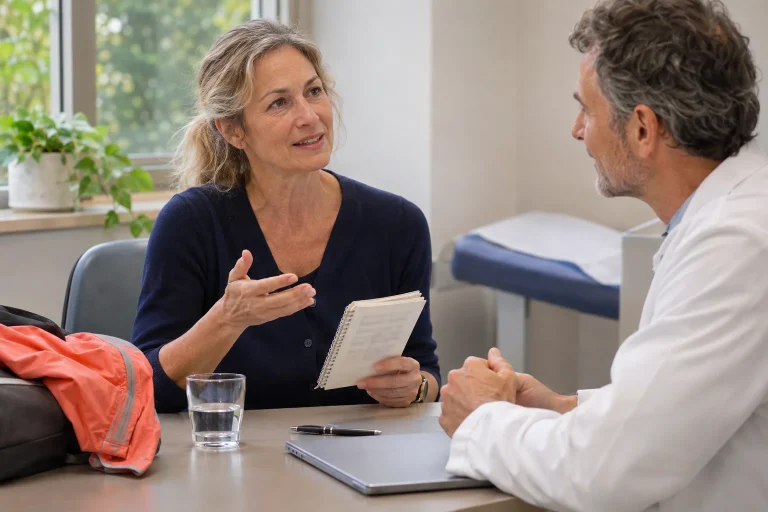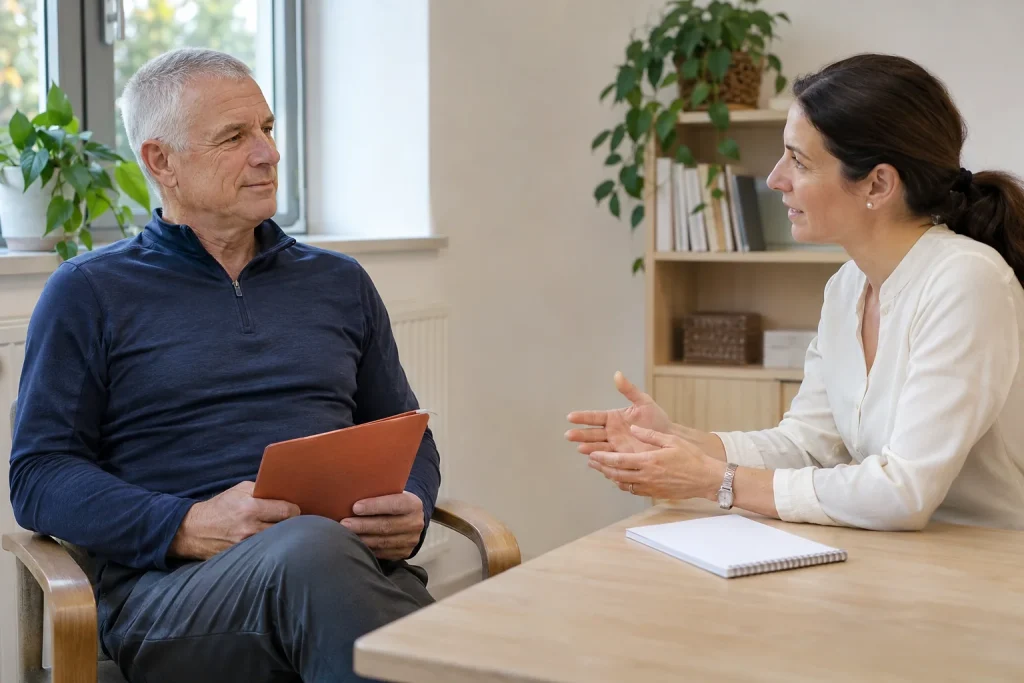
For many male runners, osteoporosis first brings a women’s health topic to mind. Yet bone health may need investigation in men too, and regular sport does not replace reviewing the history. A previous fracture, certain medicines or hormonal conditions belong in a medical conversation alongside running performance. The aim is not for every runner to suspect osteoporosis, but to prevent real risk information being omitted because someone feels fit.
Assessing bone health and deciding whether current running is safe are related but different questions. Previous fracture history, bone-density testing and loading options need interpretation together. This article helps identify what to gather before a consultation, understand the role of investigations and ask questions that avoid general advice to ‘run more’ or ‘stop everything’.
Bone is more than a motionless framework
Bone is living tissue undergoing continual remodelling. In osteoporosis, bone quantity or structure changes in a way that can increase fracture risk. NIAMS information about men specifically emphasises that the condition affects men too. The hip, spinal vertebrae and wrist can be common fracture sites, but every previous injury needs assessment in its own circumstances.
Fitness felt during running provides different information from investigating bone. Running a good pace on a route does not measure bone density. Equally, a finding about bone health does not alone establish which activity is appropriate now. Different data answer different questions. Describe your sporting history, but do not use it to replace discussion of a previous fracture or treatment.
Why the question arose matters too. Reviewing family history without symptoms differs from interpreting a new report or providing care after a new fracture. There is no need to merge these into one general ‘bone testing for runners’ package. A clearer starting question makes it easier to understand why a particular investigation or consultation is advised.
Describe the fracture’s circumstances, not just its year
Previous fractures are important history. Note the location, approximate date, circumstances of injury and care received. Bring complete discharge summaries or imaging reports if available. ‘I broke my hand once’ does not reveal the force involved, whether similar incidents recurred or whether investigation of bone metabolism was considered. You do not have to decide yourself which fracture ‘counts’.
A fracture occurring with little force, known as a fragility fracture, can be particularly important in risk assessment. The NOGG professional guideline treats this history as part of targeted risk assessment and also recommends investigating underlying causes. Its scope includes men aged fifty or older. This does not imply that a concerning fracture history in a younger man can be ignored.
New back symptoms together with known risk factors can matter similarly. A home posture photograph is insufficient to assess spinal fractures, and testing yourself with a pain-provoking movement is not a good method. Report new or substantially changed pain to your clinician. Do not use a familiar pattern of past running soreness as proof that the same thing is happening now.
 Enlarge image
Medication and hormonal history are not minor details
NIAMS lists certain chronic conditions, glucocorticoid treatment and low sex-hormone levels among risk factors important in men too. Do not tick these off as self-diagnoses. The task is to describe known conditions and products actually used accurately. Alongside ‘I took steroids’, the name, method of administration and duration may be needed for professional assessment.
List current medicines and those previously used long term. Find documents if treatment came from another clinic. You do not have to decide each ingredient’s effect on bone alone. Ask which history is relevant and whether coordination between treating doctors is needed. Coordinating care differs from independently stopping medication for sport.
Do not turn a question about hormonal background into independent testosterone buying or a ‘male strength’ course either. The need for laboratory tests and treatment is a professional decision. Share an established hormonal diagnosis or related therapy at the bone-health consultation. Athletic appearance and age alone do not answer these questions, and embarrassment should not prevent reporting important history.
Bone density and fracture risk are connected but different
Bone mineral density is often measured by DXA, usually at the hip and spine. NIAMS’s accessible 2025 description explains diagnostic and monitoring uses. Interpretation also involves age and other fracture risks. A number on the report is neither the permitted load for that day’s run nor a fitness grade.
T-scores and Z-scores involve different comparisons. NIAMS explains that age also determines which comparison is used when interpreting men’s results. Your task as a reader is not to choose care from an isolated threshold. Ask which information applies to your situation, what the complete result means and how it relates to previous fractures or other investigations.
FRAX estimates fracture probability and also considers clinical information. NOGG requires professional judgement in its use because not every risk fits neatly into available fields. Your own online result is therefore not a completed treatment decision. If it has been calculated for you, ask which information was used and what it changes in care.
| Information | How does it help? | What can it not do alone? |
|---|---|---|
| A previous fracture’s history | Assess the force involved and risk history. | Establish the complete state of bone health. |
| A DXA report | Investigate bone density and support medical monitoring. | Set that day’s running distance or intensity. |
| A FRAX estimate | Support professional decisions about fracture risk. | Independently select medicine or provide sports clearance. |
| A running log | Describe usual loading and new symptoms. | Directly measure bone density or fracture risk. |
An activity plan can have several parts, modified by history
NOGG emphasises combining weight-bearing and muscle-strengthening activity adapted to personal abilities. Assessing falls risk and a programme supporting balance also have roles. This is not a running plan to distribute to everyone. Discuss strength, safe movement and daily function alongside the bone-related goal.
The professional consensus Strong, steady and straight addresses bone loading, strength, balance and spinal position together. A previous vertebral fracture or multiple low-trauma fractures may need separate consideration. The document therefore does not prescribe one intensity for everyone. An article calling running bone-friendly must not become personal clearance without considering individual history.
State a specific activity goal at the consultation: returning to a former easy loop, finding group strength work or focusing on everyday movement after injury? Ask whether instruction and professional supervision are needed, which movements require modification and which symptoms should stop the activity. A companion’s previous diagnosis or task does not replace this discussion, even if you are of similar age.
Nutrition and supplements belong within the care plan
Suitable nutrition, including adequate calcium and vitamin D, matters for bone. NIAMS treatment information recommends discussing the type and amount of supplementation needed with the clinician. A ‘bone protection’ product name does not identify what you need, nor does an abnormal investigation alone justify combining several preparations.
Describing actual eating habits is more useful than sketching an ideal diet in advance. Which foods do you eat regularly, are any groups persistently excluded and do you already use supplements? If seeking dietetic help, make the diagnosis and treatment plan known too. A bone-health discussion need not involve rapid weight change, and one report does not justify a self-made food prohibition list.
Activity and eating choices alongside prescribed care do not necessarily replace medication. Ask separately about anything unclear: its purpose, how it is monitored and how often it will be reviewed. Do not use running results to judge whether bone-protective treatment has become unnecessary. Assessment of care relates to follow-up and the full risk picture.
 Enlarge image
Let the first discussion lead to a clear follow-up
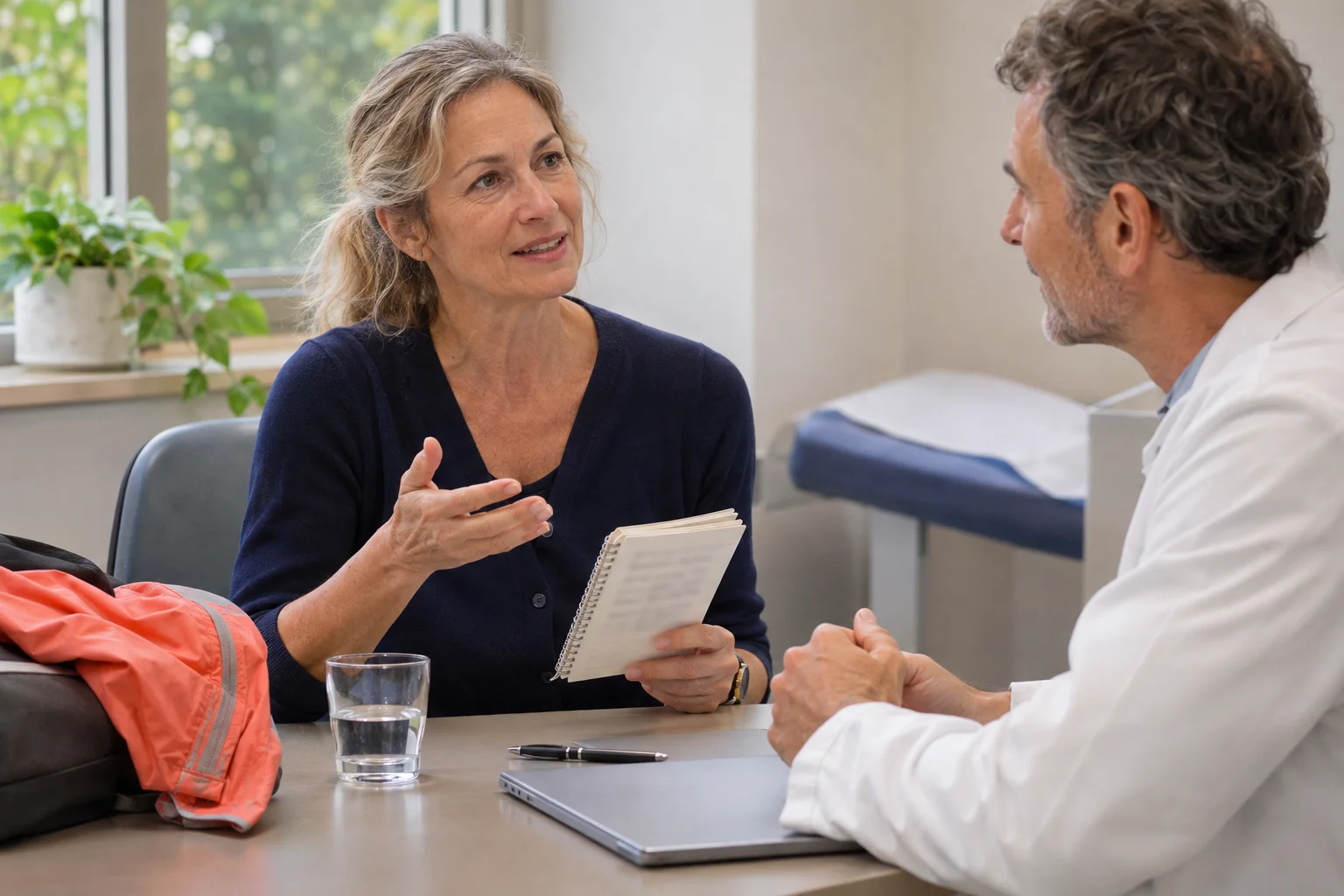
Prepare a short consultation pack: previous fractures and their circumstances, known conditions and treatments, complete reports and your present activity goal. Mention osteoporosis or fracture history in the family, marking uncertain details as uncertain. You do not need to interpret everything alone. The purpose is to show the professional which questions need clarification.
At the end, ask whether further investigation is needed, who will interpret it and what to do about activity meanwhile. If another institution provided fracture care, clarify the follow-up route. Alongside a sporting goal, the next review date offers a concrete guide. Postponing a race is not failure when an important health question gains an organised plan.
Male runners can therefore discuss bone health naturally, without stigma. You need not abandon a sporting identity or use it to refute medical questions. The point is for regular running, previous fractures and treatment history to appear in the same account. The next activity decision can then relate to your situation, rather than leaving osteoporosis in the background as a subject only for other people.
Sources
- NIAMS: osteoporosis in men
- NIAMS: bone-density tests, 2025
- NIAMS: treatment and management
- NOGG: assessment of fracture risk
- NOGG: non-pharmacological management
- Strong, steady and straight: professional consensus
How Futószív articles are prepared: our editorial guidelines.