Some people feel the day has truly begun after a morning run. Others find a comfortable rhythm later, and a dawn meeting is much harder. Lark and owl are everyday names for two characteristic daily tendencies. The difference has a biological background, but the label alone cannot tell you when to run, how much to sleep or what performance you can achieve.
Knowing about chronotype can add a personal consideration to scheduling. Put sleep opportunity, work, family commitments and route conditions alongside your preferred time, however. A daily tendency can then be useful guidance rather than another exam to fail because mornings are difficult or evenings tiring.
There are many positions between lark and owl
Chronotype describes an individual’s tendency towards earlier or later sleep timing. Jones and colleagues’ original 2019 human genetic study also describes a continuum, with intermediate types between early and late sleepers. The animal names simplify rather than divide humanity into two rigid boxes. Everyday self-description does not automatically become a detailed biological measurement. Jones and colleagues: chronotype and daily timing.
When you like to get up differs from when you must. If work demands an early start daily, actual waking does not necessarily reveal your freely chosen time. Late shifts, family tasks or a long commute can likewise delay bedtime. An observed routine can contain both tendency and constraint.
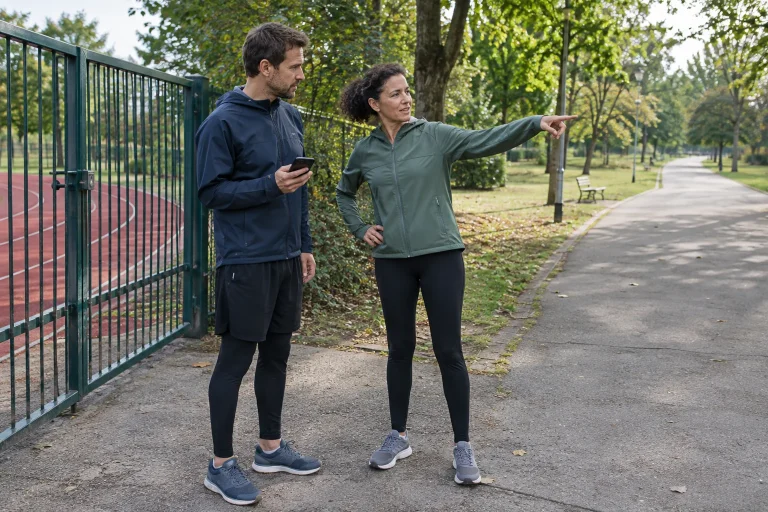
“I always get up in the morning” is therefore not the same claim as “I wake early and generally feel well then”. Both can matter in your history. Comparisons with running friends should recognise different obligations too: you may stand at the same park gate at the same time after very different evenings and sleep opportunities.
What is the biological background to internal timing?
NHLBI explains that internal clocks organise function in roughly daily rhythms, with light, darkness and other environmental cues helping synchronisation. Sleep pressure increasing during wakefulness also regulates sleep. Chronotype concerns individual timing differences, rather than simply measuring who wants to make more of the day. NHLBI: regulation of sleep and wakefulness.
Jones and colleagues’ large study analysing 697,828 participants also found genetic associations. Researchers identified 351 genetic loci, or genomic regions, associated with morning preference. These are not 351 separate “lark genes”, nor a result prescribing one person’s running time. Genetic associations help research biological background; choosing a personal routine needs more information. The genetic study of chronotype.
Do not treat a genetic association as destiny either. NHLBI emphasises the fit between personal rhythm and environmental, workplace and social demands in rhythm-disorder risk. People’s options for everyday adaptation differ. Learning about a biological tendency can therefore accompany reviewing surroundings without blaming everything on one or the other. NHLBI: internal and external factors.
 Enlarge image
A daily tendency is different from sleep need
Earlier or later timing concerns where sleep and wakefulness sit within the day. It does not automatically establish how much sleep is enough for you. An early riser may regularly sleep too little, and a late riser need not obtain enough rest. Wall-clock time alone cannot establish adequate or inadequate recovery.
NHLBI explains that regularly missed sleep accumulates, and longer sleep on days off can indicate a workday shortfall. Sleep needs vary with age and between people; persistently unrefreshing sleep warrants talking to a doctor. “I am an owl” therefore does not resolve the short window between late sleep onset and regular early rising when the rest of the day suffers. NHLBI: sleep needs and deficiency.
Our example: work ends late, but you join a running group at dawn. You may enjoy the company and ideal route while the sleep opportunity remains too short. Before a chronotype label, the actual schedule becomes visible. Moving the shared run to another day or time can be a practical change without renaming yourself as a different kind of person.
Age and life circumstances can contribute too
NHLBI notes that later sleep timing is more common during adolescence, while many older people go to bed and wake earlier. This is a group tendency rather than a compulsory timetable for everyone. Environment and circumstances matter alongside genetic predisposition. Your youthful routine may therefore not describe current mornings and evenings accurately. NHLBI: age and daily timing.
If you prefer late-morning starts at one life stage and earlier runs later, you need not call yourself inconsistent. Work, home tasks or travel may have changed too. Observe whether the current system works: does sleep have room, and does the chosen running time avoid becoming a regular source of daily difficulty?
Not everyone within a family needs to prefer the same time either. Shared morning plans and division of evening tasks jointly influence the running windows available. The answer may be two or three acceptable options rather than one perfect time. Discussing daily tendency helps when it supports arrangements, rather than judges the most disciplined family member or runner.
What do we know about chronotype and sporting performance?
In Facer-Childs and Brandstaetter’s original 2015 research, timing characteristics were surveyed in 121 competitive athletes; twenty similarly aged and trained hockey players among them performed an endurance test at six times of day. Peak-performance timing differed between early, intermediate and late types. Time since waking also proved an important predictor. The actual performance test therefore did not mean race results from 121 runners. Facer-Childs and Brandstaetter: timing and sporting performance.
The research highlights that the same wall-clock time can represent different biological situations for different people. It does not establish one hour for every lark to run and another for every owl. Its sport, small tested sample and task prevent treating it as a personal marathon prediction or a reason to search for training times through maximal tests.
The lesson also helps comparisons. If the same session feels harder at another time of day, wake time and earlier sleep may be among the circumstances. Heat, post-work demands, route and daily tasks may also differ. One morning or evening run cannot establish that chronotype caused the difference.
Use personal observation without overinterpreting it
Begin with things you can genuinely observe: when you usually become sleepy, when you wake on more flexible days and how running fits your obligations. Do not choose a permanent label from one particularly tiring week. If you have a specific sleep complaint, assessing it matters more than completing an online type description perfectly.
| Question | Useful personal observation | An excessive conclusion |
|---|---|---|
| When would I wake freely? | The usual routine on days off, alongside the previous week’s circumstances. | One long lie-in definitely identifies my type. |
| How does sleep fit? | The actual opportunity between bedtime and obligatory waking. | A chronotype label resolves short nights. |
| When does running feel good? | Time of day, time since waking and that day’s circumstances. | A personal best is possible at only one time of day. |
| Is there persistent difficulty? | Problems falling asleep, getting up and functioning during the day. | Every difference in timing is itself a disease. |
These questions are neither a validated chronotype test nor diagnostic scoring. They help separate preference, fixed demands and symptoms within your history. Seeing all three strands makes it less likely you will expect too many answers from one label. Accurate observation needs no purchased genetic test.
 Enlarge image
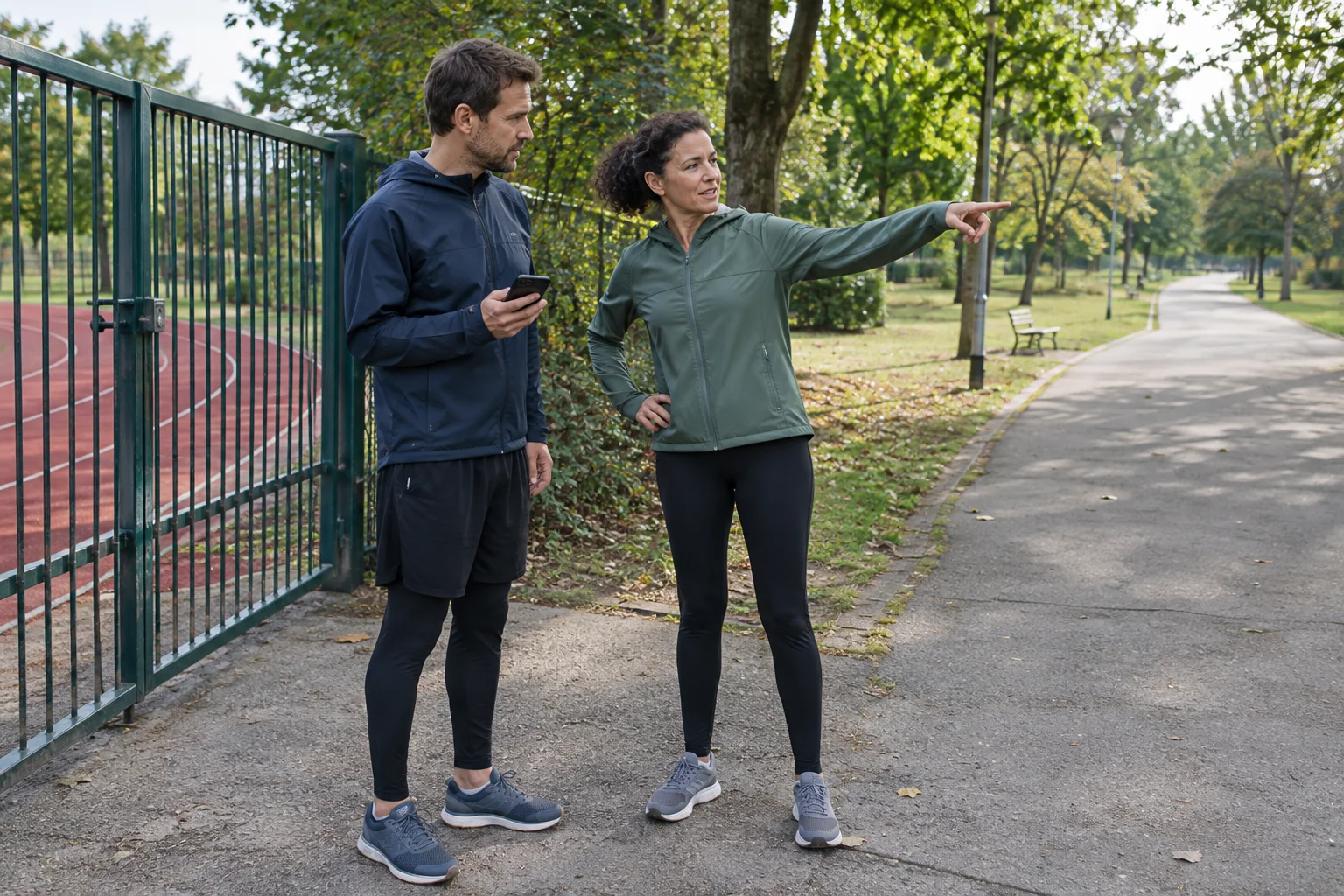
A group run’s timing is a negotiable circumstance
A group chooses a start around track availability, working hours or the last bus. That time is a social agreement, rather than a biologically ideal moment for every participant. Say this without requiring anyone to share detailed health history. A later arrival is not necessarily less enthusiastic, nor does an early start automatically demonstrate greater talent.
Possible arrangements include two meetings, alternating weekend starts or a session people can join along the way. These are group choices rather than this article’s prescribed training plan. What matters is including sleep and obligations in the conversation. Everyone need not create the same routine experience to belong to the same running community.
Race start times are usually fixed. This does not mean a runner with later daily tendencies is inherently unsuited to a morning event. Consider the whole preparation: travel, packing, accommodation and sleep opportunity. Discuss individual sleep or health difficulties with an appropriate professional; chronotype cannot yield a universal adaptation protocol.
When is the situation more than an everyday owl tendency?
NHLBI describes delayed sleep–wake phase disorder as a pattern in which late sleep onset and difficulty waking at the desired time can disrupt work, study or social obligations. With advanced phase disorder, early evening sleepiness and excessively early waking may cause problems. A running group’s preferred start time should not decide the label. NHLBI: types of circadian rhythm disorders.
NHLBI says assessment reviews symptoms, sleep patterns, history and environment, possibly using a diary or targeted investigation. Your impression of personal tendency provides a useful start but cannot replace that process. Persistent inability to sleep or rise at necessary times that makes daily function difficult warrants seeking help. NHLBI: assessing timing difficulties.
The NHS sleep information also emphasises not driving when sleepy. “I just take time to get going in the morning” cannot make a risky drive to a group run safe. The lark–owl distinction helps most when it leads to more understanding and precise scheduling. It describes your functioning with more nuance while leaving room for sleep, company and necessary individual care. NHS: sleep difficulties and daytime safety.
Sources
- Jones and colleagues: large genetic study of chronotype, 2019
- NHLBI: the daily sleep–wake rhythm
- NHLBI: risk factors for circadian rhythm disorders
- Facer-Childs and Brandstaetter: chronotype and sporting performance, 2015
- NHLBI: how much sleep do you need?
- NHLBI: types of circadian rhythm disorders
- NHLBI: diagnosing circadian rhythm disorders
- NHS: insomnia
How Futószív articles are prepared: our editorial guidelines.