
When planning a lactose-free breakfast or afternoon snack, first clarify the individual requirement it needs to meet. Lactose-free dairy and a plant-based alternative are two different options, rather than automatically equivalent substitutions. A useful meal idea considers taste, texture, the quantity of the whole meal and the actual preparation situation. On running days, this also means when and where the breakfast or snack will genuinely be available.
This article is a collection of kitchen ideas for adult recreational runners, not a diagnosis of lactose intolerance or a personal treatment plan. If recurring symptoms prompt you to make changes, seek appropriate healthcare first. With a known intolerance, follow your medical and dietetic guidance. The examples do not prescribe identical portions for everyone or guarantee freedom from symptoms around every run. Check the suitability of the other ingredients too, especially with an allergy or another prescribed diet.
Lactose and milk protein are separate questions
The NHS information on lactose intolerance describes a condition related to digesting milk sugar and distinguishes it from allergy. Similar digestive symptoms alone do not establish a definite cause. The necessary extent of dietary change is individual. Do not exclude a whole food group after one unsuccessful breakfast, or treat another runner’s personal solution as your own diagnosis.
The British Dietetic Association guide to milk allergy clearly explains that lactose-free cow’s milk and dairy products still contain milk protein, so they are not an automatically suitable replacement for milk allergy. A lactose-free label is therefore not a promise that a product is dairy-free. Describe this precisely in shared kitchens and when shopping. Meeting one requirement does not confirm that another health-related restriction is met.
Write what you actually need on your shopping list. Do not use dairy-free, lactose-free, plant-based and vegan interchangeably. If you have several requirements, check each against the specific product. Every component of a complete breakfast needs to be suitable, rather than only its main drink or yoghurt. The ingredients in the bread, spread and flavourings are part of the whole meal too.
First option: freshly prepared porridge
For a porridge you enjoy, choose a liquid or other addition that fits your diet. This might be suitable lactose-free dairy or another checked alternative. Follow the preparation instructions for the grain and the specific product. Using a different liquid may change the texture, so record the quantities and method in your own recipe. A kitchen substitution is not necessarily a nutritionally equivalent replacement.
Choose fruit, seeds or other toppings according to your needs. They are not compulsory decorations, and not every ingredient suits everyone. The overall amount and composition of breakfast matter more than how many different things appear on top. If an ingredient is new, get to know it in a calmer setting first. Before an important run, start from a familiar, suitable eating plan rather than several new ingredients at once.
Second option: a cold bowl to eat with a spoon
Suitable lactose-free yoghurt or another product you can eat with a spoon may form part of a familiar breakfast. Check the actual package’s ingredients, storage and handling after opening. If you add cereal or another base, its conditions of use matter too. A cold bowl does not mean that every dried or frozen ingredient can be eaten directly. Do not omit necessary preparation for any component.
You can keep moist and crunchy elements separate and combine them when eating if this fits the chosen products’ handling requirements. This may make the desired texture easier to preserve. When storing them together, however, consider every ingredient in the whole dish. A longer-lasting dry component does not extend the refrigerated storage limit of a prepared moist mixture. The label and the food’s own handling requirements remain the basis.
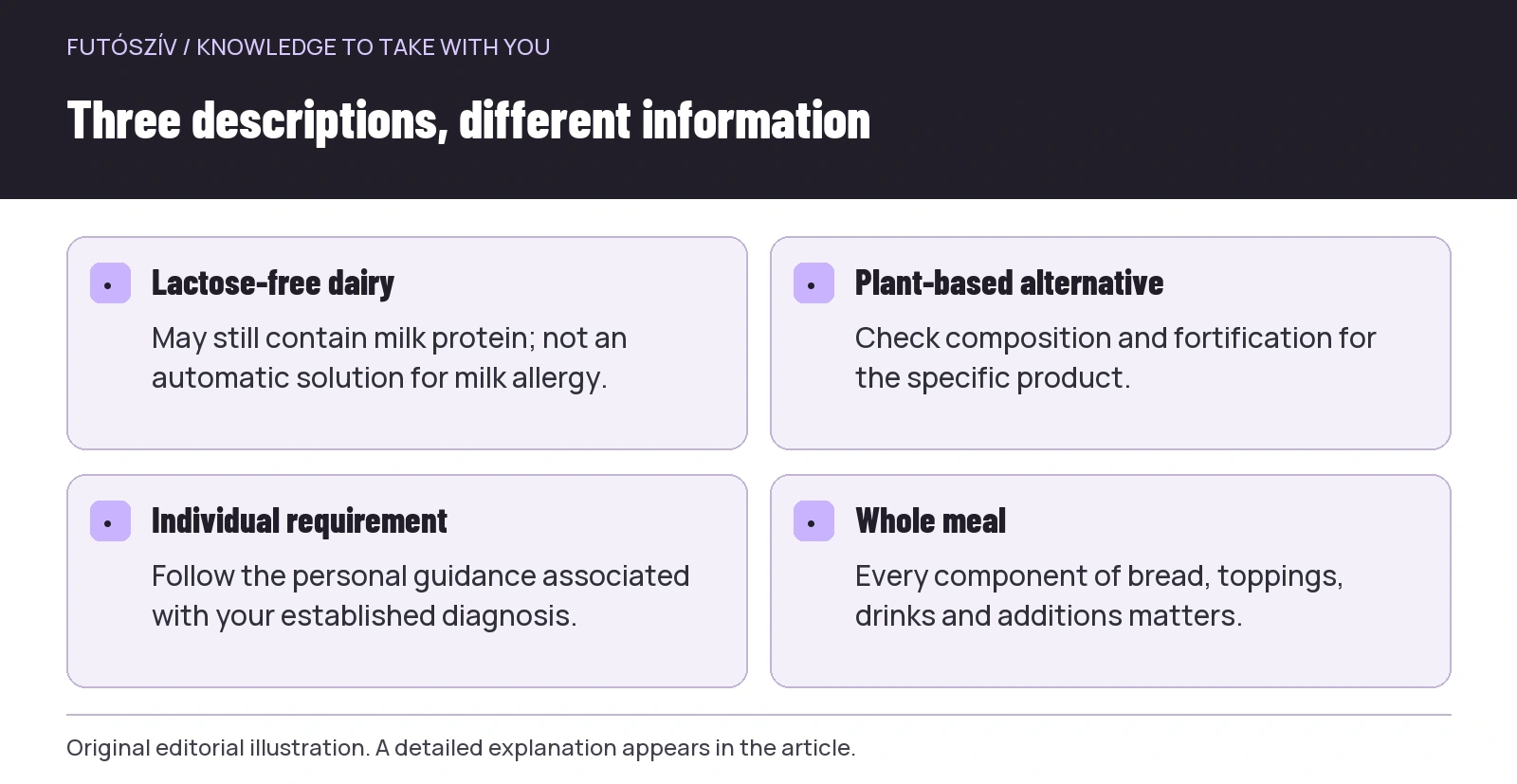 Enlarge diagram
Text version of the illustration
- Lactose-free dairy
- May still contain milk protein; not an automatic solution for milk allergy.
- Plant-based alternative
- Check composition and fortification for the specific product.
- Individual requirement
- Follow the personal guidance associated with your established diagnosis.
- Whole meal
- Every component of bread, toppings, drinks and additions matters.
Third option: a savoury topping for bread
Breakfast or an afternoon snack need not be a sweet, milk-based dish. With suitable bread, choose a savoury topping and prepared vegetables that fit your diet. If it contains lactose-free dairy, check its exact composition. A dairy-free spread is not automatically free from every other allergen either. The recipe or label, rather than the topping’s name, provides the information needed.
Consider which texture of spread suits the bread. A more liquid product may work better as a separately served addition, while a thicker one has different uses. You do not need to perfectly imitate a familiar sandwich with a completely different product. Separately served components can form a new, suitable meal. Part of success in the kitchen is using an ingredient’s actual properties rather than expecting every characteristic of the previous product.
Fourth option: a freshly prepared egg-based version
If you can eat eggs, properly prepared eggs can form part of a savoury breakfast. Choose added dairy or an alternative according to your requirements, or follow a familiar recipe that can be prepared appropriately with the chosen ingredients. Thorough preparation of the entire dish and clean utensils matter just as with other egg dishes. A lactose-free ingredient does not make an inadequately prepared meal suitable.
Prepare accompaniments and vegetables first so you can focus on the egg stage. Serve an amount of your chosen base that fits your needs. This is not compulsory protein supplementation for everyone, but one possible breakfast that may fit the diet. If the schedule before running is tight, base the choice on a familiar recipe and a realistic preparation plan.
| Meal format | Possible individual choice | First check |
|---|---|---|
| Fresh porridge. | With suitable lactose-free dairy or a chosen alternative. | Composition, preparation instructions and the whole meal. |
| A bowl eaten with a spoon. | With suitable yoghurt or another familiar base. | Refrigeration and necessary preparation of every additional component. |
| Savoury sandwich. | Suitable spread, topping and bread. | Suitability of all ingredients, not only the main topping. |
| Egg-based breakfast. | Your chosen version, freshly and properly prepared. | Your own diet and thorough preparation. |
Assess a plant-based alternative as a distinct product
The NHS information on dairy and alternatives also discusses considerations when choosing fortified plant-based versions. Do not assume every drink or dessert provides the same protein, calcium or other nutrients in your breakfast. Check the actual package and its role in the whole meal. Similar kitchen uses and nutritional value are two different properties.
Write down a specific purpose for the substitution. Do you want a suitable liquid for the same porridge? Do you need to provide a particular nutrient source according to your plan? Or are you looking for taste and texture that work in a sandwich? Different questions can lead to different products. If you exclude several foods from your overall diet, discuss adequate replacements with a dietitian.
Pack a complete meal
For a snack at work or on the move, make sure the base, topping and necessary utensils are available. A refrigerated pot alone is a different plan from the pot together with its intended cereal or suitable accompaniment. Transport and store each product according to its instructions. Food left unrefrigerated does not become suitable because it is lactose-free. The label addresses one compositional issue, rather than all food safety.
Pack food so it can be identified. In a shared fridge, make it clear which container is yours, what it contains and how it needs to be handled. If contents are stored separately from the product label, retain the important information. This is particularly relevant when several similar pots or drinks stand together. A readable description helps prevent a mistaken swap more than remembering the package colour.
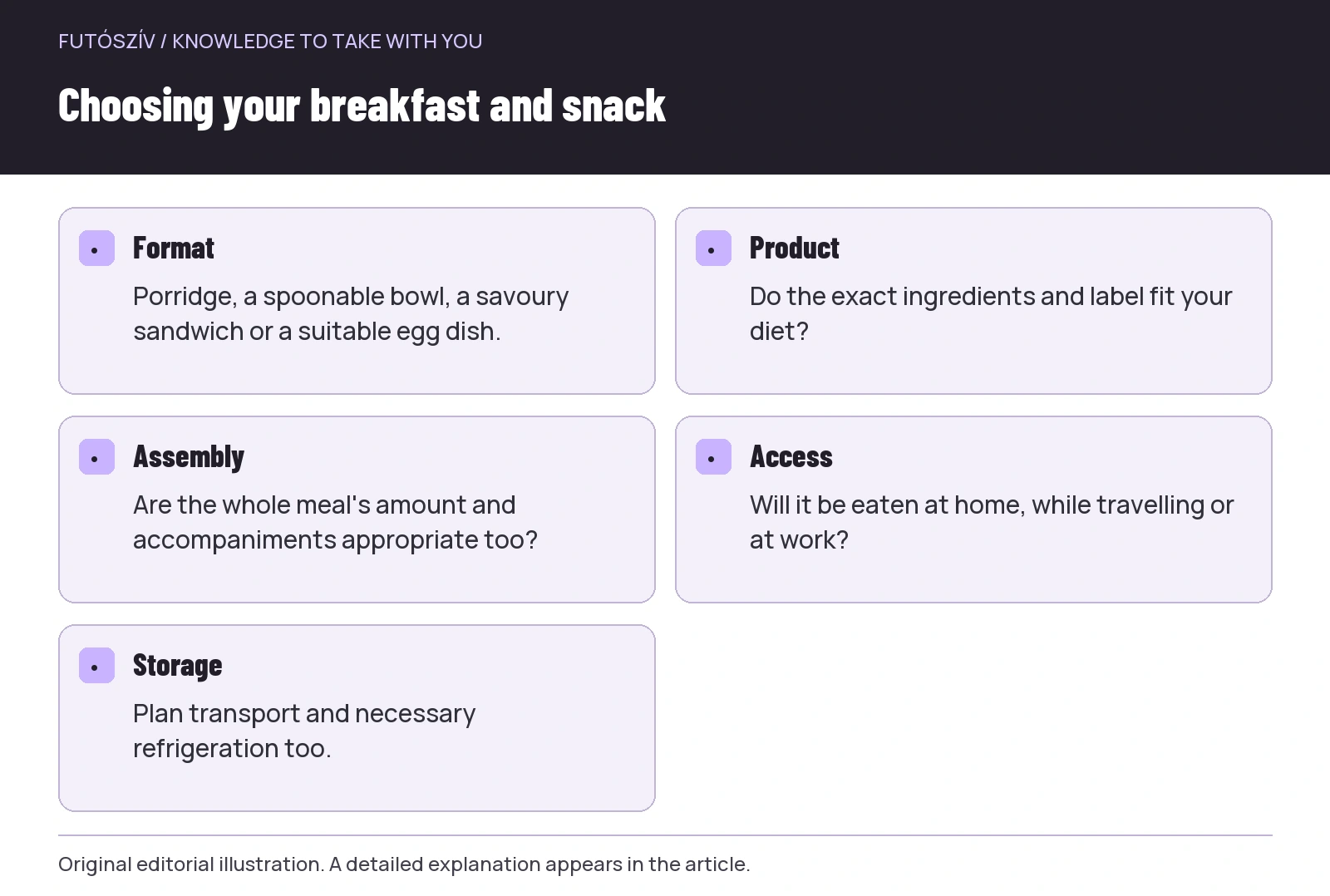 Enlarge diagram
Text version of the illustration
- Format
- Porridge, a spoonable bowl, a savoury sandwich or a suitable egg dish.
- Product
- Do the exact ingredients and label fit your diet?
- Assembly
- Are the whole meal’s amount and accompaniments appropriate too?
- Access
- Will it be eaten at home, while travelling or at work?
- Storage
- Plan transport and necessary refrigeration too.
Around running, consider familiar foods and your own timing
A lactose-free label does not guarantee that a mixed dish suits running in any quantity at any time. The whole dish, your portion and previous experience matter too. If you want a new breakfast routine, do not first try it on the morning of an important race. Familiarity developed in everyday life and your own professional guidance can together provide a more reliable basis.
In your notes, record the whole meal rather than just the drink’s name. What was in the porridge, which topping went on the bread, and how long afterwards did you set off? One uncomfortable occasion does not establish that lactose was the cause or that another entire food group needs excluding. Have recurring symptoms assessed by an appropriate professional. Observation can support the conversation, but does not replace diagnosis.
Make your request precise in a café
When requesting a lactose-free product, its exact identity and every other element of the finished drink matter. A drink made with lactose-free milk may contain another ingredient that is unsuitable for you. For milk allergy, lactose-free cow’s milk is not a suitable solution. State your requirement clearly and ask about the specific ingredients and necessary preparation conditions. Staff should not have to guess what your special request means.
A pastry, sandwich or spread ordered with breakfast needs a separate check. A suitable drink does not confirm the suitability of the whole order. If necessary information is unavailable, choose a familiar, appropriate alternative. Fast service or a rushed running day does not remove the need to check. Your everyday backup can be valuable here too if transport and storage are arranged.
Make the difference clear in a shared household
Tell the person shopping or cooking exactly which product suits you. It can help to demonstrate the distinction between lactose-free and dairy-free using actual packages. If household members have different requirements, identifying and appropriately separating personal products can help. The ingredient information needed should not exist only in one person’s memory. A shared breakfast is then easier to adapt to several individual needs.
Every family member does not necessarily need to change to the same product. A shared base and individual additions can be planned separately if this is compatible with everyone’s health requirements. The aim is suitable food, rather than an identical package beside every plate. If the plan is uncertain because of overall daily intake or complex restrictions, seek individual dietetic help.
Two workable breakfasts and one portable snack
Choose two breakfast formats you enjoy and can prepare appropriately, plus one genuinely portable snack. For each, list the exact product, necessary accompaniment and storage conditions. This is not a compulsory weekly schedule. It helps turn a shop purchase into a familiar meal rather than requiring a complete new solution on every running day.
A good lactose-free meal idea starts with an accurate understanding of individual requirements and reaches the complete meal. An appropriate label, reliable preparation and your own quantities together make a useful breakfast or snack. The necessary change then becomes more than removing something: it creates choices that work in taste, texture and everyday practice.
Sources and further reading
- NHS: Lactose intolerance
- British Dietetic Association: Milk allergy
- NHS: Dairy and alternatives in your diet
How Futószív articles are prepared: our editorial guidelines.