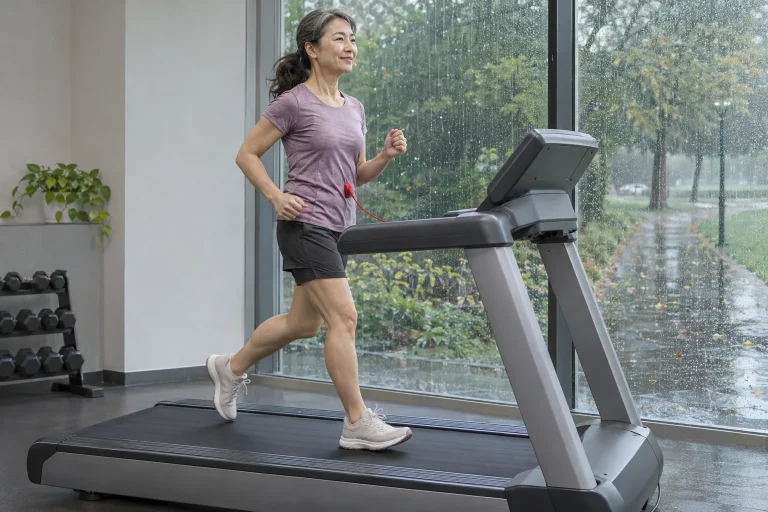
After a good run, everything can sometimes feel lighter: your body is still working, but the day has quietened in your mind and simply being there feels good. Saying ‘the endorphins have arrived’ seems natural. Yet the phrase both describes a feeling and supplies a biological explanation. Your feeling needs no laboratory result; testing the explanation requires a method measuring a specific part of the story. Post-run PET research therefore became an interesting milestone, approaching an internally experienced feeling through the brain’s opioid system.
Enjoyment remains when its explanation becomes more precise
The everyday phrase ‘runner’s high’ does not describe one identical moment for everyone. Consider two reports: ‘Running really lifted me today’ and ‘Today I finally came home calmer.’ They need not express the same feeling. Asking about euphoria places a different emphasis on the phenomenon from examining tension or pain changes. This is not splitting hairs: a finding relates precisely only to the aspect of experience participants actually reported.
The endorphin explanation’s appeal is understandable. One familiar word connects movement, body and pleasure. But ‘endorphin’ and ‘opioid system’ are not interchangeable in every setting. The system includes different signalling substances and receptors; the studies here infer from a receptor-related signal or modification of signalling. Put simply, a receptor is a molecular binding site through which a signal can act. This explanatory image helps with the principle, rather than describing the whole nervous system.
Keep two statements separate: ‘Running felt good’ and ‘I know exactly which molecule caused it.’ The first can be an accurate personal report even without a complete answer to the second. Research does not take enjoyment away, but makes its map more detailed. A quiet, pleasant run need not be less valuable for lacking dramatic euphoria either. Scientific terminology does not grade your sporting experience; it asks a testable question.
What did the 2008 brain PET study add?
In 2008, Boecker and colleagues examined ten athletes on two occasions, at rest and after a two-hour endurance run, in random order. They used PET with a labelled compound binding to opioid receptors and recorded self-rated euphoria. After running, measurable receptor availability decreased in certain emotion-related brain regions; binding changes were associated with euphoria ratings. The authors interpreted this as supporting the opioid theory. Crucially, they examined a brain receptor signal rather than merely renaming an everyday account of pleasure as biochemistry.
The study’s historical value lies in making a difficult-to-access process measurable. Another kind of data joined participants’ reports: how did the selected tracer behave in the brain under the two conditions? Imagine two notebooks. One records what someone feels, the other an instrumentally determined signal. Researchers ask how they relate. Neither automatically translates into the other’s language, but together they may provide a more interesting picture.
The two-hour run was part of the design, rather than a general recipe for happiness. Extracting duration alone from research news easily turns a measurement condition into a personal target. Participant selection, run characteristics and measurement timing together form the interpretive framework. The interest lies in adding a new kind of data to post-run experience, rather than requiring everyone to run that long.
 Enlarge image
A PET signal is not a colour photograph of enjoyment
RadiologyInfo, patient information from North American radiology organisations, explains that PET uses a radioactive tracer and specialised detection to inform us about molecular processes. Tracer choice matters: not every PET scan shows the same thing. Opioid research used a compound suited to its question, rather than one used in many other settings. Understanding a colourful brain image therefore first requires knowing its signal source. Colour alone cannot tell us whether we see greater pleasure, metabolism or another process.
Measurable behaviour of a receptor-binding tracer is interpreted through modelling. Fewer available binding opportunities for the tracer may be consistent with release of the body’s own signalling substances. Imagine a room with reservable seats: fewer empty seats may suggest others occupied them. The analogy illustrates the basic idea, rather than the complete measurement model. Biological interpretation must also consider the procedure’s own conditions.
This signal does not become an individual ‘endorphin quantity’ or happiness score. Reduced availability does not mean a brain region switched off, nor is a brighter colour necessarily ‘better’. When a running article shows a brain image, inspect its caption and key. What is compared? What represents a difference? Is it an individual image, group result or statistical relationship? Without this, identical visuals can suggest very different stories.
Association and a necessary mechanism are different questions
In an imagined example, two runners report different degrees of good mood. If differences in their instrumental signals track this, the association is interesting but not a complete causal explanation. Shared underlying processes or parallel pathways are possible, and measurement timing matters too. ‘Associated with’ therefore specifies what was studied, rather than merely using weaker language. Whether the experience can occur without that signalling is another question.
Siebers and colleagues’ 2021 study approached the latter question. In 63 participants, a double-blind, randomised, placebo-controlled design used naltrexone to block opioid receptors. Moderate-intensity, 45-minute treadmill running was compared with walking. Opioid blockade did not prevent increased post-run euphoria or reduced anxiety. Researchers also measured endocannabinoids and interpreted the findings as supporting the importance of that other signalling system. The experiment asked about the phenomenon through a different method from brain PET.
The medicine’s name is needed here to understand the research design. It is neither a home experiment, a recommendation nor a tool for checking a running experience. Under controlled conditions, researchers intervened in a proposed pathway’s operation. This distinguishes it from seeking relationships between two data series. Its result must still be interpreted within the studied conditions and endpoints; it does not reduce knowledge of every opioid process to one yes-or-no answer.
How can two different findings coexist?
The earlier receptor signal and later blockade experiment did not simply ask the same question twice. One reveals which changes and experience ratings may coexist; the other asks whether a particular experience remains when a selected pathway is blocked. Imagine first observing when an instrument plays in an orchestra, then examining the audible passage without it. Recognising the melody with other instruments does not make the first instrument’s role meaningless.
In another human PET study, Saanijoki and colleagues recruited 22 healthy, recreationally active men. Rest, moderate aerobic exercise and high-intensity intervals were compared using an opioid-receptor-selective tracer. A stronger receptor-signal change did not simply accompany more pleasant feeling: during intense exertion, associations with negative emotional changes were also found. This particularly challenges ‘endorphins equal happiness’. Investigating the system cannot be reduced to measuring one rewarding feeling. Detailed results deserve a separate article; here they add nuance to the historical picture.
Read the research history as accumulating questions. First: is there a measurable brain association? Next: how does the picture change under another exercise demand? From another direction: what happens when a signalling pathway is blocked? This is not disorganised uncertainty, but a broad everyday claim divided into testable parts. Identifying an oversimplified explanation more precisely is progress too. It does not require immediately placing the whole story’s weight on another molecule.
Four guides to reading news about running pleasure
First, identify who was studied. Findings from a small specified athlete group are not claims about every beginner, age or circumstance. Second, identify the setting: running or other movement, laboratory or outdoors, measurements during or after effort. Third, separate measured data from interpretation. Fourth, notice what the headline adds to the original paper. A few words can easily turn a scientific observation into a general lifestyle promise.
| The news says | What to look for | Why it helps |
|---|---|---|
| ‘They saw runner’s high in the brain’ | Which signal and experience report were recorded? | It separates instrumental data from the feeling’s name. |
| ‘They found the cause of pleasure’ | Was an association measured, or was an intervention performed? | It reveals which causal question the study can answer. |
| ‘This is how long you must run’ | Is this a research condition or personal recommendation? | It avoids turning a measurement design into compulsory training. |
Try these questions on one report. List participants, method, measured experience and conclusion separately. If something is missing, you need not fill it with assumptions. The original abstract often reveals the question more accurately than a striking headline. A photograph or brain image cannot replace these four lines. The aim is to understand why a result matters and how far the news follows it, rather than become a researcher.
 Enlarge image
What can you take to your next run?
Observing your experience requires no molecular label. Afterwards, describe what was good: freedom, calm, movement’s rhythm, a pleasant conversation or being outside. This is personal description, rather than biochemical measurement. A more tiring or neutral session does not imply a system malfunction. Everyday observation’s value lies precisely in its connection to your own day and feelings, rather than a research group’s average.
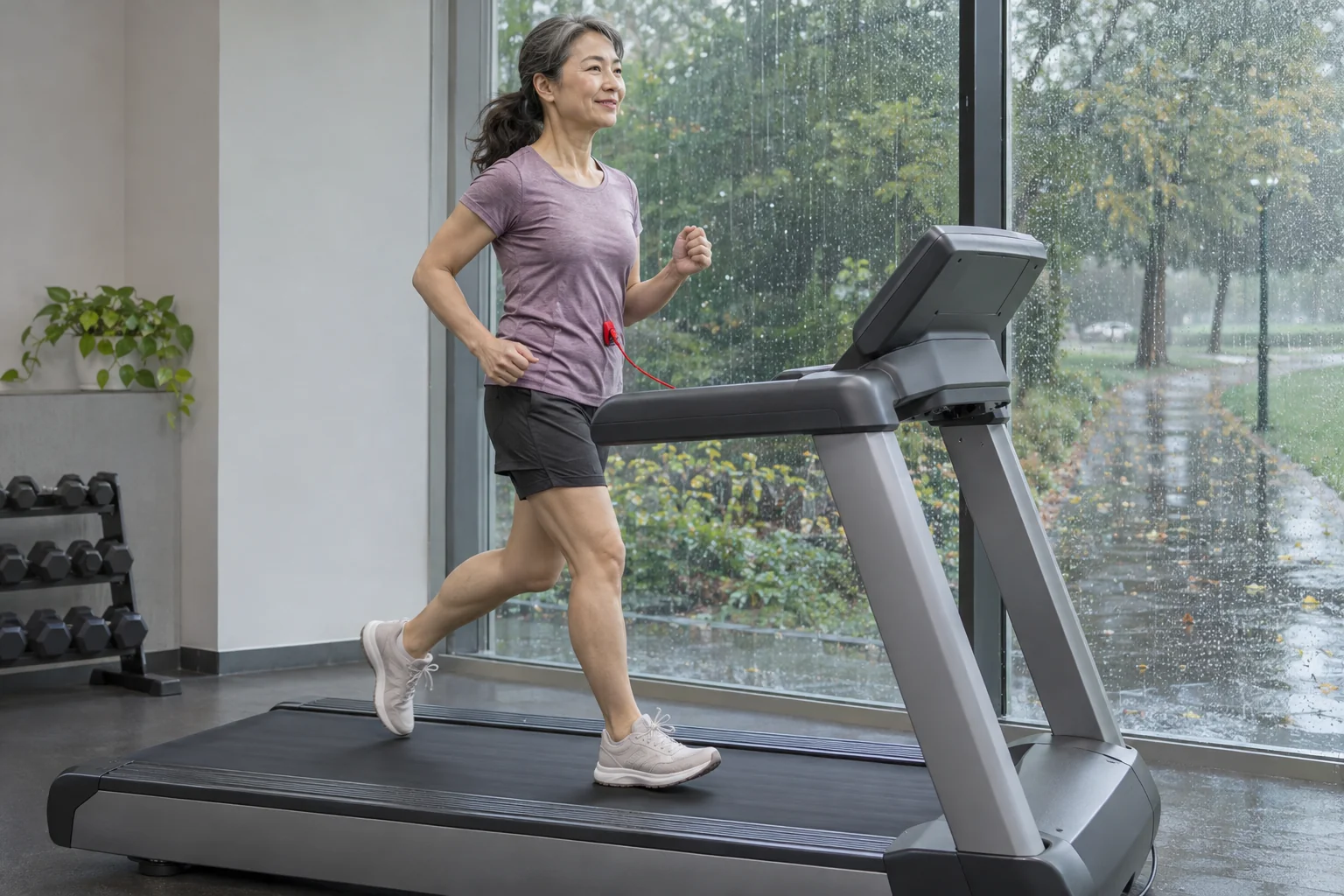
The most interesting part of the endorphin explanation’s history is increasing detail. Brain measurement joined experiential reports, followed by other exertion conditions and intervention questions. Running pleasure becomes more understandable, rather than a lost secret. After your next pleasant park loop, enjoy what you experienced. Scientific precision asks only that you do not replace that feeling with one supposedly certain molecular story or make exceptional euphoria every run’s compulsory goal.
Sources
- Boecker and colleagues, 2008: The runner’s high
- Siebers and colleagues, 2021: Exercise-induced euphoria and anxiolysis
- Saanijoki and colleagues: Opioid release after high-intensity interval training
- RadiologyInfo: PET/CT
How Futószív articles are prepared: our editorial guidelines.