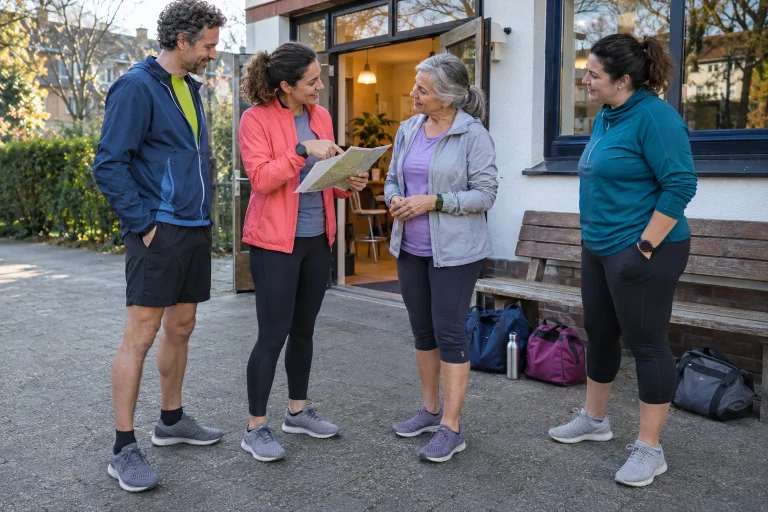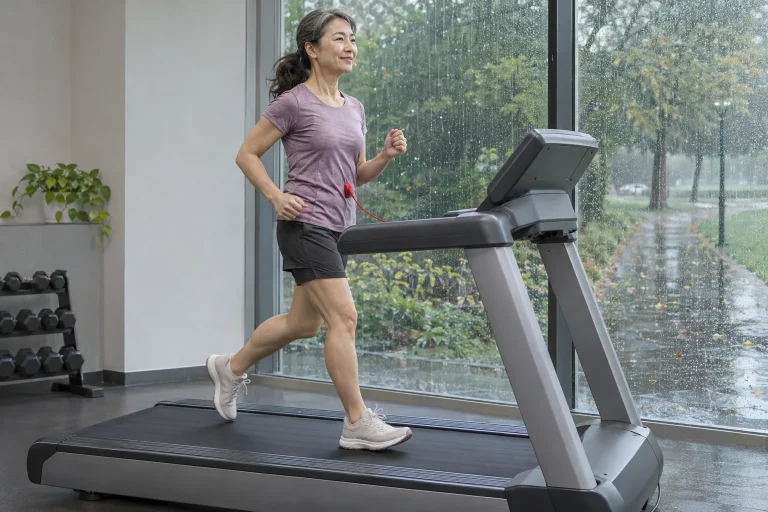
Moving beside someone who finds the same task a little easier can be inspiring. At other times, the gap discourages: their level seems unreachable and our effort insignificant. A companion’s ability is therefore more than pace data. Its meaning also depends on expectations, how we compare ourselves and whether we can freely shape participation.
One experimental approach to group motivation specifically varies the companion’s ability gap. But the result is easily overextended: a brief static-hold task beside a virtual partner does not automatically become a rule for choosing a running companion. Here, we explore that distinction and how another person’s performance can offer an interesting example without becoming a compulsory standard.
An ability gap always concerns a particular task
When calling someone a better runner, we often highlight one visible result. They may finish a short distance faster, yet have different knowledge of long hikes, feel at home on different terrain or move for quite different goals. A general ranking conceals details. For motivation, ask which ability matters in that situation and why.
A gap that seems achievable differs between people too. A change appearing small to someone experienced can be substantial for a beginner. Behind visible performance, we do not know another person’s training history, free time or current condition. Comparison starts from partial information even when both watches accurately recorded that day’s route.
A companion’s performance can play three roles: demonstrating a possibility, offering social support or appearing an external expectation. The first two can feel pleasant, the third oppressive. A faster person’s mere presence does not decide the situation; the story we attach matters too. Notice your response alongside the numbers.
What changed in the virtual-partner experiment?
In Feltz, Irwin and Kerr’s experiment with 135 university students, participants held isometric abdominal exercises connected to a video game. They completed the first block alone; in the next, some remained alone while others worked beside a virtually presented superior partner. The partner’s advantage was set as small, moderate or large, with shared success dependent on the weaker member’s performance.
Improvement in persistence time was greater in the partnered conditions, with the largest increase associated with a moderate gap. Within this specific task, that supported researchers’ expectations about ability differences. The study did not measure running pace, lasting exercise habits or injury safety. It does not prove that a moderately faster running companion is ideal for everyone.
‘Moderate’ here names an experimental condition, not an everyday percentage guide. Do not calculate seconds per kilometre or a compulsory improvement goal from it. The useful question is how relatable another’s performance seems to your possibilities. Exploring that personal interpretation may matter more than adopting an experimental number.
The task’s structure matters as much as the partner
Two people moving in the same place differs from shared success depending on the weaker person’s persistence. The latter can give a task strong social meaning: someone may feel the group result rests on them. A casual run need not have such a rule. Social presence does not have to become a task in which someone continually feels like the team’s obstacle.
Greater persistence in a short laboratory setting does not alone reveal the later experience or whether participants wanted to return to similar activity. Seconds completed and sustainably manageable participation are separate outcomes. Both may interest a runner, but an unpleasant, excessively demanding shared session does not automatically become good because it lasted longer that day.
Do not infer running through pain, attending while ill or abandoning personal loading limits from social responsibility. The experiment did not test the safety of such decisions. If a shared goal makes stopping or expressing needs difficult, that deserves a separate conversation. Motivation’s value is not equivalent to how completely it overrides boundaries.
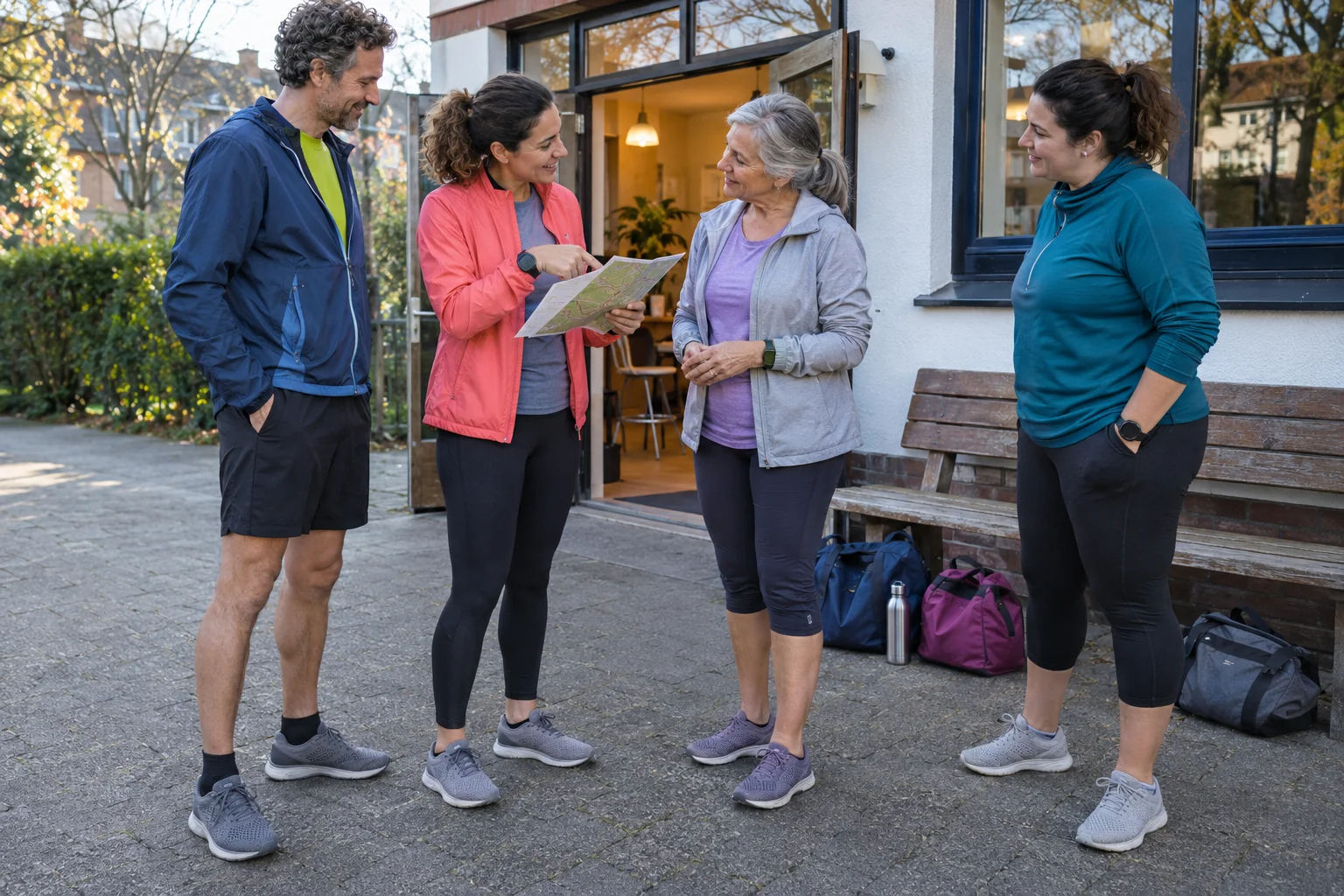 Enlarge image
A role model’s story can matter too
An experienced runner can exemplify more than results. How they learned to rest, fit movement around work or changed previous goals can be interesting. These offer different connections from a faster lap. Another person’s path can offer ideas even if you have no wish to reach their performance level.
A role model need not be a distant elite athlete. They might use everyday solutions you understand and acknowledge uncertain or difficult periods. This is an editorial possibility for interpretation, not a mechanism established by the virtual-partner experiment. Personal similarity and perceived accessibility differ from the advantage configured in a laboratory.
Separate ‘I can learn something from them’ from ‘I must become like them’. The first preserves choice; the second can expand one characteristic into a complete personal standard. A runner you admire may exemplify a well-framed training question while having entirely different circumstances and goals. Partial inspiration is fully valid inspiration.
What does longer follow-up of new runners add?
McCormick and colleagues followed twenty new runners through repeated interviews; 65 conversations in total, plus observations and diaries, informed interpretation. Personal meaning, everyday barriers, discovering ability and unequal opportunities all emerged as important themes. Sustained participation did not appear as the story of one motivational factor.
This qualitative work asks a different question from the virtual-partner experiment. It does not control another person’s advantage in a laboratory or estimate a success rate for every beginner. It helps situate participation within changing life circumstances. A personally important reason can be valuable without independently solving substantial practical obstacles.
An inspiring companion can therefore belong in a runner’s life without every missed session being a motivation failure. Missing childcare, deteriorating health or a changing work schedule cannot be replaced by a faster acquaintance’s example. An accurate account of your situation is a more useful start than blaming yourself because inspiration did not solve everything.
When comparison narrows the experience
After a meeting, you may remember how much slower you were rather than the shared route. That need not mean social running itself is bad; comparison may have become the only interpretation. Name precisely what bothered you: a spoken comment, your expectation or having no option for different participation.
Examine the comparison’s subject too. Were you pursuing the same goal, taking on similar loads or even intending a performance situation? If not, the other’s result may not meaningfully evaluate your day. You need not deny a difference to put its significance in place and compare your commitment with your own goals.
Not every unpleasant response requires immediate self-improvement. You can say you do not want to compare results today or choose another social situation. It is also fine to enjoy talking with someone without enjoying training together. The relationship and form of shared activity are separate decisions; neither automatically obliges the other.
Your own activity framework remains the starting point
A companion’s ability does not rewrite your present condition, agreed rehabilitation framework or need for rest, even when the shared task is especially motivating. Feeling you cope better together and whether a particular load is appropriate are different questions. Experimental gains in persistence do not authorise ignoring medical or individual training limits.
Stating your framework can be ordinary: you want easy movement today, need to get home on time or do not want competition. These are the session’s conditions, not excuses relative to your companion’s result. Knowing them helps the other person understand what you seek from shared presence. This supports conversation rather than prescribes pace or exercise dosing.
You may currently maintain a better relationship with activity alone. That does not make you less social or deprive you of a compulsory motivational tool. Shared and individual sessions can play different roles. No permanent runner identity is needed to choose surroundings suited to current life circumstances.
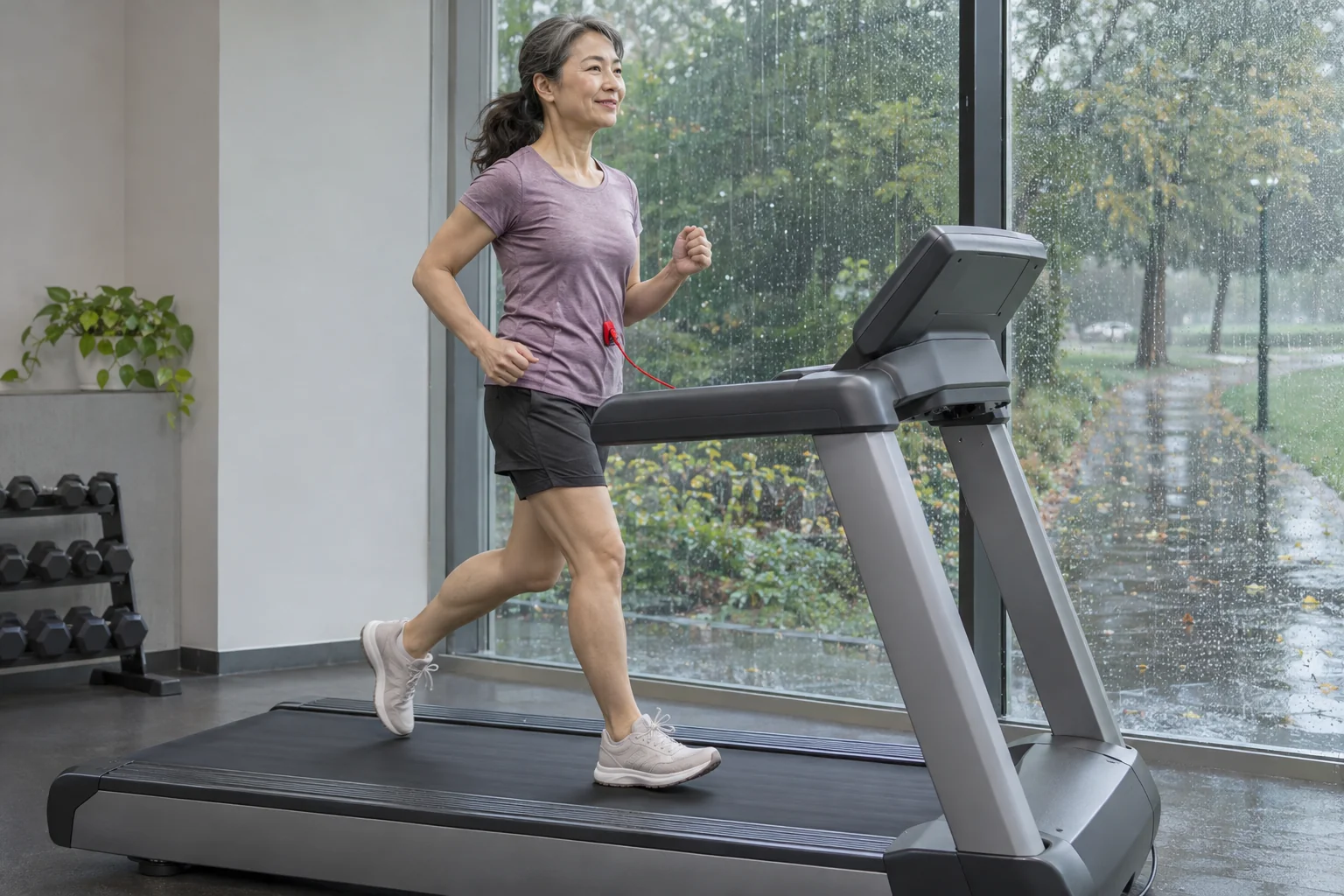 Enlarge image
Questions for interpreting the next shared session
Recall three things separately afterwards: what you did, how it felt and what you would like similar or different next time. These are not research scores or another performance log. One sentence can suffice: it was good being together, but I do not want to keep up every time. Or: it was interesting watching someone calmly handle a situation new to me.
If the companion inspired you, identify the appealing detail. Was it speed, consistency, curiosity or treating rest naturally? The answer helps separate a learnable detail from comparing yourself with the whole person. An example can then become your own decision rather than an expectation for every future session.
If the difference felt bad, you do not need to prove you can handle the same thing. First clarify the situation you want. Shared movement can offer social presence, pleasure or exchanging experience. These do not require equal ability, but do require respecting both people’s participation and boundaries despite differences.
A motivating gap is not a universal competition rule
The virtual-partner experiment interestingly shows how another’s presented ability can influence persistence in a specific task. Runners’ everyday lives involve more considerations. Meaning, personal goals, the companion’s behaviour and opportunities for participation together shape what feels supportive. One laboratory result does not choose your running partner.
A useful example can reveal details beyond finish times: asking questions, changing plans or welcoming an ordinary day. If there is room for these beside a companion, differences need not become a permanent ranking. Your activity’s meaning is not decided by how much more another person can achieve on the same track.
Sources and the limits of practical examples
Feltz, Irwin and Kerr: Two-player partnered exergame for obesity prevention – a virtual partner’s ability gap and persistence in an isometric task. McCormick and colleagues: How do new runners maintain their running? – a longitudinal qualitative study of new runners’ changing experiences. Everyday questions are our own editorial interpretations, not running programmes tested in these studies.
How Futószív articles are prepared: our editorial guidelines.