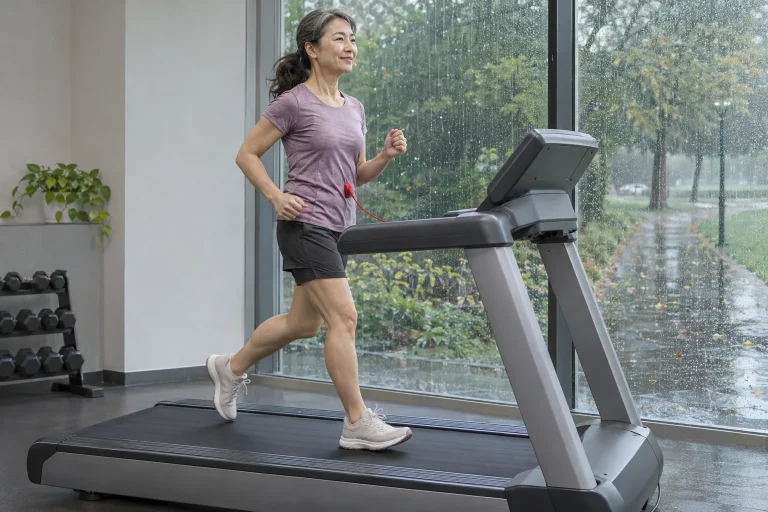
Stepping outside in running clothes can feel different from standing beside a treadmill in everyday clothing. Changing may mark the end of a period of work, recall earlier experiences or simply make movement more comfortable. There is no need to dismiss that personal difference. When explaining it, however, we need to distinguish usable clothing, the meaning attached to it and the claim that a particular outfit changes cognitive performance in its own right.
The well-known lab-coat experiment on clothing’s psychological effects is often reduced to an overly simple lesson: dress for a role and you will immediately perform better. A later preregistered replication with a null result is also part of the story. For runners, this suggests a more nuanced question: what does preparation mean to you, and why might it be an important part of a session without attributing proven special powers to a shirt?
A garment’s material and its meaning are separate questions
A jacket may suit the weather, while trousers may be more comfortable for movement. These are practical properties. Another layer is that the same item may recall a good run, a shared meeting or a peaceful morning. Both experiences can coexist, but for different reasons. When something feels good, we cannot always immediately tell how much each component contributed.
Personal meaning can differ between two people wearing similar equipment. An old top may give you a sense of familiarity, while someone else sees a new, comfortable item as a sign of starting again. Neither approach is therefore generally better. Meaning does not enter clothing in the same way with every purchase, and cannot reliably be deduced from its price or a brand’s story.
The situation is also part of getting dressed. Preparing calmly at home differs from hurriedly changing after work or searching for space in a crowded changing room. If one occasion feels better, the difference need not be attributed entirely to fabric or colour. Time, privacy and interruptions can all contribute to the experience of getting ready.
What did the original lab-coat research claim?
Adam and Galinsky’s 2012 work brought together clothing’s symbolic meaning and the physical experience of wearing it in the concept of ‘enclothed cognition’. In laboratory attention tasks, they compared groups wearing and not wearing coats, and groups wearing coats introduced with different meanings. The original report described better results on some attention measures under conditions associated with a doctor’s coat.
This was not a test of running clothes. It did not examine whether a technical top increases endurance, makes running easier or helps people set off regularly for months. Moving from the laboratory task to everyday running requires separate evidence. An interesting theoretical idea does not, by itself, substantiate a performance promise attached to a sports product.
The role-related meaning used in the study is not identical to your own memory of running clothes either. Calling the same object a doctor’s or painter’s coat in an experimental description differs from associating years of experience with a jacket. These may be related ideas, but the situations are not interchangeable. Understanding a personal story does not require claiming that exactly the same laboratory mechanism is operating.
Why is the replication attempt part of the story?
Burns and colleagues’ 2019 preregistered direct replication focused on the Stroop task in the original first experiment. With more participants and more trials, they found no significant coat effect on response time or accuracy. The result cast doubt on the specific claim that wearing a coat reduces errors in this task.
This does not prove that every personal experience associated with clothing is imaginary. The replication concerned a specified task and effect. It does, however, warn against generalising a widely known early result without limits. Retaining the research uncertainty is more accurate than declaring either that clothes have miraculous effects or that they can have no psychological role at all.
As a runner, this is especially useful to remember when a product presentation promises a direct sporting advantage based on the attention experiment. Ask whether the same clothing, activity and outcome were studied. A comfortable top can be a good choice, but a disputed laboratory finding need not justify the purchase. A practical need is a meaningful starting point in itself.
 Enlarge image
Changing clothes can mark a personal transition
Among the day’s tasks, it can be hard to notice when something different begins. Changing is an easily recognisable action: you put down your work things, take out comfortable exercise clothes and prepare for a new situation. You can regard it as your own cue to begin. There is no need to assume the fabric enhances your brain function in some special way.
The cue’s personal value may lie in what it separates within your day. Some people feel the transition when putting on running shoes, others when locking the door or taking their first steps outside. A different experience is not faulty preparation. Observing your own experience gives you more information than trying to make every session’s mood fit a single prescribed preparation sequence.
The transition is not a binding promise that you must then run. You may notice while getting ready that a different decision is warranted today: you feel unwell, the weather has changed or something urgent has happened. A few minutes spent changing do not oblige you to carry out the original plan. Getting ready can coexist with adjusting to your current condition.
Exercise at home can have its own beginning too
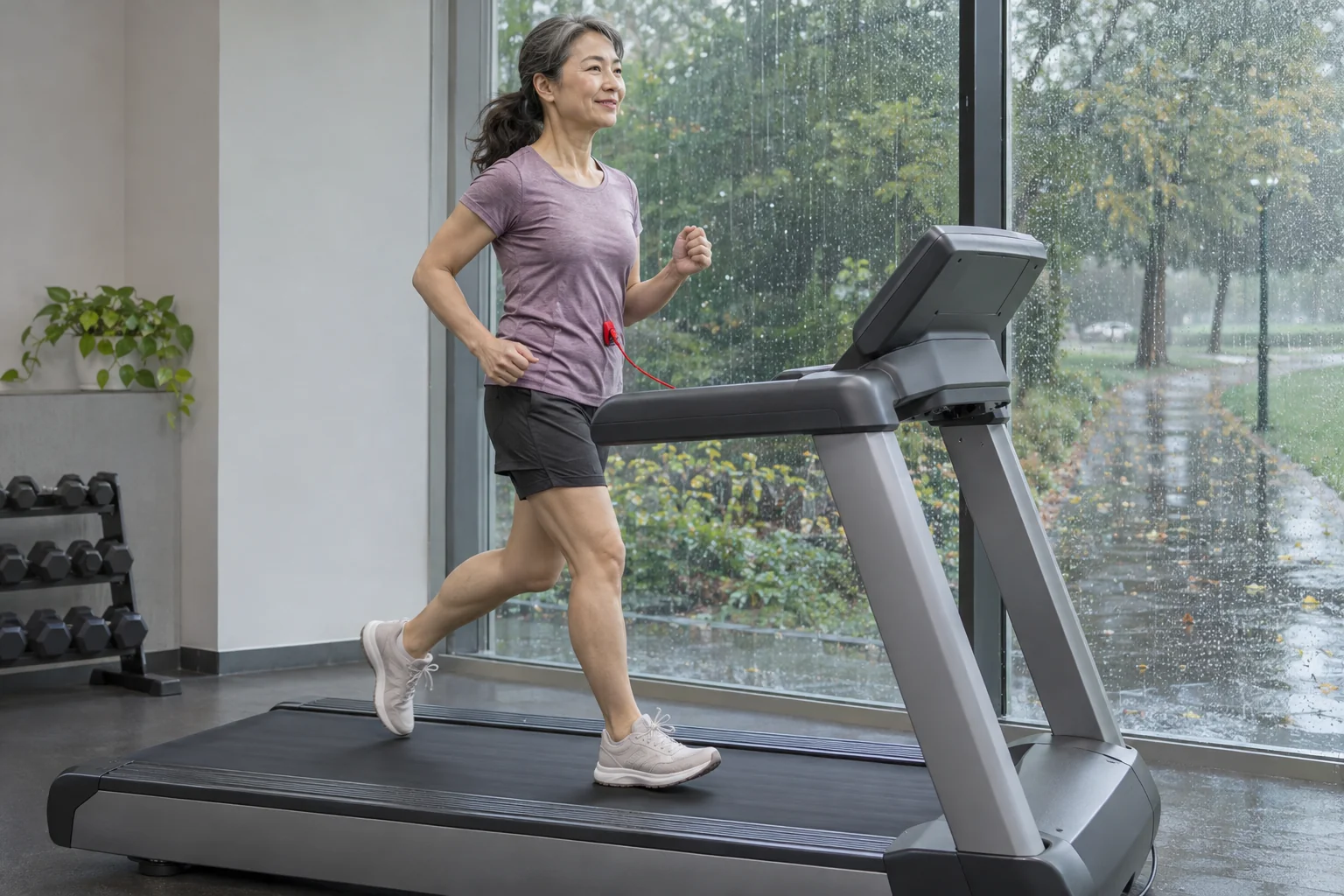
Preparation for treadmill exercise and outdoor running already happens under different circumstances. At home, you may not need to pack, travel or dress for the weather. This can make starting easier while creating a less distinct boundary from the rest of the day. The experience does not establish that either form is psychologically better for everyone; it directs attention towards different components instead.
If the beginning feels blurred at home, you might choose a few simple preparations: comfortable clothes, a clear exercise space and uninterrupted time agreed in advance. These are everyday organisational options, rather than a training protocol validated by the lab-coat research. The aim is to clarify how exercise at home becomes a recognisable occasion for you, rather than precisely copying the ritual of outdoor running.
Someone else may enjoy the absence of special preparations at home. If exercise fits comfortably into their day that way, there is no need to create artificial ceremony around it. A personal cue is useful when it actually helps, rather than becoming another task. Simplicity and a deliberate beginning can coexist, and neither needs a prescribed style of clothing.
Running clothes do not grant admission to an identity
Distinctive equipment can be striking from the outside, but it cannot tell us how strongly someone feels they are a runner. Some people enjoy expressing their relationship with exercise through clothing; others simply wear what is comfortable and available. Personal meaning cannot reliably be read from appearance, particularly from a few fashionable details.
Beginners may find it burdensome to think they must look the part before they can belong among runners. Clothing’s practical suitability matters, but social approval tied to brands and prices is a different issue. You do not need expensive new items to prove the seriousness of your intention. The meaning of your exercise is not determined by the number of products other people recognise.
You are also allowed to like an attractive top or new shoes without looking for a scientific performance advantage to justify it. Liking something, comfort and your own budget are separate considerations. Naming them honestly reduces the need to justify a purchase with a compulsory promise of progress. Enjoyment can simply be enjoyment; every pleasant detail need not become a psychological tool.
Preparation can become a burden when only one version feels right
A favourite starting habit may eventually become a rigid condition. If the usual top is not clean, the whole session already seems wrong; if a step is missed, the run feels uncertain. There is no need to jump to a diagnosis. It is worth noticing, however, whether your personal anchor supports choice or increasingly restricts it.
Everyday flexibility may mean accepting several comfortable options. You need not deliberately run in uncomfortable clothes or deprive yourself of a habit you love. There may instead be room to accept another version suited to the circumstances. The studies do not prescribe this exercise; it is a way of considering your own organisational options.
If preparation is associated with strong, persistent anxiety or compulsions that disrupt everyday life, a magazine article cannot establish the cause. Seeking individual professional help is worthwhile in that situation. There is no need to dismiss a problem as merely a sporting ritual, but a favourite running outfit alone does not indicate a disorder either. Its significance can be clarified through your experience and its consequences for daily life.
 Enlarge image
How can you describe more precisely what feels good to you?
The sentence ‘I run better in this’ may encompass several experiences. Clothing may distract you less, staying outdoors in the weather may be easier or you may feel more willing to set off. These are separate questions from performance measured under the same workload. Describing the experience more precisely does not require immediately attaching a laboratory finding or general rule to it.
You might notice when the feeling of readiness appeared: during preparation, as you stepped outside or once you were moving. It is also worth noticing what else changed that day. There is no need to stage an experiment or rate every session. A few sentences of your own may help identify which aspects of the clothing provide practical help and which carry personal memories or meaning.
Your experience can retain a local scope. You can say that this preparation gives you a more pleasant beginning without recommending it to everyone. This is both more precise and more open towards others. A personal experience is valuable because it helps explain the everyday circumstances of your own exercise, rather than because we turn it into a universal law of the brain.
You can keep the meaning without adding a miracle
Getting dressed to run can be a favourite transition between two parts of the day. It may be a simple practical choice, or a step that currently carries no particular feeling. The lab-coat research story teaches us to link a scientific claim to the specific study. We need not expect clothing to deliver something neither studied nor established in running.
You can preserve the value of your own starting cue meanwhile. If putting on a familiar jacket provides a pleasant beginning, that may be reason enough to love it. Personal meaning attached to exercise requires neither a product promise nor an identical effect in everyone. The most useful preparation lets you choose your next step comfortably and in response to the circumstances.
Sources and research uncertainty
Adam and Galinsky: Enclothed cognition — the original lab-coat attention experiments. Burns and colleagues: An old task in new clothes — a preregistered replication of the first experiment’s Stroop effect, with a null result. The everyday preparation examples are our own interpretations; neither study tested running clothes’ effects on endurance or habit formation.
How Futószív articles are prepared: our editorial guidelines.