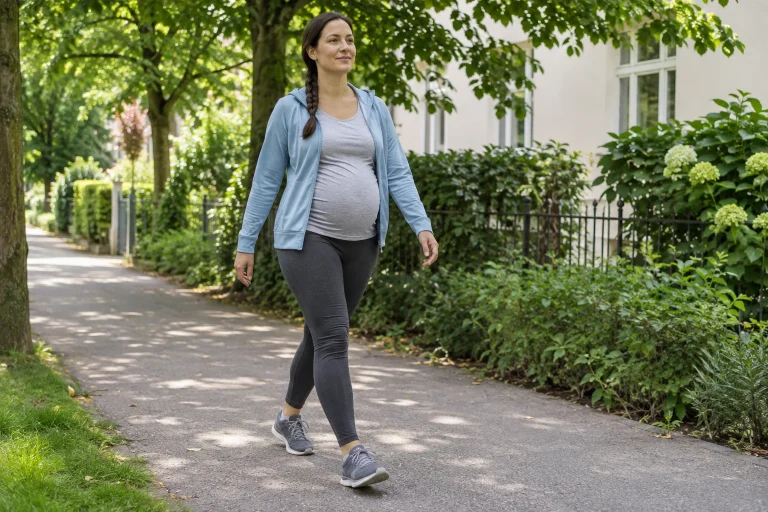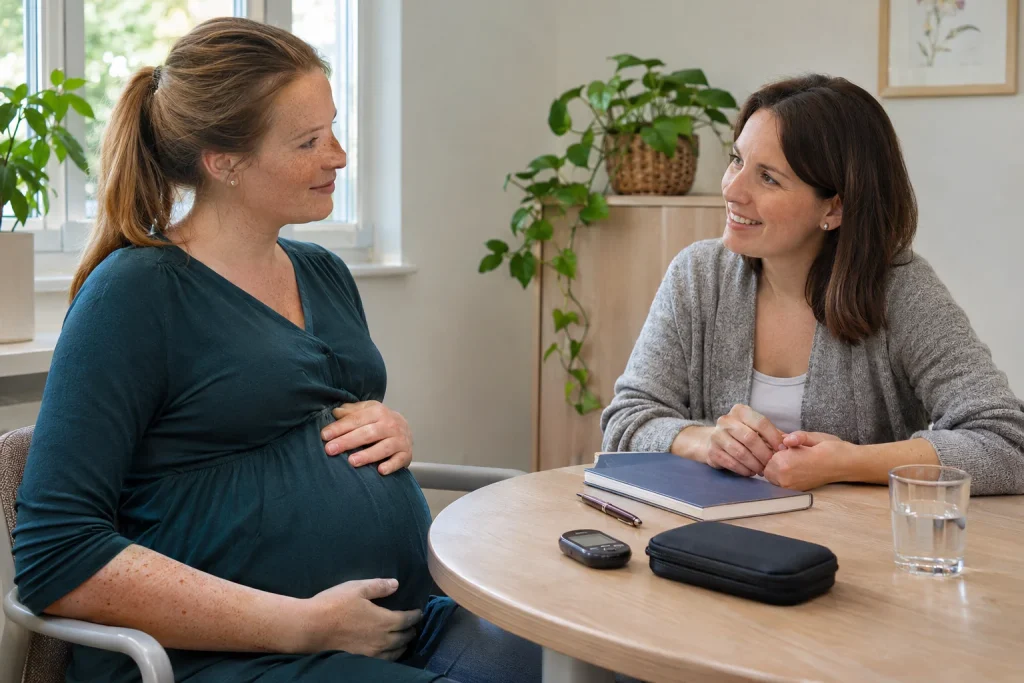
After gestational diabetes is diagnosed, someone who already runs may feel assigned a new sporting task: arrange training more skilfully and the numbers will improve. Activity can indeed be part of care, but within a shared plan involving meals, monitoring and medication when needed. Developing it involves the obstetric and diabetes teams, dietitian and pregnant person together. A running app cannot decide the next step for them.
Here, “After” means the period following diagnosis while still pregnant. Postnatal checks are another topic with different timings and decisions. The useful question now is how individual instructions fit real life: when you eat, work, rest, monitor and move. The aim is not the greatest weekly running time, but followable care and accurate information for professionals.
A good sporting history does not remove the need for a new plan
Gestational diabetes involves high blood glucose developing during pregnancy. The NHS overview explains that it often causes no noticeable symptoms and increased insulin requirements in pregnancy contribute to its development. Do not read the diagnosis as a judgement on work completed as a runner. It does not establish whether you were disciplined enough or create a race task to solve through persistence.
Prepare for the first conversation by helping the provider understand your previous routine. “I exercise regularly” can be too broad. Brief, easy movement close to home differs from a long forest run with travel. Explain changes during pregnancy, what you have already stopped and what remains comfortably manageable daily.
Separate plans from actual days. The calendar may show three weekly outings while fatigue allowed only one in recent weeks. Care needs to know the latter. Accurate reporting is not a poor report card; it provides the basis for guidance followable beyond paper.
Who can meaningfully help with which question?
Clarify who sets glucose targets, teaches monitoring, receives results and handles changes. Team structure differs by institution, so a foreign website’s roles are not a local contact list. The ADA’s 2026 professional recommendations emphasise interdisciplinary cooperation and discussing major changes in activity.
With the dietitian, discuss real meal conditions: work shifts, nausea, shopping opportunities, cultural habits and family cooking. A coach can help implement agreed boundaries but does not determine glucose targets or insulin doses. A running companion may help with shorter outings or scheduling without taking over healthcare decisions.
| Question | What to clarify with the team | Why it matters for daily life |
|---|---|---|
| Monitoring | When, with which device and how should you check? | Timing should not repeatedly clash with travel or outings. |
| Assessment | Who receives results, and through which channel? | Data should not merely accumulate on a phone. |
| Activity | Which previous activities may remain, under which conditions? | A general activity goal must not become a self-assigned running prescription. |
| Deviation | What happens with an unusual reading, symptom or missed meal? | No need to search online for rules during the situation. |
Monitoring has its own timing, not one set by the workout start button
The NHS treatment information highlights individual education about correct measurement, timing, targets and sharing results. Together these create a workable system. Copying online numbers into a notebook is insufficient: you need to know when a reading was taken, its unit and the action attached to a deviation.
Ask about apparently small timing details too. If instructions involve meal-related measurements, clarify how to count time. Request a demonstration if device operation is uncertain, then describe the steps back. Repeating an uncertain procedure does not improve accuracy; early clarification may prevent misunderstanding long datasets.
Online examples may use different units. Record personal targets in the provider’s unit rather than making treatment decisions through mental conversion. Watch heart-rate or energy data are not glucose measurements even on the same phone. A shared screen does not make data interchangeable.
 Enlarge image
Keep records that explain the situation to care providers
The NIDDK patient information explains that following measurement results helps the team assess whether the care plan works. Personal targets and monitoring schedules still require agreement with clinicians. A useful diary is a traceable account of reality, not a points competition for favourable numbers.
If requested or considered useful by the team, add short circumstances beside results recorded as instructed: activity type and timing, a different meal, illness or an unusual schedule change. Do not supply a ready-made explanation for every line. “Lunch was later” is observation; “That definitely caused the reading” is causation that one occasion cannot establish.
Mark missing data honestly too. Inventing a missed reading or importing one from another time hides the practical problem. Instead ask how the system can fit your work. The diary should not be a performance product presented more attractively than reality to professionals.
- Make timing and the team’s requested measurement conditions clear.
- Distinguish activity actually completed from activity planned.
- Briefly name unusual circumstances without independent diagnosis.
- Know beforehand how and when to send data, and when waiting for the next routine report is insufficient.
Fit activity into care rather than chasing the number
Physical activity can support glucose management, but not every activity or exertion suits every pregnancy. NIDDK specifically recommends discussing continuation of previous more vigorous activities such as jogging. A general weekly activity amount does not assign you that much running. Obstetric circumstances and current treatment also contribute to the decision.
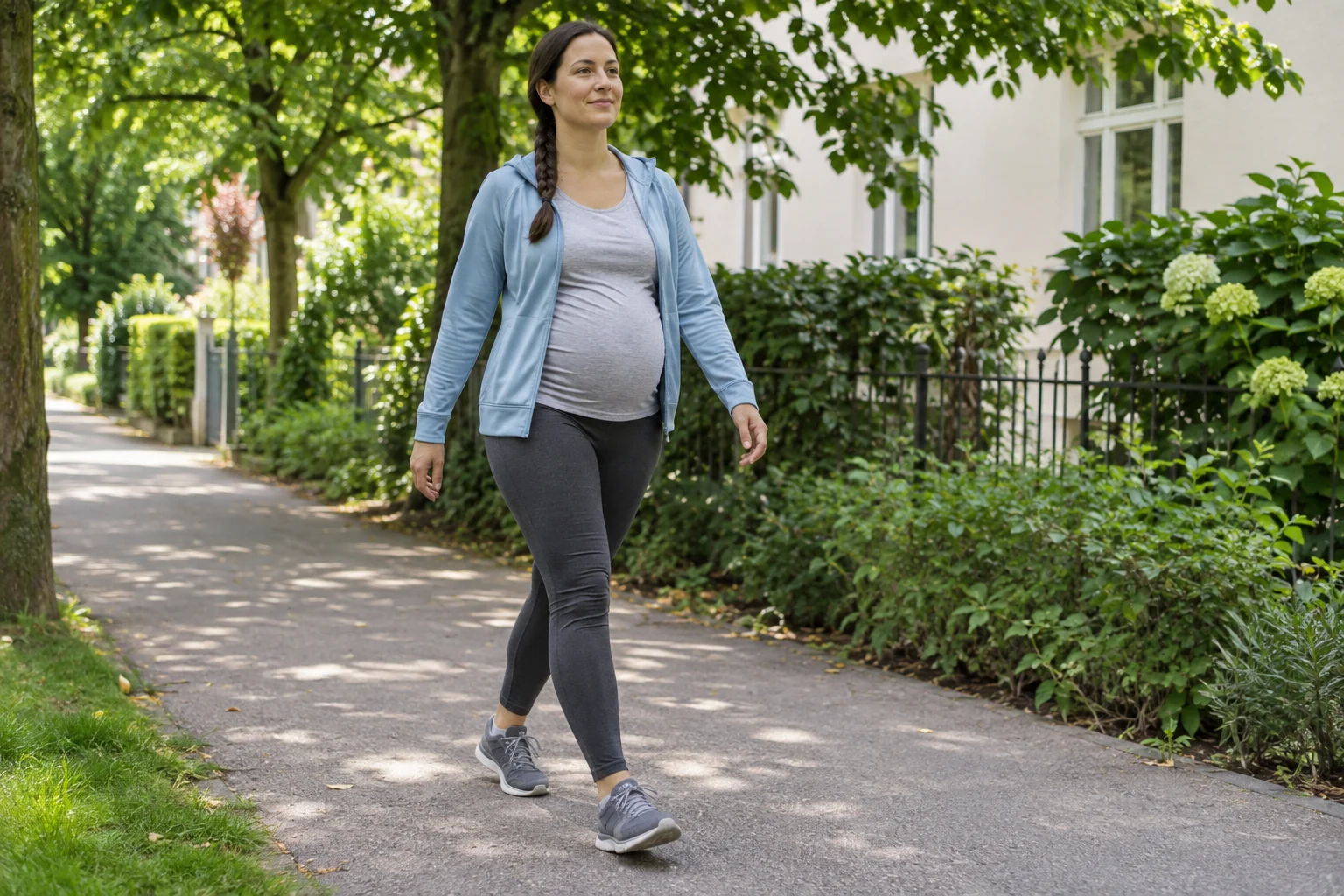
Specific discussion helps more than “Can I train?” Describe the outing: travel, location, ease of interruption and timing relative to individual meal and monitoring routines. A nearby walk differs from a long trail loop with few exits. The article does not choose for you; it helps frame the question.
Do not independently “Correct” an unusual result through extra running. That creates improvised exertion following data rather than the agreed plan. Follow individual instructions for deviations and report as directed. Activity need not prove that other help is unnecessary.
Meals and treatment are not running-fuelling experiments
NIDDK describes food choices, amounts and timing within a jointly developed meal plan. Familiar running carbohydrate strategies, fasted trials or another athlete’s diet cannot be copied unchanged. Tell the dietitian what you enjoy, what you can cook with and when eating is difficult.
Think beyond food as fuel to the entire pregnancy-care context. The family table need not be divided into competing “Sporting” and “Diabetes” rules. Bring concrete situations to the dietitian: workplace food, time to eat and meals prepared together at home. These can yield individual guidance; general prohibited-food lists rarely reveal the actual obstacle.
If medication is needed, do not adjust dose or timing for training. The NHS notes treatment may change as pregnancy progresses and low glucose can occur with insulin. Request individual guidance on recognition, immediate actions and seeking help. Good preparation means knowing this beforehand, not searching sports sites for dosing while unwell.
Three real scheduling clashes and useful questions
The first is an early work start. Running previously happened before departure; now monitoring, breakfast and travel overlap. The useful question is which part can be rearranged and how, with care-team agreement, rather than fitting everything unchanged. A previous routine is not a compulsory benchmark in changed pregnancy circumstances.
The second is a weekend outing. Others eat later, the walk may run long and your equipment stayed at the accommodation. Do not solve this through improvised fasting or extra activity. Clarify practical conditions beforehand and tell others if a different schedule is needed. Meals and checks can have space without sharing every health detail.
Third, a runner tries to follow every recommendation accurately, yet the team advises changes. This can feel like failure, but review is part of care. Explain concerns and what seems hard to implement. Cooperation does not require immediately welcoming every change; understood reasons and achievable steps matter.
 Enlarge image
What should you take to the next appointment?
Bring requested monitoring data, an accurate current treatment list and a few specific questions. Make days since the new plan understandable rather than presenting your entire running history. Report device difficulties too: access, replacing supplies or workplace measurement opportunities are more than technical details.
Questions can be simple: “May I do this brief activity at this time? Which deviation needs earlier help? Whom do I contact if unwell or unable to follow meals? When will results be reviewed before the next appointment?” Together they describe shared working arrangements in which sport is not an isolated island.
New or severe illness should not merely become a note for the next check. Clarify acute actions beforehand with your care provider; life-threatening situations require emergency help. The diary lets the team follow the process, rather than turning every change into data waiting for the next appointment.
A sustainable routine sometimes means a smaller sporting programme
An individual care plan is useful when followable on an ordinary Tuesday, not only a free weekend. That may require less travel, a shorter shared outing or another activity if considered appropriate by care. Different priorities at this life stage can coexist with a previous sporting identity. An app need not validate every well-arranged day.
The main shared outcome is a clear routine: you know your tasks, monitoring times, how to share data and whom to ask for help. Activity can be valuable and enjoyable within it, but cannot replace checks or necessary treatment. Changed circumstances naturally invite another discussion, rather than invalidating previous effort.
Sources
- NHS: gestational diabetes
- NHS: treating gestational diabetes
- NIDDK: individual care planning and monitoring
- ADA: Diabetes Care, 2026 – management of diabetes in pregnancy
How Futószív articles are prepared: our editorial guidelines.