Composition receives much attention when choosing a sports gel, yet packaging can suddenly become the main question during a run. The sachet jams in a pocket, wet hands slip, the torn-off piece has nowhere to go and residue makes equipment sticky. These are practical problems worth learning about during training. Using packaging is a skill of its own: retrieval, opening, consumption and waste storage can form one manageable sequence.
This guide is for adult recreational runners and helps handle a product already included in their own plan. It gives no gel, fluid or caffeine schedule. Check suitability, ingredients and instructions separately, following individual professional guidance with a known allergy or illness. Practical packaging does not make every gel necessary on every run. Nutritional purpose and manageable use are related but separate questions.
First identify the exact sachet
A product family can include different flavours, caffeinated and non-caffeinated versions, and other compositions. Packaging colour may not identify them reliably. Before leaving, read the exact name, ingredients, allergen information and instructions for the product. If several versions have distinct roles in your own plan, make them recognisable in packing too. A quick glance during running needs to build on earlier checking.
The Australian Institute of Sport material on sports gels addresses differences in composition and conditions of use. Sachet size alone is not a precise portion or nutrient measure. Use information for the actual product you carry in your plan. If wording is difficult to read, do not infer ingredients with certainty from the pack’s resemblance to another.
Check the date, intact seal and any transport damage too. Review reserves kept in a running bag for a long time occasionally. A leaking, damaged or uncertain sachet should not stay among usable supplies. Your inventory routine can be simple: usable products go in a recognisable place, damaged packs are separated and storage instructions continue to be followed.
Test pocket size with real packaging
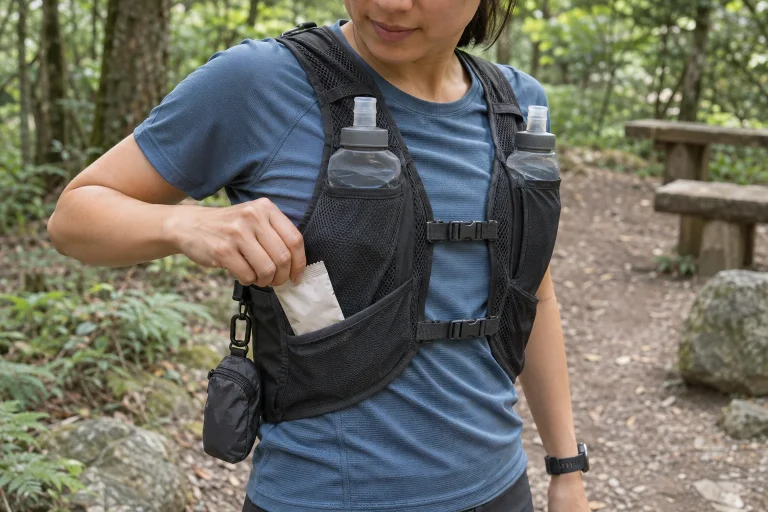
A pocket easy to reach in an empty vest may behave differently when full. Put in the actual packs you intend to take, then wear and adjust the equipment according to the manufacturer. Is the sachet top accessible? Does it jam beneath the zip? Can you retrieve one without the rest falling out? You can check these while standing. A dry packing rehearsal needs no running but reveals many problems ahead.
Many similar packs in one pocket may be harder to track. If your plan uses several versions, separate locations or a clear order can help. Keep the system easy to remember. Every sachet need not have a complicated individual code if two well-separated places suffice. Markings should not obscure important product information or damage the seal.
Test access with actual clothing too. Gloves, an upper layer or rain jacket may cover the pocket, and a bottle can change vest tension. Placement that worked in another season may therefore need checking again. Brief movement can reveal whether a sachet edge bothers you or contents shift. Comfort and safe product access matter together.
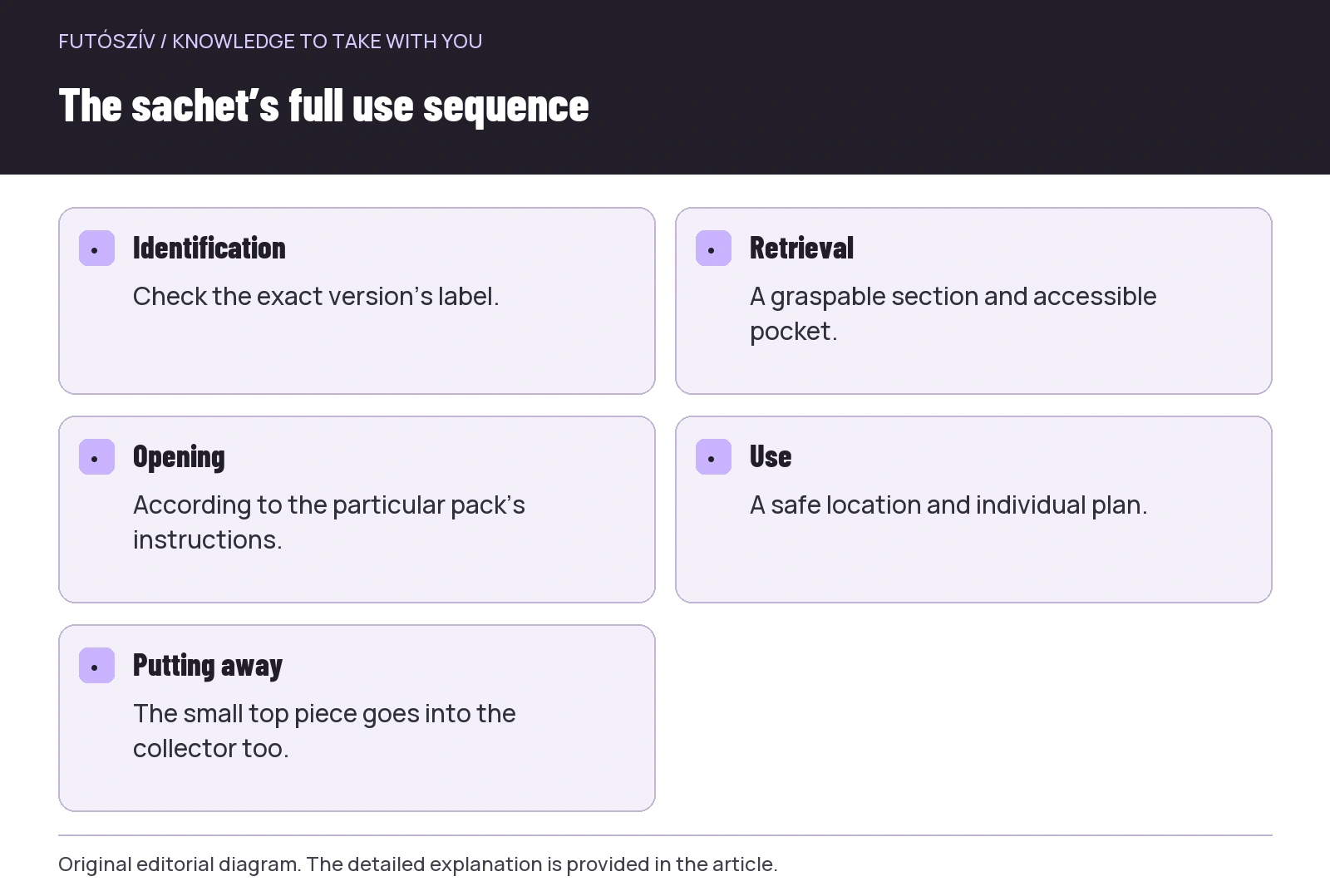 Enlarge diagram
Text version of the diagram
- Identification
- Check the exact version’s label.
- Retrieval
- A graspable section and accessible pocket.
- Opening
- According to the particular pack’s instructions.
- Use
- A safe location and individual plan.
- Putting away
- The small top piece goes into the collector too.
Learn opening from the product instructions
Sachets may have a marked tear point, different top construction or another opening solution. Examine the particular pack and follow manufacturer instructions. The Science in Sport usage information , for example, describes tearing the top off the sachet shown and squeezing out contents. This is a product-specific opening example, rather than a brand recommendation or rule for every pack. Another design may require a different action.
Try the pack first in a calm, clean setting. Hold it as appropriate under the instructions and observe the opening produced. An opening too small may make squeezing difficult; a sachet torn in the wrong place can leak more easily. The task is learning intended opening rather than forcibly modifying the pack. If it is difficult for you to handle, note that as a practical product property.
Do not try to fix a stuck opening with your teeth or a sharp tool while running. If more attention is needed, stop somewhere safe. Packaging frustration can easily distract from traffic, stones or a descent. An appropriate stop may be part of use. The aim is calm handling rather than proving speed while moving in every circumstance.
Give the torn-off top a place too
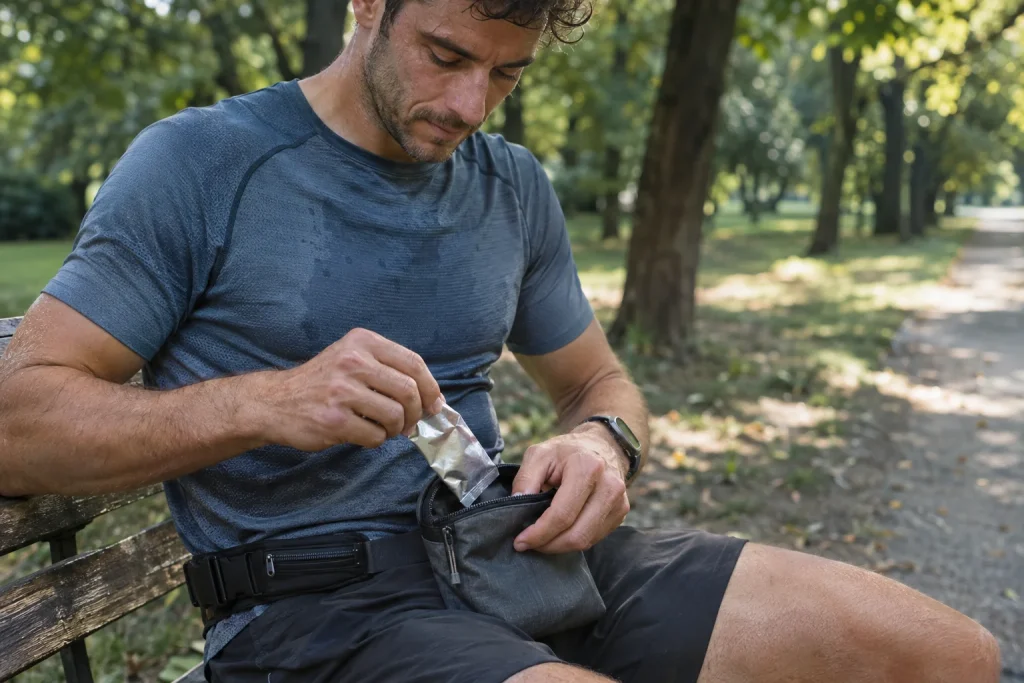
Before opening, think through what happens to the small top piece. Depending on design, it may remain attached or become separate; learn your own pack. Do not release the torn piece or make holding it in your mouth part of the routine. If dropped, small waste remains on the route just like a full sachet. Its collection place should therefore already be accessible when opening.
Keeping a designated, suitably closable or cleanable place for opened packs may be practical. Choose something that prevents sticky residue spreading among phone, food or clean clothing. Test the collection pouch’s shape and size with your equipment. An opening too small can be as obstructive as a pocket left open and easily emptied. Make the whole system workable from retrieval to putting away.
Do not mix waste storage with products still to use. Two separate areas remain easily recognisable when tired too. If you later use the number of wrappers to recall the run, separate collection can help, but a sachet does not establish the precise quantity actually consumed. Some may remain inside or have leaked. Preserve that uncertainty in your notes.
| Action | Detail checkable in advance | Common mistake |
|---|---|---|
| Retrieval | A graspable sachet section and accessible pocket | The whole supply falls out |
| Opening | The intended action for that product | The pack tears in the wrong place |
| Consumption | Individual plan and product instructions | You remember another product instead of the label |
| Putting away | A separate place for used packaging | A sticky sachet joins clean equipment |
| Waste | The small top piece is retained too | A small packaging piece stays on the route |
Choose the place during running too
On a narrow trail, steep descent, stairs or road junction, retrieval can demand too much attention. Your plan can identify a safer section or stopping opportunity. Product use does not authorise unexpectedly stepping in front of others or stopping somewhere dangerous. Look around and adapt actions to surroundings. The routine needs to fit shared-route use too.
If gloves need removing, practise where to put them as well. Do not balance several small objects at once without a free hand. Bottle, sachet, top piece and gloves together can already make a complex situation. A simpler sequence helps: safe place, prepared collector, necessary product, then putting things back appropriately. Order depends on your equipment, but object locations can be named beforehand.
Rain or wet hands can change grip. Test within equipment and product conditions of use rather than seeking artificially dangerous circumstances. A short note after a real session may already reveal an overly tight pocket or hard-to-grasp edge. Change placement before the next outing first, rather than immediately judging the whole product unusable.
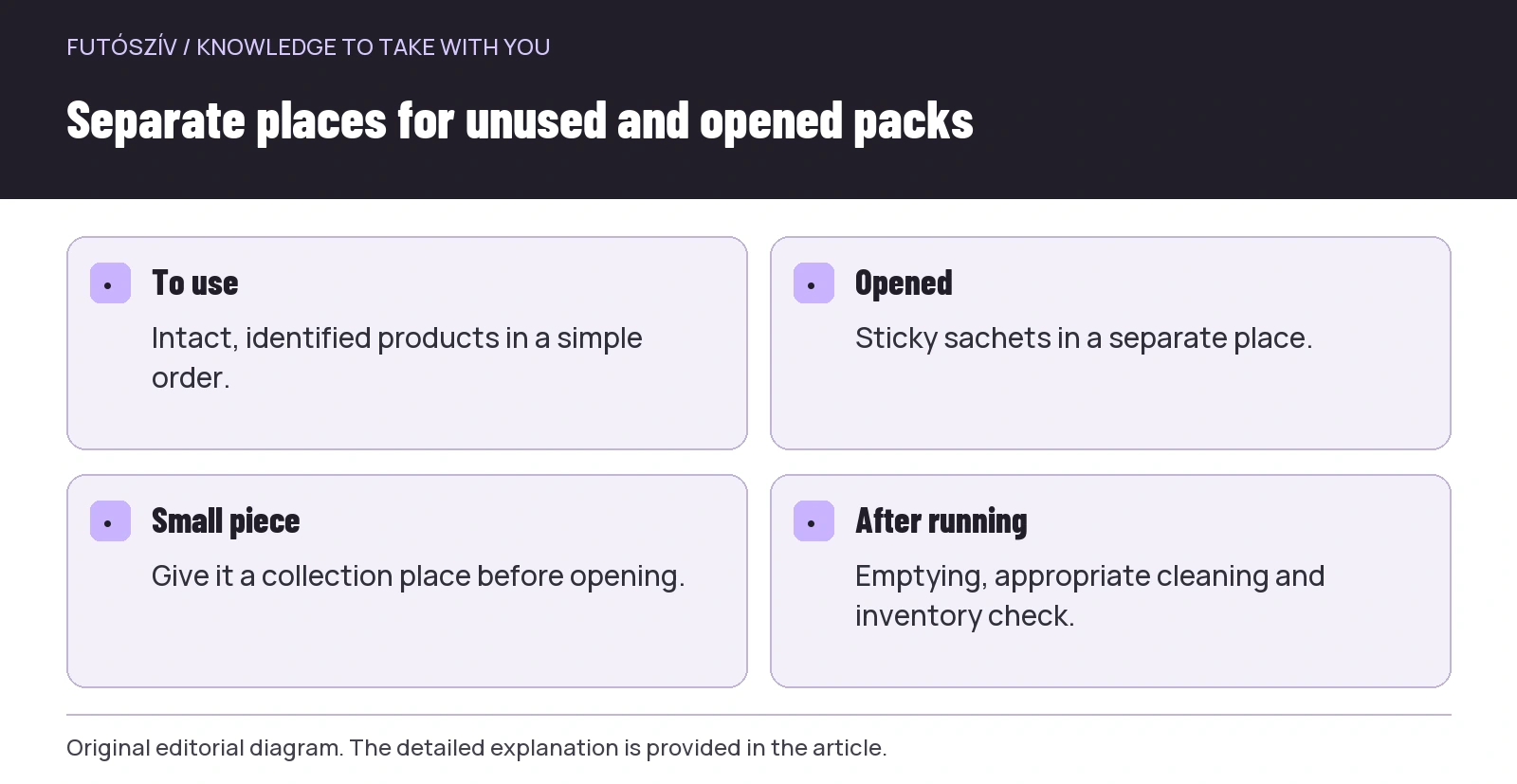 Enlarge diagram
Text version of the diagram
- To use
- Intact, identified products in a simple order.
- Opened
- Sticky sachets in a separate place.
- Small piece
- Give it a collection place before opening.
- After running
- Emptying, appropriate cleaning and inventory check.
Water and product consumption may belong together
Sports gels have different use conditions, and for many versions consumption with water forms part of manufacturer guidance. Read the particular label alongside your personal fluid plan. An easily opened sachet does not resolve missing water access. If using it at an aid station, verify actual water availability and personal cup or bottle conditions too. Handling food is one part of the full fuelling routine.
The AIS material on usage considerations highlights training practice and individual tolerance. A packaging trial alone is not a nutrition rehearsal. An easily opened sachet does not tell you whether its ingredients fit your plan. State the two checks separately so convenience does not hide a personal dietary question.
Learn race waste rules in advance
Your event’s regulations determine where and how to dispose of waste. The official Arc of Attrition by UTMB event information , for example, asks participants to carry packaging to designated collection and prohibits littering. This is a specific event example, rather than an identical penalty system for every race. For your own start, read current conditions and adapt pocket or collection-pouch use accordingly.
Do not rely on a sachet dropped by the runner ahead to mark the appropriate place. Use designated collection and organiser guidance as references. If you cannot safely put packaging into the bin, carry it onward in your own storage. Organised, considerate actions at a station also help volunteers and other participants. Design your system so retaining waste does not become an unexpected additional task.
A small packaging fragment dropped on green space and a sticky sachet left on the course are waste in nature too. Separating clean and used packs can simply prevent releasing something at the last moment. If a piece falls while opening, deal with it under safe conditions without endangering yourself or others. Preventive packing reduces such situations, so practise the full sequence at home.
Close the packaging loop after the run
At home, empty waste storage and follow appropriate local disposal arrangements. Do not classify dirty packaging solely by apparent material; local rules and product information can help. Clean sticky parts of the vest or belt according to manufacturer care instructions. The separate container should be appropriately clean and dry before reuse too.
Review remaining products and return them to label-specified storage. A damaged or partly opened pack should not enter the next outing’s unopened supplies without identification. Follow the particular product’s instructions for use after opening rather than assuming unlimited keeping time. Leaving stuck residue and uncertain packaging in the bag for the next run only creates another preparation difficulty.
Finally, write one specific improvement for next time. The used-wrapper collector may need a more accessible place, or the order of products to use may need simplifying. A useful gel-packaging routine connects recognisable products, intended opening and organised storage afterwards. Knowing that chain keeps packaging from unnecessarily distracting you from running and leaves no small forgotten waste along the route.
Sources and further reading
- Australian Institute of Sport: Sports gels
- Science in Sport: Energy Gels – Recommended use
- Australian Institute of Sport: Sports gels – concerns and considerations
- Arc of Attrition by UTMB: Race regulations
How Futószív articles are prepared: our editorial guidelines.