Do not continue training after fainting during a run
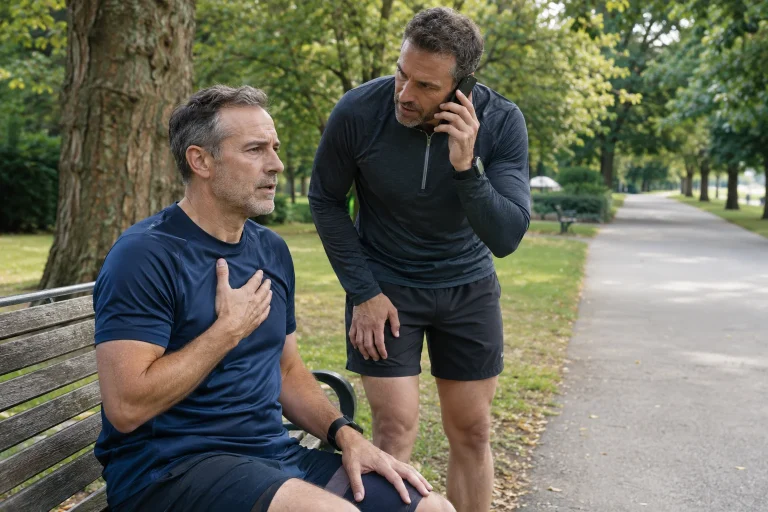
If someone loses consciousness while running, seek urgent help: call 112 in Hungary. If they are unresponsive and not breathing normally, begin resuscitation under emergency-dispatcher guidance and request an AED if available. Waking up or improving quickly does not automatically mean they can continue running. The NHS also lists fainting during exercise as an emergency.
According to the NHS information on fainting , chest symptoms, palpitations, incomplete recovery, speech or movement difficulties and serious injury also warrant immediate help. Use the Hungarian emergency number and explain what happened. Do not wait beside the course for someone to provide a certain diagnosis.
This article is for advance information, not waiting out a current episode. Fainting and feeling faint can occur for many reasons. The runner’s task is to stop that exertion, seek help and convey the story accurately; investigating the cause is a healthcare task.
Feeling faint also deserves attention
You may not have lost consciousness but experienced darkening vision, unsteadiness, sweating or a sense of impending collapse. That still does not make persisting to the next kilometre a good idea. Stop, tell your companion and position yourself to avoid falling. Do not try to continue on a busy road or stairs while unsteady.
The St John Ambulance first-aid guide recommends lying down when feeling faint and help appropriate to the situation. Injury or other particular circumstances also need consideration, with emergency guidance followed where necessary. The aim is not to stand everyone up quickly and send them home.
Discuss new, exertional or recurring near-fainting symptoms with a doctor too. “I did not fall, so nothing happened” is too quick a conclusion. Accompanying chest pain, severe breathing difficulty, fainting or another alarming symptom makes the situation urgent. You do not need to wait for actual loss of consciousness to seek help.
During exercise or after stopping? This is an important distinction
Timing matters for assessment. Were you still running when you fell, or had you stopped and were waiting standing up? Was there slowing down, walking or a longer interval after finishing? Everyday conversation may easily call all these “fainting after running”, but the care provider needs the precise sequence.
The ESC syncope guideline separately addresses events during and immediately after exertion because different causes may be more likely. This is not a reassuring home test: timing alone does not prove a harmless origin. Loss of consciousness during exertion is a particularly important warning sign.
It is therefore inappropriate to automatically say “you just stopped too quickly” after seeing someone collapse at a finish arch. That may have contributed, but current condition determines on-site actions. Consciousness, breathing, accompanying symptoms and any injury take priority over searching for an explanation.
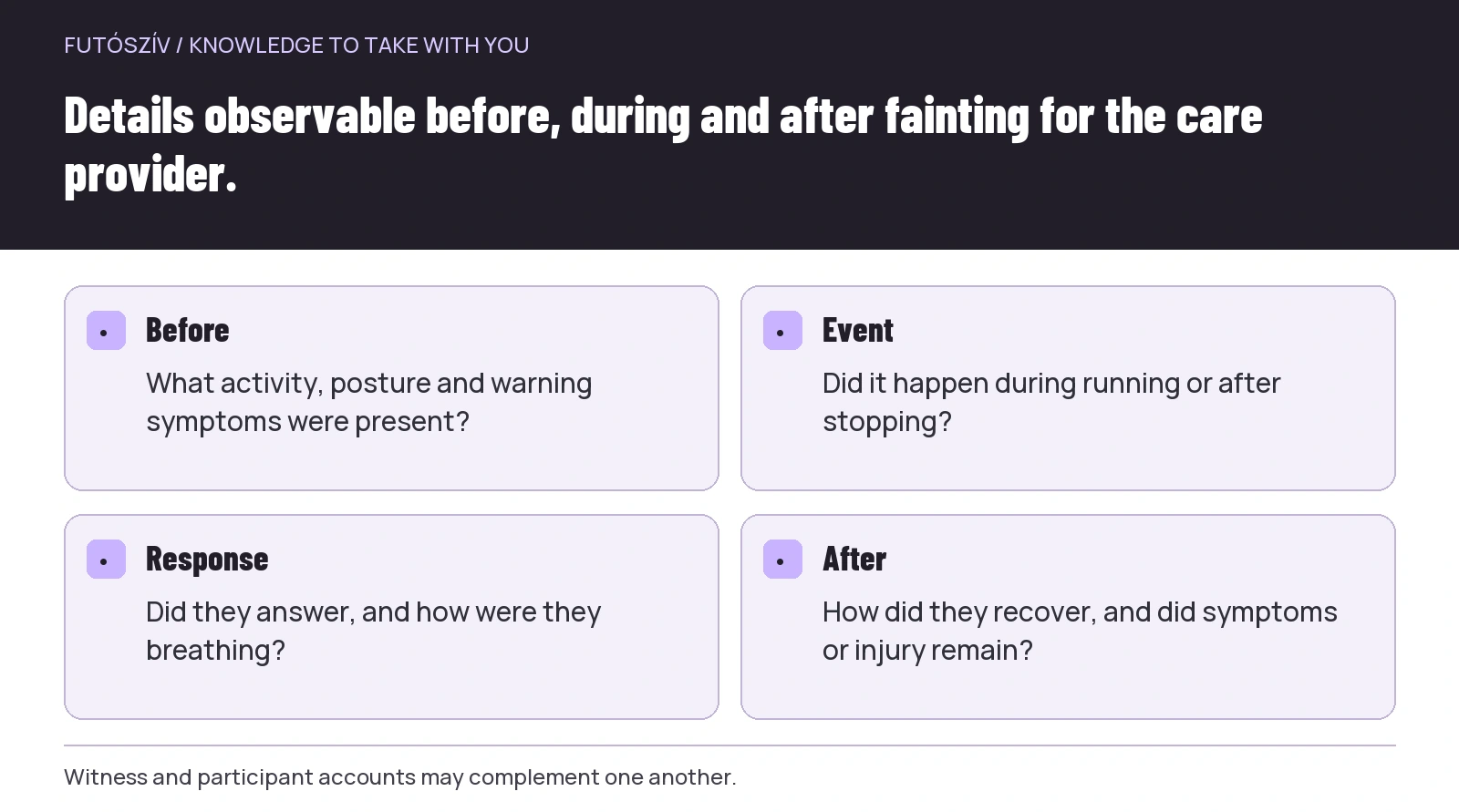 Enlarge diagram
Text version of the diagram
- Before
- What activity, posture and warning symptoms were present?
- Event
- Did it happen during running or after stopping?
- Response
- Did they answer, and how were they breathing?
- After
- How did they recover, and did symptoms or injury remain?
Heat, fluids and food are circumstances, not ready-made diagnoses
The NHS lists several possible triggering circumstances, including heat, insufficient food or fluid intake and standing up quickly. These are worth reporting, but one piece of information should not establish a certain cause. Different kinds of illness can happen on the same hot day, and the runner’s account may be incomplete.
If the person is not fully alert or cannot swallow safely, do not try to give food or drink. Regaining consciousness is not a race to supply refreshments as quickly as possible. Particularly avoid automatically treating loss of consciousness as “low sugar” with an unknown history. With a known condition, tell emergency services about any personal emergency plan.
Weather, exertion, food, fluid and medication history may provide useful information afterwards. Convey these objectively, not defensively: the goal is not blaming the runner. A warning event still deserves investigation even if someone feels they know what they did wrong before the start.
A witness may know many details missing for the person affected
If you saw the event, remember the sequence: how were they moving beforehand, did they report symptoms, did they collapse suddenly and did they respond when spoken to? Say if you do not know precisely how long it lasted too. A brief, honest description is worth more than converting uncertain memory into definite seconds.
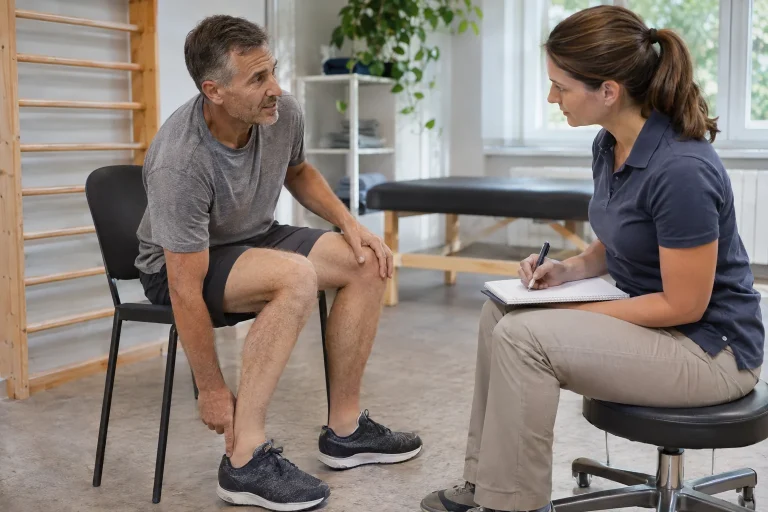
The NICE recommendation on transient loss of consciousness treats detailed accounts from the person and witnesses as an important part of assessment. Questions may concern preceding symptoms, posture, movements, injuries and recovery. As a layperson, you do not need to decide whether you saw a faint, seizure or another event.
If several people witnessed it, do not rewrite one another’s memories into one shared account. Details seen from different positions may complement each other. On site, however, gathering information must not precede help. Documentation follows once care and safety are arranged.
What should the person’s brief account contain?
Once receiving care and able to speak, explain what you remember immediately beforehand. Was there a warning feeling, palpitations, chest symptoms, breathlessness or an unusual headache? Has anything similar happened before, even outside running? Whether the event was sudden or allowed time to sit down matters too.
Describe recent illness, known conditions and preparations used regularly or occasionally. Mention any sudden death at a young age or known inherited heart disease in the family too. You need not judge which detail will ultimately be decisive; the care provider can ask targeted questions from these.
Earlier negative test results are worth showing, but should not close the account. Having been well last year does not replace assessment of a new event. Sporting history, race results and low resting heart rate may be important background without making a cause needing investigation impossible.
Which tests may be considered, and why not choose a package?
The NICE recommendation discusses detailed history, physical examination and ECG in initial assessment, linking further steps to the suspected cause. Longer rhythm monitoring or an exercise test may be justified in some cases; others need a different direction. The care provider chooses this; an identical online package for everyone does not account for your story.
Ask which question a test addresses and which decision follows its result. If symptoms occur rarely, that frequency may matter when selecting monitoring too. Do not expect a snapshot to exclude every possible cause, but do not automatically demand every available test either.
Ask for clear instructions while waiting too. For fainting during exertion, NICE recommends avoiding exercise until further assessment. Do not regard UK care time targets as a promise of Hungarian appointment availability; agree urgency and local actions with your provider. The point is not replacing investigation with your own test workout.
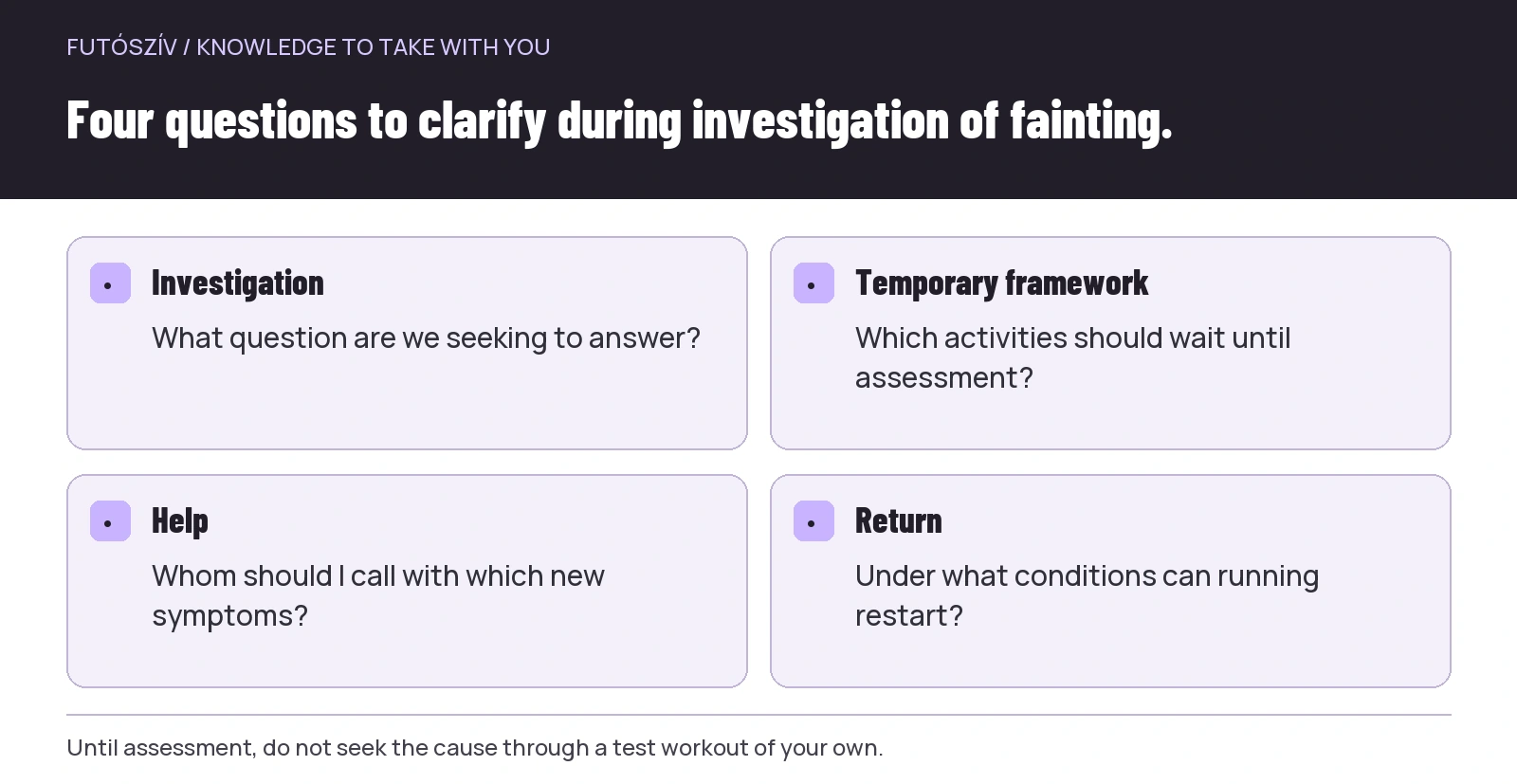 Enlarge diagram
Text version of the diagram
- Investigation
- What question are we seeking to answer?
- Temporary framework
- Which activities should wait until assessment?
- Help
- Whom should I call with which new symptoms?
- Return
- Under what conditions can running restart?
Driving, running alone and other everyday questions
After the event, do not drive yourself to care. Seek personal medical advice about later driving and other activities that become dangerous with loss of consciousness, and follow Hungarian rules. An overseas patient leaflet’s administrative procedure cannot automatically be copied. Clarifying the actual risk matters more than quickly restoring a normal day.
Discuss remote solo running, swimming or working at height too if the cause remains unclear. You need not create your own permanent prohibition list. Request a temporary framework showing what is manageable and what should wait. Clinical instructions should account for real situations in work and everyday transport too.
Agree with family or a running partner how they can help. This might be accompaniment to a review, organising the medication list or simply accepting that you are not training now. Support does not mean constant checking but enabling the agreed safety plan.
A running group should not require someone to get up quickly
After illness, the person affected may want to move on fastest because attention feels embarrassing. The group need not reinforce this. Instead of “You are fine, get up”, seek help appropriate to the situation, make space and stay with them. Embarrassment is not a reliable assessment tool.
As organisers, think through precise location identification, phone access and getting help to the spot beforehand. A park’s popular nickname may not suffice for emergency services. A route briefing can include entrances and access points too. This helps beginner and experienced groups alike.
After the event, share only necessary information while respecting the person’s consent and privacy. You need not turn it into a social-media lesson. Group arrangements can still improve: first-aid training, clear task division and easily shortened routes can contribute greatly to organising later sessions.
Returning is connected to clarifying the cause
There is no running-break duration valid for everyone after fainting. An identified treatable cause differs from ongoing investigation. Ask the conditions for returning, the framework for the first session and when to report new symptoms. Your own decisions need understandable instructions.
If allowed to return, do not try to work off the sum of missed workouts. Aim for a manageable session within a personal framework, with prescribed reviews and reporting. Give the coach restrictions or clearance concerning activity, because “I am well now” does not explain load details.
Uncertainty may remain after the event. Discuss it with your care provider and seek support for returning too. Taking the event seriously is not giving up running. It enables the next decision to rest on clearer information and your own health circumstances.
Sources
- NHS: Fainting
- NICE CG109: Transient loss of consciousness in over 16s, recommendations
- ESC: Guidelines for the diagnosis and management of syncope, 2018
- St John Ambulance: Fainting first aid
- OMSZ: Who can call an ambulance and when?
How Futószív articles are prepared: our editorial guidelines.