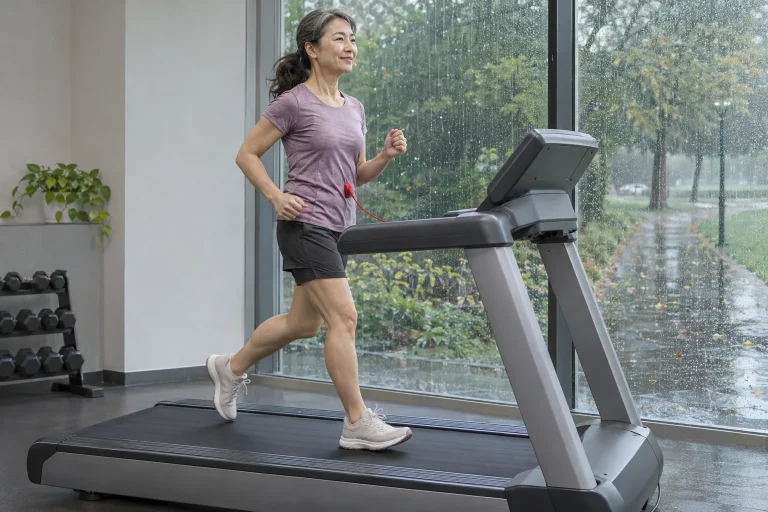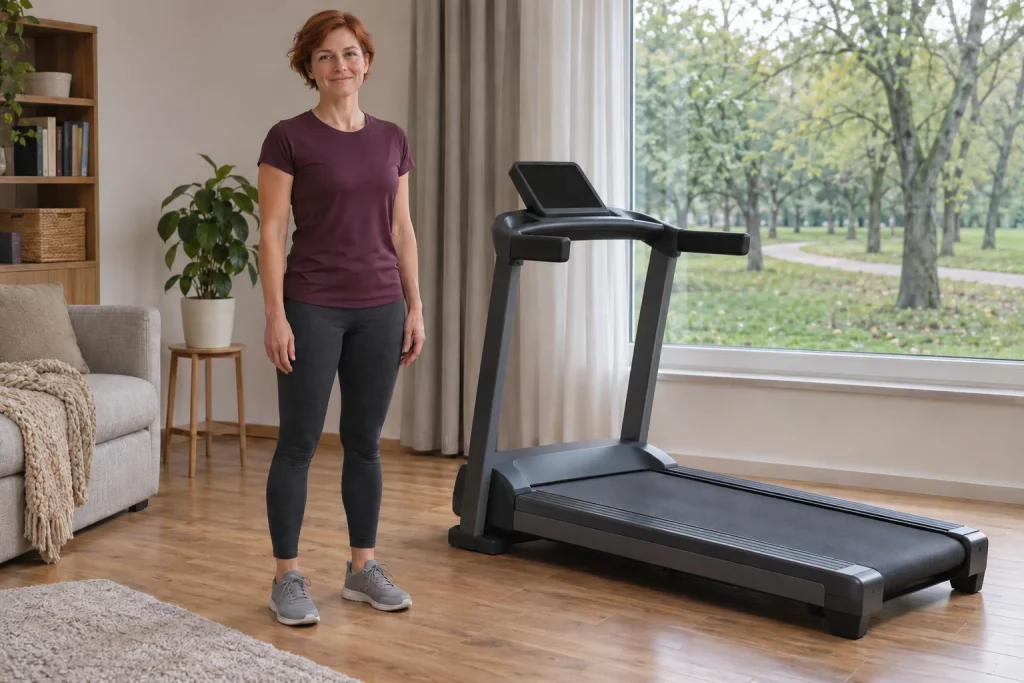
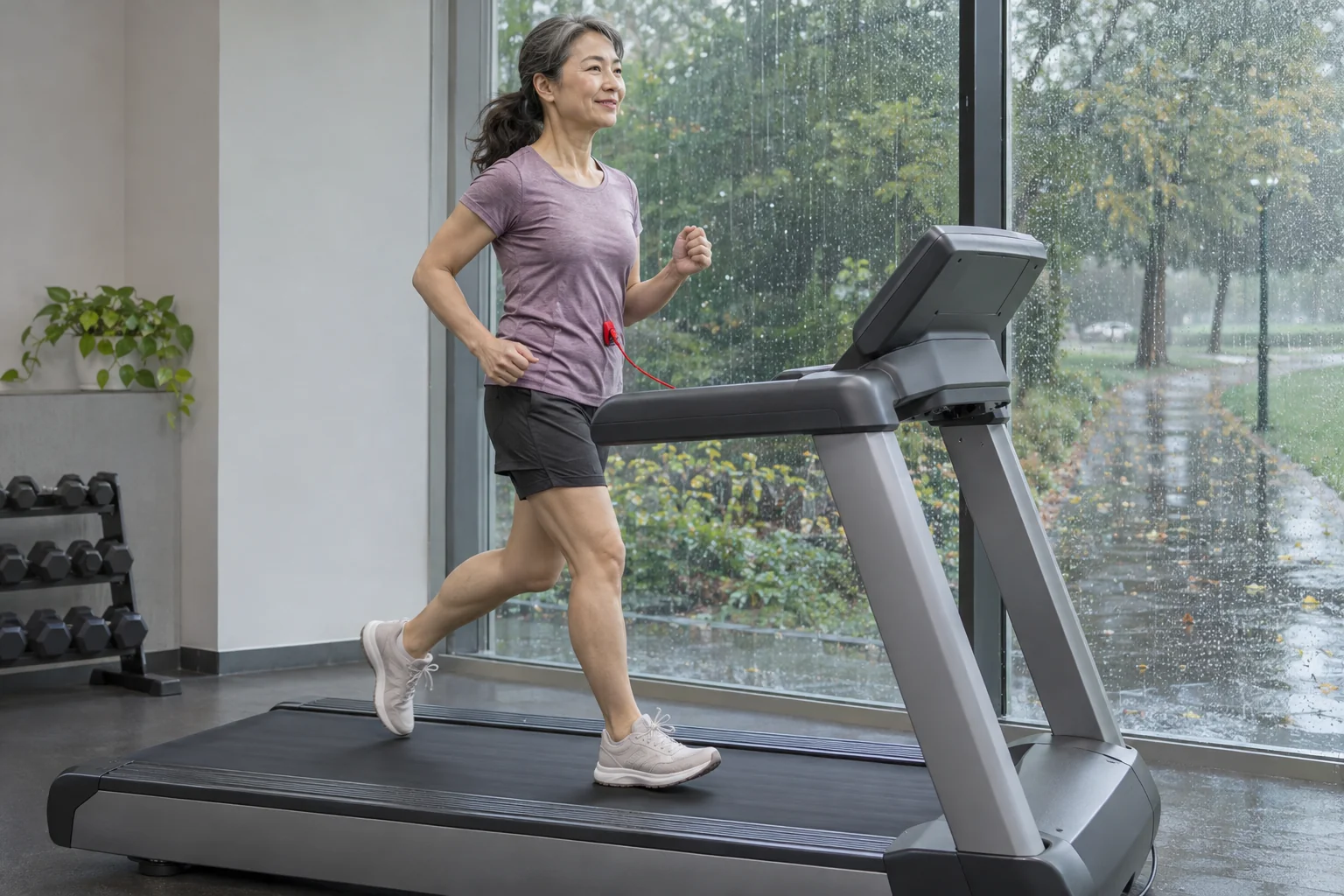
It is raining and the treadmill is in the room, yet something about heading outdoors feels missing. At other times, it is a relief not to choose a route and to move in a familiar indoor environment. These experiences need not compete. Exercise on a treadmill can be enjoyable, while being outdoors may add other elements important to you. Research investigates them through different questions.
Enjoyment in running itself brings together several experiences: pleasant well-being, absorption, calm or occasionally a more euphoric state. A change in one of these in a study does not establish a guaranteed experience for everyone or an overall ranking of settings. Look closely at what happened in indoor experiments and what outdoor–indoor comparisons add. This also gives you more precise questions for your own choice.
The treadmill’s role in research on enjoyment
Siebers and colleagues’ 2021 human study examined treadmill running and walking conditions in sixty-three participants. After the specified moderate-intensity run, they found greater euphoria and reports of lower anxiety compared with walking. The double-blind, placebo-controlled experiment also used opioid-receptor blockade; this did not prevent the changes studied. Endocannabinoids were measured too. The original research asked about a biological mechanism while exercise took place on an indoor treadmill.
This matters to someone who feels indoor movement cannot be a genuine running experience in the first place. The study did not test whether a treadmill or a forest trail was better. It did not include an outdoor comparison of the same run. A positive experience was nevertheless observed indoors. The setting therefore does not rule out such an experience in advance, but the experiment does not promise it for every session at home.
Mechanism and preference are importantly different. A researcher may ask which signalling pathway is necessary for a particular change. You may meanwhile ask where you enjoy moving. They can relate within the broader story without being the same outcome. You might prefer outdoor running while understanding that pleasant experiences also occurred on the laboratory treadmill. A personal choice does not require rejecting a scientific finding.
Well-being can take several forms
After exercise, someone may feel quietly satisfied, more lively or simply calmer. These are not necessarily different strengths of the same state. Consider timing when naming the experience too: the middle of a run, the moment it ends and looking back later can differ. Expecting euphoria at the end of every run would unnecessarily restrict what you can personally call a good experience.
Indoor exercise can have everyday value of its own. For example, one fictional reader values being able to exercise within a short, predictable time slot; another enjoys returning to a familiar activity in the same surroundings. This is neither a research finding nor a recommendation about suitability. It illustrates that a run’s meaning need not come exclusively from an intense feeling afterwards. You can describe the situation that matters to you in your own words.
A research questionnaire measures what it asks about. Enjoyment, pleasant or unpleasant feelings, excitement and fatigue may be separate variables. If an article narratively turns them into a single happiness score, it smooths away those differences. As a reader, identify which feeling was measured and when. This makes it easier to understand why differing findings in two studies can both be meaningful.
 Enlarge image
What does comparing outdoor and indoor settings add?
In 2017, Turner and Stevinson compared running in an outdoor green environment and a gym in twenty-two adults who ran regularly, using a repeated-measures design with randomised order. Participants completed the second half of the six-thousand-metre task at maximal effort. In that study, none of the analysed affective or exertion outcomes differed significantly between settings at any assessed time. The original research therefore counters the idea that every comparison must demonstrate a greater advantage for being outdoors.
In the same year, Niedermeier and colleagues examined a different task: three-hour mountain hiking, indoor treadmill walking and a seated control condition in forty-two healthy participants. Mountain hiking produced more favourable outcomes on several affective measures than the control, and on some measures than indoor walking too. This randomised crossover study concerned hiking and walking. Its duration and package of experiences differed from the previous running experiment.
The two findings need not be seen as cancelling one another out. Researchers examined different participants, tasks, durations and measures. Interest in natural environments does not mean every endpoint will improve in every comparison. The value of indoor opportunities likewise does not make scenery, routes or the experience of a place irrelevant. The precise question is always which component was associated with which outcome under the particular circumstances.
A screen is not simply the outdoors brought into a room
In 2018, Neumann and Moffitt studied forty participants running on a treadmill with a virtual environment or while viewing neutral images. Affective and attentional measures did not reveal a virtual experience that was better in every respect. Immersion in the virtual environment was associated with some positive variables, while greater post-run enjoyment was also found in the neutral-image condition. The original experiment compared specific visual conditions, rather than testing an arbitrary television programme at home.
In another study from 2017, thirty participants ran at a self-selected pace while viewing a still nature image, moving nature imagery or entertainment content of their own choice. Distance covered and certain affective outcomes followed different patterns: greater physical performance and the more favourable happiness measure were not associated with the same condition. The full study therefore shows why performance and experience must be treated separately. More stimulation or a longer distance does not automatically translate into one better well-being value.
Exercising in front of the television may be pleasant entertainment in your own life, while on another occasion it may distract you from what you want to attend to. You can discuss this as a personal preference without classifying a screen as universally happiness-inducing or experience-spoiling. The research lesson is to be specific: what did someone watch, how was the content selected, and which experience variable was measured? Without these details, with a screen and without a screen are overly broad categories.
| Component | Possible personal question | What should you not assume automatically? |
|---|---|---|
| Setting | Why do I like this environment? | One setting is better for everyone |
| Visual content | What does the selected image or programme add? | Nature on a screen is the same as the route |
| Attention | Do I want conversation, absorption or entertainment? | Every direction of attention produces the same experience |
| Looking back | What was pleasant about that session? | Only euphoria counts as a positive outcome |
The machine’s usability may be part of the experience too
In 2019, Carraro and colleagues examined the use of four treadmills with fifty-seven trained runners. Alongside enjoyment, participants reported on ease of use, stability and appearance. Certain perceived qualities, including aesthetic judgements, were associated with enjoyment of use. This user-experience study does not prove that a more expensive or attractive device makes everyone feel better. It does show that the relationship with equipment in an indoor setting can be studied.
The word setting can therefore conceal many things. Imagine two indoor sessions: in one, the machine and room are familiar; in the other, every operation is uncertain. The story is about more than having a roof over your head. The actual use situation differs. This is an editorial example, rather than a purchasing recommendation or a claim that uncertainty causes one particular hormonal change. It simply names more precisely the experiences an indoor label can combine.
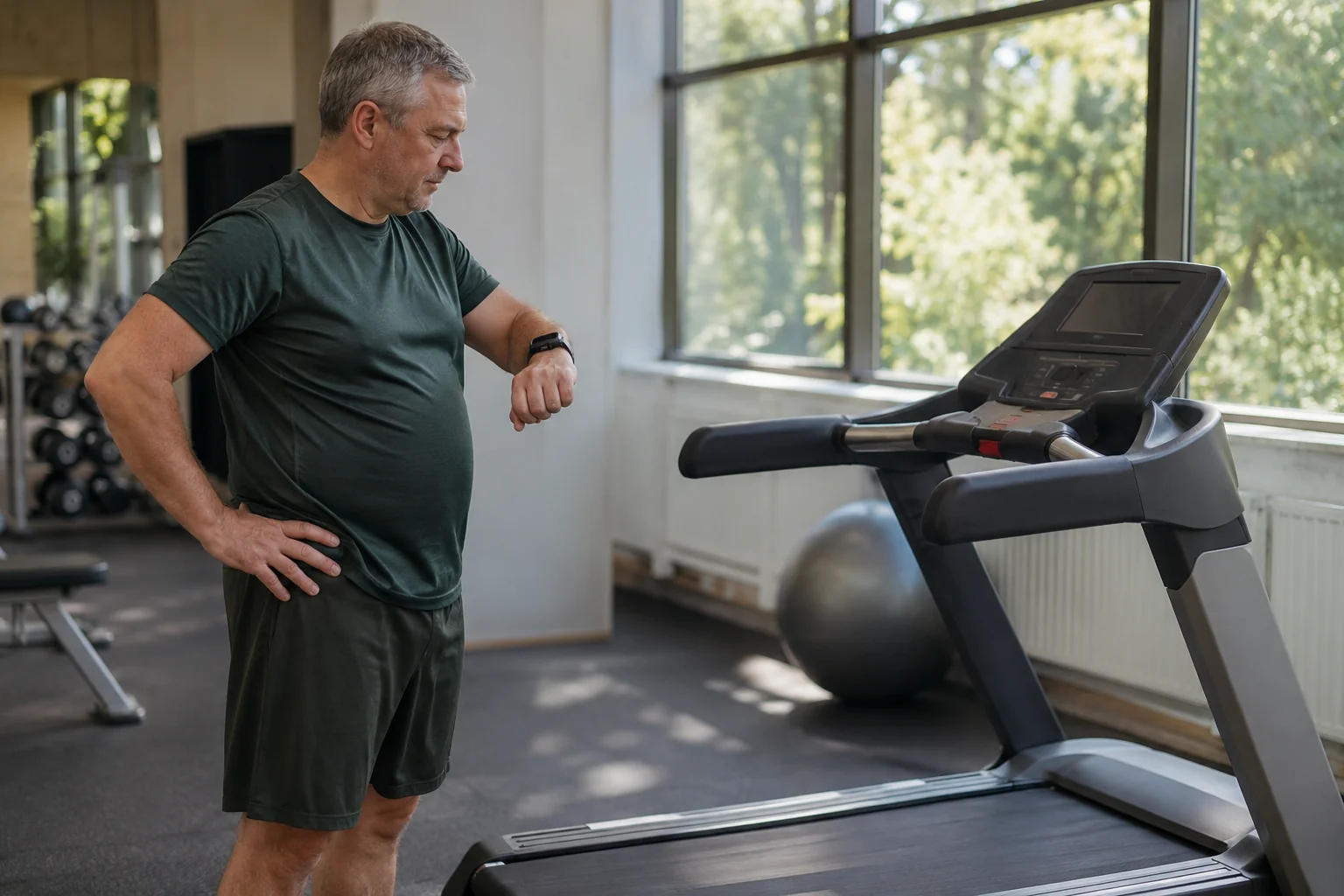
Thinking about experience should therefore be separated from ranking objects. First name what is missing or what works: the quietness of the space, predictable access, company or what you want to do during the session. A general promise of running enjoyment does not answer these questions. Understanding the studies does not require buying new equipment, and the generic treadmill on the cover is not a test result for a specific model.
Your preference need not become a biological obligation
You may almost always seek the experience of a route, with indoor exercise only an occasional option. For someone else, the treadmill is their preferred, familiar setting. A research group average does not automatically rewrite either personal choice. Saying “I like this” is not unscientific: it names your own experience. It would become an overstatement if you derived a compulsory rule for everyone’s enjoyment from it.
When looking back curiously on a session, you can distinguish several questions. What was starting like? What held your attention? How did you feel when you finished? These are not diagnostic scales, and you need not score each one. They help you find the detail that matters to you behind liked it or did not like it. You need not use this to decide whether you experienced the runner’s high studied in research.
Seeking a pleasant experience should not turn into forcing euphoria. The experiments described produced data under defined conditions, rather than exercise instructions for everyone to follow. A restrained, calm or simply ordinary session may also be valuable to you. Understanding an experience differs from achieving an expected state. Your choice of setting can remain personal when you do not compete with a laboratory result.
 Enlarge image
Indoor movement as a running experience in its own right
Research reveals a nuanced picture: pleasant changes in well-being have been measured on treadmills too, while environmental comparisons depend on the task and participants. Outdoor scenery, indoor predictability and selected visual content open up separate questions. They are not different casings for the same happiness switch. Scientific interpretation involves the exercise, situation and measured feeling together.
Next time you decide where to exercise, naming a consideration that suits your day may be enough. Perhaps you look forward to the route; perhaps you appreciate easy access to a familiar indoor option. Enjoyment can appear in both stories, in different forms and at different intensities. Research helps explain that possibility; you still name your own experience.
Sources
- Siebers and colleagues, 2021: treadmill running and investigation of opioid signalling
- Turner and Stevinson, 2017: affective outcomes of indoor and outdoor running
- Niedermeier and colleagues, 2017: mountain hiking and indoor walking
- Neumann and Moffitt, 2018: virtual environments and the treadmill experience
- Physical and Emotional Benefits of Different Exercise Environments Designed for Treadmill Running, 2017
- Carraro and colleagues, 2019: treadmill usability and enjoyment
How Futószív articles are prepared: our editorial guidelines.