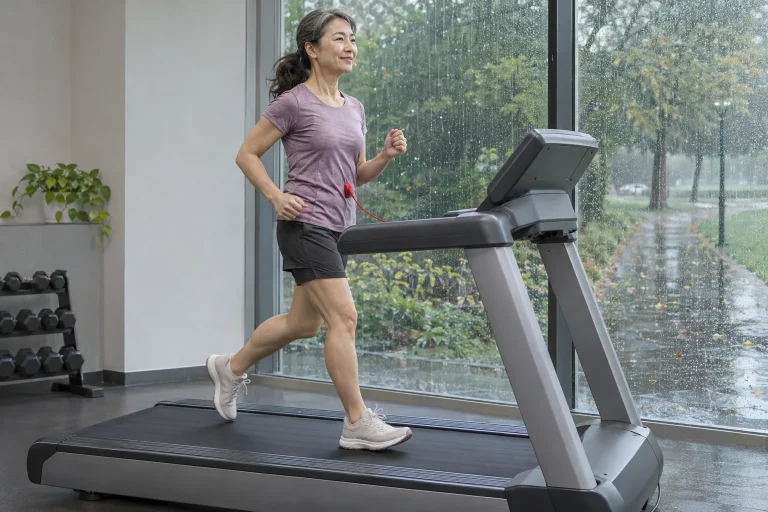
After running, you sometimes feel livelier, switch between tasks more easily or simply enjoy the rhythm of movement. We often attach dopamine’s name to such experiences. Researchers ask more precisely: can brain dopamine release be detected in a particular exercise situation, and how does it relate to performance on a measurable task? Two human PET studies illustrate why this is interesting. An earlier treadmill study found no significant change in its selected measurement, while a later cycling design provided data on dopamine response and reaction time.
Dopamine is not another name for a good mood
Dopamine is a nervous-system signalling substance studied in relation to receptors and different neural processes. The word alone does not mean one feeling. Motivated behaviour, reward processing, movement and a response in a particular task can be separate research questions. Calling every pleasant experience a “dopamine rush” loses both what we felt and what a study measured. Runners benefit from separating these because personal good mood is not a direct molecular measurement.
For example, Osugo and colleagues’ 2025 study in healthy people using a pharmacological intervention separately analysed relationships between D2/D3 receptor signalling, reward processing, motivated behaviour and experienced pleasure. Movement and reward outcomes did not change identically in every comparison. This is not running research or advice to change medication. Its conceptual lesson is that a receptor-signalling system can be studied in relation to different functions; naming them all one happiness level is insufficient.
Everyday examples can distinguish them too. “I felt like setting off again”, “I feel pleasant now” and “I solved a task quickly” are different statements. They make sense as personal reports, but their chemical explanation is not ready simply because they belong to the same day. Researchers choose specific endpoints precisely to avoid measuring the entire human experience with one overly broad word.
What did the 2000 treadmill study look for?
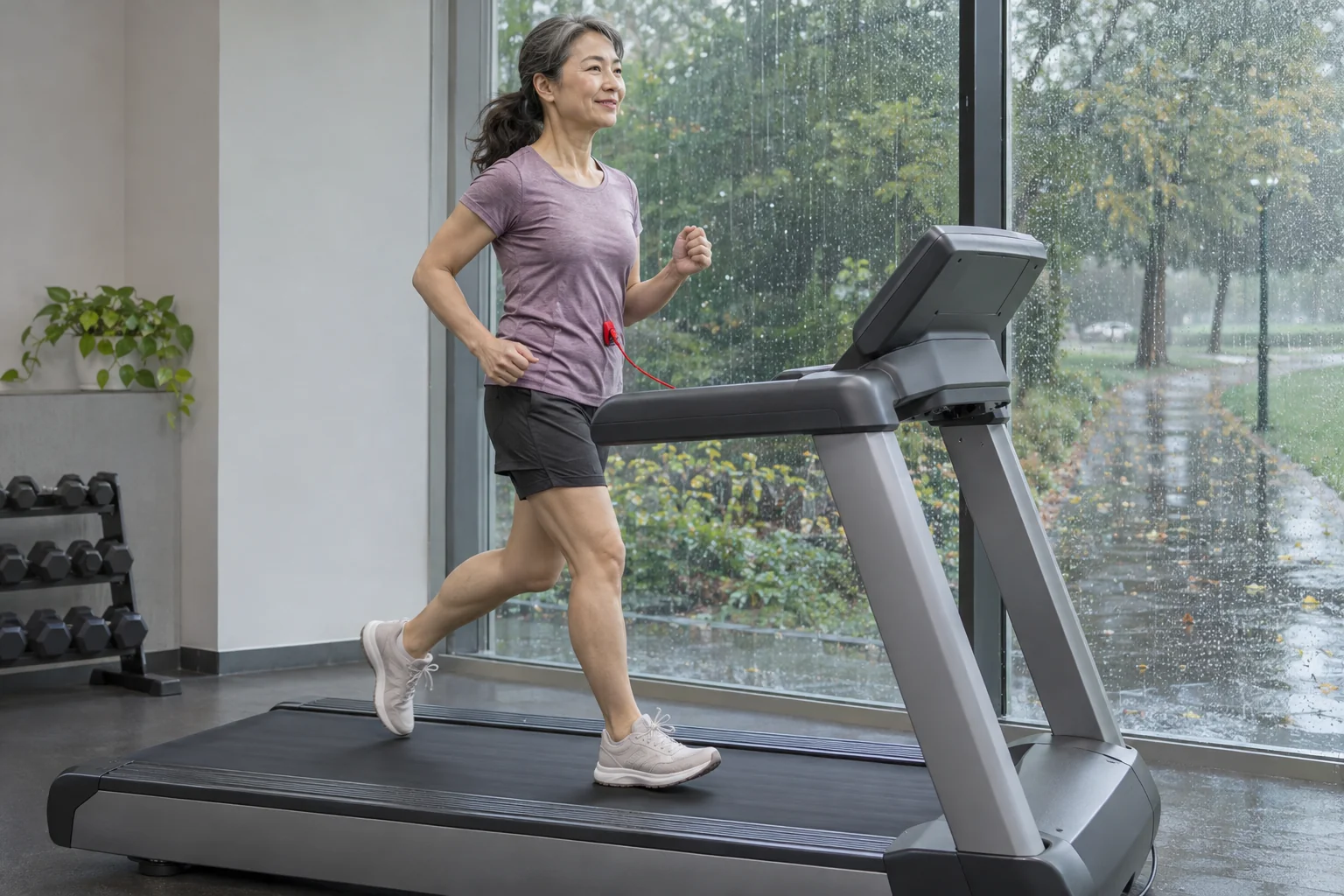
Wang and colleagues compared resting PET measurements and measurements after thirty minutes of treadmill running on separate days in twelve healthy volunteers who exercised regularly. They used carbon-11-labelled raclopride to examine D2 receptor availability in the striatum, specifically the putamen. Measurement beginning after the run found no significant difference in the selected receptor data relative to rest. The authors accordingly did not detect a substantial change in synaptic dopamine concentration in this design. The paper did not claim the whole brain remains unchanged during activity in every situation.
Read this as an important finding rather than a failed story. Researchers asked a specific measurement question and did not obtain a convincing difference using that method. Readers preserve this accurately by retaining the situation: who was studied, when, in which brain region and with which signal? A general claim of “no dopamine response” would be broader. Nor must any pleasant feelings runners experienced be considered unreal because of the instrument result.
Measurement timing is a particularly useful reading point here. The brain signal was examined after running, not at every moment of the activity. This does not require inventing an assumed, unmeasured peak. Simply retain the study’s time frame. A finding matters because it clearly defines which question it informs, rather than answering every possible one. This also prepares comparison with later, different designs.
 Enlarge image
What did the 2024 cycling research add?
Ando and colleagues also used raclopride PET in their multi-experiment human research. In its imaging component, they examined brain dopamine release during supine cycling in sixteen participants. The measured response was associated with improved reaction time on a Go/No-Go task. Two further experiments with separate participant groups investigated task responses using electrical muscle stimulation and arm-circling conditions. The paper pointed to dopamine’s possible neuromodulatory role in reaction-time change. It did not determine a general amount of running pleasure, and the PET component did not involve outdoor running.
Supine cycling may initially seem far removed from a park run. For research, however, it allows a design connecting activity, imaging and a task differently. This explains why the specific protocol deserves reading alongside a title. “Exercise” connects the studies without making them identical experiments. Body position, timing and the behavioural endpoint may differ.
The association with reaction time is intriguing human data without needing immediate extension to every cognitive ability. Faster completion of one task is not improvement in every everyday decision. Give the paper’s finding appropriate meaning by retaining the task name and measurement conditions. Scientific precision here is more than caution: it identifies the new observation and further questions it can connect to.
What does reaction time in a Go/No-Go task mean?
The basic idea is to respond to one signal and withhold a response to another. Response time therefore belongs to a defined perceptual and action situation. This differs from asking how happy, content or calm the participant felt. “Mental performance improved” in science news can thus be much broader than the response originally examined. Naming the task precisely helps prevent reaction time becoming a complete personal ability assessment.
For an illustrative rather than research example, imagine two games. One requires reacting quickly to the appropriate signal; the other requires remembering details of a complex story. A performance change in the first does not tell us the second’s result. A report of pleasant feeling is a third question. Running and brain-function research is rich precisely because different tasks and measurements can address these. One indicator need not take on every role.
Pause briefly over causal explanations too. An association between receptor-signal change and reaction-time change is important. Revealing the complete process, however, may require more than placing two series side by side. The paper’s additional experiments served more detailed questions. A runner’s task is not to calculate such an association from their own good mood, but to understand which human function was actually studied.
Interpreting PET data also requires knowing the tracer
RadiologyInfo’s professional information explains that PET uses a selected radioactive tracer to provide information about molecular processes. Different substances address different questions. Dopamine studies therefore cannot be reduced to “they photographed the brain”. Receptor availability interpreted from raclopride binding and a measurement model is not simply all the dopamine in a tank. Read instrument data within the procedure’s precise conditions.
Brain-image colours alone do not rate performance or experience either. Colour may indicate binding changes, differences between conditions or a statistical result. When exercise news shows a brain image, find its legend. Which substance was used, which region analysed and what comparison made? Without these, it is easy to read greater pleasure or “brain performance” into an image where researchers asked another specific question.
Your sports watch data form another category again. Heart rate, movement speed or an algorithmic load estimate are not direct brain dopamine measurements. They may provide sporting information about your day, but are not the procedures used for molecular claims. “My dopamine must have been high today because my pace was good” therefore combines personal impression with an assumed mechanism. Pace and experience can be named without inserting an unmeasured chemical value between them.
How can the two different findings coexist?
When comparing the earlier treadmill experiment and later cycling experiment, first identify the shared question, then the differences. Both examined human activity and brain dopamine signalling, but in different sporting situations and at different times. One detected no significant change in its chosen measurement; in the other, a behavioural task change was associated with the observed signal. This justifies neither “running does nothing” from one nor “all activity guarantees a dopamine rush” from the other.
| Research detail | What should you compare? | Why does it help? |
|---|---|---|
| Activity and body position | Treadmill running or a cycling setup adapted to imaging. | It shows how similar the actual situations are. |
| Measurement time | When were imaging data collected relative to activity? | It preserves the finding’s time frame. |
| Behavioural endpoint | Was it reaction time, an experience report or another task? | It avoids renaming one result as another. |
The scientific question does not close here; it becomes more detailed. Under which conditions is change detectable? Which task does it relate to? Would another group or activity show the same? These questions say more about genuine progress than opposing two short headlines. A newer paper need not refute everything earlier; it may open the same field from another side.
 Enlarge image
Your next run’s value need not be justified by one molecule
If returning to a task feels easier after a run, you can report that as a precise personal observation. Preserve the specific experience: what was easier, when and in which situation? You can call it pleasant, invigorating or simply a good day. It need not become a personal dopamine diagnosis, and you need not seek a pace expected to guarantee a molecular peak. The studies presented did not provide that kind of personal optimisation programme.
Dopamine and exercise research is interesting precisely because it can place targeted brain and behavioural data alongside lived experience. Different measurements offer a more detailed picture of human functioning while answering different questions. Your running story can be social, quiet, energetic or ordinary. Research does not diminish it or need to explain every part with one word. The useful question is what a particular study taught us; your experience can remain yours in its own precise words.
Sources
- Wang and colleagues, 2000: PET studies of aerobic exercise and dopamine
- Ando and colleagues, 2024: Dopamine and reaction time after exercise
- Osugo and colleagues, 2025: Dopamine D2/D3 receptor regulation of reward processing
- RadiologyInfo: PET/CT
How Futószív articles are prepared: our editorial guidelines.