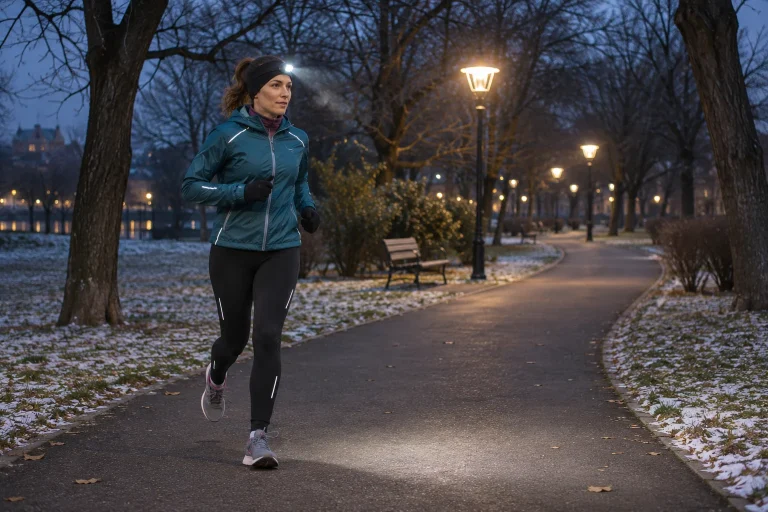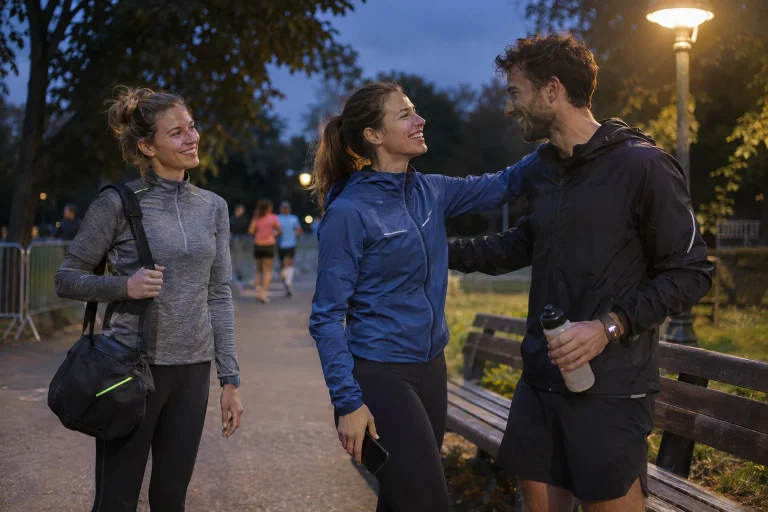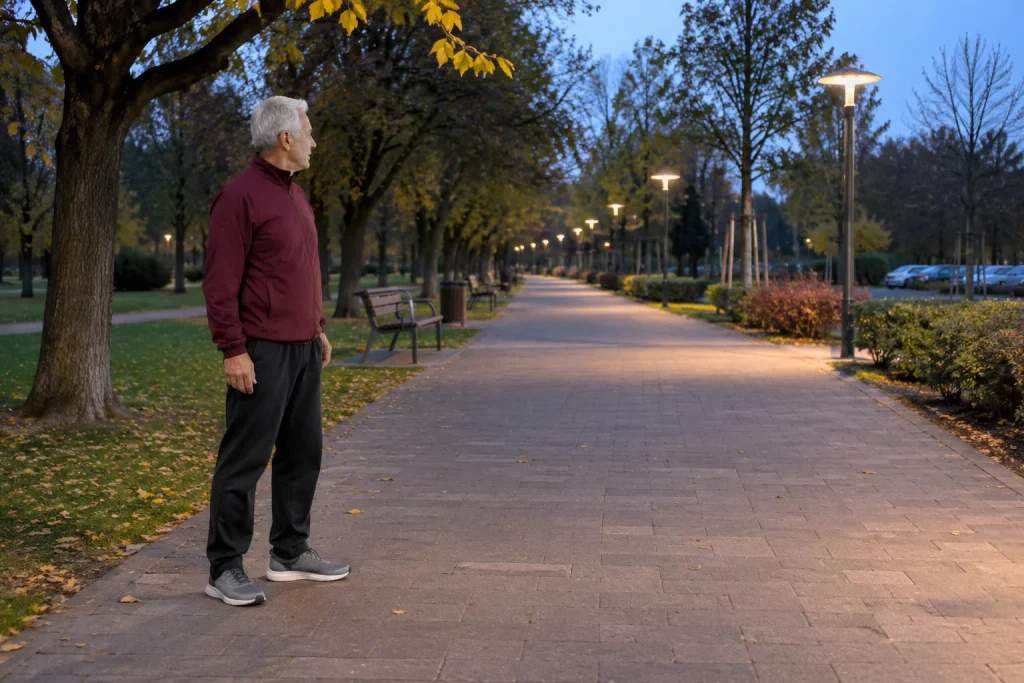
Many lamps illuminate the car park, yet the route still does not feel easy to assess. After stepping away from headlights, the next section is hard to distinguish and distracting patches appear on the shiny surface. “Bright” and “Clearly visible to me” are not necessarily the same. As an older runner, include that distinction in choosing a place.
Report new, persistent or everyday-movement-disrupting visual difficulty at eye assessment too. Sudden sight loss, severe eye pain or a new dark curtain-like shadow may require urgent help, according to the NHS information. Do not continue to another lighting situation to decide the symptom’s significance yourself.
What does glare mean here?
Glare is more than seeing a bright lamp. Light can interfere with perceiving surroundings and cause discomfort. The Singapore National Eye Centre explanation highlights light scattering within the eye and reduced contrast. A light source therefore does not guarantee that nearby surface details are easy to see.
An oncoming headlight or conspicuously strong entrance lamp provides an everyday example. No precise optical term is required to say the surface is harder to see beside the light. This still does not establish the cause. Describing changed perception is more useful than generally saying “I dislike evening lights”.
Choosing a running location should therefore involve more than powerful lights. Consider how clearly you can follow the whole usable surface, where crossings occur and what happens between sources. Visibility comes from the route and individual visual conditions together, not one pole.
More light does not answer every individual question
Visual difficulties have different backgrounds. The American Academy of Ophthalmology information for older adults separately discusses contrast, changes in illumination and glare sensitivity. A usual high-contrast letter-chart result cannot describe every everyday lighting situation. Report a specific problem even with a previous favourable result.
The National Eye Institute cataract page mentions lamps appearing excessively bright and difficulty seeing at night. These symptoms cannot diagnose cataract at home: other eye problems may produce similar experiences. The aim is appropriate assessment rather than selecting a disease label.
Do not expect a purchasing competition for brighter lights to remove every difficulty. If equipment still leaves the environment unusable for you, change route or timing. A device may help a task without replacing individual eye assessment or automatically making every evening location suitable.
Moving lights create a less predictable environment
A car park, loading area or busy access road is complex for more than lamps. Vehicles arrive and turn, light direction changes and other users move. Do not watch only familiar running rhythm while the setting creates new situations. Another approach can be a safer organisational response.
If the meeting point is directly there, move it with companions to a quieter, identifiable location. The aim is not secretly compensating for visual difficulty. Explain which section is distracting and what would be more usable. Group habit does not necessarily outweigh participants’ actual access.
A daylight visit can reveal gates, passages and another arrival option without certifying the evening setting safe. It gives genuine choices instead of improvising among distracting lights. Use the alternative alongside individual condition and current circumstances too.
 Enlarge image
Compare places rather than measuring courage
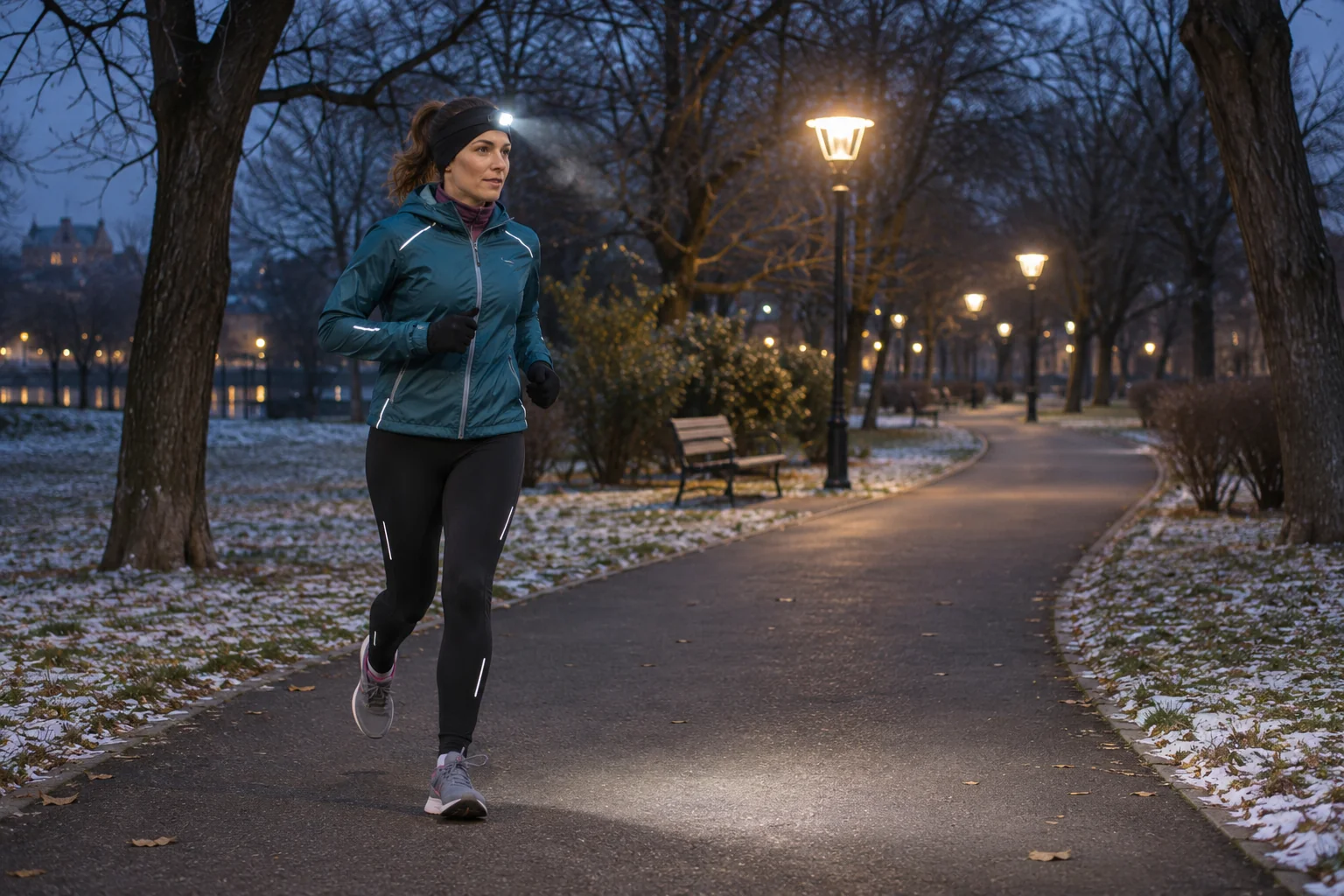
The question is which setting suits the planned activity. A broad promenade may have more even lighting; a covered community space may avoid vehicle lights; daylight may make another route usable. None is automatically good for everyone. A location category cannot completely determine personal suitability beforehand.
| Criterion to examine | Useful question | What it does not establish |
|---|---|---|
| Light-source positions | Where is the usable surface harder to see beside them? | We do not diagnose glare’s cause. |
| Continuity of lighting | Are transitions difficult to assess? | We give no general safety score. |
| Access | Is the approach to the meeting point suitable too? | The designated sporting loop is not the entire outing. |
No deliberate glare test is needed to answer. Do not look into lights or reproduce symptoms. Seek practical options from previously noticed situations and surroundings you can calmly assess. If uncertainty remains, another form of outing is acceptable too.
What can a small lighting study teach us?
An original study with twenty-four older participants compared indoor lighting while walking. Measured gait characteristics were more favourable with general ceiling lighting than with a nightlight alone. Researchers also examined environmental visual reference cues.
This supplies no streetlamp power or universal location threshold. It was a small, specified indoor study; outdoor running is another task and environment. The lesson is that lighting arrangement and visible cues matter, not merely some light being on.
A research finding does not turn every personal choice into a scientific test. You cannot control the same conditions in a park and need not try. The source helps frame a good environmental question. Connect the specific choice with your possibilities, individual vision and professional assessment.
The journey and meeting point belong to the activity location
The selected promenade may work better while its approach crosses the distracting car park. The complete outing is then not resolved. Separately examine another arrival route, calm meeting point and getting home. Planning involves more than the loop drawn in the app.
The meeting point need not be the most spectacularly lit place. Clear identification and participant usability matter more. Share the precise location beforehand so nobody must search for faces among oncoming lights. Brief, clear directions and calm arrival are often straightforward organisational matters.
Arrange travel help separately if needed. A friend’s accompaniment must not replace individual instruction or care required by your vision. Assistance should be more than “Follow me”. Understand how cooperation works in your situation.
No photographic proof is needed to describe symptoms
A phone photograph can present light differently from your vision. The pictured lamp need not prove your discomfort is real. Describe which surface is hard to perceive, beside which light and from what direction. An automatically brightened image does not judge your experience.
At an eye consultation, say whether difficulty is new, increasing, appears elsewhere and with which glasses. Indicate details you cannot recall. A flawless route diary is unnecessary. Selecting needed examination remains a healthcare task.
The NIA eye-health information also highlights regular checks and appropriate correction. Everyday difficulty supplies useful background. Age-related change need not always mean disease, but neither should a new symptom be explained solely by birth year.
 Enlarge image
A choice: car park, promenade or daylight outing
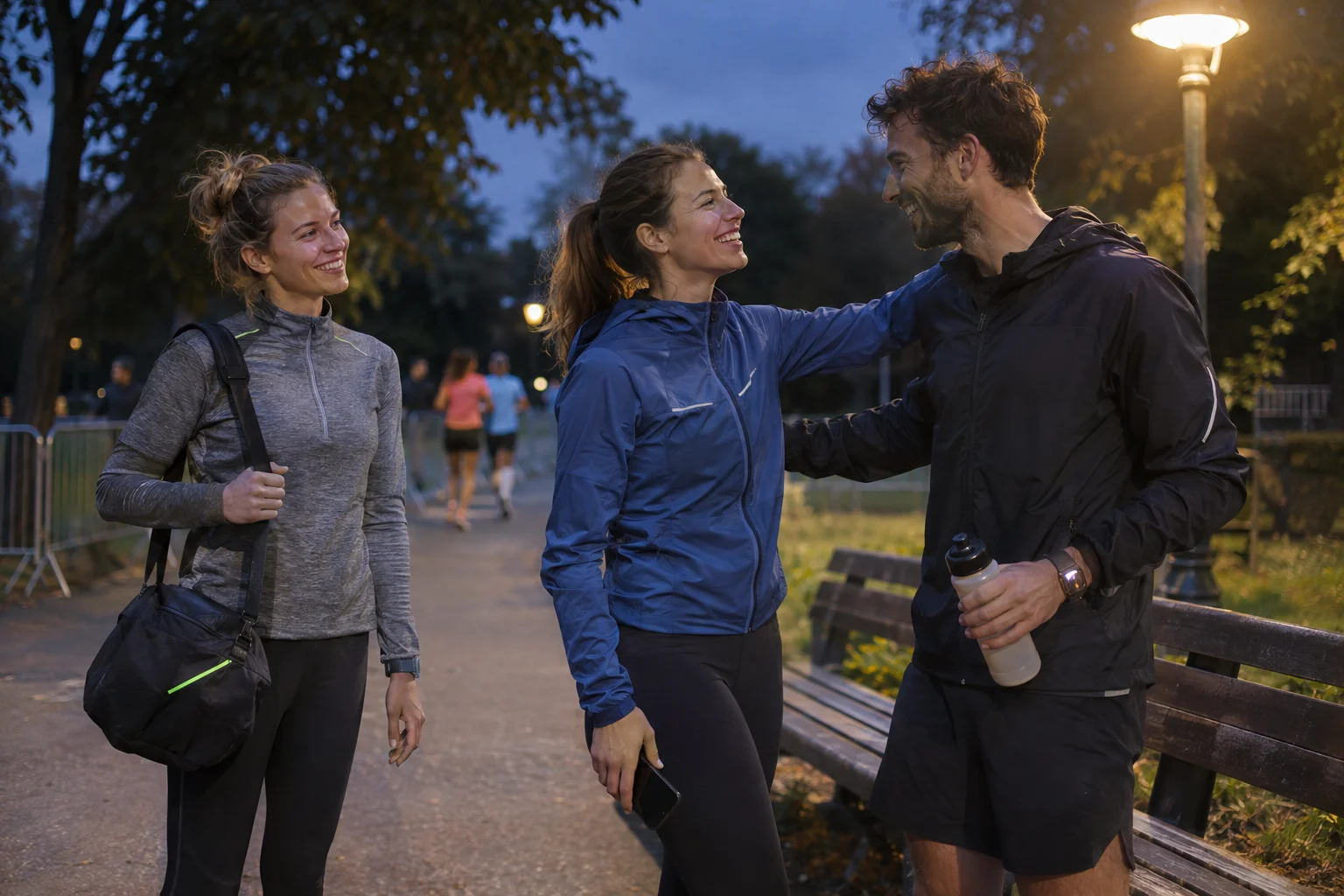
In the imagined example, a longstanding group gathers at a sports-ground car park in the evening. Someone reports difficulty seeing the passage beside turning vehicles’ lights. Instead of first reducing pace through the car park, the group reviews the meeting location. Another entrance offers more direct promenade access.
The next question is whether that solution suits the person. They need not politely agree if difficulty remains. A daylight outing or another place can be discussed. Cooperation includes revising choices through feedback. One change is not permanent accessibility certification.
The example supplies no universal sequence. It shows that surroundings and timing can change instead of requiring the person simply to “Concentrate harder”. Naming needs matters even if the final choice is elsewhere. Different arrangements can preserve the social purpose.
Better visibility provides an individual, checkable goal
A new place need not become a challenge either. Visual difficulty or another symptom during activity allows changing the outing. Known shortcuts and homeward options help prevent pressure to finish deciding. A social commitment does not require continuing uncertainty.
A few specific observations afterwards may suffice: which entrance worked better, where light remained distracting and how communication worked. Do not label every street good or bad. Conditions change and a solution may differ for someone with another visual condition. Personalisation improves planning accuracy.
The answer to uncertainty among dazzling lights is therefore more than stronger equipment. Assessing symptoms, understanding lighting arrangement and restructuring the whole outing are separate options. Seek a place and activity fitting your functioning, about which you can report specific experience rather than guess.
Sources
Singapore National Eye Centre: glare; AAO: visual conditions in older age; NEI: cataract symptoms; Original study of lighting and gait characteristics; NIA: eye checks; NHS: urgent visual symptoms. Checked: 21 November 2026. The location-choice example is an editorial illustration.
How Futószív articles are prepared: our editorial guidelines.