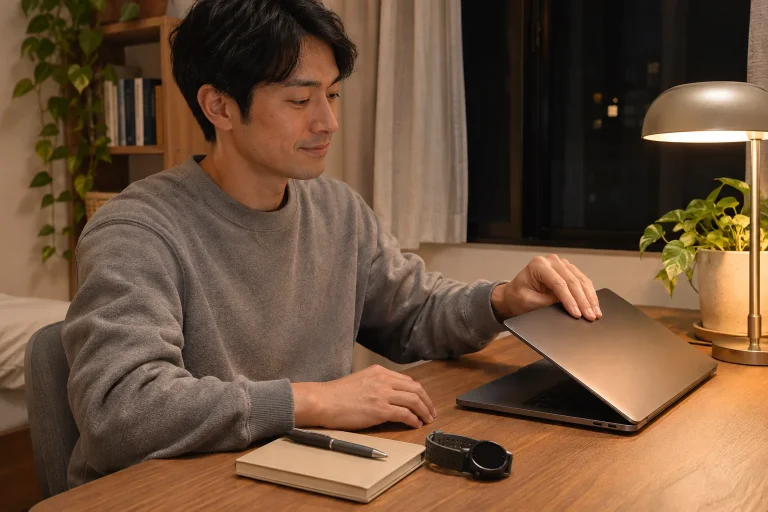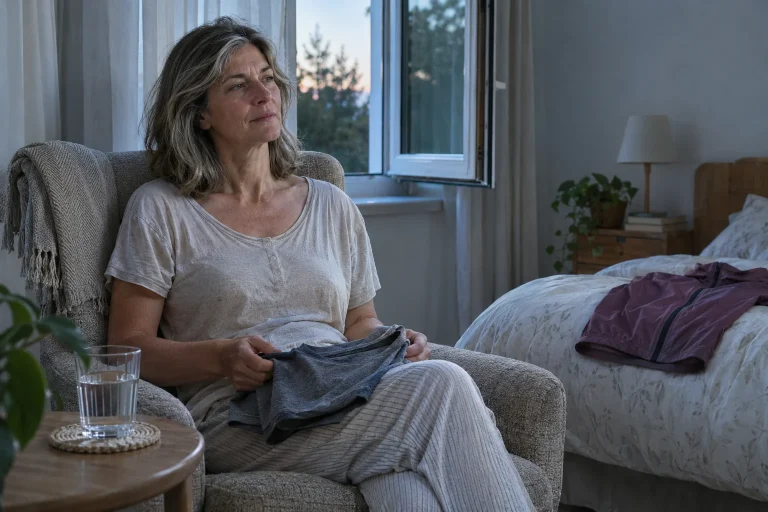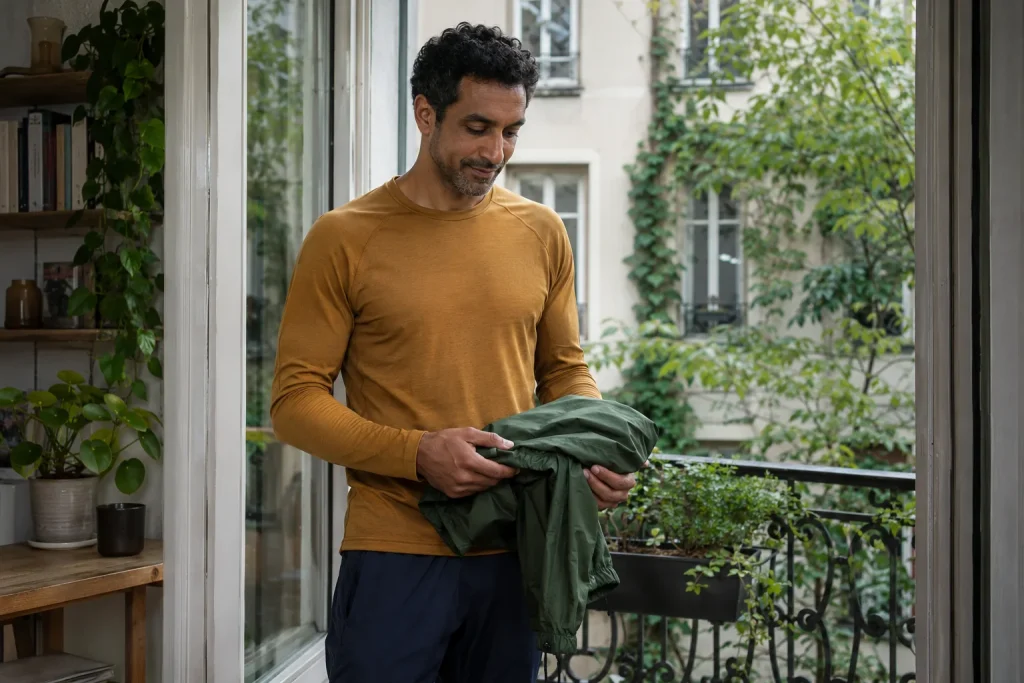
In summer, the window is already bright as you prepare for a morning run; in winter, the street is still dark at the same hour. After evening training, a brightly lit gym, transport, kitchen lighting and phone use may follow one another. Light does more than determine how well you see the road: it also signals the body’s daily timing. Consider your running time alongside the brighter and darker portions of the whole day.
This does not mean a mandatory dawn light dose or a prescribed running start for everyone. You need not buy a light-therapy lamp to understand the relationship. The aim is to recognise environmental signals and know which everyday observations can support a meaningful discussion about recurring sleep problems. Timed light treatment is a separate question requiring individual assessment.
The body clock meets the outside world each day
NHLBI explains that internal clocks follow approximately twenty-four-hour rhythms. The central clock operates in the brain; environmental light and darkness help synchronise the daily rhythm. Light information arriving through the eyes matters in this process. Circadian therefore concerns daily timing, rather than a separate running workout or the quality of willpower. NHLBI: internal clocks and light signals.
Your internal rhythm is not simply the alarm set on a phone. A calendar tells you when to leave; biological timing also shapes when you feel alert or sleepy. The two do not always align comfortably. If an early group run regularly conflicts with rest, merely dismissing it as poor discipline is insufficient.
This explanation concerns environmental information reaching the eyes, rather than deliberately looking at the Sun. The National Eye Institute specifically warns against looking directly at the Sun and recommends suitable UV-protective sunglasses. Circadian considerations are no reason to abandon ordinary eye protection. NEI: protecting eye health.
Sleepiness and timing shape the evening together
NHLBI also describes sleep pressure increasing with time awake. This process works alongside daily rhythm in shaping sleep and waking. Strong artificial light late in the evening may affect melatonin timing and make falling asleep harder. Melatonin is one of the body’s timing signals; mentioning the internal hormonal response is not a recommendation to take a product. NHLBI: sleep pressure, light and hormonal timing.
This makes it easier to understand being physically tired without falling asleep immediately. Further events follow the run, and your routine has not necessarily ended. No single cause can be identified with certainty from that. Light is one circumstance to examine alongside workout timing, travel home, work and evening tasks.
“I am tired” and “I am sleepy” can mean different things in your own account too. Your body may need rest while you actively organise tomorrow; at another time, you unintentionally doze off on the sofa. You need not diagnose a disorder from these distinctions. They help avoid using one word to summarise the whole evening and following day.
 Enlarge image
What did the light-emitting reading-device study show?
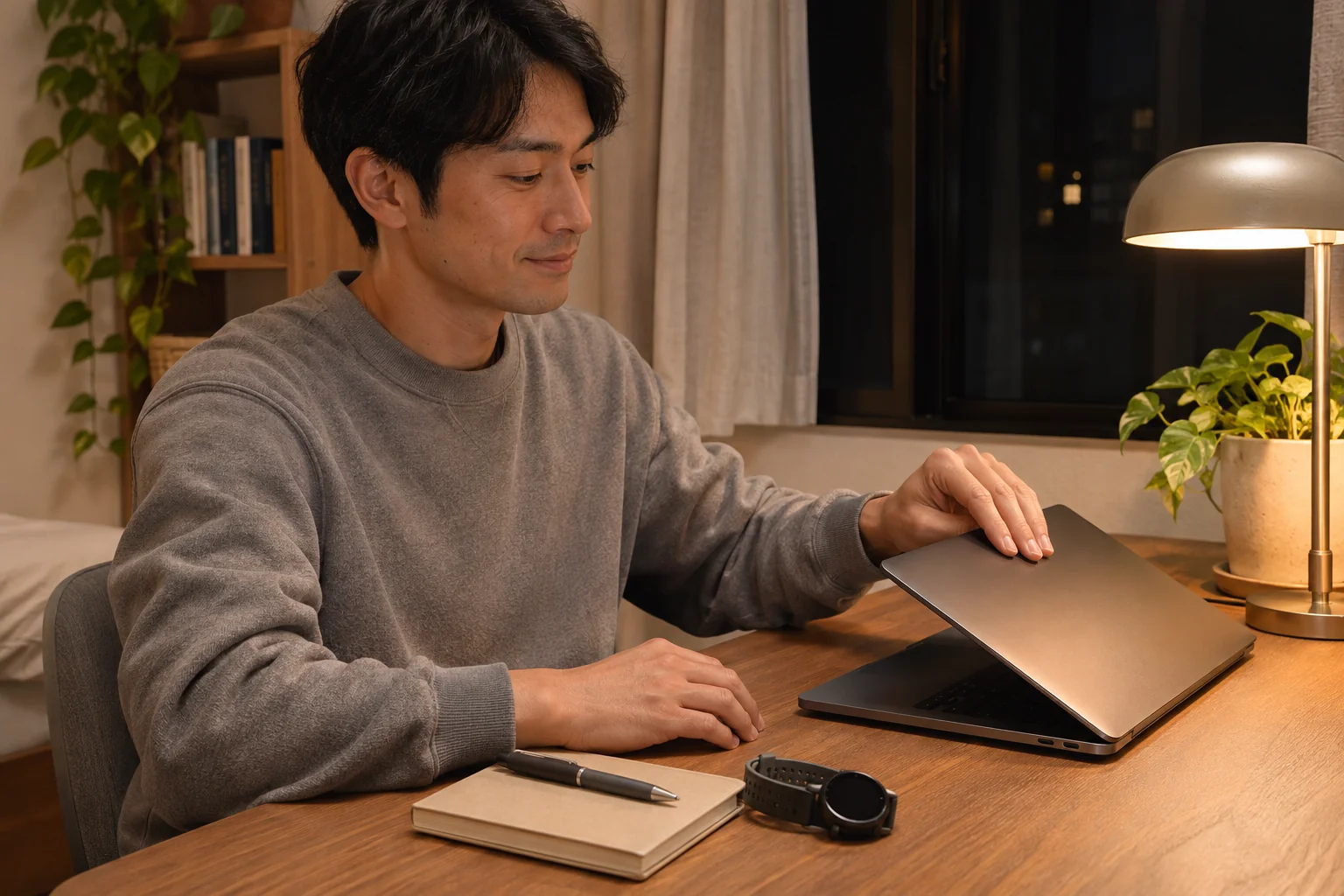
In Chang and colleagues’ original human experiment published in 2015, twelve healthy young adults experienced both conditions: reading from a light-emitting electronic device for five evenings and a printed book for another five. Order was randomised; laboratory reading lasted approximately four hours each evening. Researchers measured melatonin timing and alertness as well as sleep. Chang and colleagues: evening electronic reading.
In that study setup, light-emitting-device reading was associated with later circadian timing, longer sleep onset and poorer next-morning alertness than printed-book reading. This experiment using a particular device and settings does not mean any brief use of any current screen produces the same effect. It did not test every running watch or compare every aspect of home evening life.
The study’s practical significance is that evening light cannot automatically be considered physiologically neutral. Its precise personal effect cannot be read from one experiment’s average, however. If you spend a long time examining routes, photographs and messages after an evening run, name the whole activity alongside the device and time of day. That is an observation, rather than a diagnosis of your device.
Why is there no single light recipe for everyone?
Phillips and colleagues’ original 2019 study analysed evening melatonin responses in 55 young adults in a controlled laboratory setting at several light levels. They found substantial differences in sensitivity between people. The group average did not adequately represent every participant’s response. The study measured a hormonal outcome; it cannot yield one home lighting setting or certain sleep-onset time for everyone. Phillips and colleagues: individual differences in evening light sensitivity.
A lamp’s name, a display colour that feels more pleasant and the whole room environment are different information. A device name alone does not describe how much or what kind of light reaches your eyes during actual use. Deriving a universal sleep promise from one colour or product label would be too large a leap from laboratory findings. More comfortable use and demonstrated personal sleep improvement are separate claims too.
If two running friends experience the same evening programme differently, that does not mean one is doing it wrong. Their whole days, sleep opportunities and histories differed too. The light-sensitivity experiment highlights limits of simplification: take individual differences seriously without arranging home hormone measurements or your own light-exposure challenge.
A dawn run does not involve the same light in every season
The same wall-clock time can mean different surroundings in summer and winter. In June, the route may already be bright; in winter, street lighting and your own lamp may still be needed. When considering running time, separately identify the time of day and whether it was actually light. “Morning training” alone does not describe the light environment.
An everyday planning option may be to leave room for outdoor activity in daylight where feasible. NHLBI includes daily outdoor time and activity among general sleep-supporting habits. This is not a treatment with a specified duration or light intensity, and does not mean every outdoor run suits a particular person. Assess the setting’s safety and individual health separately. NHLBI: everyday habits supporting sleep.
Do not confuse a running light’s practical role with treatment of the body clock. On a dark route it helps you see and be seen; do not omit necessary lighting because of a general sentence about sleep. Looking directly at the Sun is not a good idea because light is a daily signal either. These questions serve different purposes and safety conditions remain.
Review the brightly lit sequence after training too
An evening running programme does not always end when movement stops. Changing rooms, shopping, transport, preparing dinner and screen-based conversation may follow. These need not become a list of bad habits. Ask how much room remains for a calmer end to the day and which activity actually extends into the time intended for sleep.
| Everyday situation | What can you observe? | What should you not infer? |
|---|---|---|
| Getting ready before a dawn run | Was it light or dark, and when did the day begin? | Every dawn start produces the same light effect. |
| Evening gym and journey home | When did the whole programme end, rather than just training? | Running alone definitely caused difficulty falling asleep. |
| A prolonged screen-based wind-down | Which device and activity, and roughly until when? | A filter or colour mode is guaranteed to remove every effect. |
| Changing shifts | When were the main sleep opportunity and daylight? | One recommendation suits everyone without understanding work schedules. |
Personal observation does not require measuring the room. A short detail may suffice: I got home late; I continued dealing with messages; the room stayed bright before daytime sleep. These are understandable observations. If assessment later needs a specific measurement, agree its purpose and method with a professional. The table is neither a validated clinical scale nor a personal diagnostic method.
 Enlarge image
Light therapy is a separate task with individual requirements
NHLBI’s treatment information on circadian rhythm disorders explains that light therapy can be part of care for some conditions. Its purpose, timing and selection depend on the type of rhythm disorder. The page also calls for prior medical discussion with eye problems or medicines causing light sensitivity. General knowledge about morning light therefore does not create a personal light-box protocol. NHLBI: treatment of circadian rhythm disorders.
This article prescribes no light intensity, treatment duration or melatonin dose. Understanding a running programme’s surroundings differs from treating a diagnosed rhythm disorder. If you already have a care plan, do not rewrite it from a sports group’s general advice. Instead, tell the treating professional when you run and travel and which work schedule the plan must fit.
Clarifying the treatment goal matters because “resetting the body clock” is too broad. Difficulty sleeping at the desired time, waking too early and lacking a stable sleep opportunity during rotating shifts are different questions. Do not merge them under one dawn-light recipe. Ask about your own timing difficulty and circumstances rather than a general optimisation promise.
When should light and running time enter the consultation?
NHLBI explains that assessment of persistent timing difficulties may review sleep patterns, symptoms, environment and artificial night-time light, using a diary or other investigations as needed. The provider selects appropriate assessment. Running and surrounding activities help in personal notes when they show a clear sequence rather than attempt to prove a predetermined cause. NHLBI: diagnosing circadian rhythm disorders.
If sleep problems make everyday life difficult, do more than keep trying new lighting settings. The NHS recommends medical discussion for persistent insomnia and emphasises not driving when sleepy. Preparing in pleasant morning light or a good watch reading does not provide a safety exemption if you would struggle to stay awake on a dawn drive. NHS: insomnia and daytime consequences.
Understanding light and the body clock need not add another compulsory task to your running-week list. It provides context for differences between morning, evening wind-down and changing seasons. You can discuss running time as part of the whole routine and describe personal sleep difficulties more accurately.
Sources
- NHLBI: the daily sleep–wake rhythm
- NHLBI: healthy sleep habits
- Chang and colleagues: evening light-emitting reading-device study, 2015
- Phillips and colleagues: individual differences in evening light responses, 2019
- NHLBI: diagnosing circadian rhythm disorders
- NHLBI: treatment of circadian rhythm disorders
- NHS: insomnia
- National Eye Institute: eye protection
How Futószív articles are prepared: our editorial guidelines.