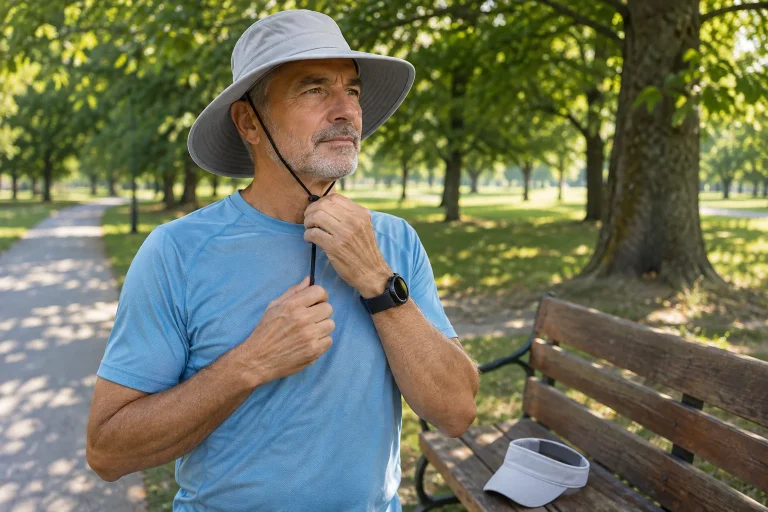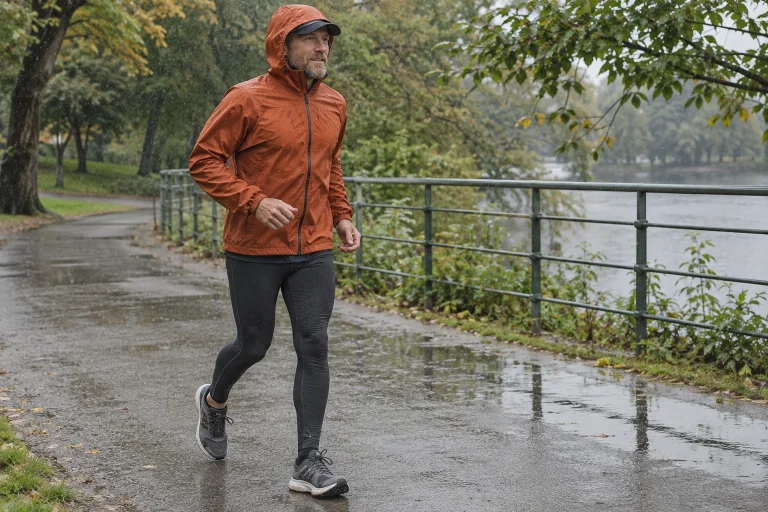
It is cool, the sky looks grey and a long-sleeved top feels welcome during the first minutes of your run. That thermal sensation does not tell you how strong the UV radiation is. Air temperature, visible light and ultraviolet radiation are separate pieces of information. You can adapt clothing to cool weather while considering sun protection from another measure: the UV Index for the relevant place and time.
This does not mean UV exposure is equally high on every cloudy day. The aim is precisely to replace guesswork: do not try to infer the value from a cold wind or the season’s name. The following guide explains what to read each weather field for, how to distinguish the daily maximum from the particular period and what belongs in your own pre-run check. The examples are not weather reports for the current day, but ways to interpret data that remain useful later.
The thermometer, cloud icon and UV Index answer three separate questions
WHO describes UV as radiation we cannot directly see or feel. The sensation of cool air is therefore not a UV measuring instrument. Temperature, wind and UV Index displayed together on a phone describe separate characteristics of the same environment. You do not need to infer the exact number for one from another. They each provide relevant information for running clothing comfort and sun protection.
As our own example of reading data, imagine a screen on which temperature is easy to find but the UV field appears further down. If you close the app after the first piece of information, you have not yet looked for an answer to the second question. The useful routine is therefore not another complicated calculation, but awareness that you are checking two separate fields. Temperature informs clothing comfort; UV data provides one starting point for the sun protection plan.
An overcast weather icon is also a summary symbol. It does not by itself explain every detail of UV transmission and does not replace sun protection information. If the interface does not show UV information, you can find it from another appropriate source. A missing field is not a zero value. This is a simple but important distinction: unseen data should not automatically be used to infer either the absence or presence of danger.
Cloud cover has a role, but does not act as a single switch
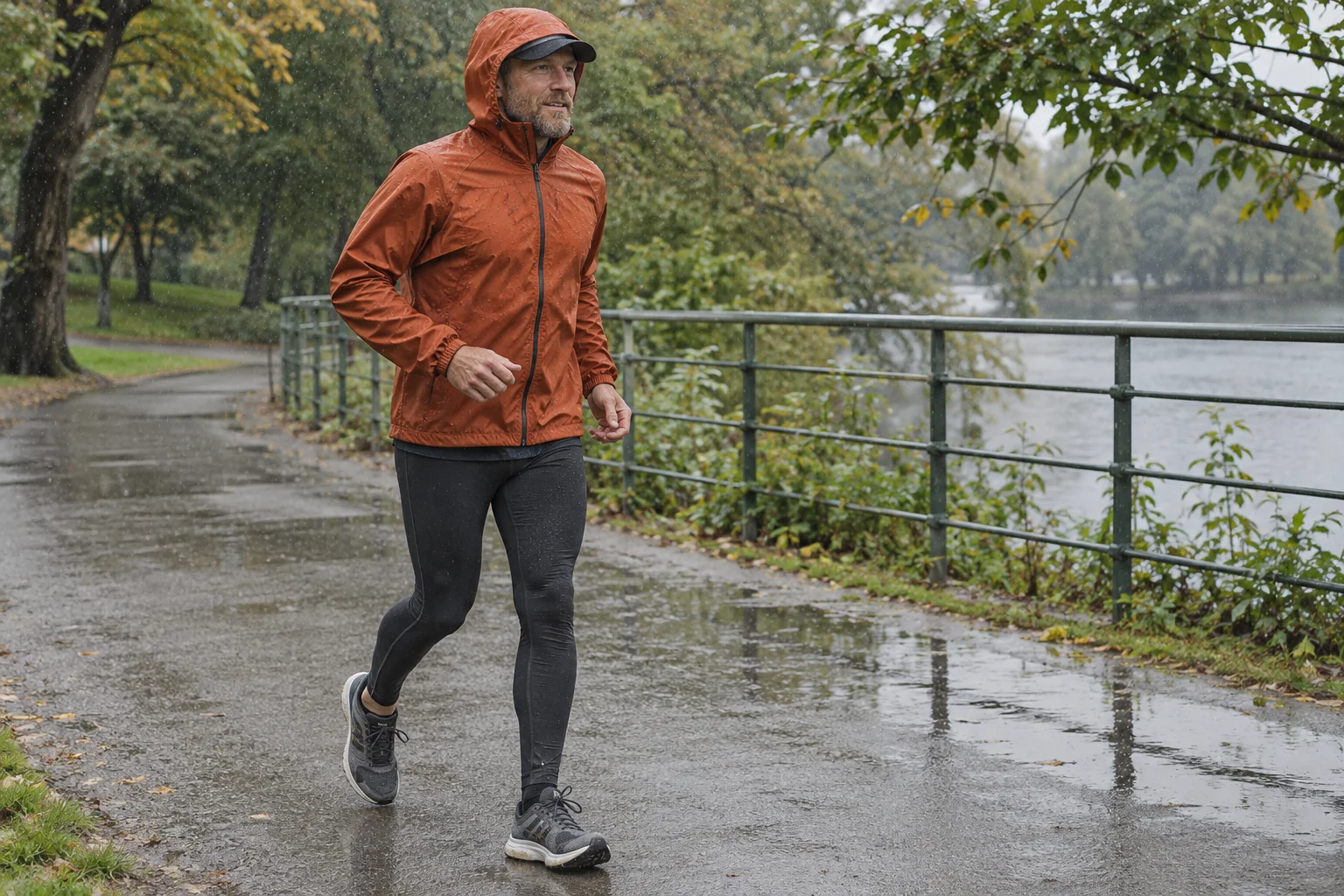
According to WHO, UV levels can be highest under cloudless skies, but significant radiation can also occur with cloud cover. The effect of thinner, lighter clouds differs from thicker overcast conditions; scattering processes may play a role too. The point is not a cloud-cover percentage applicable at all times, but that visible cloudiness does not reveal precise personal UV exposure. A specific forecast is therefore a better reference than a general impression.
You also experience a run with changing cloud cover as a route, rather than a single moment viewed from the window. The sky may be grey at the start, with a longer exposed section later. There is no need to break this down in advance for every possible cloud shape. What matters for planning is seeking UV information for the expected period and not treating a changing environment as an unchanged copy of the starting icon.
In Hungary, HungaroMet’s methodology description specifically names consideration of cloud cover in its UV forecast. The service is therefore not merely guessing a number from surface temperature. Its explanation also mentions astronomical parameters and ozone content behind the model. This helps explain why using the actual information product is worthwhile: it brings several factors into a specified forecast that a runner cannot accurately combine through visual inspection.
 Enlarge image
Time of day and season matter too, but look for the specific data
WHO lists the sun’s position in the sky, time of day and season among the factors shaping UV levels. Even the hours of the same day are therefore not identical. Do not automatically read a daily maximum as the value at the moment you set off. First clarify the time meaning of what you are viewing: does the screen show a daily peak, a forecast for a period or a measurement at a specified time?
Season is useful general background, but a particular run need not be decided solely from it. A cool spring day, a cloudy summer afternoon and travel to another geographical location may mean different UV environments. Do not automatically copy protection routines from a previous situation based on memories of what you wore. Specifying place, date and period is simpler than building a personal risk estimate from the name of a month.
As our own example, treat a short morning loop separately from a longer outdoor outing starting later. We do not attach invented UV numbers to them; the actual day’s data will need checking. Even so, the two scenarios show why a general ‘I am running today’ is not enough. A change in the planned period may require reinterpreting the same source, even if air temperature seems comfortable for both outings.
Reading Hungarian UV data: place, time and product name
HungaroMet’s UV interface provides a national forecast, measured data and map information separately. Start with the page title and update time. A national maximum provides different information from a result at a particular monitoring station and time. Even data from a nearby station belongs to that station; it is not a personal instrumental assessment of every point on your running trail. Naming the source helps correct interpretation.
Check the date on the page too, rather than only whether it currently opens. A saved screenshot or old warning does not necessarily apply to your new run. If the selected interface has no fresh forecast for the period you need, do not convert that absence into zero UV. Find other current information that is appropriately identified, or discuss general sun protection considerations alongside your individual circumstances.
Warnings and numerical data can also be different information products. Read ‘no warning’ together with the particular service’s issuing criteria, rather than as a general exemption from protection. A personal note needs only the source, time and field name. You can then trace what you checked later, rather than retaining an isolated number whose day or area you no longer know.
The UV Index informs a protection plan, not a personal countdown
WHO uses the UV Index to communicate radiation levels and the need for protection clearly. It recommends sun protection measures at values of 3 or above. You do not need to turn the number into your own ‘definitely fine for this many minutes’ deadline. Individual sensitivity and the actual outdoor programme involve more than one index value. The information supports deliberate planning, rather than replacing every individual circumstance.
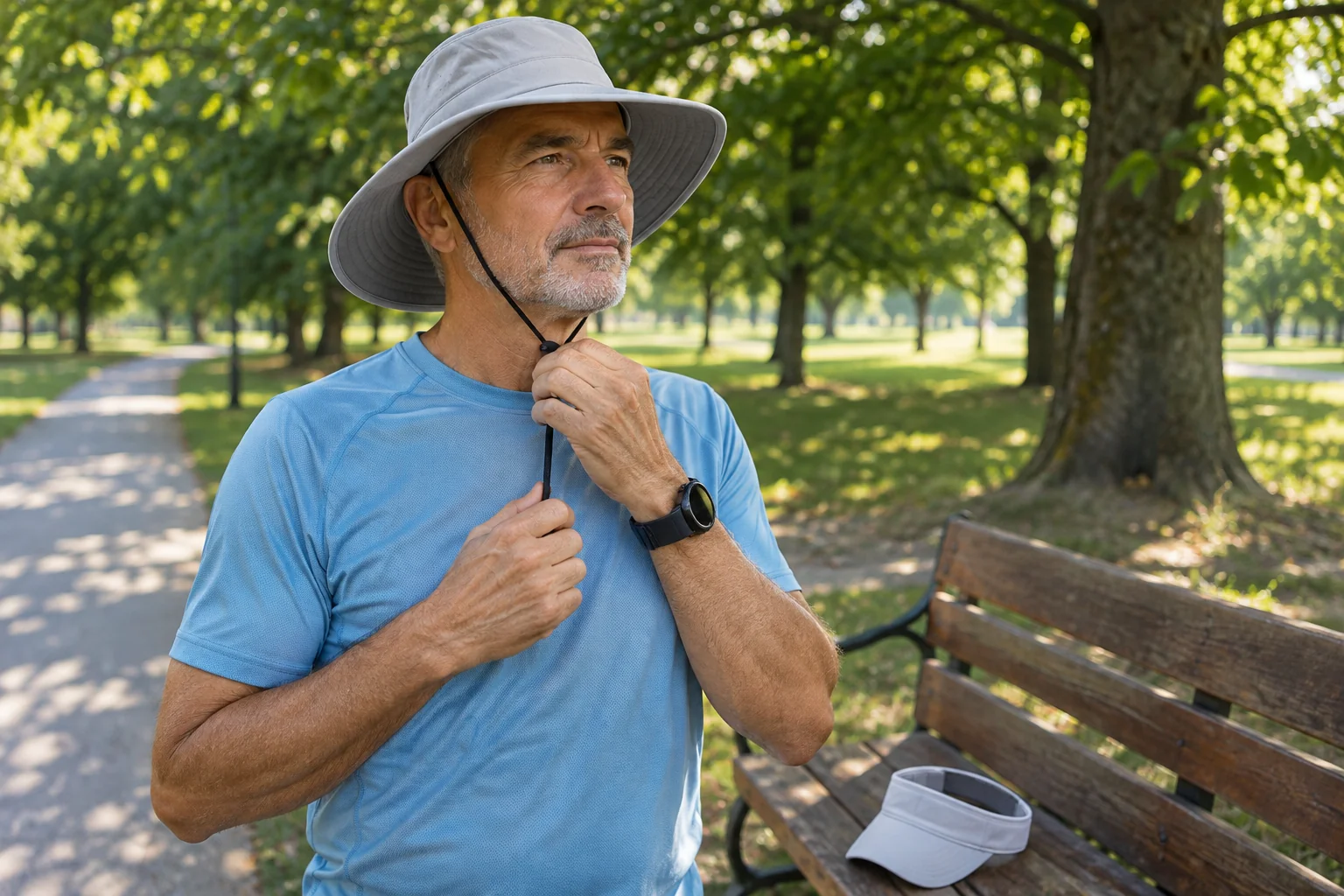
Combined protection can include clothing providing appropriate coverage, protection for the head and eyes, sunscreen on exposed skin used according to its instructions, shade and timing the outing. Check actual clothing coverage separately. Even a long-sleeved top can leave areas exposed around the hands or neck, and a cap does not cover every point equally. Your whole combination matters, rather than a single label.
With individual photosensitivity, a skin condition or a medication-related question, personal healthcare advice should supplement the general routine. The article does not prescribe identical protection timing or a product for everyone. You can prepare your specific question, however: when do you run, what does the clothing cover and which data did you find? This is a more useful basis for discussion than concluding that because it is cool, UV certainly does not matter.
Think through all your outdoor time, not only the recorded kilometres
The activity measured on a running watch is one part of the outing. Before it there may be a warm-up; afterwards, walking, waiting and talking. If these happen outdoors, they do not become invisible to the UV question because you have stopped the workout. For your own planning, therefore, name the whole outdoor programme. This is not the same as calculating a personal radiation dose; it simply helps you notice stages that are easily missed when focusing on kilometres.
At an event, the pre-start location and waiting after the finish may deserve particular attention. You can find out beforehand whether shade or cover is available and how you will reach the belongings you need. Look for actual site facilities in current event information rather than memories of a previous event. Your programme combines running, waiting and available protection; comfortably cool air does not automatically make these all identical from a UV perspective.
When travelling, also check your phone’s location setting if it displays UV data. A forecast for a saved home location is not data for your holiday destination or mountain starting point. The selected city name and validity period can prevent many misunderstandings. Build your own routine on this simple check before linking any number to your running plans.
 Enlarge image
A manageable pre-run check in four questions
The first question is: where and when will I be outside? The second: which UV data am I seeing, and which period does it cover? The third: what do my clothing and other equipment actually cover? The fourth: how will I adapt protection or the route to the whole planned outing? The sequence is simple and tied to the specific situation. It does not require minutes invented from your skin type or a homemade conversion of the index.
If your departure time changes later or you move elsewhere, return to the relevant question. You do not need to reinvent every garment, only notice the changed circumstance. A short loop becomes a longer excursion, or you arrive later instead of setting off in the morning: these are changes to interpret within your UV planning too. Temperature and comfortable clothing remain separate questions throughout.
A cool, cloudy running day then becomes a situation you can read more precisely rather than a frightening exception. You check the necessary data, understand its meaning and connect it to your own plans. Cloud cover and air temperature are valuable weather information, but you answer the UV question through the appropriate source. Sun protection can then become a simple part of consciously preparing for an enjoyable run.
Official sources and checking date
The background on radiation and cloud cover comes from the WHO information on UV radiation and its UV questions and answers page; the index’s meaning is explained in the WHO guide to the UV Index. A Hungarian starting point is the HungaroMet UV interface and the forecast methodology description. Checked: 21 November 2026. The article records no UV value for that day; before setting off, open current data for the relevant place and period.
How Futószív articles are prepared: our editorial guidelines.