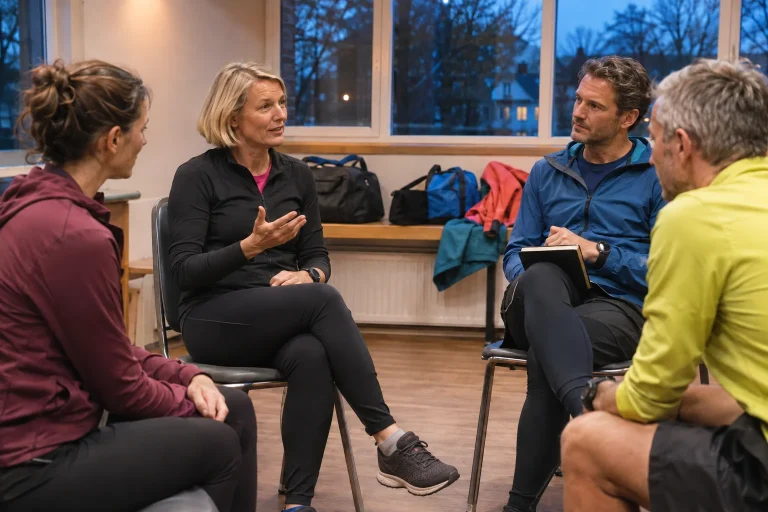
You want to discuss how exercise can fit into your week, but the coach brings out a scale. Weight may have come up when you signed up, or perhaps you only wanted more comfortable running, company or a regular opportunity to be active again. The two conversations are not automatically the same. Before regular weigh-ins begin, understand what the data would be used for, which decision it relates to and which parts of the proposed arrangement are optional.
A decision does not become shared merely because someone asks, “Is that OK?” You need enough information and unhurried time to explain your own considerations too. Discussing weigh-ins is not a test of commitment to sport. This article offers a practical framework for talking with a coach; it does not set you a weight target or replace medical assessment or advice on Hungarian data-protection law.
First identify which service you are discussing
A running session, a weight-management programme and healthcare may perform different tasks. Everyday offers can easily blur them: the same package may include group exercise, an app, comments on eating and regular measurements. What matters is not the heading on the registration form but what the provider undertakes, with which qualifications and within which responsibilities. You can ask: “Are we discussing how to organise my running, or are we also undertaking weight management? If the latter, who deals with its healthcare aspects?”
The NICE principles of care for weight management emphasise asking permission, considering previous experiences and allowing time to become informed. These are British healthcare recommendations, not compulsory wording for a Hungarian running-coaching contract. They offer a useful starting point for communication, but do not establish on their own that any measurement requested by a coach is necessary or that particular data processing is appropriate.
Start by explaining why you approached the coach. For example: “I’d like to find activity that fits around my shifts and work out how I can participate without my symptoms.” If weight management is also part of healthcare you receive, you can name that separately, together with the framework agreed with your care provider. You then do not have to guess from the appearance of a scale which goal is being assigned to you. Your own sporting request deserves attention even if your body size often prompts others to start talking about weight loss immediately.
The purpose should explain why the data is needed
“We’re tracking progress” is too broad an answer. Progress might mean more regular attendance, easier travel to sessions, better understanding of a movement situation or an individual healthcare goal. Ask for a specific link between the measurement and a planned decision: “What will you do differently once you have this number? What happens if it doesn’t change? What other information could support the same conclusion?” This discussion is not an attack on expertise, but clarification of what you are agreeing to.
It is particularly important that weight data does not automatically become a judgement on suitability for running. The NICE chapter on measurement and assessment describes context-dependent use of body measurements in health-risk assessment and recommends asking permission before every occasion. This is not a test for prescribing a running load. A scale reading does not replace assessment of current symptoms, history and the actual response to exertion.
The coach’s professional explanation can be nuanced too. They might say, for example, that they want to track one variable in a separately agreed programme, but would not independently make decisions about conditions or medicines from it. What matters at the end is that you both understand the measurement’s role in the same way. If one person sees it as background information and the other as a compulsory condition of success, a well-understood agreement has not yet been reached.
 Enlarge image
Participation, measurement and sharing are three separate questions
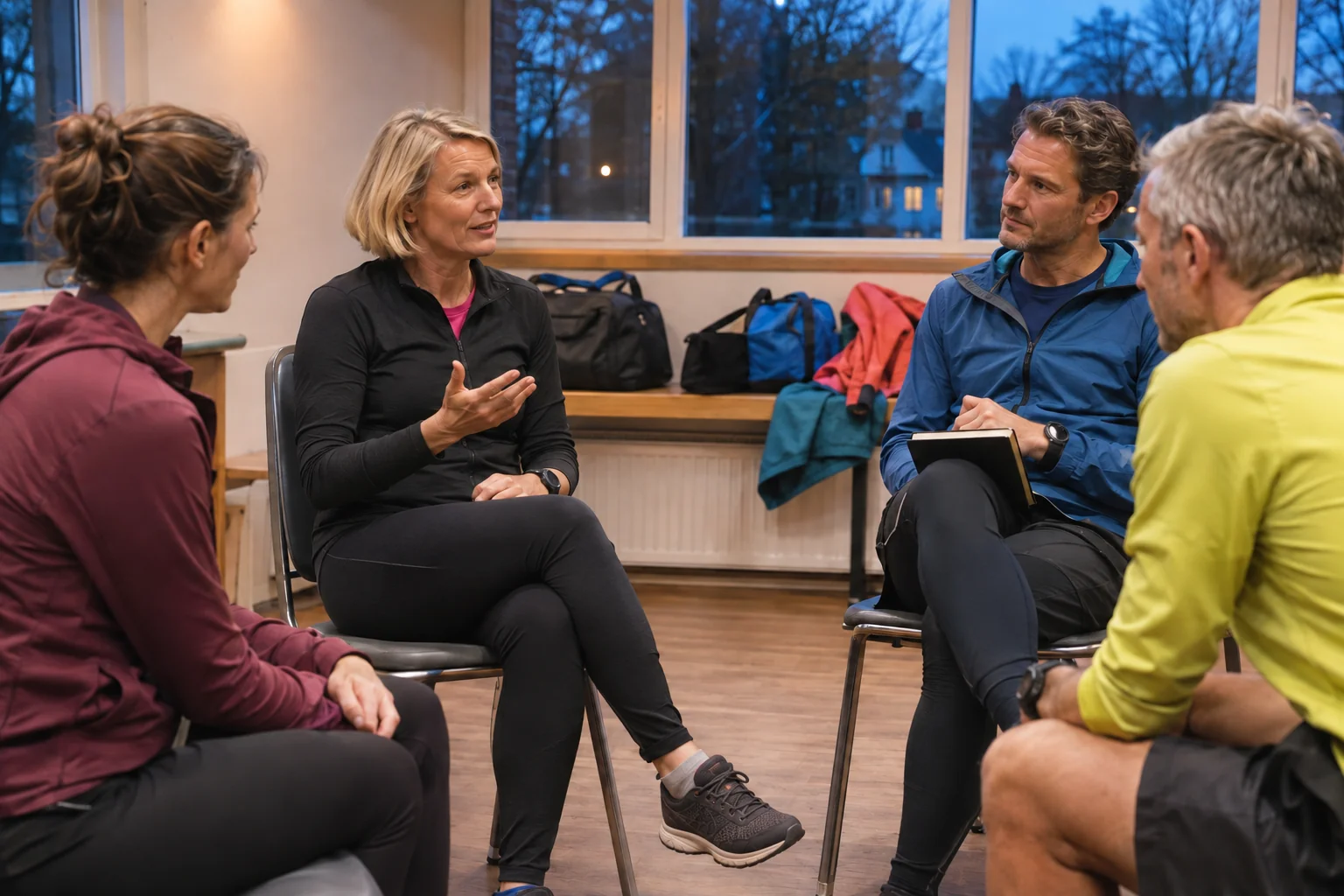
Ask separately whether you can exercise without being weighed, and whether measurement is possible without publishing the result. Information given privately to a coach is different from a weekly table in a group chat. A group photograph, results list with names and an account of change usable in later advertising are separate questions too. One checkbox in a package should not leave you guessing which is meant.
State your boundary simply: “I’d like to attend the group run, but I don’t want my weight shared with the group.” Or: “For now, I want to understand how regular exercise works for me; I’d decide about weighing later.” These are phrases for discussion, not legal formulas. If the provider says measurement is essential to the offered programme, ask for a clear explanation of that and any alternative service before you pay or hand over personal data.
The style of the response can help you choose. A clear explanation reveals the programme’s structure and the choices available. A reaction such as “People who are serious don’t keep secrets”, however, is not a professional explanation of why data is necessary. You do not have to prove your willingness to cooperate through your body. You can ask for time, another arrangement or another provider without giving up your sporting goal.
Discuss the measurement setting too
Discomfort about measurement is not always about the number itself. An open corridor, a group waiting outside the changing room, a result announced aloud or the next participant already looking over your shoulder may feel uncomfortable. If you decide on weigh-ins, ask beforehand about the location, who is present and how feedback is given. A private conversation and a calm setting express a much more precise need than a general request to “be discreet”.
You can also clarify the equipment’s practical usability: whether you can approach it stably, whether it is suitable for the intended use and whether it requires a movement that feels uncomfortable or uncertain to you. Do not take on a situation in which you do not feel safe simply for a measurement. This is not a guide to certifying equipment at home; it highlights that the measurement environment belongs in the discussion rather than being an insignificant organisational detail.
If you do not want to hear or see the number, you can discuss that too. Even so, you must understand exactly who uses the data and why. Hiding the result alone does not resolve public comparison, an unwanted target or data being passed on. The agreement needs to address the entire process: what happens before, during and after measurement.
Who can access it, and where is it kept?
A paper notebook, the coach’s phone, a shared spreadsheet and an external app are different situations. Practical questions include who sees the entry, whether it includes a name, photograph or other health-related information, and how you can ask what happens to it. Instead of accepting “Only we use it”, ask who “we” means: just your personal coach, the whole studio, an administrator or a programme partner too?
You do not need to become a data-protection expert to read the provider’s information and ask which section applies to your measurement. Equally, this article does not determine which legal basis, retention period or procedure a particular Hungarian provider must use. If an answer is unclear, request written clarification; disputed data-processing questions need appropriate professional or regulatory information. A coach’s verbal reassurance does not replace knowing the actual conditions.
Also watch for convenient technology introducing new sharing unnoticed. If joining the app requires creating a profile visible to the entire group, that may be a different arrangement from what you understood in a private conversation. You do not have to enable every function simply because the system offers it. Ask for help to ensure that your chosen participation technically means what you agreed.
Include real sporting questions instead of, or alongside, measurement
A discussion about running can have substance even without new weight data. You can talk about whether getting to sessions is feasible, whether tasks are clear, whether the location suits you and what you experienced last time. These are not invented clinical metrics to replace the scale. They are practical information that helps the coach understand what works in your cooperation and which circumstances could be changed.
For example, even if the number is unchanged that week, you might discover that travelling after work takes too long and you therefore regularly miss the class. A closer location or another time may help; another weigh-in does not answer the organisational question. At another point, an exercise may be unclear and need more demonstration or a different movement variation. Describing your own experience is no less valuable because it is not expressed in kilograms.
If you have a health symptom, however, do not construct a reassuring sporting story merely because the log or weight curve looks favourable. Measurement does not rule out disease, and a sporting goal does not make the coach the care provider for every symptom. Be clear about when they recognise the limits of their role and where they refer you. Acknowledging professional boundaries is a useful part of working together.
 Enlarge image
What a discussion might look like in practice
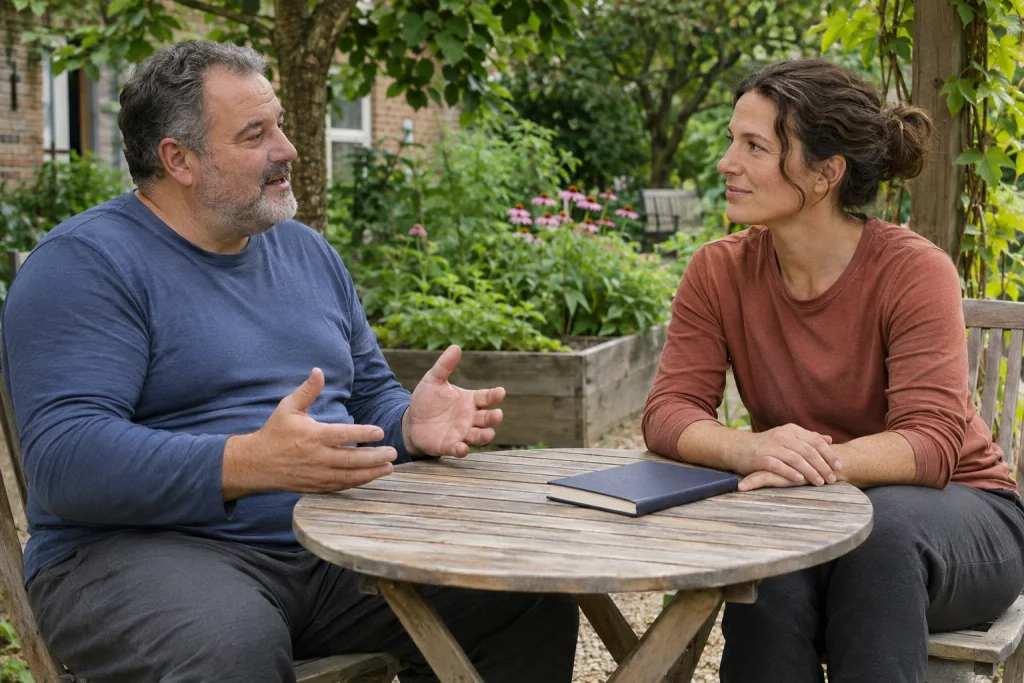
The following invented situation is not an account from a real participant. Anna is looking for an exercise group she can reach comfortably. The coach mentions weekly weigh-ins as part of the package. Anna explains that she wants to try exercising together and does not currently wish to track her weight. She asks which class she can attend on that basis and what feedback she would receive on her activity. The outcome may be a separate service, a modified package or recognition that this offer does not suit her.
In another invented situation, Peter also works with a healthcare provider and separately agrees to track a particular variable. With the coach, he needs to clarify which information is necessary for their shared task, how this fits the care plan and whom to approach if things change. The lesson is not that Anna’s refusal or Peter’s agreement is more correct. Different goals and understood conditions can underlie different decisions; the question is whether that genuinely emerged in the conversation.
The NICE recommendations on shared decision making particularly emphasise discussing what matters to the person in healthcare, clarifying the agreed plan and next steps and allowing decisions to be reviewed later. An original practical idea applied to coaching is therefore a brief summary: “This is what we agreed, this is not included for now, and this is when we will discuss it again.” This is not a clinical care plan, but a reminder that reduces the chance of misunderstanding.
A previous yes does not close the conversation forever
During your work together, the effect of regular measurement may change. Perhaps you initially saw it as neutral data but it later determines your mood for the whole week; or your sporting goal has simply changed. Say so rather than waiting until you disappear from training too. If anxiety around numbers, eating compulsions or compensatory exercise place a significant burden on you, healthcare help may also be appropriate; you do not have to solve this alone through a change of coaching goals.
A useful agreement does not necessarily end in a weigh-in. It may end in a clear yes, a postponed decision, tracking different information or choosing another service. What matters is understanding the measurement’s purpose, participation conditions, extent of sharing and opportunity for further discussion. Data about your body then does not quietly take the place of the question you originally arrived with: what sporting life do you want, and how can the coach help you with it?
Sources and interpretation
NICE NG246: Principles of care; NICE NG197: Shared decision making, recommendations; NICE NG246: measurement and assessment. The clinical recommendations come from the British healthcare setting. The coaching conversations in this article are original editorial examples, not statements of Hungarian law or individual healthcare advice.
How Futószív articles are prepared: our editorial guidelines.