
A distance runner’s drinking plan may be designed for a particular person, programme and set of conditions. With chronic kidney disease, however, kidney function, treatment and individual dietary guidance also influence fluid decisions. Another runner’s number of bottles is therefore not a personal recommendation, even if you plan a similar distance or pace.
This article helps you discuss your running goal with the professionals involved in your kidney care. It does not prescribe litres, salt, potassium, sports drinks or medication changes. The individual framework for fluids and exercise needs to be understood together, so an outdoor programme connects with your own care instructions.
The kidneys’ role goes beyond thirst during running
In its explanation of fluid balance, the National Kidney Foundation describes the kidneys’ roles in retaining water and producing urine. Appropriate hydration does not simply mean drinking a lot: too little and too much fluid can present different problems. Without knowing your personal condition, a generic running quantity cannot determine what you need. NKF: hydration and kidney function.
This distinction also changes the language of planning. ‘How much fits in my vest?’ is an equipment question. ‘How much fluid, and what kind, is recommended for me?’ is a healthcare question. First clarify the latter within your own care, then arrange storage, access and route points accordingly.
You can describe your thirst to your care professional, but do not turn it into an independent treatment rule. If your advice differs from a general sports recommendation, ask why. An understandable explanation helps you follow it. Your guidance needs to be usable in your actual day, not merely appear as a note on a report.
Chronic kidney disease does not mean the same situation for everyone
According to the NIDDK, nutritional needs can change as kidney disease progresses. The modifications needed may differ in earlier stages and other care settings. There is no dietary and fluid plan to copy across everyone with chronic kidney disease. Ask for an answer suited to your kidney function and treatment. NIDDK: nutrition with chronic kidney disease.
Saying only that you have kidney disease is not enough for the discussion. Know what follow-up you receive, which individual advice you were given and what has changed since. If asking about a laboratory result, clarify its meaning with your treating team. Running distance cannot be calculated from one test value, and this article provides no such conversion.
A drinking quantity mentioned by another person with a similar diagnosis is therefore not a useful template. Their kidney function, treatment or current condition may differ. Rather than compare, ask: ‘Which of the circumstances being monitored in my case currently determines the advice about fluids and movement?’
Fluid restriction can be an individual instruction, not a universal label
The National Kidney Foundation discusses possible fluid restriction in advanced kidney disease and kidney failure, particularly with little or no urine production. This does not mean everyone with chronic kidney disease should independently drink less. The framework set by your own care team matters; this article does not choose that quantity for you.
If you have a restriction, ask exactly what it covers and over which period. How should you understand it across the whole day, and what should you do if a planned activity brings different circumstances? Do not supplement the answer with a generic running formula. Changing a personal framework is as much a professional question as establishing it.
If you have not received a fluid restriction, do not start one because another person with kidney disease mentioned it. Equally, do not assume sport automatically allows all previous guidance to be set aside. Ask for an individual explanation connecting the amount to follow with the specific activity. The goal is a clear personal plan, not choosing the strictest or most generous drinking approach.
 Enlarge image
Electrolytes are not one identical task in every situation
Sodium and potassium on a sports-drink label are different ingredients. The NIDDK discusses their individual management separately in nutrition for chronic kidney disease. Amounts appropriate to your personal goals need clarification with a professional. The word electrolyte does not itself establish whether a product suits your condition.
Take the actual label to the consultation: which drink or powder would be part of your programme, with which composition and planned preparation? This is more precise than saying you would use a sports drink. If you would combine several products, name those too. A professional can answer specifically only about a known plan.
When reading the label, distinguish whether information refers to powder, prepared drink, one serving or another stated quantity. Understanding mixing instructions and determining individual medical suitability are separate steps. Even a correctly prepared product is not automatically personally recommended; commercial instructions do not know the considerations in your kidney care.
Describe the whole day together with the planned programme
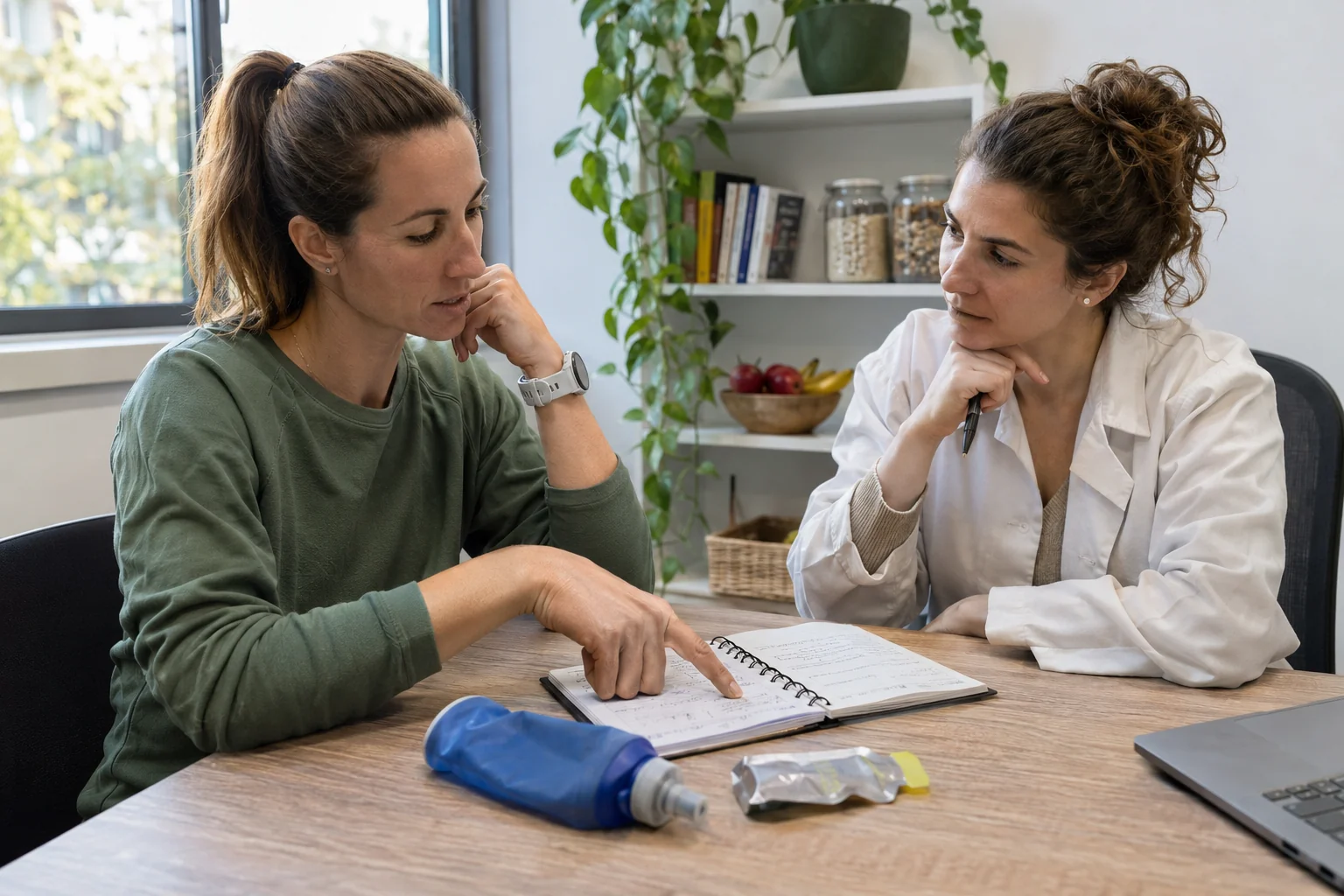
Running plans often put drinking before, during and after a run into separate rows. Within your own care, ask how these fit the guidance for the whole day. Do not independently add another quantity because you call part of it recovery rather than exercise.
Also describe travel, waiting to meet others and your total time away. A short local session and a similar run within a long day can mean different access. This is not a medical judgement but a precise description of practical implementation. Access to your own drink and help should be clear at the actual location.
You can also ask about weather and surroundings, but this article does not assign extra litres or salt to a temperature. If planning an outing unlike your usual routine, raise it beforehand. Instead of the general phrase ‘long run’, interpret the real programme together, with knowledge of your condition.
Activity can be part of care; running is a specific question
The National Kidney Foundation discusses the role of regular movement in several kidney-disease settings and emphasises consultation with the healthcare team. Possible programmes may include everyday activity. This does not establish fitness for distance running for everyone; connect the activity you enjoy with your individual situation separately. NKF: exercise and chronic kidney disease.
During the professional discussion, explain your previous activity and current goal. Are you starting a new sport, returning to a former routine or planning a longer event? Different starting points create different questions. Your own wish to move matters, and need not be hidden behind a general ‘I would like to be more active’.
The CDC information on activity with chronic conditions also emphasises individually choosing an appropriate type and amount of movement. Ask about the connection between public-health goals and your own sports plan rather than treating a number read as a minimum as an automatic training obligation. You need an answer appropriate to your current condition. CDC: activity with chronic conditions.
Do not independently adjust treatment around training
In its guidance on managing kidney disease, the NIDDK highlights taking medication as prescribed and discussing it with your care professional. The team also needs to know about non-prescription medicines and supplements. A running programme is not a reason to skip medication, change its timing or introduce a new supplement without individual discussion. NIDDK: managing chronic kidney disease.
If you receive dialysis, discuss its schedule and your own activity guidance with the treating team too. In this situation, the National Kidney Foundation separately mentions movement suited to the type of access and fluids around the programme. A general article does not choose treatment days, modify therapy or provide sport-related exceptions.
You can describe a practical difficulty between care and sport specifically. Which programme do you want, where does it conflict with existing guidance and what answer do you need? This keeps the care plan in place while giving your movement goal a place in discussion. Formulating a question is not the same as independently rewriting treatment.
 Enlarge image
Know the route to help when your condition changes
The NIDDK nutrition page recommends contacting a healthcare professional if you notice new swelling. Do not manage that change yourself with more water, less water or extra salt. The origin and significance of the visible sign need assessment in your own condition. A previously stable period does not replace reporting the current symptom.
Within your individual exercise plan, know what to do if you feel unusually unwell or your capacity changes. This article does not turn symptoms into a home fluid-balance calculation. Severe difficulty breathing, chest symptoms or another serious emergency require immediate help; in Hungary, you can call 112. Do not wait for a drink or stopping to explain what happened.
When reporting an observation, separate fact from inference. You can say ‘I felt different and noticed this’ even without knowing the exact cause. Assessment is the professional’s task. A favourable readiness score on a sports watch or a companion’s similar experience does not override a new symptom.
Six questions for your personal drinking plan
The following table is for discussion. It contains no fluid or electrolyte dose and requires no exercise test. Answers should come from individual healthcare guidance, not another runner’s training diary.
| Topic | Question to discuss |
|---|---|
| Current kidney care | Which current circumstances matter when choosing activity and fluids? |
| Daily framework | Do I have individual fluid guidance, and exactly what does it cover? |
| Specific programme | How should we interpret the planned run, travel and entire outing? |
| Product | Does the actual drink or powder’s composition and preparation fit my plan? |
| Treatment | Which question needs separate clarification with the doctor, dietitian or dialysis team? |
| Change | Which new symptoms should prompt earlier help, and through which route? |
Summarise the answers in your own words. If the connection between quantity, drink type and exercise setting is unclear, a question remains. Do not retain only the easiest number to remember. Without its conditions and method of application, the number can lose its meaning too.
With chronic kidney disease, a distance runner’s drinking plan therefore cannot be copied solely on the basis of distance or pace. Your kidney function, treatment, nutritional needs and movement goal need joint interpretation. Ask your care team for that individual connection, then arrange equipment and practical implementation around it.
Sources
- NIDDK: Managing Chronic Kidney Disease
- NIDDK: Healthy Eating for Adults with CKD
- National Kidney Foundation: Healthy Hydration and Your Kidneys
- National Kidney Foundation: Exercise and Chronic Kidney Disease
- CDC: Chronic Conditions & Disabilities Activity
How Futószív articles are prepared: our editorial guidelines.