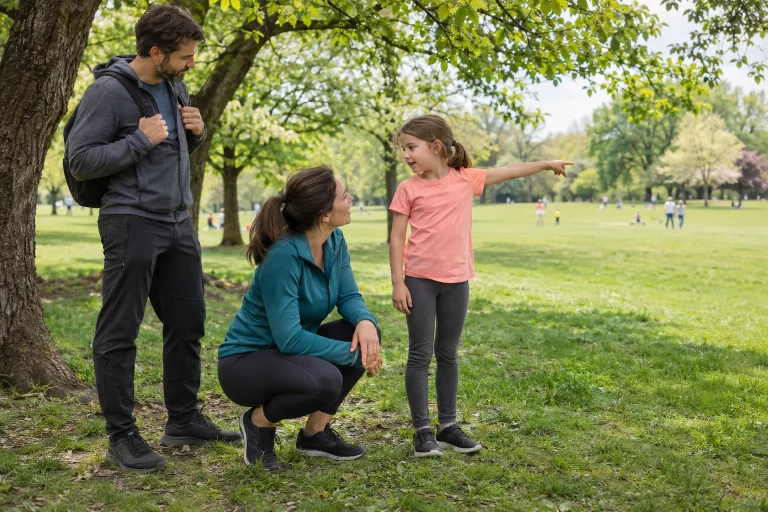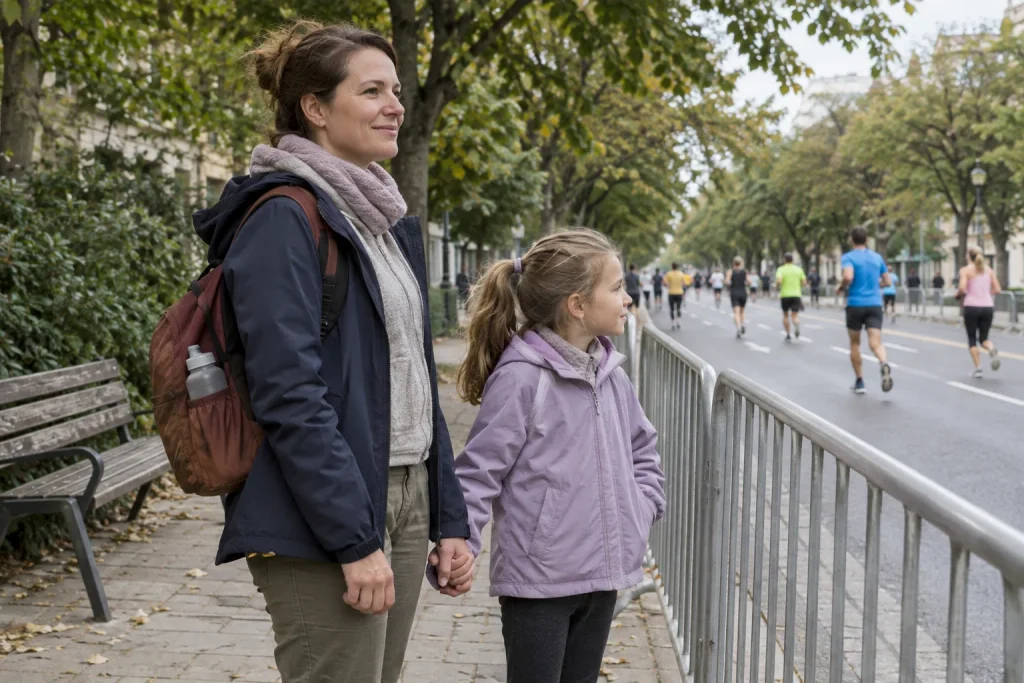
Watching a city race with children is a different task from catching a runner at several kilometre points alone. Closures may separate places appearing close on a map, a transfer may involve much waiting and the most spectacular section may not work well for the family. A good plan leaves a manageable day even if you see your family member only once.
Build the spectator route from the actual possibilities of the family members travelling with children. The runner’s kilometres provide reference information, not compulsory checkpoints for spectators. The following method is an original organising aid: fill in particular locations and times from current organiser and transport-provider information.
Map the whole journey, not just cheering points
The family route begins at the home or accommodation door and lasts until returning. Set out travel there, walking from the stop or car park, reaching the spectator position, waiting and returning. If meeting the runner at the end, give the meeting point its own place in the plan rather than treating it as another name for the finish line.
Walking between points can easily disappear in planning. Even between good public transport connections there may be a long detour, stairs or a race course crossable only at designated points. Check which side the family arrives on and where they can leave from it. Crossing the running course is not a freely available shortcut.
In Budapest, the official BKK journey-planning platform separately provides journey planning, real-time changes and planned traffic alterations. Search for the race day and actual period instead of relying on a usual weekend timetable. Elsewhere, likewise use official local-provider announcements together with organiser spectator information.
A good spectator position answers several questions
Being able to see the runner is only the first consideration. Access with children, leaving space for pedestrians and being able to move on lawfully matter. Do not regard a cheering location as certain from a nearby café, bridge or park name. The precise side, entrance and exit count too.
Check waiting conditions: accessible toilets, places for breaks and what current weather means at the chosen spot. An earlier photograph does not prove these exist. If using a pushchair, mobility aid or having another specific access need, ask the organiser about the whole connection, not simply whether the race is accessible.
A good place is not defined by getting as close as possible to the runner. Seek somewhere the family can watch together without a child having to push between others to see. If only a narrow, continually congested space promises a close view, a more distant, orderly position may be more manageable. Follow staff instructions in the actual situation.
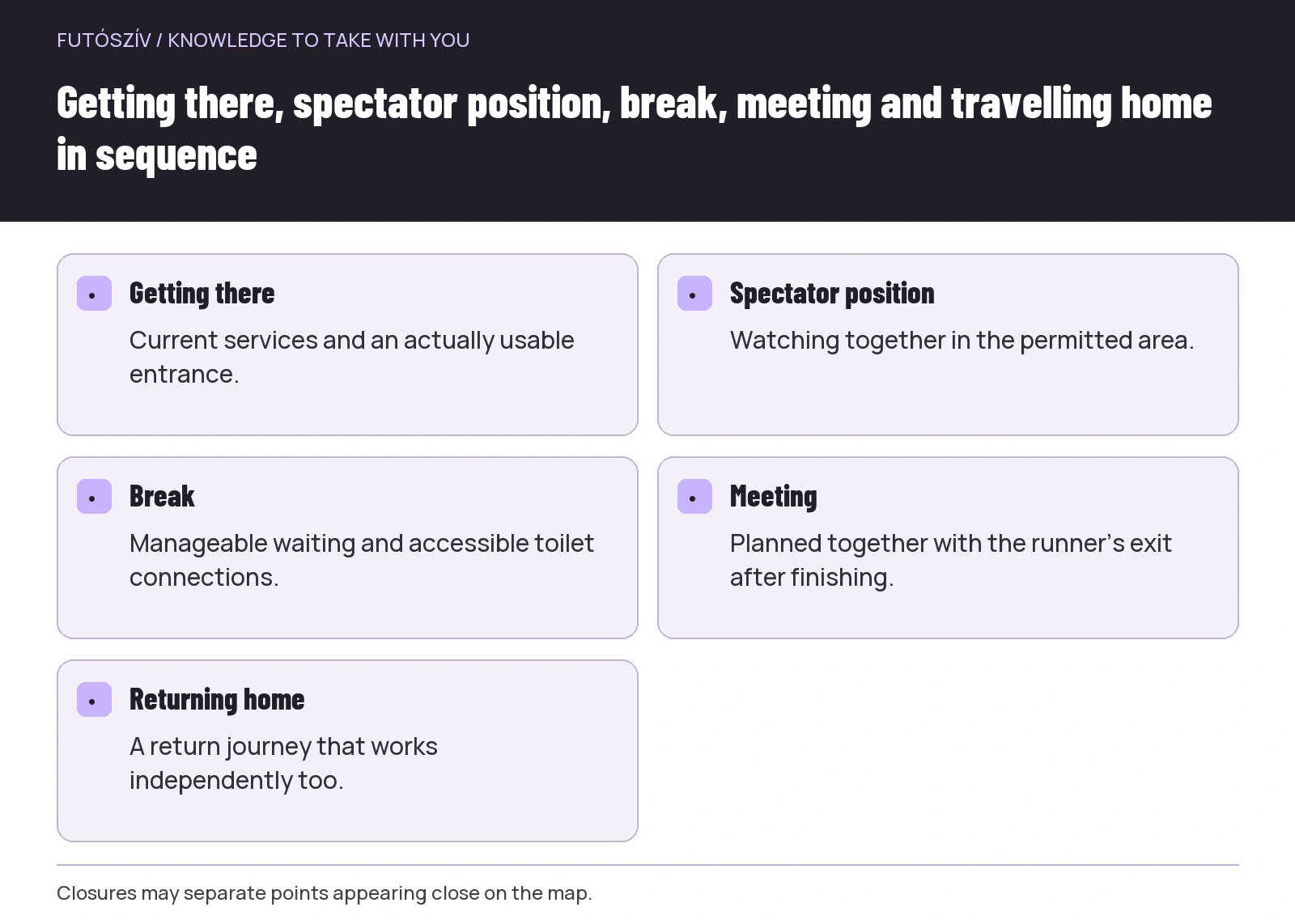 Enlarge diagram
Text version of the diagram
- Getting there
- Current services and an actually usable entrance.
- Spectator position
- Watching together in the permitted area.
- Break
- Manageable waiting and accessible toilet connections.
- Meeting
- Planned together with the runner’s exit after finishing.
- Returning home
- A return journey that works independently too.
Spectators also need to travel between two viewing points
A second cheering place belongs in the plan only if leaving the first and actually reaching the second form a comfortably understandable connection. Map distance is not the same as a route walkable with children plus a transfer. Reaching the stop, waiting, exiting and finding the position all belong to the journey.
Here is an entirely original, fictional calculation. If the runner covers five kilometres between the first and second observation points and the planning estimate uses six minutes per kilometre, that is thirty minutes of running. If spectators’ total relocation is estimated at twenty-five minutes, only five minutes remain. This does not prove the family will arrive in time, especially under changing conditions.
| Part of the fictional calculation | Estimated time | What does it include? |
|---|---|---|
| Runner’s time between two points | 30 minutes | A personal estimate, not a guaranteed arrival |
| Spectators’ relocation | 25 minutes | Leaving, transport and approaching the new place |
| Difference | 5 minutes | Even a small variation can consume it |
| Another choice | One spectator position | Less movement, more orderly waiting |
The example’s pace is not a recommendation for the runner, and twenty-five minutes is not actual Budapest journey information. The calculation highlights that the connection between two points is determined by both movements together. If it works only through constant rushing, omitting the second position can improve the family programme.
Closures can change over time too
A major event’s transport effects do not necessarily begin at the start or end when the family member finishes. Setup, separate events and reopening areas may involve different periods. Check transport information for the entire visit day, both arrival and departure.
The official BKK October 2026 announcement about the SPAR Marathon illustrates this, reporting a closure beginning before race days as well. This is a past example of why checking the whole period matters. It is not the next event’s transport arrangements, so do not use its street and service details as a current itinerary.
Alongside particular transport information on the family sheet, record when you checked it. Before departure, reopen current provider changes as well as the race website. If a stop or entrance has changed, give the revised plan to the other adult too. Different versions on two phones can easily lead to two different meetings.
Discuss the journey sequence with the child too
The whole race need not be explained through kilometre points. A simple sequence may suffice: travel there, cheer at one place, take a break, then meet the runner or go home. If committing to two positions, explain that travel occurs between them. “We will just pop somewhere else” should not unexpectedly mean a long walk.
Explain beforehand which adult the child stays with and how to signal a need for rest, toilets or a change. Adults should manage the spectator route; the child should not be responsible for punctual arrival or monitoring the tracking app. Several children need not choose identical cheering roles.
The police family advice also relevant to crowded events mentions an agreed meeting point if contact is lost. Learn the particular event’s information point and way to request help on site too. This does not replace the accompanying adult’s attention or justify delaying help with an actual problem.
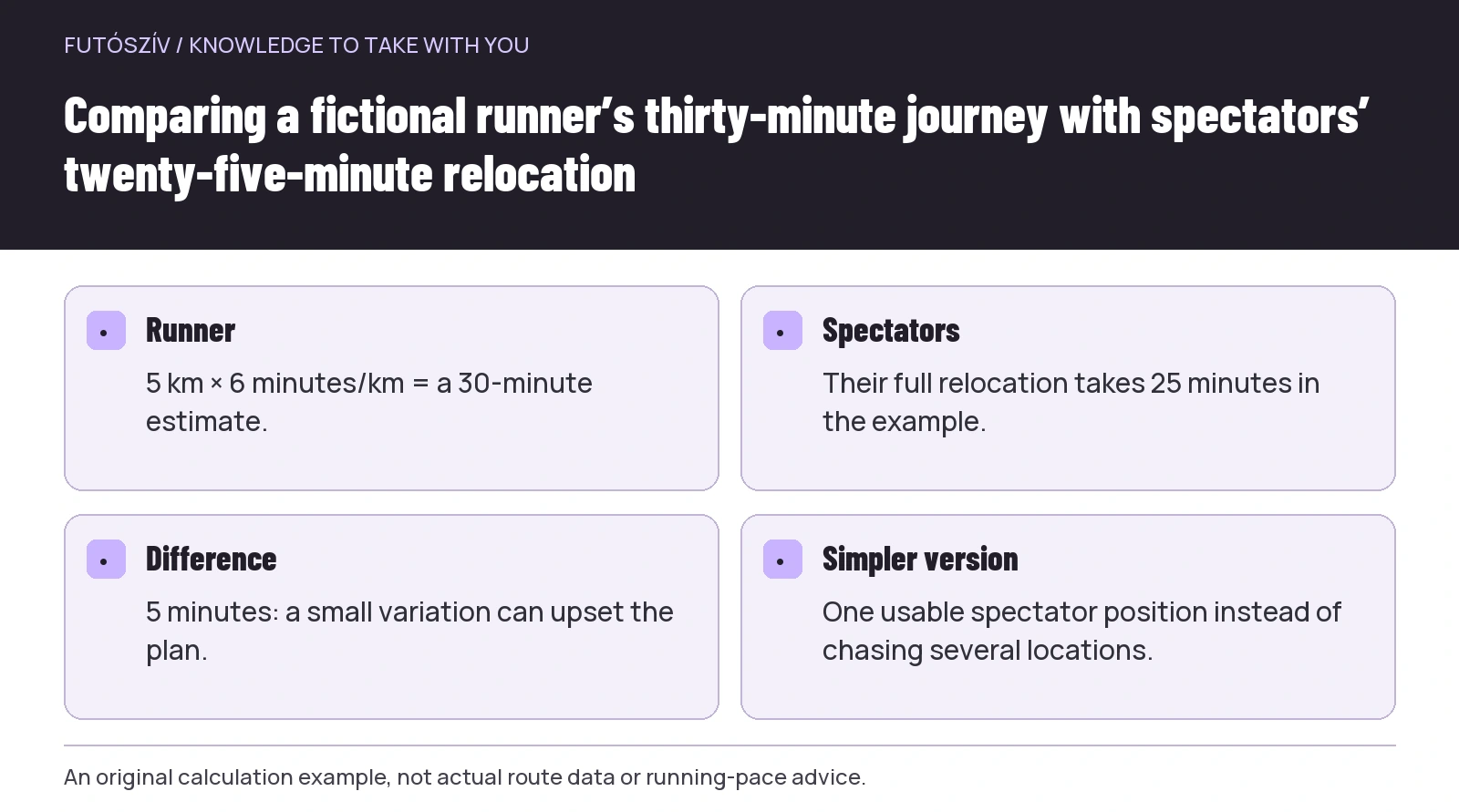 Enlarge diagram
Text version of the diagram
- Runner
- 5 km × 6 minutes/km = a 30-minute estimate.
- Spectators
- Their full relocation takes 25 minutes in the example.
- Difference
- 5 minutes: a small variation can upset the plan.
- Simpler version
- One usable spectator position instead of chasing several locations.
Agree your commitment with the runner too
The runner should know where you plan to stand, on which side relative to their direction and how long you will stay. A repeatable, precise description is better than “You will definitely see us by the bridge”. A place may change or fill up, so also agree it is fine if you miss one another. The runner need not change direction or stop for a missed photo.
Spectators should not promise several compulsory meetings at once. If deciding after the first to skip the second, signal through preagreed arrangements when possible. Nor is it realistic for the runner to help the family’s transport through continuous calls. The plan should be understandable without them approving every step from the course.
Cheering and personally meeting after the finish are separate commitments. A family plan may involve being beside the route with children and then going home. Another may keep you near the central area throughout. Neither needs treating as less valuable support if agreed beforehand and manageable for participants.
What a spectator bag must not do
Belongings should not obstruct crossings, spectator movement or course use. With signs and flags, check when and where they can be held without continually blocking others. Do not place pushchairs or bags at designated crossings or in runners’ paths. Match exact positioning to venue arrangements.
The London Marathon Events spectator guide specifically asks spectators not to enter the course for photos or to run beside participants. Keep this organiser example in mind when discussing family roles too. Seeing the runner does not authorise crossing; follow the particular event’s designated crossings and staff instructions.
Keep waiting essentials easily accessible in the bag without moving the whole home out for the day. Assess items chosen for family needs and weather alongside the task of carrying them all. A bag full of hard-to-manage objects can alter the relocation plan too.
Prepare a simpler version as well
A simpler plan is not a retrospective failure. Decide at home what remains if the chosen area is too crowded, transport slower or the family wants a shorter programme. This may mean one easily reached viewing place, staying centrally or omitting the visit. The alternative should also use officially available routes.
Do not invent an entirely new city tour while standing in a crowd. With a known alternative, you understand which side to stay on, how to reach a stop and where to contact one another. If staff direct a different route, adapt. Your plan cannot override current event arrangements.
Explain changes briefly and clearly to the child. For example: we will not go to the second viewing place today; we will take a break here and then meet as agreed. The decision follows actual circumstances rather than meaning the family “could not manage cheering”. Agree this flexibility with the runner beforehand too.
The final check should follow the spectators’ journey
Before departure, read through the plan once from the family’s perspective. Do you know the entrance, where you first wait and how to continue? Does any part work only through a prohibited or uncertain crossing? Does the second position actually fit, or only appear convenient on the map?
Then check meeting and getting home. Include the full finishing process and family’s actual movements rather than only the runner’s finish time. Necessary keys, tickets and belongings should not remain with someone still on the course if others leave earlier. The shared day needs to work after the race too.
A child-friendly spectator plan is not detailed because it connects many points. It is usable because every connection is real, waiting is manageable and shorter participation has room. One well-chosen section, a few personal words of encouragement and a predictable meeting can make the day a fully valid shared occasion.
How Futószív articles are prepared: our editorial guidelines.