A small rubbing spot can become the most troublesome part of a long run
A shirt seam, shorts hem, sports bra strap or moving running vest may initially be barely noticeable. After many repetitions, however, it can leave an area of burning, sensitive skin. Chafing is a practical problem: look for opportunities to change what happens where skin, clothing, moisture and movement meet.
The Columbia University information on chafing caused by sports bras also highlights the combined role of skin, clothing and perspiration. Fit, fabric, friction-reducing protection and early trials may all matter to a solution. Choosing a single product said to work for everyone is insufficient.
Chafing is nothing to be ashamed of, and does not prove that your body is wrong or that you are unsuited to running. It can occur with many body shapes and over both short and long distances. However, not every red, itchy or painful skin symptom is simply rubbing: persistent, spreading or unusual symptoms require professional help.
First map what is touching what
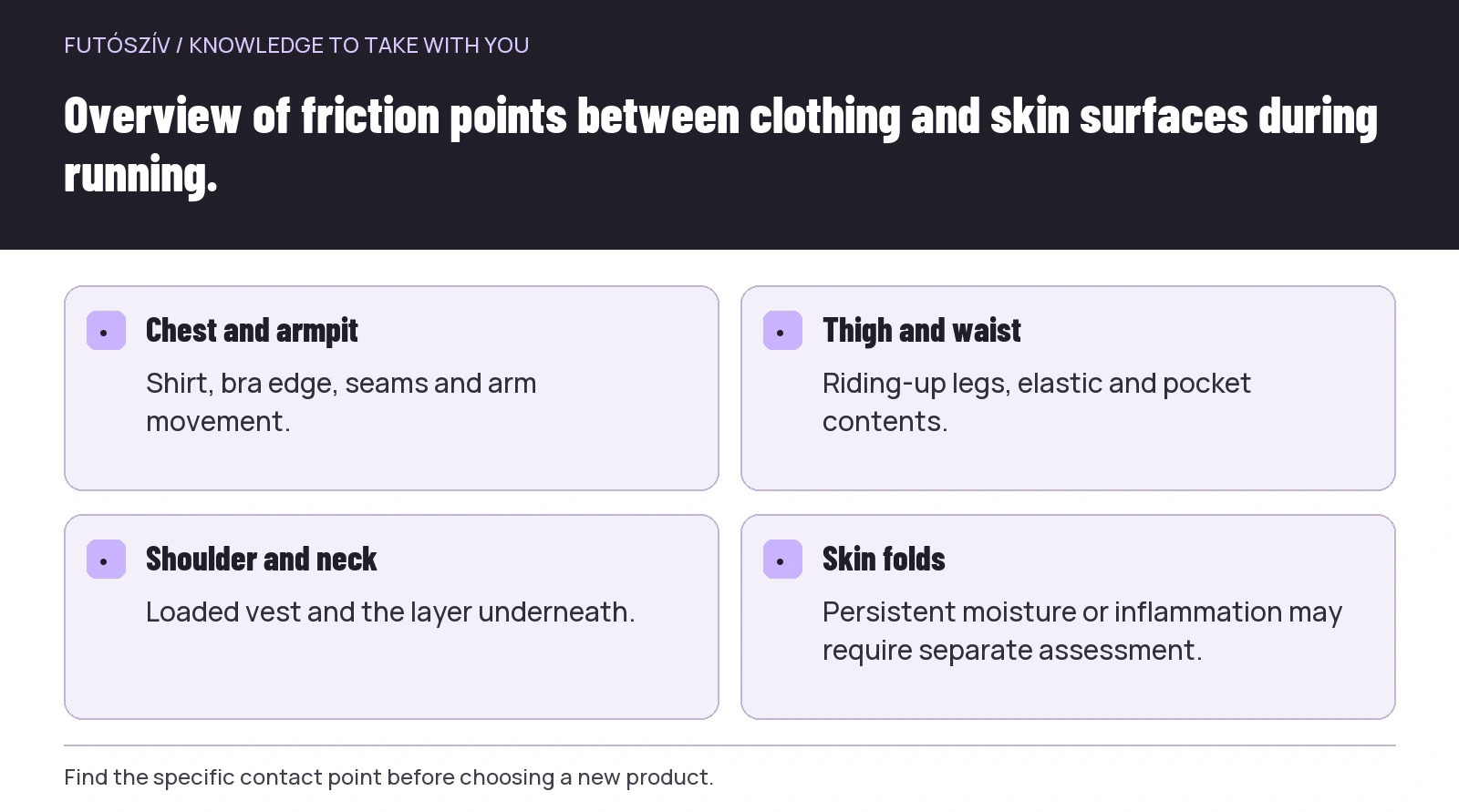
At the chest, shirt and skin may meet; at the armpit, the arm and fabric; and at the inner thigh, skin against skin or a clothing edge. Waistband elastic, a neck label or a vest strap at the shoulder may be relevant. The same garment change cannot resolve every location.
After running, see whether the visible skin mark follows a seam, strap or pocket. Turn the clothing inside out too: is there a hard section, a displaced insert, a rolled-up edge or fabric that has become stiffer than before? This is practical troubleshooting, not a definite diagnosis of the skin symptom.
A short note is enough: which outfit, how long a run, what weather, and where the sensation began. Do not merely remember that this brand is bad. A particular cut, size or combination of layers under the vest may not work, while another item from the same manufacturer is comfortable.
Clothing needs to behave well in motion
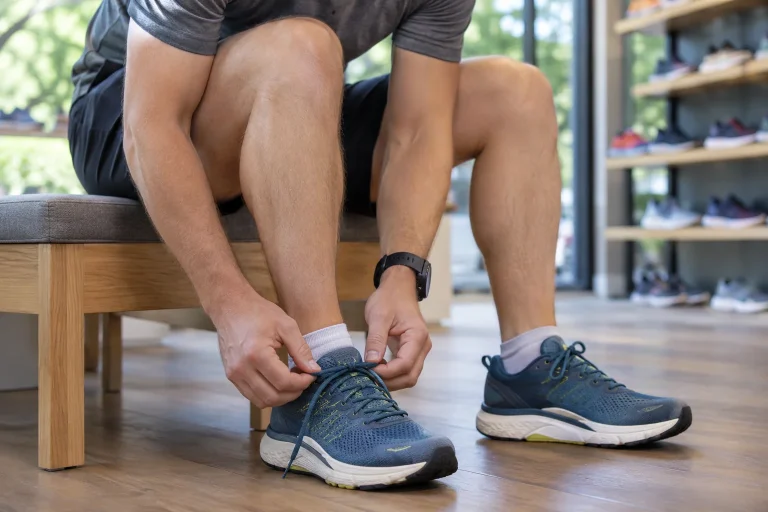
Standing in a fitting room does not reveal everything. Raise your arms, turn, bend, take a few running steps and notice whether the top or shorts legs shift. If fabric already bunches in one spot when dry, address it before it repeats on a longer run.
Overly loose and overly tight clothing may cause problems in different ways. Looser fabric may move around; a tight edge may press or dig in. There is no single correct tightness for every runner and body area. The aim is clothing that does not need constant adjustment while movement and breathing remain comfortable.
The fabric composition on the label is useful information, but not a complete wear test. Knit, thickness, stitching and cut can differ even for the same fibre. Do not choose for a particular problem through a general cotton-versus-synthetics debate; your own skin, moisture management and actual movement together provide feedback.
 Enlarge diagram
Text version of the diagram
- Chest and armpit
- Shirt, bra edge, seams and arm movement.
- Thigh and waist
- Riding-up legs, elastic and pocket contents.
- Shoulder and neck
- Loaded vest and the layer underneath.
- Skin folds
- Persistent moisture or inflammation may require separate assessment.
Sports bras: check several points, not just the strap
Columbia’s information states that both excessively loose and excessively tight fits may contribute to chafing. The underband, shoulder strap, side seam and clasp touch skin in different places. Pain at one point does not necessarily mean everything needs equal tightening.
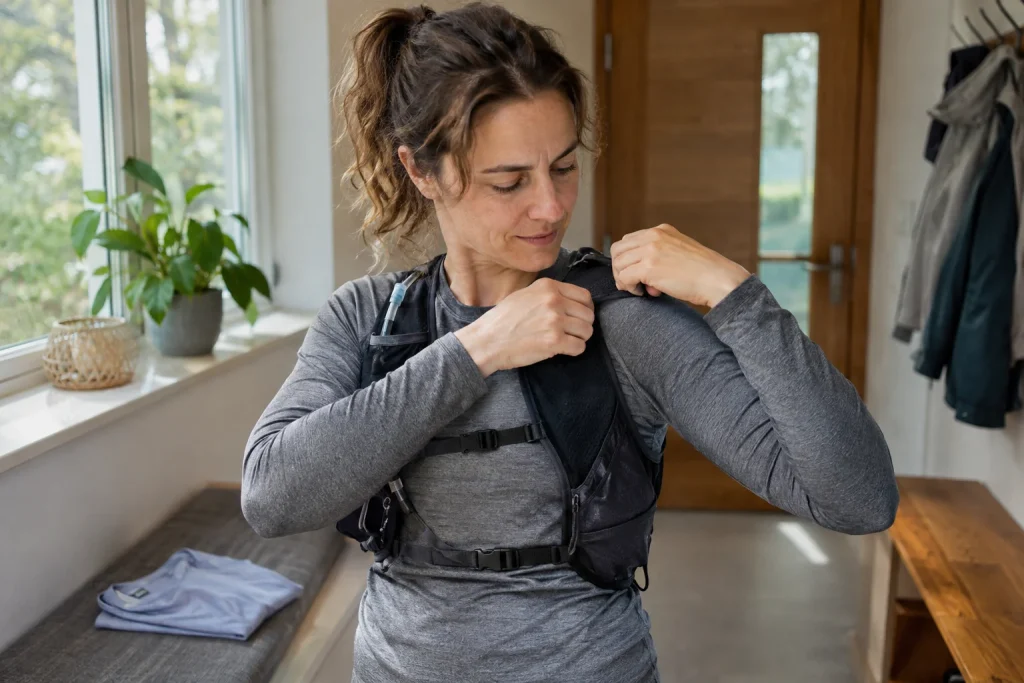
During a trial, notice whether the underband stays in place as you move, whether straps slip or dig in, and whether a hard contact point appears at the breastbone or armpit. Check this with your running vest too if you will race in one. Two individually comfortable pieces may create a new pressure point together.
A size label does not necessarily mean the same fit across brands. If your body, the garment’s support or the sensation during running has changed, reassess size and style. You need not immediately buy several new products: first identify where and under what circumstances the problem occurs.
Shorts, thighs and waist: cut is an intervention too
At the inner thigh, leg length, riding up and the surfaces touching each other may matter. A longer inner layer that stays in place can move differently from a short hem that constantly rolls up. This is a kit choice you can test, not guaranteed prevention for everyone.
Test pockets with their actual contents. A phone, key or several gels may change how the shorts hang, the pull at the waist and fabric movement. Shorts that work empty may behave differently with race supplies. The same applies to a belt and race-number holder.
If clothing only works with constant adjustment, do not expect it to improve on the long run. First try a different adjustment or combination on a shorter loop. If no version works, leaving that item out may solve the problem; there is no need to force your skin to adapt.
Running vests and backpacks: test the layers under load
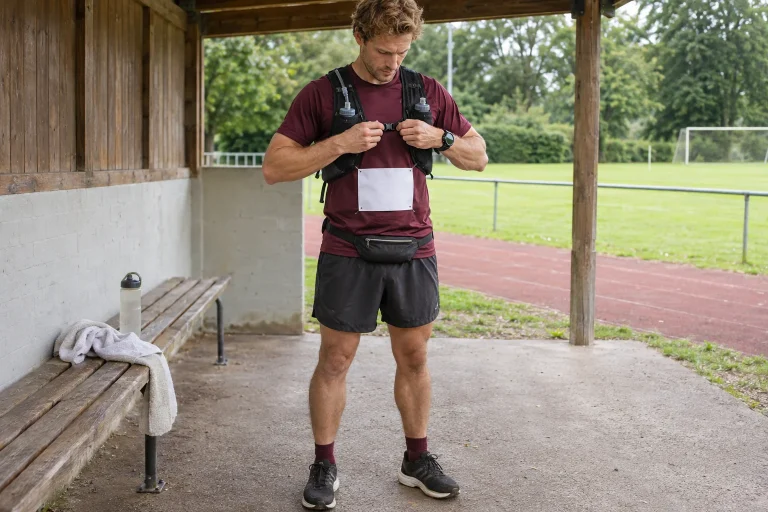
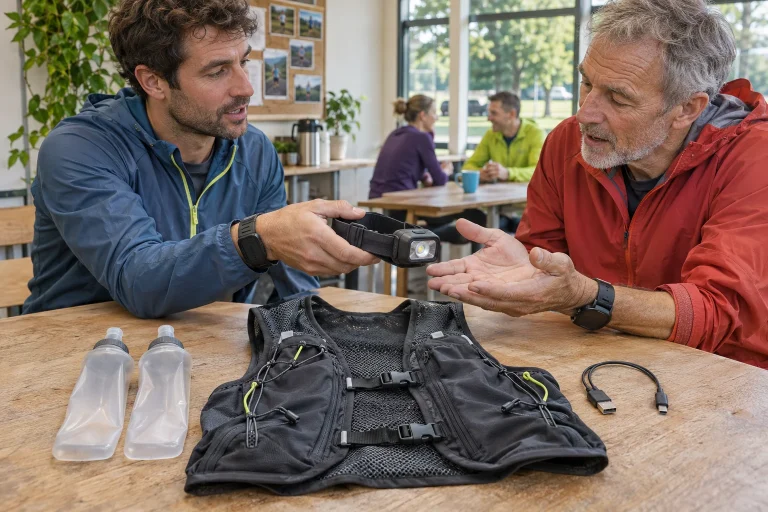
A vest strap may barely move when empty but pull differently with full flasks or mandatory kit. Load the planned weight and actual bottles for the trial. Watch movement at the neck, collarbone, armpit and waist, rather than only how tight it feels while standing.
A shirt collar or seam can fold under a strap. If the problem always appears in the same place, inspect how the layers meet too. A small adjustment or different top may make more sense than adding one skin-protection product after another to the same rubbing combination.
A short loop from which you can easily return home and make changes is useful. The trial succeeds when it reveals what is uncomfortable, not when you complete the predetermined distance at any cost. Stopping early here preserves information about your kit and may prevent a minor discomfort from becoming a larger skin problem.
Skin protection: seek a simple, previously tested solution
A protective layer that reduces friction may help in some situations. The St John Ambulance Australia event health protocol also lists petrolatum for reducing chafing associated with running and cycling. This does not mean it is equally suitable for every skin type, every wound or underneath every item of contacting equipment.
Try the selected product according to its instructions, initially on a smaller area and for a shorter occasion. If it stings, causes itching or a rash, do not continue simply because others swear by it. On damaged skin, mucous membranes or underneath specialist equipment, use only a solution considered suitable for that purpose.
For adhesives and dressings, skin tolerance, removal and moisture also need consideration. Removing a strong adhesive can itself damage skin. Do not try a new tape over a large area on race morning, and seek pharmacy or healthcare advice about appropriate protection for persistent problems or damaged skin.
 Enlarge diagram
Text version of the diagram
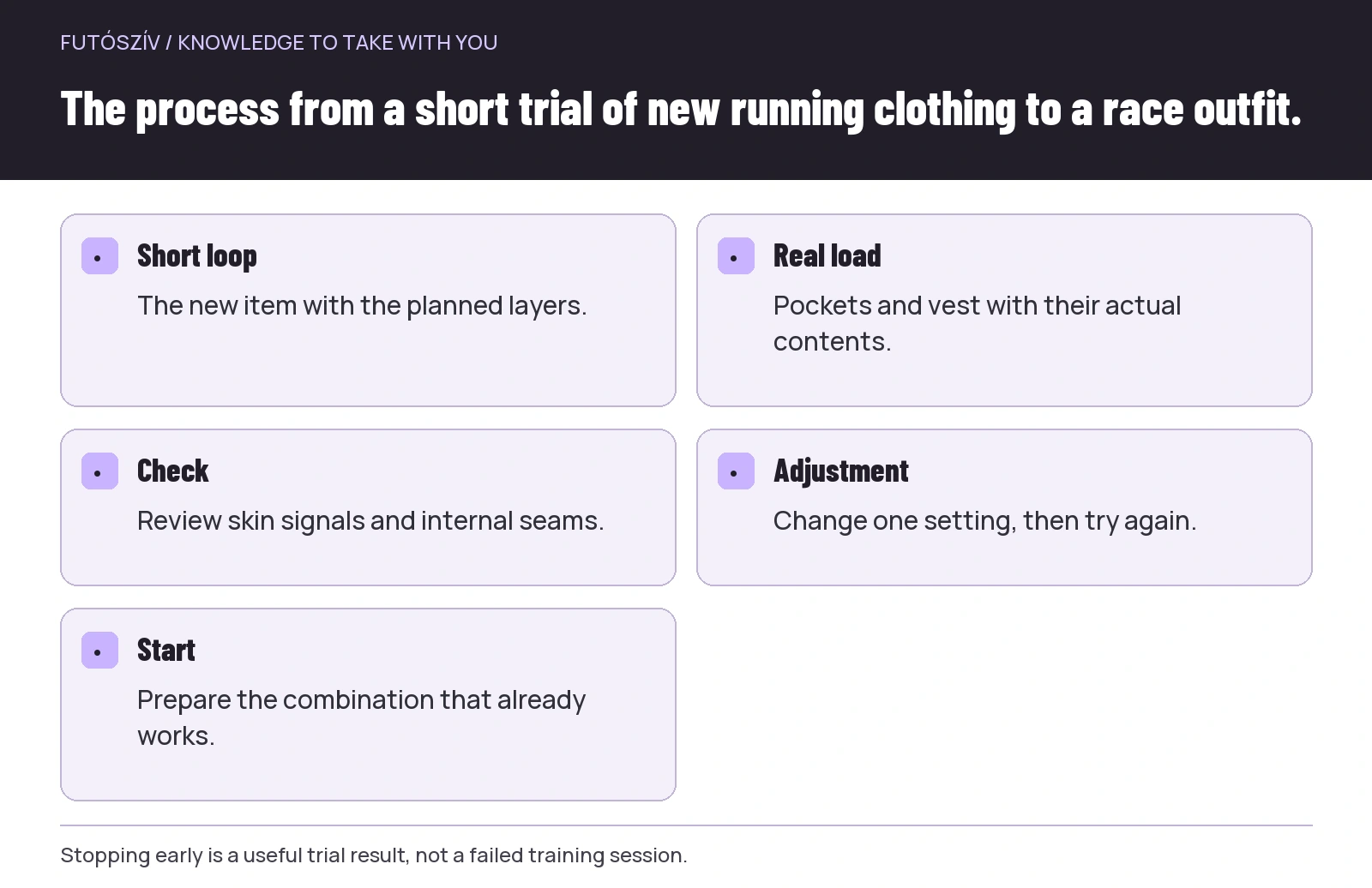
- Short loop
- The new item with the planned layers.
- Real load
- Pockets and vest with their actual contents.
- Check
- Review skin signals and internal seams.
- Adjustment
- Change one setting, then try again.
- Start
- Prepare the combination that already works.
Inflammation in skin folds is not always a simple sports injury
The Primary Care Dermatology Society describes intertrigo as an inflammatory condition of skin folds in which friction, moisture and limited ventilation can play a role. Secondary infection may also accompany it. Not every armpit, groin or under-breast symptom is this condition, so clarify the cause of recurring symptoms.
The Frimley Health NHS Foundation Trust information also discusses skin folds rubbing against one another. Recommendations for a clinical skin condition and testing running clothes on healthy skin are not interchangeable in every detail. If an area is already inflamed, weeping or regularly recurring, individual assessment may be needed rather than self-treatment.
Do not choose an antifungal, antibiotic or steroid cream solely by comparing photographs in a running group. Symptoms in similar locations can have different causes. Professional guidance is useful because it shows the possible complexity, not as a source from which to copy a treatment for yourself without examination.
If skin starts burning during a run
Stop in a safe place and see whether you can adjust a clothing edge, empty a pocket or sort out a strap. You need not wait until the finish for every small adjustment. If skin is already broken, bleeding or movement worsens the problem, shortening the session and seeking help as needed may be appropriate.
In a public setting, you can request a private space at the medical point, particularly for the chest, groin or another intimate area. You do not have to show the injury to the group. A companion can help bring clothes or arrange travel home without passing on your intimate health information.
Do not layer unfamiliar creams, antiseptics and adhesives over each other beside the course. If you are unsure what can be used and where, seek advice. The aim is to reduce further friction and care for the skin appropriately, not to continue the original distance using any improvised method.
After running: gentle care, cleanliness and monitoring change
Clean the area gently, then dry it carefully rather than rubbing. Change out of damp, sweaty clothing. Do not scrub skin because perspiration makes it feel dirty: further mechanical irritation does not help a damaged surface. The type of injury may determine appropriate care; seek advice if needed.
For preventing intertrigo, the PCDS emphasises reducing friction and moisture and maintaining a clean, dry environment. It does not recommend talc and cornflour because of possible irritation. A homemade powder or strongly fragranced product does not become safe by being called natural.
Seek medical help for spreading redness, increasing pain, warmth, swelling, pus, fever or feeling unwell. With diabetes, reduced sensation or a condition affecting wound healing, individual advice may be appropriate sooner. Recurring symptoms that do not heal also go beyond trying another pair of shorts.
A short trial plan before the next long run
- First occasion: try the new clothing with its planned layers on a safely short loop.
- Second occasion: if it was comfortable, test pockets and vest with real contents.
- Check: inspect skin and internal seams, noting the early friction point.
- One change: where possible, adjust one setting at a time to make its effect understandable.
- Race: prepare the tested combination and have a plan for stopping because of symptoms.
Preventing chafing mostly involves refining details: seam placement, a working size, a properly loaded pocket and a signal noticed in time. It requires neither a perfect body nor expensive kit. A useful solution actually works with your movement and on your skin, while persistent skin symptoms still receive assessment.
Sources and further reading
- Columbia University, Go Ask Alice!: What can I do to prevent sports bra chafing?
- Primary Care Dermatology Society: Intertrigo
- Frimley Health NHS Foundation Trust: Intertrigo
- St John Ambulance Australia: Event Health Services Clinical Protocols, petroleum jelly
How Futószív articles are prepared: our editorial guidelines.