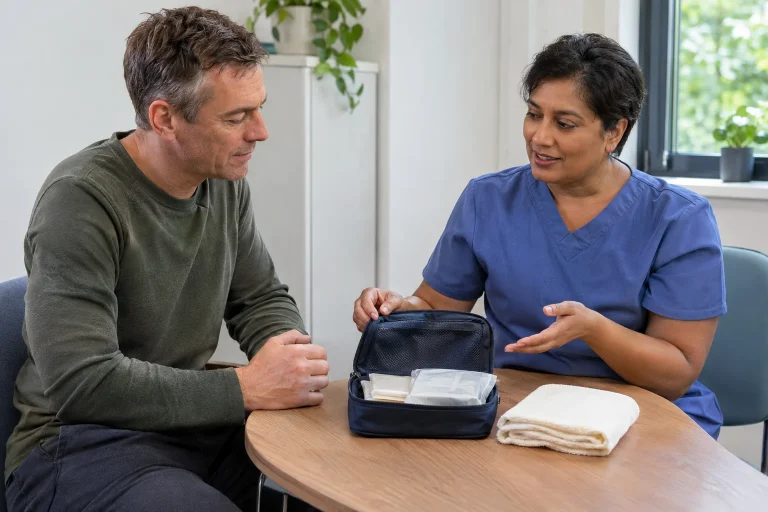
Running with an ileostomy: your personal fluid plan matters alongside your kit
Planning a run with an ileostomy involves recovery, stoma care and individual fluid guidance. Prepare specific questions to discuss with your care team.
352 articles · one running community
Planning a run with an ileostomy involves recovery, stoma care and individual fluid guidance. Prepare specific questions to discuss with your care team.
What have athlete surveys and small experiments found about side stitches? Understand the research, describe symptoms accurately and recognise why different abdominal symptoms…
Coordinating your postoperative diet with an exercise day starts with specific experiences. Prepare useful questions about eating, drinking and organising your day.
Chest-wall sensitivity to movement or pressure can be an important observation. Why is it not a home exclusion test, and how can you…
Running and targeted physiotherapy can have different roles with axial spondyloarthritis. Coordinate goals, changes in symptoms and follow-up within your individual care.
Weight change and tolerating running provide different information. Consider daily function, eating and different movement goals without chasing ever greater volume.
Movement after surgery and returning to running are separate questions. Coordinating healing, eating and everyday function helps you plan a meaningful sporting goal.
With lupus, photosensitivity, fatigue and overall health matter together. Which outdoor details and activity framework should you discuss with your treating team?
Changes in appetite and weight do not describe your condition during sport. How you feel, nutrition and medication care need to be considered…
New stiffness or swelling alongside known psoriasis? Discuss skin and joint histories together without automatically assuming the symptoms come from running.
The timing of medication and weight changes matters without proving a cause on its own. Symptoms, daily function and sporting goals need to…
A shoulder symptom's story extends beyond running. Work, carrying, dressing, sleep and altered sensation: what information helps an individual clinical assessment?