A used running vest is worth choosing when the specific item’s condition and design genuinely suit your task. A low price and familiar brand alone are insufficient. A good photograph may conceal a stretched pocket, missing chest cord or flask that does not fit the original holder. A good purchase process therefore begins with questions. This guide explores the images, information and trials to request, how to total the cost of bringing it into use and when an attractive listing should remain an unresolved question.
Define the task first
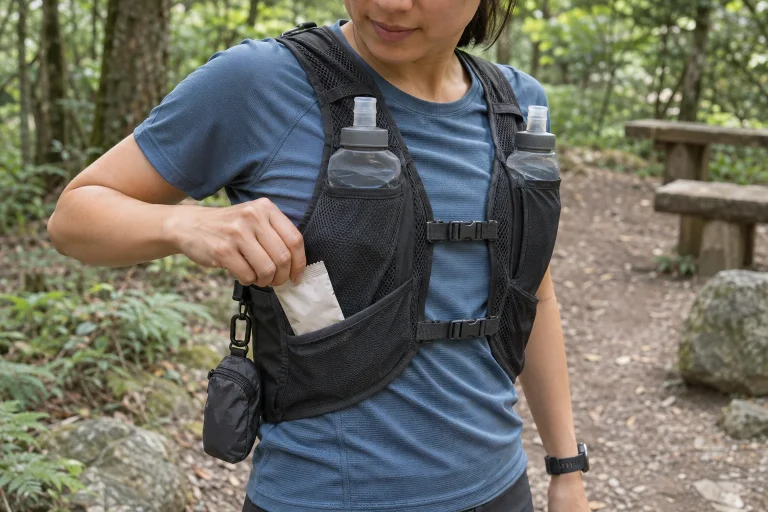
Write down what the vest needs to carry. Start with actual objects rather than a general capacity: a permitted-size hydration system, phone, lightweight layer and equipment required by the route. Stretch-pocket arrangement and access often matter more than one litre figure. For racing, check current compulsory equipment and whether it fits too. A previous owner’s running distance does not establish usability; design and condition suited to your task do.
Separate essential needs from preferences. Holding a certain reservoir size or closing securely may be necessary; an appealing colour matters less. Accessory needs are specific too: pole attachment, tube routing and flask holders differ between models. If you need a function absent from the original design, a cheap used vest may still be a poor starting point. Do not discover only after purchase that your equipment fits only with force or insecurely.
Ask for the full model name and label
The same brand and capacity can cover different years, cuts and pocket designs. Request a legible image of the internal product identifier, size and care label. This helps locate that version’s original description, size chart and care instructions. If the seller knows only the family name, photographs may help refine identification, but do not remove uncertainty by assuming. A listing title is not always a complete manufacturer identifier, especially for equipment bought years ago.
The Salomon ACTIVE SKIN 12 manufacturer product page , for example, describes design, hydration-system features and care information. This documents the specific version, not every older vest with that name. Compare the original description with the seller’s actual item. Current product imagery may differ from an earlier year; identify what you will receive rather than imaginatively buying features of a similar but different model.
Size belongs to your own trial
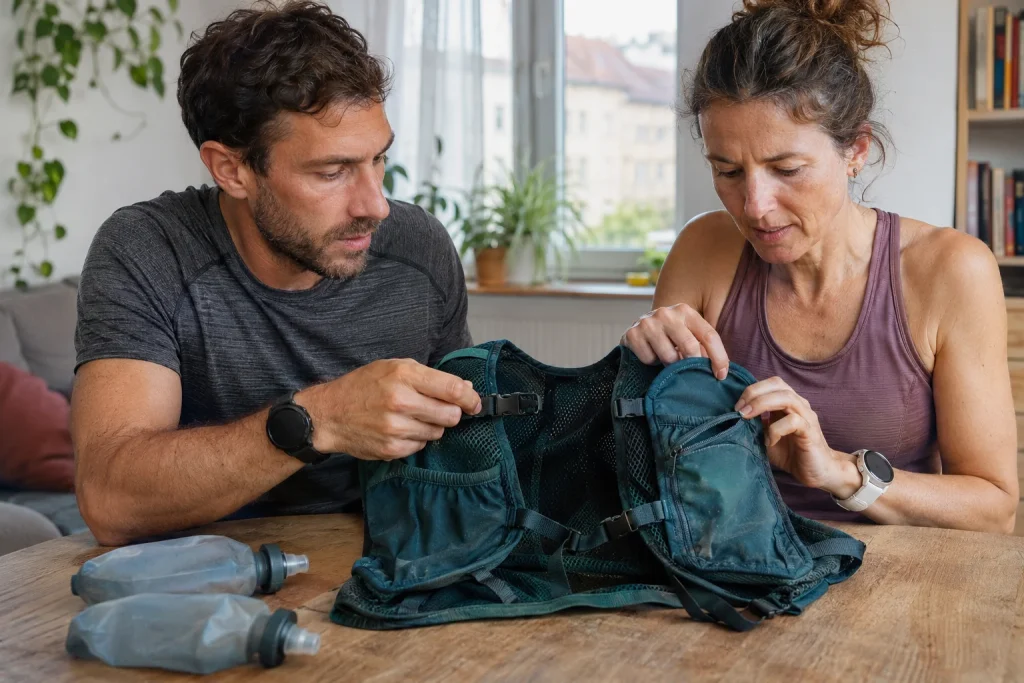
Ask for the labelled size, then compare the required body measurement with that model’s own chart. The seller’s height or statement that it fitted perfectly cannot replace this. Planned layers and load can also change how a vest wears. Seeing an empty vest pulled on says little about fit during running. If a trial is possible, use your normal running top and permitted planned equipment, in calm conditions and as agreed with the owner.
During the trial, observe closure adjustment, flask access and normal pocket operation. It should not be wearable only with every adjuster at its limit. Your movement and comfort matter, not a universal rule about how tight every running vest should be. If stretch material has visibly lengthened or closure is uncertain, separate size from condition. You may not need a smaller size; that particular used item’s structure may have changed.
 Enlarge diagram
Text version of the illustration
- Front and back
- Show main panels and pockets empty.
- Inside
- Body-contact surface and hidden compartments.
- Fastenings
- Close views of cord, loop, buckle and zip.
- Label
- Exact model, size and care information.
- Accessory list
- Laid out separately, showing only items actually included.
Which photographs should you request?
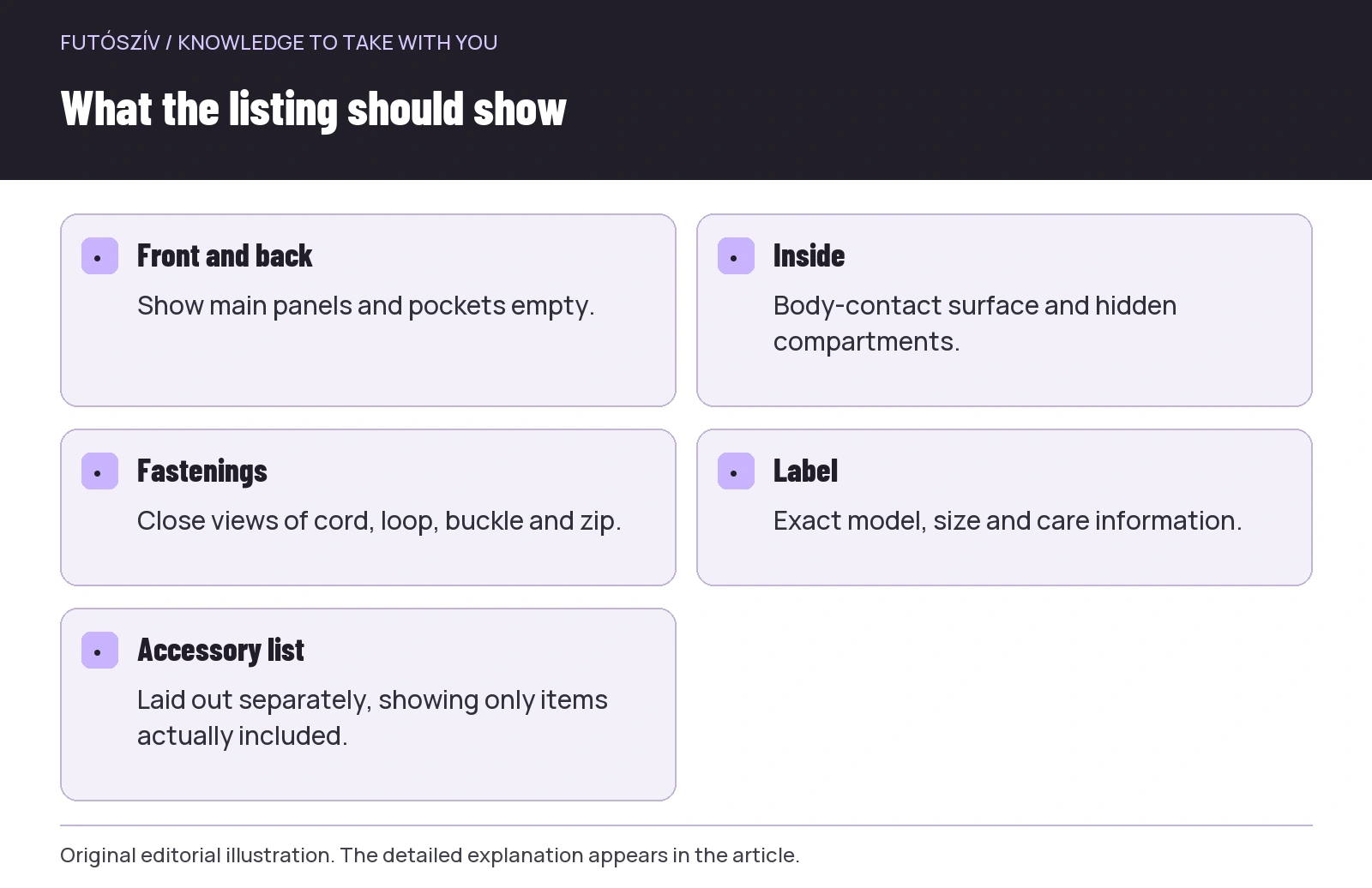
Include front, back and inner body-contact surface. Important fastenings, pocket edges and faults should also appear close up. Ask for the vest to be empty, as packed objects can conceal mesh and pocket bottoms. The internal label deserves a separate image, and accessories are best seen together, laid out separately. The aim is understanding condition, not a long photograph series for its own sake. A few sharp, well-chosen images can provide more information than many similar angles.
Look for load-bearing or hard-to-access areas: shoulders, pocket bottoms, seams, cord-guide loops and zips. Request clarification where anything is hidden. A dark mark cannot necessarily be identified from a photograph as discolouration, dirt or a material fault; do not confidently label it any of these. A sound condition description recognises image inspection’s limits and supplements it through personal viewing or targeted questions where possible.
Inspect structural condition area by area
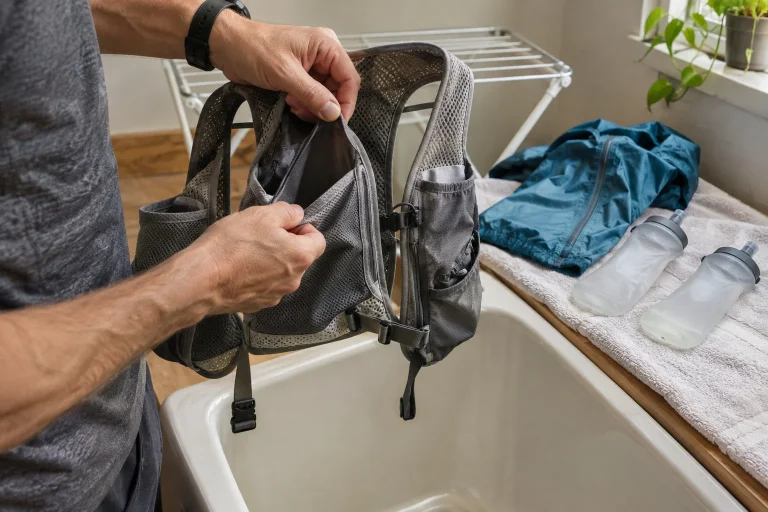
At front flask-holder edges, examine stitching and stretch material. At the chest fastening, check complete cord or strap, associated loops and closure. Find wear, fraying or damage on the back panel. Obtain information about pocket interiors too, as an externally intact vest can have detached lining or a hole inside. Fault location matters: a faint surface mark differs from damage to a retaining component. Do not collapse photographic condition into one score.
Try closures normally, without force. A zip can be faulty despite looking intact; a buckle can appear connected without actually securing. This is not expert certification, nor should you strength-test the seller’s gear. Distinguish known operation, visible faults and remaining uncertainty. If the condition of a part holding necessary equipment cannot be clarified, do not count it as certainly usable. Discuss possible repair first with an appropriate specialist and accurate component information.
| Area | What should be shown? | Why does it matter? |
|---|---|---|
| Flask holder | Edge, bottom and retaining component. | All may be needed to hold the correct flask. |
| Chest closure | Complete cord or strap, loop and buckle. | Replacing a missing part depends on the model. |
| Rear compartment | Inside surface and seams. | Not every fault is visible outside. |
| Label | Model, size and care information. | The exact version can be checked. |
| Accessories | The complete set laid out separately. | Listing image and actual package may differ. |
Make the accessory list itemised
Write down what comes with the vest. A flask in the original retail package is not necessarily part of the used offer, nor are poles or a phone visible in photographs automatically for sale. An itemised list prevents misunderstanding. Flask type, size and condition are separate questions; bladder and tube compatibility also need checking against your model’s documentation. It is worth knowing if an accessory came from another product. Something appearing to fit may not stay secure during running.
Assess the inside of a used hydration system and cleanability according to manufacturer instructions separately. Do not automatically count a hard-to-clean, cracked or leaking component as usable. In your comparison, separate vest and hydration-system prices if that makes the decision clearer. External cleanliness alone is not a complete check for liquid-contact parts. If you would resolve uncertainty by buying a new compatible component, check actual availability and cost while evaluating the offer.
History: ask rather than guess
Ask how the vest was used, cleaned and stored, and whether it was repaired. The seller’s memory is not a complete measurement log, so treat estimated use as an estimate. “Little running” may conceal different kinds of wear, and something stored long ago is not automatically like new. Washing history particularly matters when the label requires special care. The aim is knowing relevant history, not drawing a certain fault conclusion retrospectively from one answer.
The Osprey DURO LT manufacturer page , for example, separately gives that model’s care requirements. It reminds us that a vest cannot automatically be treated like a simple sports T-shirt. If an earlier intervention’s consequences are unclear, product-specific manufacturer help may be needed. Request a photograph and description of repairs. Repair alone makes the item neither good nor bad; method and present condition matter.
 Enlarge diagram
Text version of the illustration
- Purchase price
- The amount paid for the specific item.
- Necessary replacement
- Count only available accessories with confirmed compatibility.
- Repair
- An option and cost requested for a specific fault.
- Collection and trial
- Consider delivery and ability to inspect too.
- Usable outcome
- Both size and task must be satisfied.
Compare the complete cost of bringing it into use
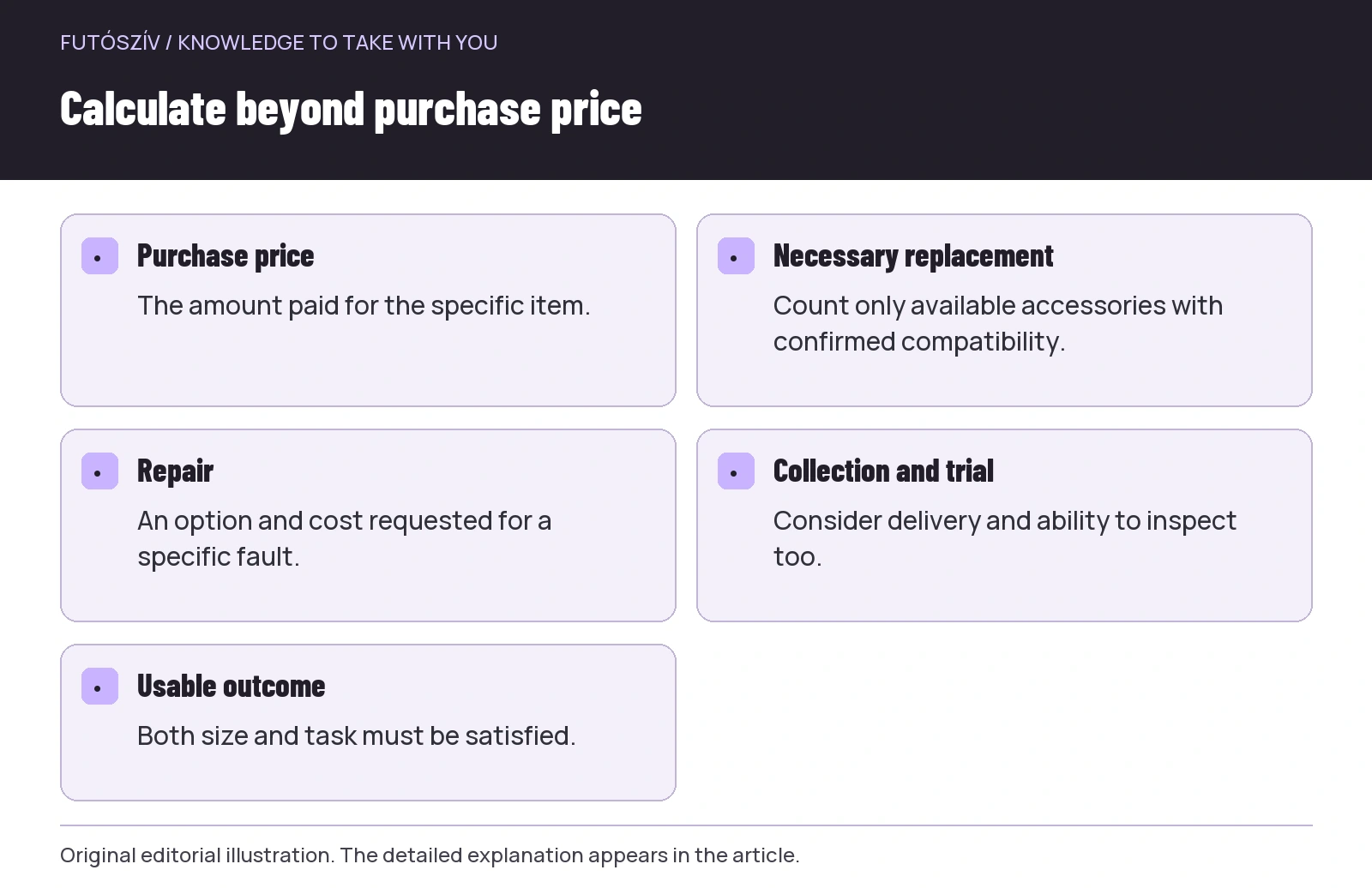
Alongside price, record replacing missing essential accessories, possible repair and shipping. Do not calculate using an imaginary part you might find somewhere later. Ask about availability of a replacement for the exact model and discuss repair against actual condition too. A cheap incomplete vest may then cost more than another complete offer in suitable condition. This is not a general contest between new and used: compare total costs of two options that can genuinely be made usable.
In an imaginary example, one vest has a lower price but no flasks, while another includes two confirmed suitable accessories. The first requires separately replacing what you want to use. Do not guess the original retail package price; check the real cost of replacements currently available. The example carries no market price or brand-test result, only the calculation’s logic. The same applies to size. A discount cannot compensate for an item that fails to work appropriately on your body with your equipment.
What does “good condition” mean?
An adjective in a private listing is not a detailed condition assessment. Even in an organised used-product programme, examine what a category means. The Patagonia Worn Wear programme page , for example, describes washing and inspection as part of its own process. This cannot automatically extend to another seller or any private listing, and regional conditions need separate checking too. The point here is process transparency: know what inspection actually occurred rather than reading only a favourable adjective.
Request specific condition details: stains, stretching, fraying, repairs, missing parts and whether closures work. An accurate description does not mean a faultless product. A known cosmetic mark irrelevant to your task makes deciding easier than uncertainty concealed behind “perfect”. Listing condition and what you see on collection should agree. State your own requirements clearly too, especially if a particular accessory or function is essential.
On collection and before first use
Calmly compare the item received with the agreed model, size, condition and accessory list. Do not skip inner compartments and closures because the outside colour matches. Clarify discrepancies or questions through the appropriate channel before immediately modifying the vest. Prepare it for use according to manufacturer guidance. Complete drying and condition inspection remain part of care after cleaning, just as with equipment you have owned for years.
During a first short trial with your equipment, observe access, retention and comfort before taking it to an important event. If suitable, buying used extends a usable item’s life. If size or important condition cannot be clarified, declining the purchase can also be reasonable. A good choice is not finding the cheapest listing, but equipment of known condition and suitable design whose replacement and care needs you understand.
Sources and further reading
- Salomon ACTIVE SKIN 12: manufacturer design and care
- Osprey DURO LT: model information and care instructions
- Patagonia Worn Wear: its own used-product programme
How Futószív articles are prepared: our editorial guidelines.