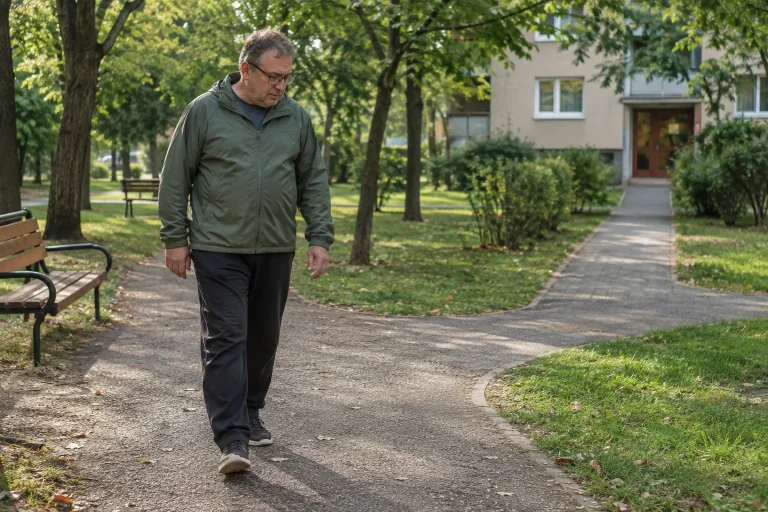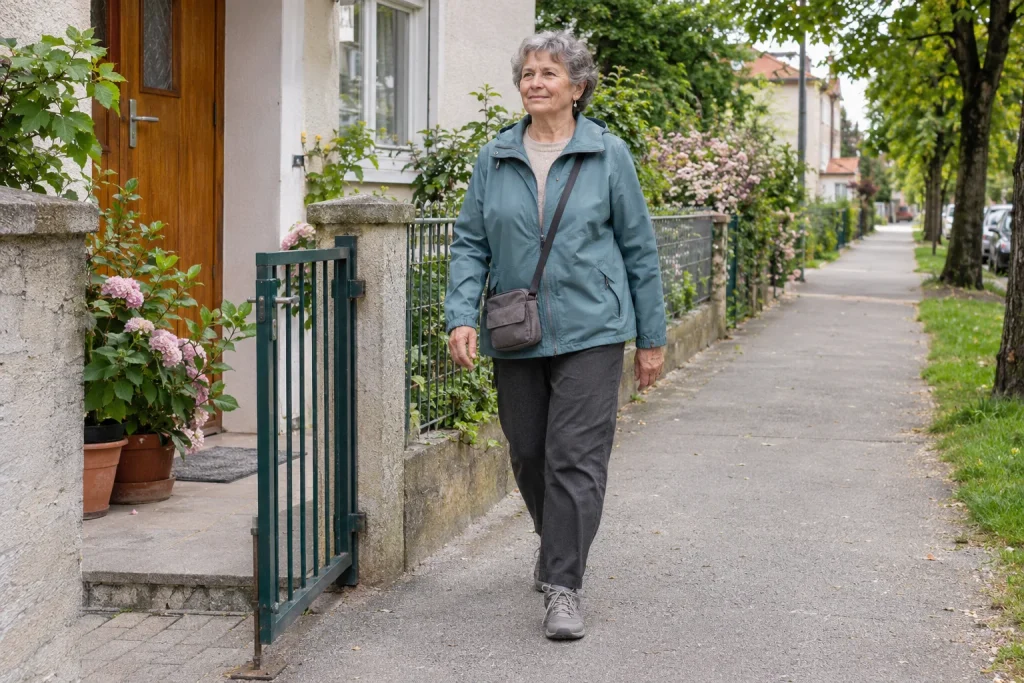
When a longer activity session cannot fit, putting the entire opportunity aside is easy. The thought often goes: by the time I dress and leave, I would already need to return, so there is no point. In older age, however, brief, appropriately chosen activity can have its own place. Every outing need not be a miniature version of a larger workout.
Brevity alone does not make activities equivalent. A calm walk, individually selected seated movement and a few minutes of fast running are different tasks. Current condition, surroundings and purpose matter. A small time window is no reason to make the outing “More valuable” through rushing or major effort.
A short outing needs no certificate of length
The WHO’s current physical activity overview explains that all appropriate activity counts and a little can be a valuable starting point. Recommendations do not suggest that every movement below a general minimum session length disappears. A short outing is not inherently pointless because it resembles no full sports class.
Value may connect to several purposes: calmly leaving the home, a little time in a nearby park or suitable movement within a long seated day. These need not always serve sporting results. Naming the personal aim helps explain why you selected that option.
Brief activity does not promise identical effects for every task. Total weekly activity, different forms and individual care needs still matter. An arbitrary small walk is not automatically a complete strength programme or sufficient preparation for every sporting goal. Value and suitability for a specific aim are separate questions.
What does observational research show, and what does it not?
An original device-based study of older men’s activity analysed daily movement volume and distribution. Results indicated no separate importance of bouts lasting at least ten minutes beyond total activity volume. This examined associations, rather than separately measuring each brief activity’s effect to create a personal intervention recipe.
We therefore derive no certain lifespan gain for a short walk. Nor do we claim a specified minute count gives the same result in every health condition. The useful question is how to include genuinely available opportunities. A research average does not equal an individual’s current capacity.
Attention-grabbing reports on brief activity often highlight one number. Add who was studied, what movement was measured and the outcome. Data from older men do not automatically form a rule for every woman, condition or running form. Turn general information into personal choice only with your circumstances.
 Enlarge image
The real window includes preparation
Free calendar time is not always entirely available for movement. Shoes must change, keys be found, the gate reached and the next task resumed. Omitting these can turn a brief outing into rushing. Seek an accessible version for the whole small programme.
A nearby path may fit while travel to a favourite distant park is currently too much. Another situation may make suitable movement indoors more accessible. Distance does not measure value. Usability means being able to begin and end calmly within the day.
| First examine | What to clarify | Why it helps |
|---|---|---|
| Preparation | How much dressing and searching for objects are needed? | Getting started does not remain hidden within free time. |
| Location | Is the suitable environment immediately accessible? | Travel does not consume the entire outing. |
| Return | Can you finish calmly before the next fixed task? | Real time remains for ending too. |
These questions prescribe no minute-by-minute timetable. One person reaches the street quickly; another needs different preparation because of stairs or assistance. Adapt your outing accordingly. Comparison with others’ departure time is unnecessary for finding an appropriate option.
A short walk, seated activity and jogging are different choices
The NHS guide for older adults mentions light activity and recommends breaking up prolonged inactivity. Daily movement includes more than running. Appropriateness to individual condition may matter more than looking athletic.
A walk can retain its own purpose without becoming a jog every time; a comfortable outing is not a “Failed run”. Seated movement can matter if appropriate, but choose the task and equipment for your abilities. Sitting does not automatically provide safety with every symptom.
A brief jog can pose a different loading question. The CDC older-adult activity page emphasises a plan matching individual abilities and condition. Restarting after inactivity, illness or uncertainty may require professional discussion of the chosen form. Brevity cannot replace that judgement.
Know several noncompeting options: outdoors or home, social or independent. They need not form one difficulty ladder. Different daily conditions and purposes can support different choices, none a compulsory waiting room for running.
Interrupting sitting and weekly sport are separate tasks
You may have regular favourite sport but long still periods across the remaining day. Alternatively, brief daily movement may be accessible while organised outings are rare. Distinguish the patterns. One training entry cannot describe a whole day, nor one seated afternoon your entire week.
The NHS information on everyday activity also offers small opportunities within daily life. It does not require trying every idea. Stairs, walking linked to public transport and other situations vary in personal usability. Select an appropriate idea from the actual environment.
An at-home day may offer predictable points where brief movement feels good and is appropriate. Avoid dangerous dual tasks: no walking around with hot pans or checking reminders in traffic. Give the opportunity its own calm place. Existing routines can provide connections without turning every task into exercise.
- Choose a situation genuinely recurring in your day.
- Identify suitable movement easily accessible there.
- Allow preparation and ending time.
- Keep choices adaptable when circumstances change.
The list offers organisational prompts, not compulsory daily repetitions. Other care, assistance or rest may take priority some days. Changed circumstances need not become a mistake after every missed alert. The aim is more appropriate opportunities within the week.
Do not turn brief activity into frequent pressure to prove yourself
Seeking small opportunities can easily become another performance list: responding to every alert, measuring each small part and summing all minutes. If this creates more burden than help, choose something simpler. Constant data collection is not a condition of personal activity.
A reminder helps when supporting your intention. It needs neither penalties nor crammed evening compensation. A missed outing can provide practical information instead: no suitable place, changed weather or excessive preparation. Use that for the next opportunity.
Brief movement is not permission to push through pain. New symptoms, dizziness or unusual difficulty require handling appropriate to the situation. The small programme’s end need not be reached at all costs. Individual healthcare boundaries remain alongside general opportunity-seeking.
 Enlarge image
Three imagined days, different solutions
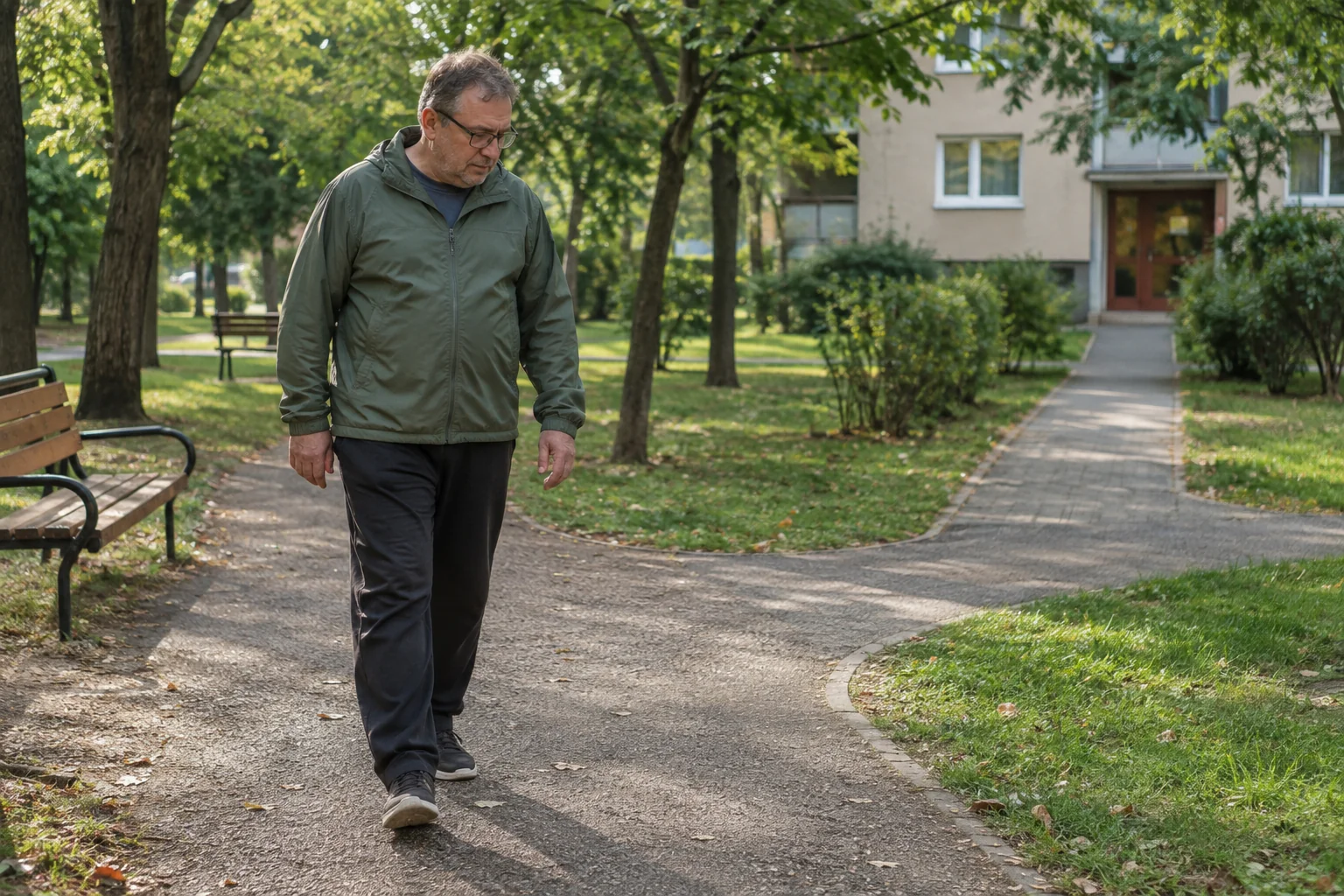
First, someone wants short outdoor time between morning home tasks. A nearby easily reversible route fits, so they do not travel to the distant favourite park. The aim is getting outside and moving calmly. They need not pursue the same loop as on a freer day.
Second, weather and access make outdoors unsuitable. The person chooses previously individually agreed activity available at home rather than a harder new video to compensate for little time. Choice follows personal conditions, not spectacle.
Third, unexpected changes remove even the small window. Rather than assigning double tomorrow, the person seeks the next usable opportunity. These examples provide no universal daily plan. Each connects activity to real conditions instead of requiring one perfect outing.
What should you retain from brief outings?
Observation can be simple: which option begins calmly, which location is reachable and which social or environmental condition helped. Every experience need not become a numerical value. A nearby route working well while another option’s preparation proved complicated is useful information too.
A later plan can develop gradually from this. Give desired changes an understandable purpose: more suitable occasions, another activity or support for an individual function. Brief activity need not automatically build towards longer running. Its present opportunity can retain independent value.
If only brief movement fits now, you need not read zero value into it. An appropriately chosen, calmly organised outing can genuinely belong to the week. Suitable form, accessible place and adaptable plans help more than requiring only a long, athletic-looking programme to count.
Sources
WHO: physical activity and the value of brief outings; Original study of older men’s activity volume and distribution; NHS: activity for older adults; CDC: activity matching individual ability; NHS: creating daily opportunities. Checked: 21 November 2026. The daily examples are not individual activity prescriptions.
How Futószív articles are prepared: our editorial guidelines.