A BMI calculator gives a different note after you select your ethnic background from the one you saw before. It is easy to infer that running rules change too when you have a different body size or belong to a different group. Health-risk assessment answers a different question from an individual activity task, however. A screening consideration is not a description of someone’s entire health or their place in a running community.
This article separates what BMI and consideration of some population differences may be used for, what one original study examined and what remains an individual question. We do not assign running clearance, bans, pace or compulsory weight targets based on ethnicity or body size. Describing British guidance does not mean its categories determine a Hungarian screening or treatment schedule for every reader either.
BMI is a relative body-size measure
Body mass index relates weight to height squared. It is therefore different from kilograms alone, but still does not directly reveal complete body composition or the load experienced during activity. The NICE recommendations on measurement and assessment treat it as a practical measure requiring careful interpretation. They specifically note considerations related to high muscle mass and older age, for example.
The calculator’s category therefore does not mean every important health question has been settled. A category attached to a value does not contain your symptoms, medical history, medicines or recent activity. It does not describe the surface you would use or whether a task is new to you. Its practical use makes sense when you know which question it addresses and what other information is considered alongside it.
This distinction matters for internet interpretation too. A calculator placing a category name next to generic activity advice does not create a personal running plan. The next step is not necessarily rewriting your training log immediately. First understand the tool’s purpose, which ages and situations it was designed for and which questions require appropriate healthcare assessment.
Why might a guideline use different thresholds?
The NICE recommendations for adults use lower BMI thresholds for practical classification of overweight and obesity for some ethnic backgrounds, because central adiposity and metabolic or cardiovascular risk may be greater at lower BMI. The listed backgrounds include South Asian, Chinese and other Asian, Middle Eastern, Black African and African–Caribbean groups. The guidance asks for this to be explained through inclusive, non-stigmatising communication.
The purpose of risk assessment here is to avoid an important health question being missed simply because of a general body-size threshold. It is not to sort people into groups on a running track or attach sporting ability to an ethnic description. If a care provider mentions a different consideration, ask which condition’s risk they mean and which specific investigation or follow-up decision it raises for you.
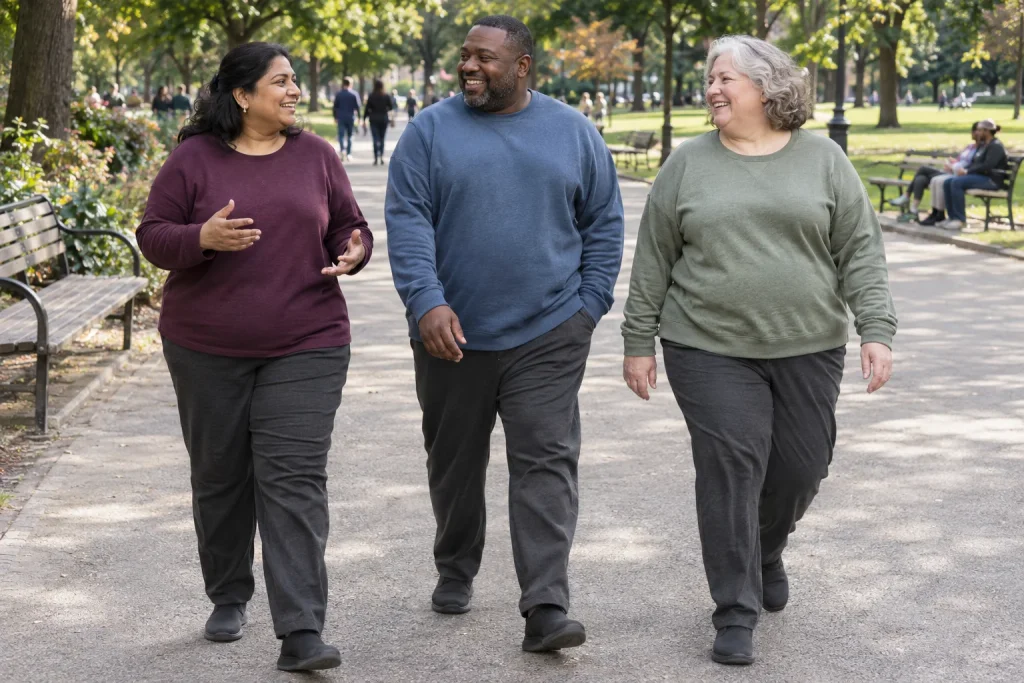
Population categories are not detailed self-descriptions of an individual either. Not everyone fits comfortably into a single selection field, and broad labels can encompass many circumstances. This article assigns nobody a group based on name, appearance, first language or location. If you are unsure what a healthcare form is asking, clarify its meaning rather than guessing classifications for members of a running community.
 Enlarge image
What did the original English study follow?
Caleyachetty and colleagues’ cohort study published in 2021 analysed records of more than 1.47 million adults in English primary care. They had no known type 2 diabetes at baseline, and the BMI and ethnicity data required for the research were available. The authors examined at which BMI the different groups formed from records had similar age- and sex-adjusted diabetes incidence.
The result concerned group-level differences related to type 2 diabetes risk. The researchers did not test running training, define safe mileage or individually predict every participant’s future. The research grouping was broad, and findings from an English database cannot be extended without qualification to every person or country. A figure correction was also published for the study; use the corrected publication rather than an old copy of a figure.
For a running reader, the study’s purpose is not to provide a new table for looking up an exercise dose. It instead helps explain why personal background may matter more in a health-risk assessment than one generic calculator result. The study provided data on a specific question. The more precisely we retain that question, the less likely we are to transfer the result into an area it never examined.
A screening consideration is neither diagnosis nor destiny
Further healthcare discussion prompted by risk assessment is not the same as diagnosing a condition. A screening question may ask whether something is worth investigating or monitoring. Individual assessment may also involve current condition, history and appropriate tests. An internet field or its explanation cannot carry out that process for you.
Avoid the opposite error too: a BMI within a general category does not rule out every health problem. An athletic appearance, an existing running habit or someone else’s reassuring example does not provide a complete answer either. If you seek help because of a symptom, explain when it began, how it developed and what is happening now. You do not need to decide first whether your body size and ethnicity mean you are “allowed” to address it.
Clarify the language of risk in the conversation. What does “higher” mean here: which condition, over which timeframe and compared with what? Which part concerns groups, and what additional information is needed for your situation? These questions do not reject research. They prevent a probability statement quietly becoming a certain personal prediction or unnecessary shame.
Activity planning requires other information too
A running discussion needs to consider your current activity, what is new to you, your goal and any symptoms or care-related restrictions. These cannot be read from an ethnicity selection field. The NHS information on physical activity for adults recommends a prior healthcare discussion for health concerns, a known condition or a long period without exercise, and emphasises activity and intensity suited to fitness.
This information does not provide an ethnic running programme either. A population activity recommendation is not a personal starting task or a requirement that every reader run. Another activity, modification, investigation or following an existing care plan may be indicated individually. The decision needs information about the actual person, not sporting or less-sporting qualities attributed to a group.
Tell a coach or group organiser what is necessary for participation: which task needs clarification, which modification you need to discuss and what framework your care provider has given, if any. You do not need to justify yourself through risk categories in front of the community. Personal health assessment and activity organisation can be connected, but public classification is not an inevitable form of either.
Do not let weight discussion swallow the symptom
The NICE assessment chapter specifically warns against automatically attributing every symptom to overweight or obesity; the other health problem someone presents with should be addressed meaningfully first. This matters to runners because a discussion of new pain, for example, can easily shift into generic weight advice. Naming a category does not replace understanding the individual symptom.
A factual sentence may help: “I understand this may matter for risk assessment, but I came about this specific symptom; how will we investigate it?” The aim is not to exclude body size or background, but to organise separate questions. Permission, understandable explanations and expressing your own concerns matter in healthcare discussions too. A category must not become an explanation that removes the need to hear the symptom’s history.
If a symptom is severe or rapidly worsening, do not refill a calculator to decide whether it matters. Seek help according to its nature and current severity, rather than the reassuring or alarming colour of a theoretical category. This article does not list every urgent condition’s signs. It highlights that risk data does not override assessment of the current state.
 Enlarge image
An inclusive community does not need labels for runners
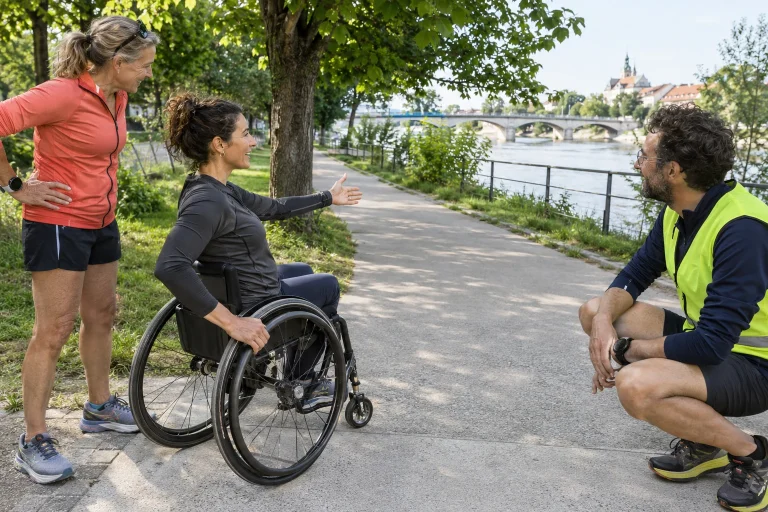
A running organiser can help by asking everyone the same understandable participation questions: what experience they bring, which task they need help with and how they can indicate different needs. This differs from inferring someone’s options from body size, name or assumed ethnicity. General access and individual discussion can sit comfortably together.
Even an intended compliment that someone from a particular background “must be a good runner” can mislead, as can assuming a larger body must receive a slower task. Neither replaces discovering actual needs. A sporting situation should not require someone to perform as a representative of a whole group. Listen to their own goal and feedback.
If someone labels you without explanation, state what you need: to understand the activity’s conditions rather than discuss a population comparison. Any health question can have an appropriate setting and professional. A shared sports session does not need to become a screening consultation or public body-size assessment because a guideline mentions considering background.
How the distinction can remain useful information
In an invented situation, an adult becomes worried after a calculator note that they cannot attend a planned beginner session. A useful response is not for the group leader to permit or ban participation from the category. First, they understand which healthcare question arose and direct the person to an appropriate discussion if necessary, while separately addressing practical participation conditions. The story is not a real case and does not decide participation.
The relationship between BMI and ethnic background can therefore help direct healthcare attention more precisely. It remains useful when we ask no more of it than it was designed for. Understanding personal condition, assessing symptoms and choosing activity remain individual questions. In a running community, the starting point can be the person’s own goal and understood circumstances, rather than a label attached to a group.
Sources and research limits
NICE NG246: Identifying and assessing overweight, obesity and central adiposity; Caleyachetty and colleagues, 2021: an English cohort study; the publication’s figure correction; NHS: physical activity for adults. The study examined type 2 diabetes risk, not suitability for running; the situation presented here is fictional.
How Futószív articles are prepared: our editorial guidelines.