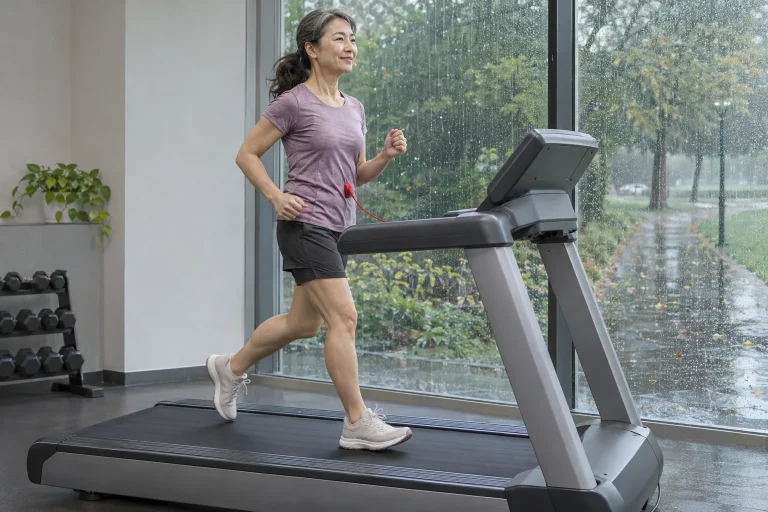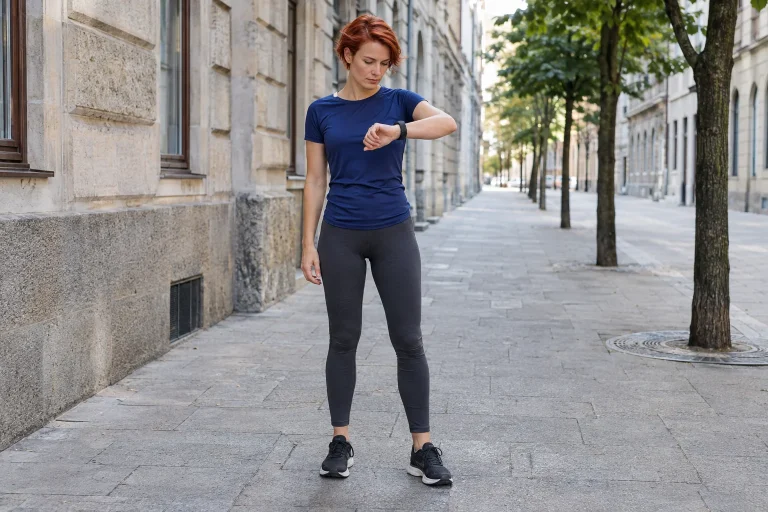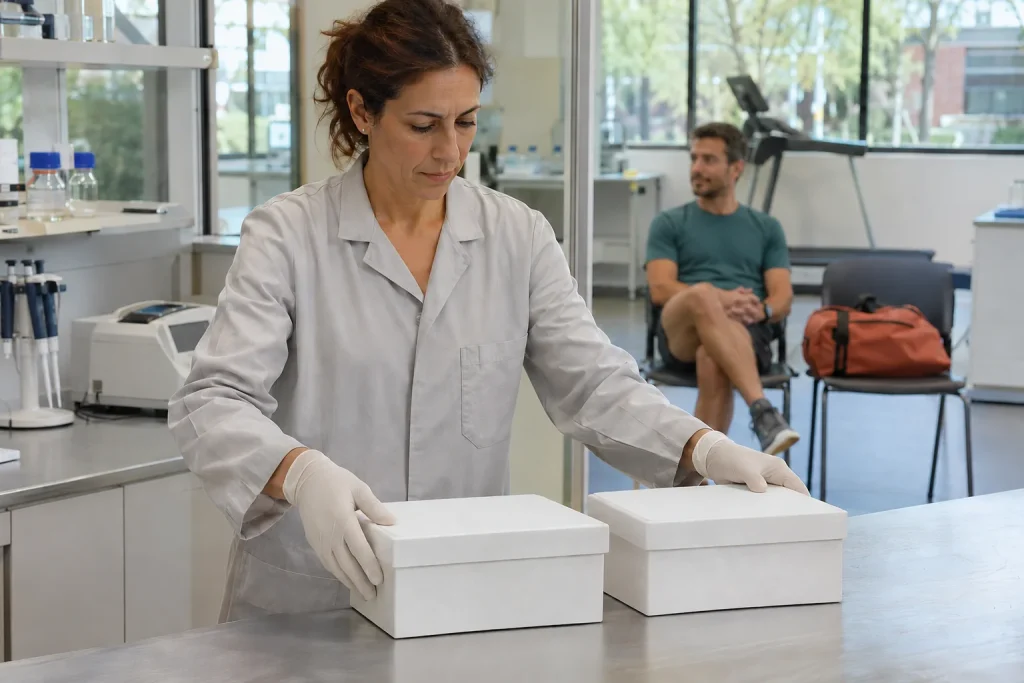
A runner says they felt calmer after exercise, while a researcher determines the concentrations of several compounds in a sealed blood sample. Two separate pieces of information come from the same session. One is an experienced feeling; the other is a measurable detail of the body. Research into running’s chemical companions becomes particularly interesting when these are considered together: when did the marker change, how did the person feel and what activity took place? One blood result does not capture the whole experience, however. Understanding its contribution to research also means following the path from sample to conclusion.
A blood sample is an observation point within the body
A circulating marker means a substance examined in a blood-derived sample. It does not mean the researcher observed its action at a particular binding site in the brain. Papers about running may measure endocannabinoids or a protein called BDNF, for example. These are separate compounds providing information for different questions. Distinguish from the outset whether a paper demonstrated a change in blood concentration, investigated the substance’s origin or analysed its relationship with personal experience. None of these questions automatically answers the other two.
Think of a water sample from a river in a city. It provides valuable information about the selected place and moment, but does not map the origins of every tributary by itself. This is merely an illustrative analogy, rather than a biological model of circulation. It highlights why determining a concentration differs from identifying a source or site of action. Researchers may need a separate design to relate a change during exercise to a particular organ or pathway. Sampling location is therefore part of the question, not a dispensable technical detail.
Nor does “brain” in a marker’s name determine the origin of a blood measurement. BDNF stands for brain-derived neurotrophic factor, but explaining the amount detected in a particular sample requires actual investigation. This is an important lesson about names and measurements. A known biological function does not make every related laboratory result a direct measurement of a brain process. Researchers compare sampling locations and sample forms precisely to make interpretation more accurate.
How did researchers try to identify a marker’s source?
In 2009, Rasmussen and colleagues compared arterial blood and venous blood draining from the brain while eight volunteers rowed, to investigate BDNF. This design produced findings supporting release from the brain. The paper also contained a separate mouse experiment, which did not examine human brain tissue. The methodological idea matters more here than one ratio: researchers did not merely label a sample from an arm a brain signal, but organised a comparison specifically addressing origin.
The basic idea is that data from blood entering and leaving an organ can together answer a different question from one peripheral sample. Actual calculation and interpretation involve further conditions; subtracting two numbers at home is not enough. The useful point for readers is that a claim about “where it comes from” needs an appropriate sampling location. A news report mentioning only a general increase in blood levels cannot have an exact organ of origin added as an assumption.
Newer research has examined the question in greater detail. In 2025, Tarassova and colleagues studied different BDNF forms and several arterial–venous sampling locations after cycling in sixteen healthy trained adults. Under this shorter exercise design, they did not detect brain release of the analysed forms; muscle and platelets also came into focus when interpreting the blood findings. This is not simply erasing an old statement. It indicates that protein form, exercise and sampling together define the question.
 Enlarge image
Another fluid compartment permits another comparison
In 2026, Carr and colleagues examined cerebrospinal fluid alongside arterial and jugular venous blood before and after cycling in thirteen trained people. They found increased BDNF concentration in the fluid, but no simple correlation between values from the different sampling compartments. The authors highlighted complex relationships between fluid compartments and circulation. For research into exercise chemistry, this shows why even two measurements from the same person and session do not necessarily replace each other.
This research design involved invasive procedures and does not provide a model for everyday sports monitoring. You need not request similar tests to understand whether activity felt good. The finding’s scientific significance lies in placing different measurements alongside one another. A change in one sample does not become a direct display of another. Learning a molecule’s location and course over time differs from evaluating the whole human experience or cognitive performance.
Comparing older and newer designs therefore offers more words for reading the news: which molecular form, which fluid compartment and a sample from which location? These details can tell distinct stories behind “BDNF increased”. You do not need to learn every role of the protein here. Recognising that a familiar molecular name does not settle a measurement’s origin or meaning is enough. This makes research more precise without reducing activity’s personal value.
The sample’s journey to the laboratory matters too
After blood collection, analysis does not instantly appear as a finished series of numbers. Researchers process, store and examine the sample using an appropriate analytical method. Methodological research on endocannabinoids indicates that sample-handling conditions can themselves affect results. A 2022 study comparing human serum and plasma found different concentrations under different handling and storage conditions. This does not make running-research data worthless; it makes a traceable laboratory procedure a requirement for interpretation.
Serum and plasma are liquid parts of blood prepared differently. Blood clots to produce serum, while plasma is separated from an anticoagulated sample. These names are not decorative details in a paper: for some compounds, preparation differences may contribute to the amount measured. Values from two studies using different sample types should not automatically be placed in a common ranking. Researchers must assess comparability alongside the full methodological description.
A 2019 analytical study examined determination of several circulating endocannabinoids and related compounds, also highlighting formation, conversion and degradation during sampling and storage. Readers need not turn this into a laboratory protocol. The practical lesson is that documenting what happens to a sample contributes to a number’s quality. A laboratory result is not independent of how it was produced. Sometimes the methods section therefore offers the most important explanation for a striking difference reported in a sports article.
Timing connects exercise and measurement
Samples taken before starting, during exercise and after stopping represent different moments. In a 2026 marathon and ultramarathon study, repeated sampling also allowed researchers to examine the molecular response over time. The marathon component compared running in 19 runners with duration-matched walking. AEA and 2-AG changes followed different time courses. Questions assessing the running experience were recorded too, so personal feelings did not have to be inferred solely from blood data.
As an imaginary example, consider one study sampling immediately after exercise and another much later. If values differ, timing is one possible question. That alone does not establish that timing actually caused the difference; this must be checked within the study design. The example shows why “measured after exercise” is an incomplete account. Without exact timing, an important part of the story is missing.
Look for when the experience question was asked too. Answering during exertion, immediately after stopping and reflecting later concern different moments. If a blood sample and questionnaire do not refer to the same moment, their comparison may also mean something different. This does not necessarily make the research poor. It means researchers examine a defined temporal relationship that readers should preserve in the same form.
Three data series together are more interesting than one number
Imagine three adjacent columns: what happened during exercise, what the sample measurement showed and what the person said about their feelings. If all three change, the next question concerns their relationship. Recording them on the same day is insufficient. Statistically examining association and experimentally testing a necessary mechanism are different tasks. A circulating substance’s change can accompany a process without becoming the sole explanation for the entire experience.
| Data | Which question does it illuminate? | Which additional claim requires separate investigation? |
|---|---|---|
| Exercise description | In what situation was the sample taken? | Is the response the same for another activity? |
| Sample result | What changed in the specified fluid compartment? | Where does it originate, where does it act and what does it mediate? |
| The person’s report | What did they feel at the time studied? | What caused it, and is the experience similar for everyone? |
The absence of an expected relationship can also be an important finding. A missing association between a blood change and an experience rating need not be explained through participants’ “poor perception”. The proposed relationship may be different, involve more components or be undetectable in that design. A precise conclusion describes the actual data. This opens much more productive questions than trying to fit every result into a predetermined molecular story.
 Enlarge image
How can findings stay connected to people’s lives?
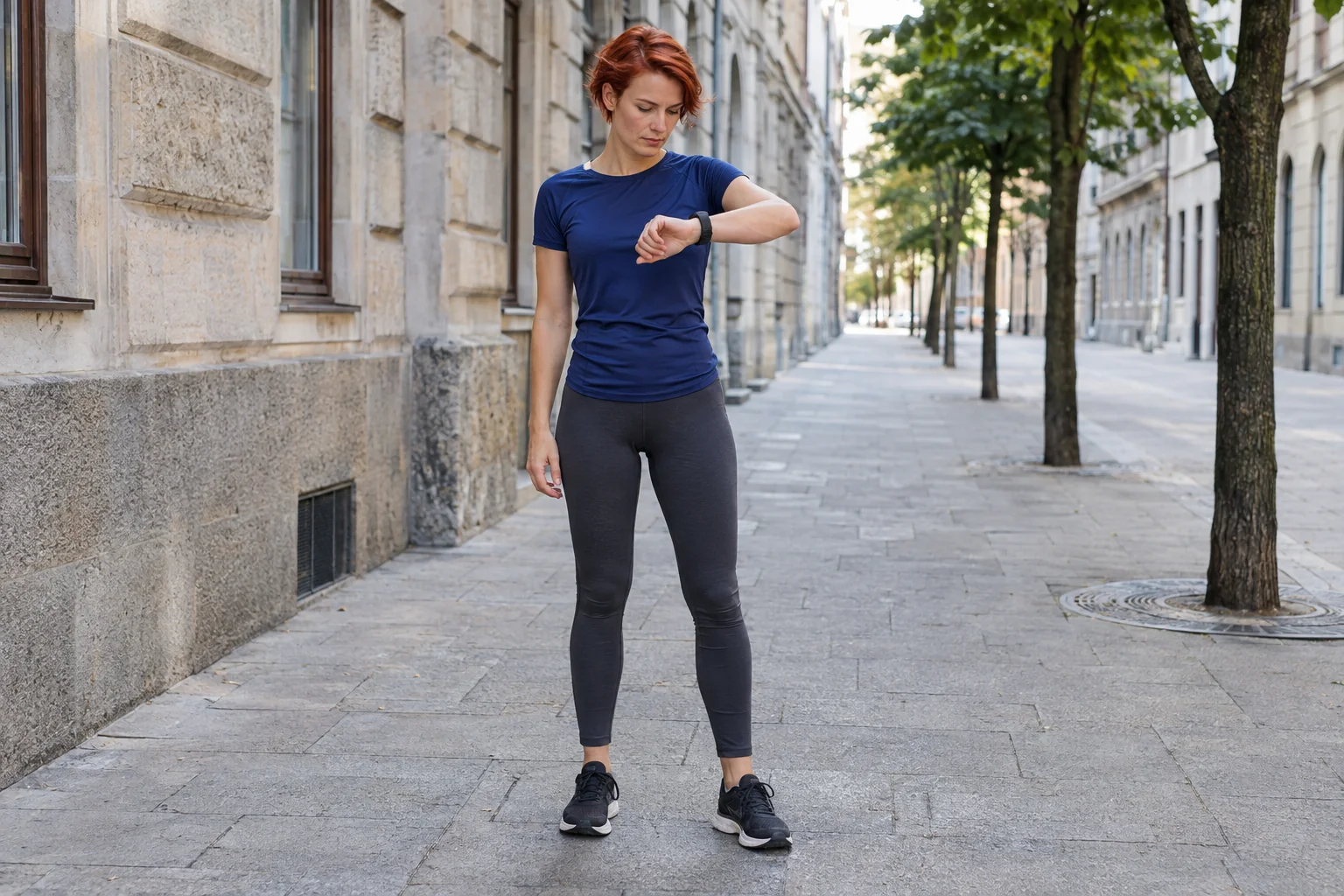
A good conversation after running, a calmer journey home or enjoying fresh air belongs to your experience. Describing these does not require knowing your circulating-marker values. Research asks at another level: which measurable processes accompany exercise, and how can their relationship with human experience be examined? Experience and laboratory data do not replace one another. They offer two perspectives that a carefully designed study can connect.
When you read that running changed a substance measured in blood, look for four details: exactly what was measured, from where, when and compared with what. Then check whether personal reports were collected and which relationship was analysed. The molecular finding can remain interesting without becoming a mood diagnosis. For your next run, ordinary words of experience remain sufficient: it felt pleasant, calmed me, made me work or felt different today. Science continues to seek increasingly precise explanatory details alongside this.
Sources
- Rasmussen and colleagues: BDNF release from the brain during exercise
- Siebers and colleagues, 2026: Endocannabinoid dynamics
- Tarassova and colleagues, 2025: Arterial–venous differences of BDNF isoforms
- Carr and colleagues, 2026: BDNF in human cerebrospinal fluid after exercise
- Pre-analytical challenges for endocannabinoid quantification, 2022
- Quantification of circulating endocannabinoids in human plasma, 2019
How Futószív articles are prepared: our editorial guidelines.