The Amazfit Balance 3 emphasises reviewing running, strength training and everyday demands together. HybridCharge makes sense when you distinguish sensor data, the training log and your own life-context entries. Using manufacturer material checked on 21 November 2026, we examine both what the indicators mean and the technical conditions for use.
The Balance 3 is more than a Balance 2 in a new colour
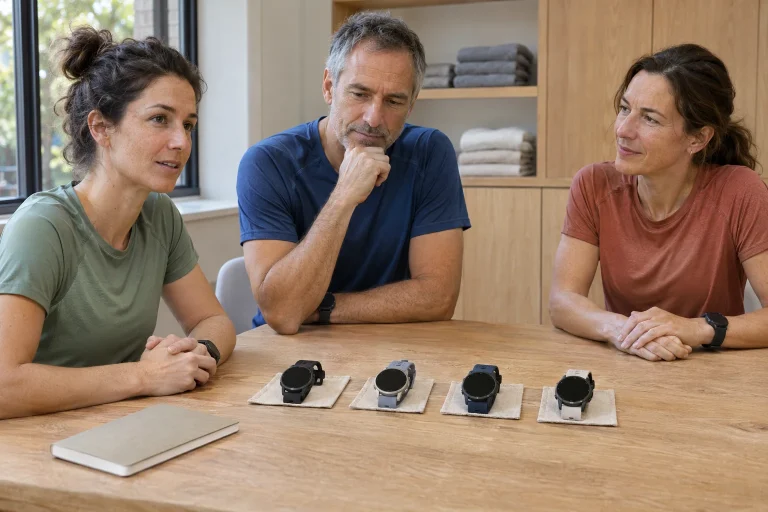
The current US Balance 3 specification lists steel and Grade 5 titanium versions weighing 62 and 55 grams respectively without straps. It gives 51.4 millimetres as the industry case diameter and a sapphire-covered 1.5-inch, 480 × 480-pixel AMOLED display. We use the specific model specification: we do not confuse the cover glass’s 44.8 millimetres with case diameter, or strapless weight with the complete worn watch. The Balance 2 and Balance Ultra are separate products.
Here, hybrid training has a simple practical meaning: a week can include running, strength work and other movement, alongside demands from work and private life. The watch may help organise these into a clearer system. More sport modes do not automatically provide a better programme, however. First identify which daily question you want to answer faster: what did I complete, how much load accumulated or what is manageable tomorrow?
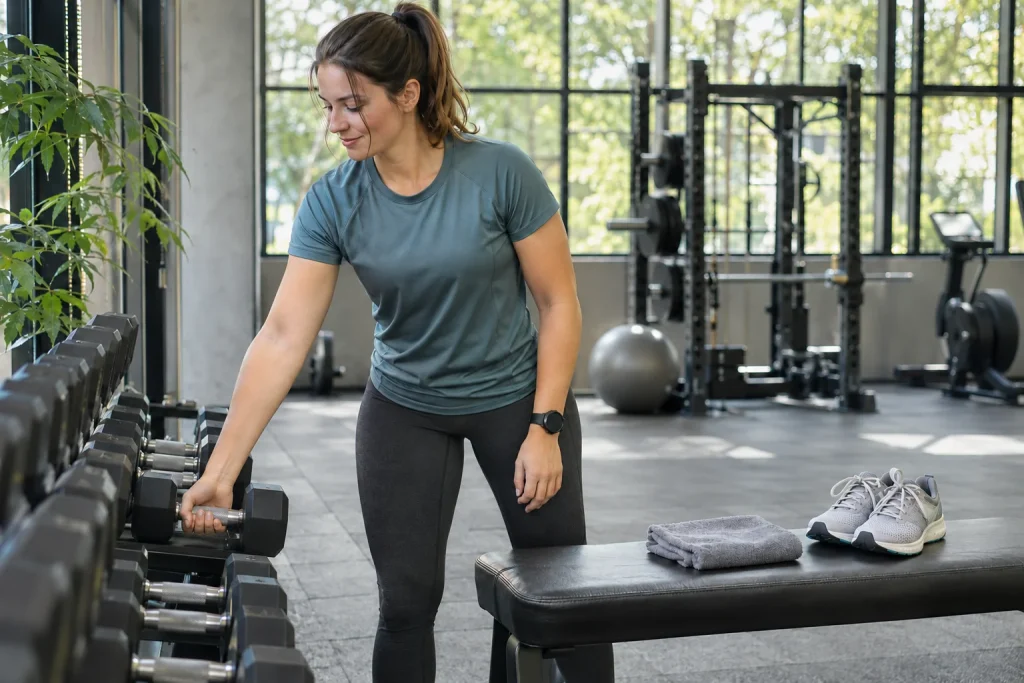
Try the larger watch during gym movements too. Extend the wrist, hold a light object you can safely put down and then put on a jacket. The case may meet your hand differently when holding a weight than when running. These are personal fit considerations. Materials and display brightness are important, but your movement and the strap also shape comfortable everyday use.
HybridCharge: a summary built from several inputs
The HybridCharge support information combines heart rate, HRV, stress and sleep data, activity, training load and LifeLoad entries in a daily state estimate from 0 to 100. The manufacturer’s system introduction emphasises interpreting BioCharge, LifeLoad and Training Load together. These are algorithmic indicators and entered circumstances, not laboratory percentages of physical energy remaining in a person. A higher score does not mean any task will certainly be manageable.
Think in three columns. Sensor-derived data belong in the first, recorded workouts in the second and your own life events in the third. The summary becomes more personal when these sources genuinely describe your day. Missing strength work or interrupted overnight wear changes the basis of feedback. An incomplete summary does not become a full picture because it has an attractive chart.
Imagine two similar runs of your own. One takes place on a rested weekend morning; the other follows late work and little sleep. Distance may be identical while the whole day’s context differs. The system may try to bring this together, but your own notes matter for interpretation too. Ask not only how many points you have, but which data produced them and what you actually experienced.
 Enlarge image
LifeLoad: your diary is a separate data source
According to the support description, LifeLoad can record circumstances relating to sleep, physical demands, emotions, work and nutrition, among others, through voice input or manual selection. Entered events complement HybridCharge interpretation. A personal entry is valuable context, but does not become an independent instrument measurement. The meaning of a ‘hard working day’ label also depends on how and when you use it.
Keep your logging rule simple and sustainable. For example, briefly record unusual events within the same time window, rather than adjusting memories to the score afterwards. Searching insistently for an unpleasant event after seeing a poor-looking value can create an explanation you would not have recorded independently. Consistency means clearer data, not perfect self-observation.
After two or three weeks, look for recurring situations rather than trying to decode every single point. Perhaps travel days regularly mean later bedtimes, or a particular work pattern comes with shorter training. This can be useful for planning. But an event and score change occurring together do not establish causation alone. The log helps you understand your week, rather than manufacture a new health diagnosis.
Running and strength: a useful summary starts with a good recording
The Balance 3 Global Version manual describes sport-specific recording and automatic activity-detection settings; automatic recognition may require time and characteristic movement. The user guide shows that a deliberately started session and an activity recognised afterwards are different workflows. If you want a full gym session alongside your runs, check the selected sport and recording status at the start.
An illustrative hybrid day might include an easy morning run and evening strength work. Treat them as separate entries with clear purposes. Strength-session time may contain movement, rests between sets and equipment changes; identical elapsed time does not mean identical loading content. Average pace familiar from running cannot simply transfer to weights. Training type and a brief personal note therefore help the combined view.
Check automatic exercise recognition against your own movements. If a repetition or recovery period is misplaced, correct it in a supported way or note the uncertainty. Do not judge displayed accuracy from the decimal places in many numbers. Recording should make what you did understandable later, rather than retrospectively portray every incompletely captured movement as a perfect measurement.
When interpreting a week, place the full calendar beside the different sports. Four runs and two strength sessions may look orderly on paper, but feasibility depends on other commitments too. The summary can offer guidance, while daily scheduling must fit actual time and how you feel. A hybrid approach helps by showing several tasks together, rather than assigning another compulsory score to every day.
Maps and sensors: check the technical chain separately
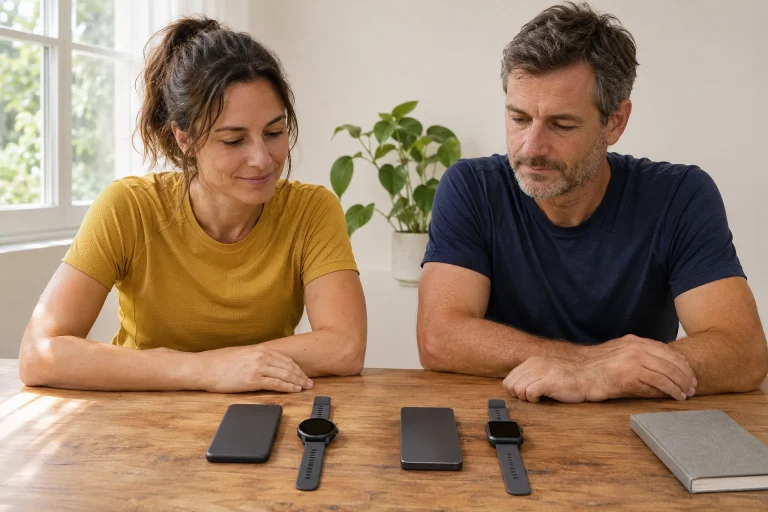
The manual describes downloading a region selected in Zepp to the watch, with base and contour maps, and mentions Wi-Fi or Bluetooth transfer. Alongside checking the local map and display switch, a GPS position is needed. Workout Accessories describes standard Bluetooth heart-rate monitors and cycling power meters, with one accessory of each type connected simultaneously. The specific guide is more precise than assuming every wireless device transfers every field.
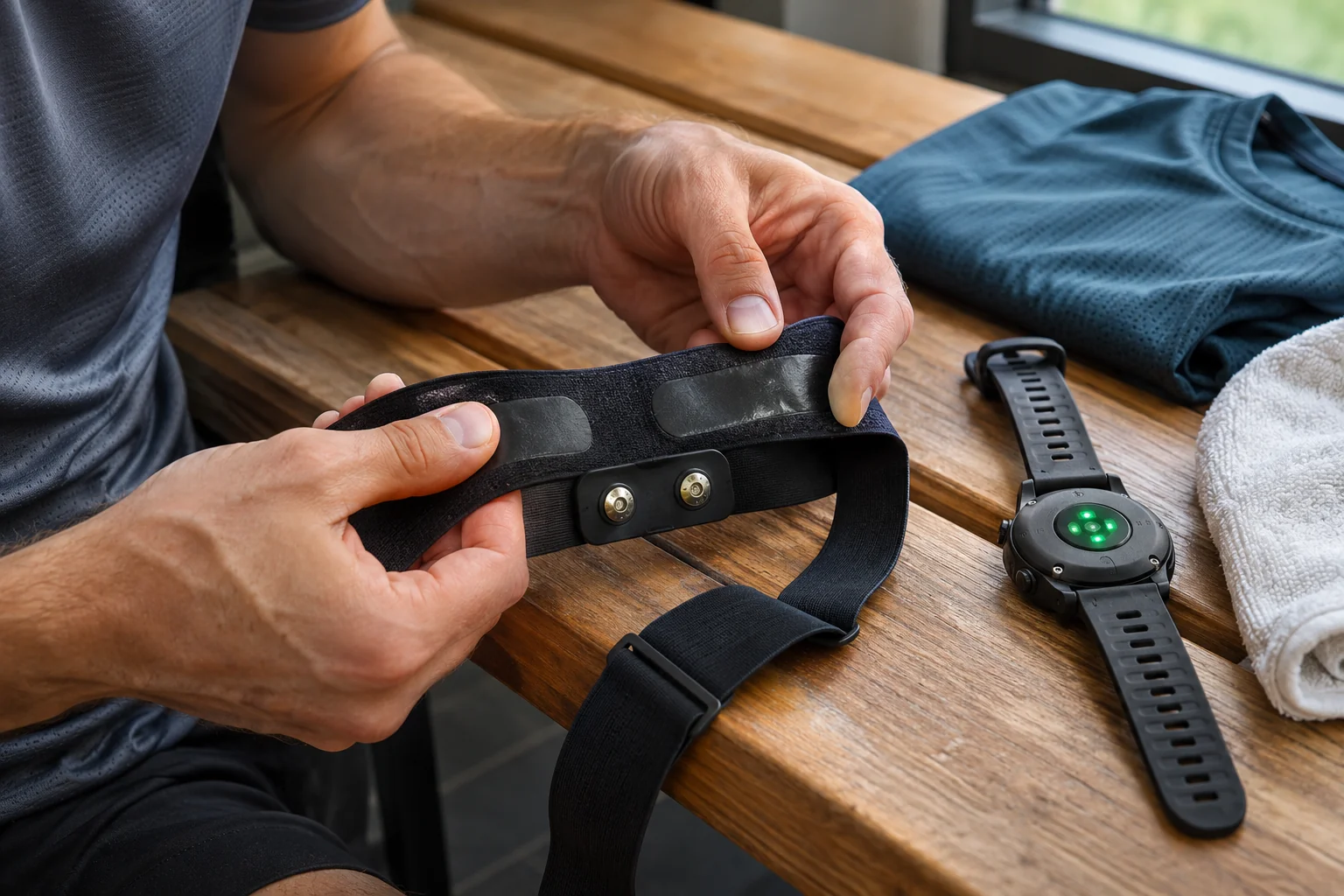
For a treadmill, strap or other device, describe the data direction separately. Which device measures, which receives and where does the final recording appear? Bluetooth audio, a heart-rate connection and receiving machine workout data are three different purposes. Successful phone pairing does not prove treadmill speed control. Check the particular machine and watch versions for the intended use; the radio technology’s name is insufficient.
Give a sync test a beginning and an end. Start a short recording you understand, inspect the watch summary and compare the same session’s time and data in the app. If sending it to a partner account, check its appearance there too. Data available in several places may improve visibility, but duplicate runs or a misinterpreted time zone can distort weekly totals. Correct that as a technical error rather than interpret it as training performance.
Read phone requirements for the specific Balance 3
The current Global Version manual requires at least Android 8.0 or iOS 17.0 for the Balance 3. The Hungarian Zepp App Store listing itself requires iOS 15, but this concerns installing the app, not proof of full support for the particular model. We therefore do not automatically copy older Amazfit phone requirements to this watch. Check the specific device, phone system and current app version together when buying.
Replying on an iPhone introduces another condition. The current EU Notification Forwarding information lists the Balance 3 among supported models for eligible EU users on iOS 26.5 or later, as a beta feature. Replies and quick actions also depend on notification type. This is not the same as Android’s Call Quick Reply function and does not promise unlimited replies to every notification.
Before daily use, decide what should reach your wrist. An important call alert and continuous display of every group chat create different attentional demands. Pop-ups can also obscure running data. Try notifications and then Do Not Disturb in familiar surroundings. Suitable setup means knowing why you use each convenience feature, rather than enabling every permission.
 Enlarge image
Free basics, a separate subscription and remaining energy
The current Zepp introduction distinguishes free Coach and basic data access from optional Aura Premium. Region, language and payment conditions still need separate checks. HybridCharge should be understood as one of the device system’s state estimates, rather than a subscription-package name. You need not subscribe to every extra item simply to interpret your own training log.
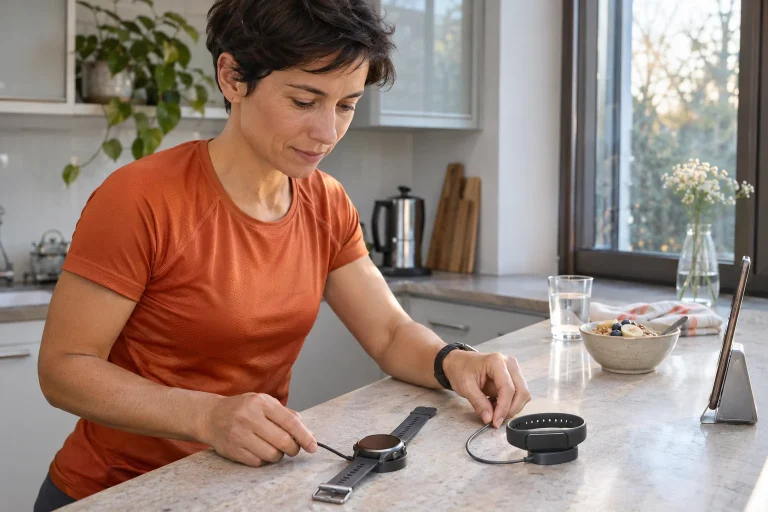
The US Balance 3 table lists twenty-one days of typical, ten days of heavy and seven days of Always On use; Accuracy GPS mode has a stated maximum of 41 hours. These are different manufacturer examples. We do not combine them into a promise of the best figure with the strongest display, continuous map reading and every radio connection. Actual mode and tested consumption provide a more usable guide for your week.
Keep the physical battery separate from the BioCharge/HybridCharge metaphor too. One charge value describes an electronic device; the other algorithmically combines information collected about you and entered by you. A favourable state estimate does not require filling every free hour with exercise. The system offers useful direction when it helps you see your week clearly and make a feasible decision linked to your own goal.
At the end of choosing, be clear which Balance 3 version fits your wrist, what your phone supports, how different sports enter the log and which data create the summary. This information is based on checked manufacturer documentation, not our own product test or clinical validation. A shared system for running and strength helps when it clarifies both completed work and your life circumstances.
Sources
- Balance 3 US product specifications
- Balance 3 Global Version manual
- HybridCharge and LifeLoad support
- Manufacturer introduction to the hybrid system
- Zepp app and services
- Zepp in the Hungarian App Store
- iOS Notification Forwarding
How Futószív articles are prepared: our editorial guidelines.