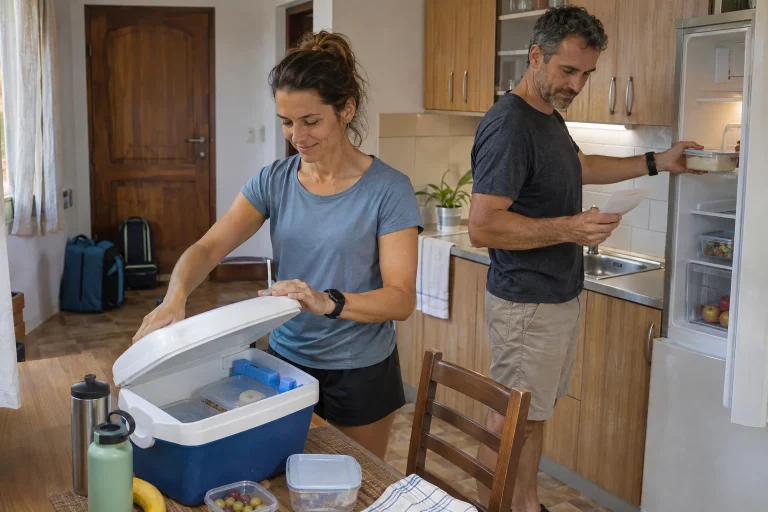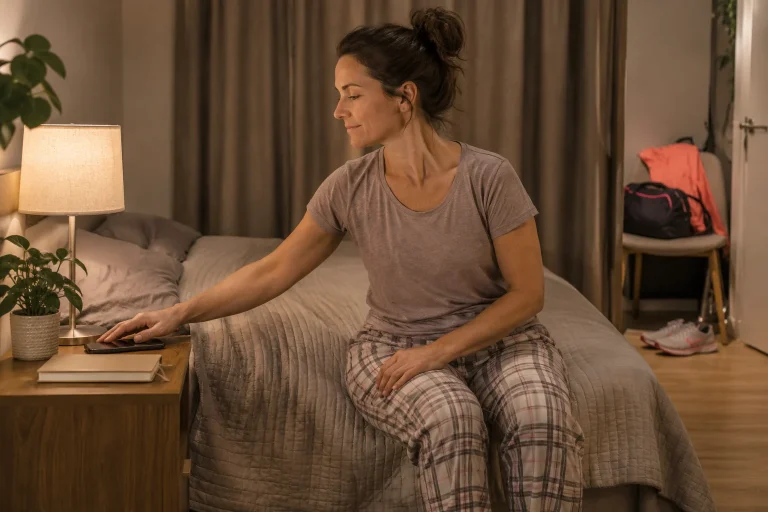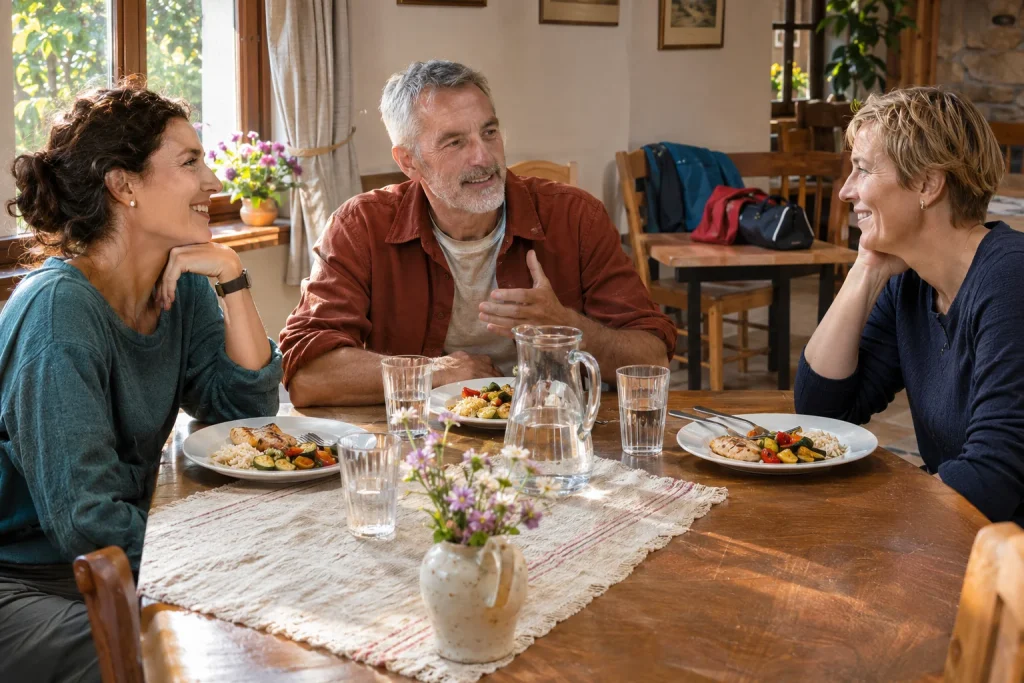
After finishing, it feels good finally to sit down, remove your race top and hear how everyone’s day went. In many places, alcohol automatically accompanies the social occasion. If your eyelids feel heavy sooner after a drink, it is easy to think it helps rest too. But becoming sleepy is only one moment of the evening: it does not show what happens throughout the night.
As a runner, separate three things: how quickly you fall asleep, how continuous your sleep remains and how you feel the next day. A race day may also involve a short night, travel and an unusual schedule, so next-day feelings cannot identify one cause. The following considerations help explain these differences and plan a calmer evening, without an alcohol-based recovery recipe.
Falling asleep sooner is only one detail of the night
NHLBI’s insomnia information says alcohol may make falling asleep easier while leading to lighter sleep than usual and more frequent night-time awakenings. Avoiding alcohol before bed therefore also appears among its sleep habits. These points are not contradictory: a substance’s short-term sedating effect and its effect across the whole night can differ. NHLBI: insomnia treatment and evening habits.
Imagine a fictional race Saturday. You rose before dawn, travelled a long way and then drank alcohol during the evening conversation. At home, you remember falling asleep almost immediately. That memory may be true, but says nothing about how often you woke later or how much sleep time remained before the next day’s commitments. Ending the account at rapid sleep onset leaves the rest of the night out of assessment.
Nor is a companion visibly nodding off beside you a useful measure. Outward calm is not a sleep examination and does not establish complete bodily recovery. Like running performance, sleep does not consist of one striking moment. An overnight process cannot reliably be replaced by how sleepy someone appears at the end of dinner.
Sleep architecture can change too
Sleep consists of REM and non-REM phases; three stages of non-REM sleep are distinguished. Deep slow-wave sleep is typically more abundant earlier in the night, and REM later. Sleep laboratories classify these using, among other signals, brain activity and eye movements. A night is therefore not simply a sum of hours of identical quality. NHLBI: sleep phases and stages.
McCullar and colleagues’ original 2024 study included thirty adults in a within-person comparison of two sets of three consecutive laboratory nights. Alcohol and non-alcohol beverage conditions were used, with sleep recorded through polysomnography. Alcohol changed the accumulation of slow-wave and REM sleep across the night and reduced total REM sleep. Total slow-wave sleep did not increase. McCullar and colleagues: alcohol and sleep architecture.
This does not mean every runner experiences the same change after every celebration. The researchers studied controlled laboratory conditions rather than the full range of variables in evenings after Hungarian races. The lesson still matters: altered deep sleep early in the night does not automatically mean the whole night became more restorative. Do not compress a partial finding into “more deep sleep, therefore better recovery”.
 Enlarge image
Feelings and measured sleep do not always tell the same story
Another study, published in 2022, compared two laboratory nights in thirty-one adults given alcohol or placebo in random order. Researchers measured evening experiences, behavioural performance, overnight heart rate and sleep, and the next morning’s state. Alcohol worsened several sleep measures and raised overnight heart rate, but these changes were not strongly associated with next-day mood and task-performance measures. Pabon and colleagues: evening effects, sleep and the next morning.
The study used a relatively high alcohol exposure and did not measure next-day running-race results. It provides no formula for how much pace worsens, nor establishes that every aspect of a hangover arises from sleep changes. How you feel matters, but not feeling particularly bad does not imply unchanged sleep. Conversely, a bad morning cannot be explained simply by how quickly you fell asleep the previous evening.
This distinction also helps interpret a running log. “I was sleepy in the evening”, “I woke often” and “I struggled to concentrate in the morning” are three separate observations. Do not turn them into one self-assigned recovery grade. Factual descriptions may later help a professional conversation too, while a green or red classification can obscure what actually happened.
Do not organise the post-race evening around one drink
The social part of celebration is often more important than what is in the glass. You can say beforehand that you will stay for dinner but do not want alcohol, without giving a medical explanation. If organising, make an alcohol-free choice clearly available and do not turn a toast into a condition of belonging. Everyone may face a different decision after finishing, invisible in their placing on the results list.
Review travel, food and the time actually left for sleep before the race. An extended dinner can mean arriving home late even if nobody drinks alcohol. NHLBI’s sleep-habits guide emphasises sufficient sleep time, a more consistent schedule and a quiet, dark, cool environment. These do not neutralise alcohol’s effects, but are sensible planning considerations in themselves. NHLBI: healthy sleep habits.
A useful advance agreement is that dinner has no compulsory late-night continuation and travelling home separately is not an insult. Someone working early or handling family tasks can leave sooner. Anyone wanting rest owes no further justification. Nor must an alcohol-free decision be “repaid” with an extra workout the next day: a calmer evening is an acceptable goal itself.
Five separate questions to keep on the table
The distinctions below help prevent a successful social evening automatically receiving a health or sports-physiology endorsement. The right-hand column contains questions useful for your decision, rather than a scored test or permission to drink alcohol.
| What easily gets conflated | The more precise question |
|---|---|
| Becoming sleepy and sleeping well | Do I remember only the evening feeling, or sleep continuity too? |
| Social experience and choice of drink | Can I participate equally without alcohol? |
| A long time in bed and sufficient sleep | How much time actually remained for rest, and how did I feel during the day? |
| An ordinary evening and a situation involving medication | Have I checked the medicine–alcohol relationship with a professional? |
| One bad night and persistent symptoms | Is this a one-off event or a recurring problem affecting my days too? |
Imagine two runners at the same table. One has the next day off; the other must leave early for work and takes regular medication. The first person’s choice cannot establish safety for the second. The size of the dinner group, the shared race distance or a friend’s good experience do not make health circumstances identical.
A third participant has repeatedly tried using alcohol to fall asleep. Their question is no longer simply the custom of celebrating after the finish, but why this evening aid feels necessary. They need not discuss it before the whole group, and a running club should not create a care plan. The recognition is worth using for a non-judgemental conversation with a professional.
Medication, breathing symptoms or persistent insomnia change the situation
NIAAA warns that alcohol with certain medicines can increase sleepiness, impaired coordination and, in some cases, breathing danger, among other effects. Over-the-counter and herbal products may also be involved; interactions need not occur only with simultaneous intake. A doctor or pharmacist can help with a specific medicine. Do not skip prescribed treatment to make evening alcohol consumption possible. NIAAA: harmful interactions between alcohol and medicines.
If others notice pauses in breathing or choking, gasping breathing at night alongside loud snoring, or you have marked daytime sleepiness, medical assessment is warranted. NHS sleep-apnoea information also mentions avoiding evening alcohol, but changing the habit does not replace needed investigation or prescribed treatment. Running fitness and a successful race do not rule out sleep-disordered breathing. NHS: sleep apnoea, symptoms and care.
For recurring insomnia, reviewing bedtime habits is useful, but should not remain the only step if symptoms persist and disrupt daytime life. NHLBI also describes cognitive behavioural therapy for insomnia in treating persistent insomnia. This is professionally guided treatment rather than a stricter running plan or an independently started sleep-deprivation experiment. You do not need to prove every evening habit has been perfected before asking for help.
 Enlarge image
Sometimes the task is not optimising sleep
If controlling alcohol consumption is difficult or you feel you regularly need it to fall asleep, seek help from a GP or addiction service. With physical dependence, stopping suddenly without supervision can be dangerous. The NHS therefore recommends medical advice; this article gives no home withdrawal plan. Severe withdrawal symptoms, such as a seizure or hallucinations with confusion, are urgent: in Hungary, call 112. NHS: support for alcohol problems and withdrawal danger.
Difficulty waking an intoxicated person must not simply be called good deep sleep either. If they cannot be woken, breathing is slow or irregular, or another serious deterioration is visible, seek emergency help immediately on 112. Do not wait for every possible symptom or leave the person alone. NIAAA emphasises that coffee, cold showers or walking do not reverse alcohol overdose. Follow the emergency dispatcher’s instructions. NIAAA: dangers of alcohol overdose.
These situations concern neither improving sporting performance nor shameful character flaws. The community’s useful role is supporting help-seeking and recognising serious symptoms. A rest day, a run to “sweat it out” or monitoring by friends does not replace appropriate care. Do not judge the situation according to how tightly packed next week’s race calendar is.
What is worth keeping from the post-race evening?
Storytelling, sharing a meal and the joy of finishing can remain without alcohol. When planning the evening, start from allowing time for both companionship and getting home. You do not need a drink promising celebration and better sleep at once. Nor must you justify your own decision through other runners’ habits or a sleep number on a watch.
Before the next occasion, a few concrete logistical changes may offer more than harsher self-grading: deciding departure earlier, an accessible alcohol-free choice, agreed travel and time reserved for rest. Recurring sleep symptoms remain a separate professional question. The evening’s good memory, the moment of falling asleep and your health then need not merge into one oversimplified recovery story.
Sources
- NHLBI – Insomnia: Treatment
- NHLBI – Healthy Sleep Habits
- NHLBI – Sleep Phases and Stages
- McCullar and colleagues, 2024 – Altered sleep architecture
- Pabon and colleagues, 2022 – Effects of alcohol on sleep
- NIAAA – Harmful Interactions
- NHS – Sleep apnoea
- NHS – Alcohol support
- NIAAA – Understanding the Dangers of Alcohol Overdose
How Futószív articles are prepared: our editorial guidelines.