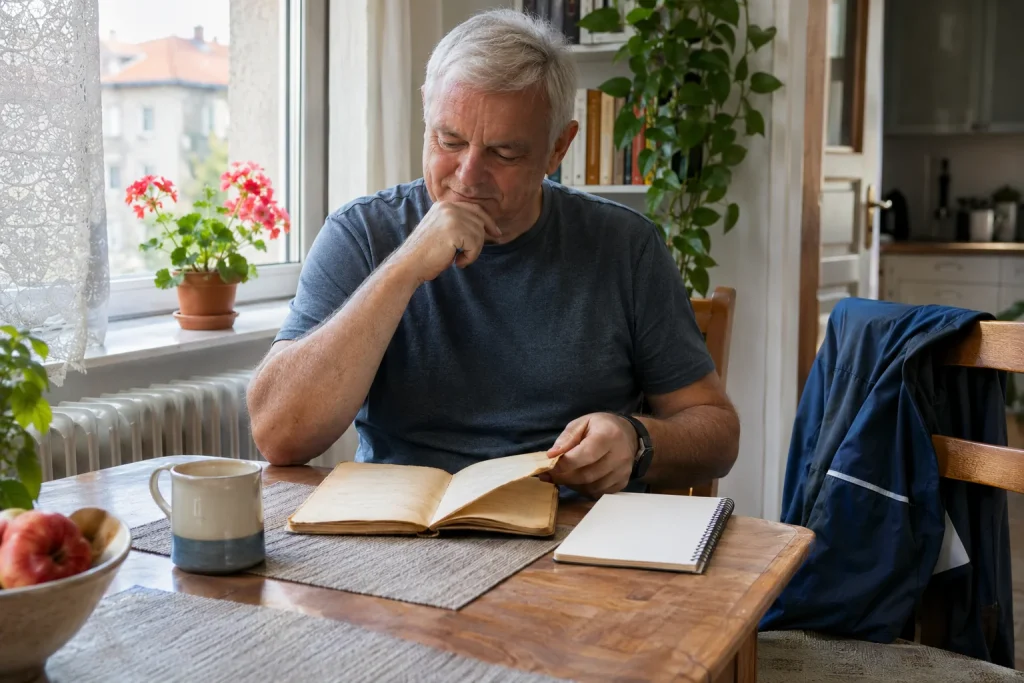
A few lines in an old running diary can bring back an entire period: the familiar loop, usual departure time and pace you called easy then. After twenty years away, these memories can be valuable. They simply cannot serve the same purpose as recent personal experience. Past running tells you about your relationship with movement; today’s starting point needs discovering now.
Returning need not mean reaching everything again at once. First separate what you want to retain from the earlier experience, which circumstances changed and what remains unknown about current capacity. After prolonged inactivity, with a condition or symptoms, discuss appropriate activity beforehand. Old results do not replace that, and no proving run through pain is needed.
Experience consists of more than old kilometres
You may know which time of day you enjoyed outside, which company motivated you and which places you avoided. Perhaps you learned that prepared clothing made starting easier or a favourite route mattered more than varied workout tasks. Those memories can offer organisational advantages. You need not reinvent every habit when you recognise what worked.
Choose three things you genuinely enjoyed. Record situations rather than results: morning quiet, conversation with friends, the nearby park’s smell or entering a different space after work. Reclaiming an old number then need not be the only reason. The experience may exist in several present-day forms of movement, not necessarily through the same arrangements.
The NIDDK information on getting started also values choosing enjoyable activity. Returning need not turn that into a grand motivation task. Name what attracted you before and see what is available now. Something no longer interesting need not remain alive merely because it once belonged to your running identity.
Remembering an easy pace is not a current measurement
An old diary’s easy run describes circumstances at that time. Activity, health, daily demands and rest opportunities may have changed since. Today’s outing does not gain value by resembling it. Do not turn an old adjective into a present speed instruction, even if the route name remains.
Retrieving only a lap time can be particularly misleading. Earlier notes may not say where you stopped, whether walking home counted or what the weather was. A current phone can divide a session differently from an old stopwatch note. Neither figure need be false; they may simply measure different stories.
If an old number keeps pulling your attention back, choose another observation for a while: how starting felt, where you wanted to stop and how the outing fitted your day. This is not a new compulsory diary system. It gives present experience its own place rather than rating every line against a result from twenty years ago.
Make two separate pages: memories and the current situation
Put old favourites and experiences on the first. Use the second for current circumstances: movement already in everyday life, when you could go out calmly and what makes starting difficult. No detailed autobiography is needed. Separate pages keep nostalgia and planning from competing in the same column.
| An advantage from memory | A detail to check today |
|---|---|
| You loved the old park. | What are the entrance, surface and shortening options like now? |
| Morning departures worked well. | Does your current sleep and family routine allow calm time too? |
| You had comfortable shoes. | Does the equipment chosen now actually fit appropriately? |
| You knew your strong days. | Which activities tire you now, and how much? |
The table does not mean replacing every old solution. It offers checking points: which memories can still be used, and where has reality changed behind them? If a busy crossing now occupies the old route, modifying the loop says nothing about sporting ability. The place in which you organise movement is simply different.
 Enlarge image
Review equipment for usability
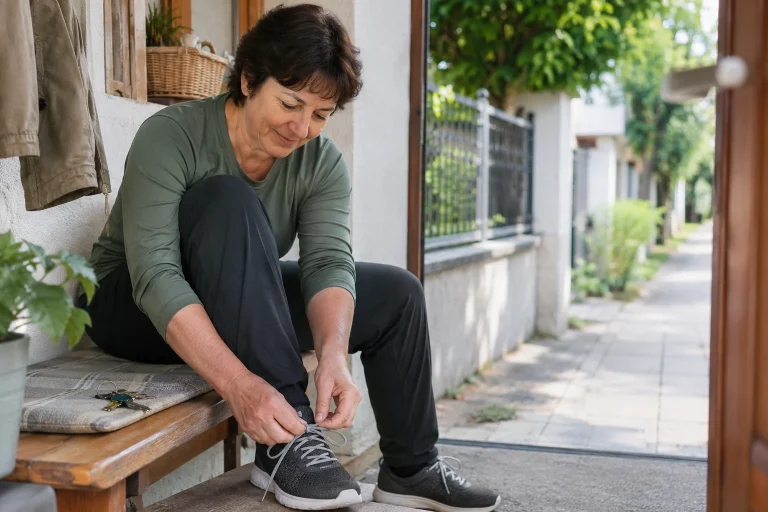
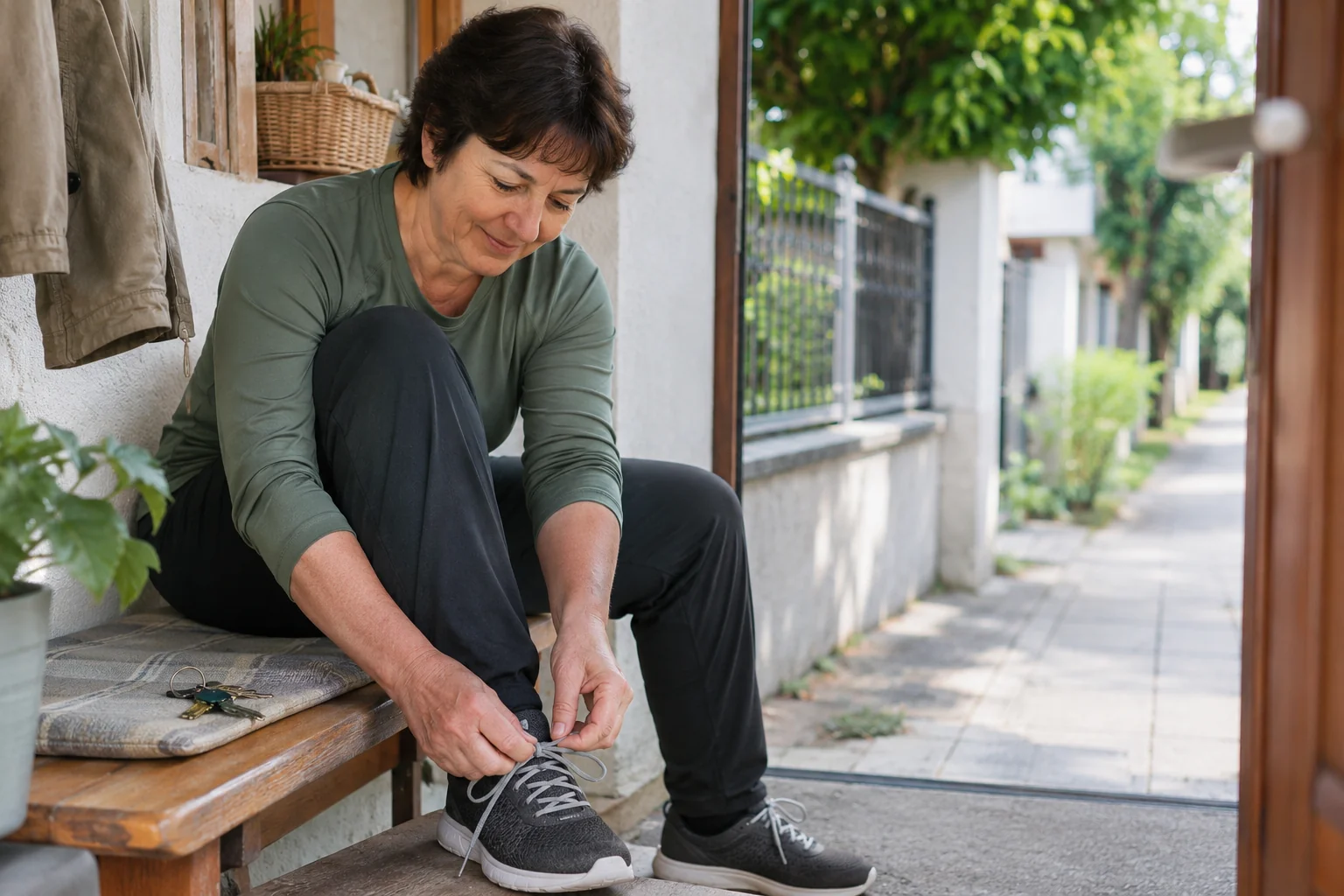
Old shoes or a favourite top may carry strong memories. Whether size, condition and comfort suit you now is a separate question. Inspect fastenings, sole grip, seams and comfortable movement in the clothing. You need not put a keepsake into use on the first occasion, nor buy an entirely new wardrobe immediately.
The NIAMS sports-injury information also highlights appropriate activity, equipment and gradual change. Your practical trial should start with what an item needs to do now. A phone in a pocket, keys or glasses may require a different solution from when you last ran regularly.
Distinguish a fault from unfamiliarity. Tight shoes, slipping trousers or an insecure fastening are not things to endure through athletic discipline. If discomfort does not seem purely equipment-related or remains after changing shoes, do not try to resolve it through a series of purchases. Equipment trials do not replace clarifying symptoms.
First get to know the old route as a place again
Memories of a favourite loop can tempt you to complete its old distance. First explore the place in a way appropriate to you: what changed, where can you stop and how easily can you return? Every section need not belong to one outing. A nostalgic place remains even if you choose another entrance or shorter loop.
Check the approach too. Departure includes how much travel is needed, whether there is rushing and what awaits on the way home. If the old activity was easy to reach after work but your journeys differ now, new organisation may be needed. Returning means finding a place in your current day as well as resuming movement.
In an illustrative example, someone wants to restart because of an old woodland loop. Its entrance has become harder to reach, while a calm short path exists nearby. Choosing the smaller place does not permanently abandon the woods. It can be a simple current solution providing the outdoor experience without immediately restoring the whole past programme.
The first outing need not prove you have returned
After a long break, a striking beginning can feel especially important: showing yourself or others you still can. That desire can merge with the practical question of appropriate activity now. You need not decide in one session whether you will become a regular runner again. First identify the right starting point and workable conditions.
Earlier running can make self-instructions familiar too quickly: the next tree, another loop, the old cool-down section. Name the outing’s actual purpose beforehand: rediscovering the place, equipment comfort or an appropriately chosen movement experience. Continuing is then not the only successful decision.
Stopping with pain or suspected injury does not reject your running history. The NIAMS specifically cautions against continuing through injury pain. Do not automatically bring ‘I’ll run it off’ along, even if it seemed to work before. Good memories can remain while an old reflex is replaced by a different decision today.
Let companions join today’s outing rather than an old result
Someone remembering you as a runner may assume the former rhythm. Clarify before departure that you are rediscovering what suits you, without a performance demonstration. Lengthy explanations are unnecessary, but make organisation clear: who waits, where can you split and how will you get home if the outing changes?
Choose company where walking, shorter participation or conversation are normal too. That is an organisational property, not personal fitness clearance. Supporting present decisions helps more than ‘you used to be faster’. Shared experience is not valuable because historical roles are reassigned.
Social-media sharing can wait until you know what you want to say. An old start photograph does not require a comeback deadline. If sharing the process, describe concrete experiences: returning to a favourite place, finding a workable time or noticing something needing change. The public statement then need not become a later performance contract.
 Enlarge image
Separate organisation and bodily responses in later notes
After a short outing, two stories may matter. One concerns departure: access, timing and clothing. The other concerns changes in wellbeing and function. Compressing everything into good or bad can obscure where a simple organisational change would help.
Everyday language is enough for bodily observations. What was familiar, what was new and did anything affect the rest of the day? Every sensation need not immediately receive a medical label. Persistent, recurring or concerning symptoms, however, are not a reason to repeat unchanged for data collection. Clarify the next step with appropriate help.
Name the next modification. It might be another time, more comfortable equipment or an easier-to-reach place; with health uncertainty, postponing activity and seeking assessment may be appropriate. You need not change everything at once. That makes it easier to see what improved usability without turning the entire week into an experimental training plan.
A past running life is a legacy to choose from, not a deadline
Returning can eventually take a different form from the initial idea: regular walking, mixed outdoor activity, another sport or jogging under appropriate conditions. You do not need to label it victory or loss beforehand. What matters is finding something valuable now that works in everyday life.
The NHS information for older adults prioritises different activities and choices suited to individual circumstances. Running history does not exclude other options. You need not use running alone to prove the earlier period mattered, or discard memories to choose another form.
The old diary can stay among memories while current experience gets a separate page. One holds what you already lived; the other what you discover today. Earlier knowledge can help identify enjoyment, habits and organisation while fresh information guides current movement decisions. The stories can connect without needing to be identical.
Sources
NIDDK: getting started with physical activity; NIAMS: sports injuries, activity and return; NHS: physical activity for older adults. Checked: 20 November 2026. Organisational examples are original illustrations, not general return-to-training plans. The older NIDDK page’s numerical starter programme is not applied as a personal prescription.
How Futószív articles are prepared: our editorial guidelines.