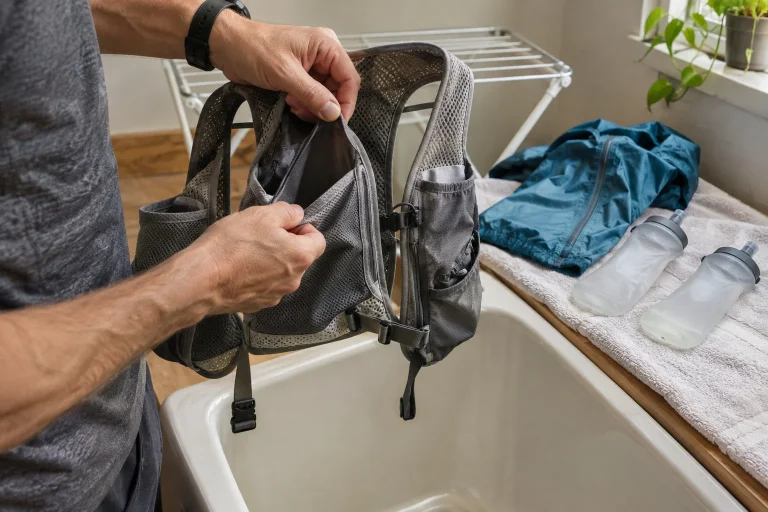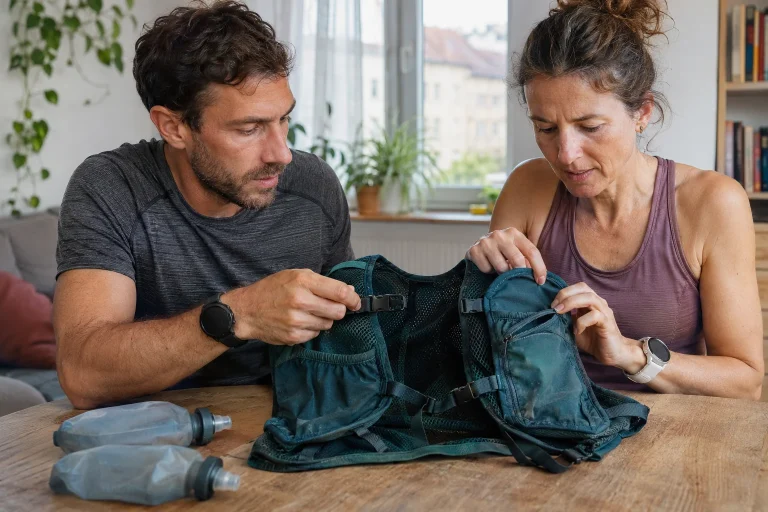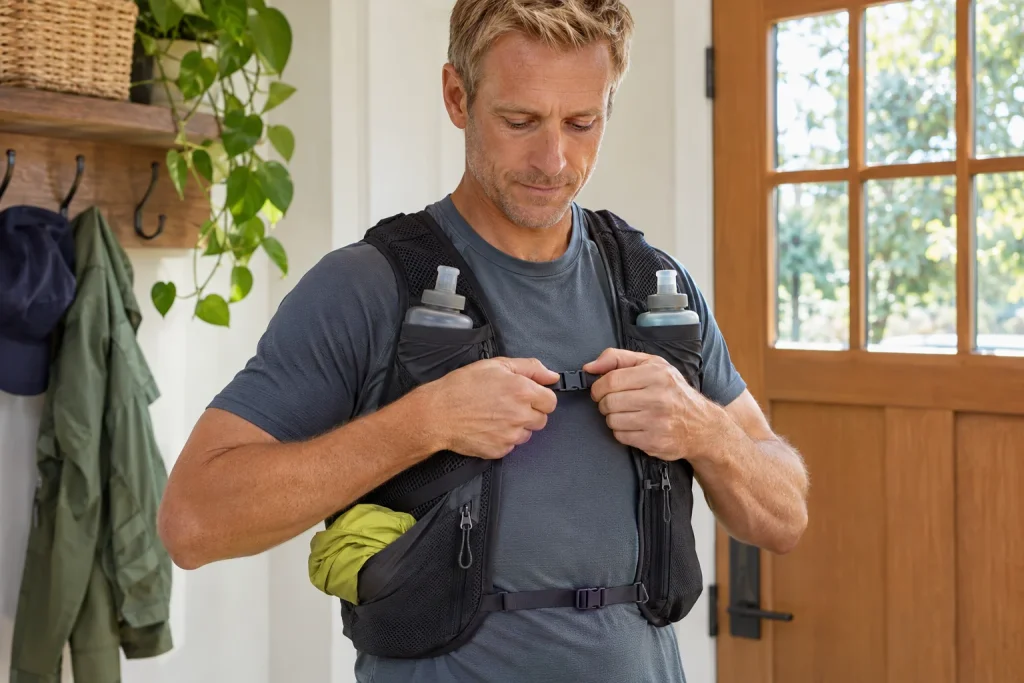
A running vest can be light and soft yet work poorly once loaded with fluids, phone, jacket and fuel. Its litre figure describes storage, not complete fit. While running, it must keep contents organised while allowing free breathing and arm movement. Appropriate size, arrangement and adjustment all contribute. A good first trial is therefore not quickly putting on an empty vest, but gradually learning a loaded system assembled for your own task.
Capacity and body size: separate scales
Nominal volume is not your body size. How much equipment you carry is one question; how the vest fits your torso is another. A high-capacity model can come in a smaller body size, and vice versa. The Salomon selection and sizing guide also addresses use and size separately. Find the current chart for the particular product, not an older different model. A usual shirt size is not sufficient in every system.
Measure at the manufacturer’s specified position and in the stated way, with natural posture. Chest, shoulders, torso length and breast shape can create different experiences at the same circumference. Category labels do not replace trying on. Between sizes, ask manufacturer or retailer support and compare loaded where possible. Do not choose too small merely because it feels firmer empty. Free breathing, access and stability matter together, not the tightest possible embrace.
First, name what you will carry
Lay a typical run’s contents on the table: perhaps fluid, jacket, phone, keys, personal items and planned food. For racing, add current mandatory equipment. One UTMB organiser equipment page emphasises carrying prescribed items throughout, for example. This is not another event’s list to copy, but a reminder to test against your own actual requirements. A satisfactory empty vest does not prove all necessities fit accessibly.
Mark frequently accessed items separately from reserves. Place the first within easy reach and the latter securely in rear storage according to design and task. Do not fill every pocket merely because it exists. Unneeded objects add mass, pressure points and searching. Equally, do not omit necessary safety or mandatory equipment to improve the scale reading. Packing serves the task properly.
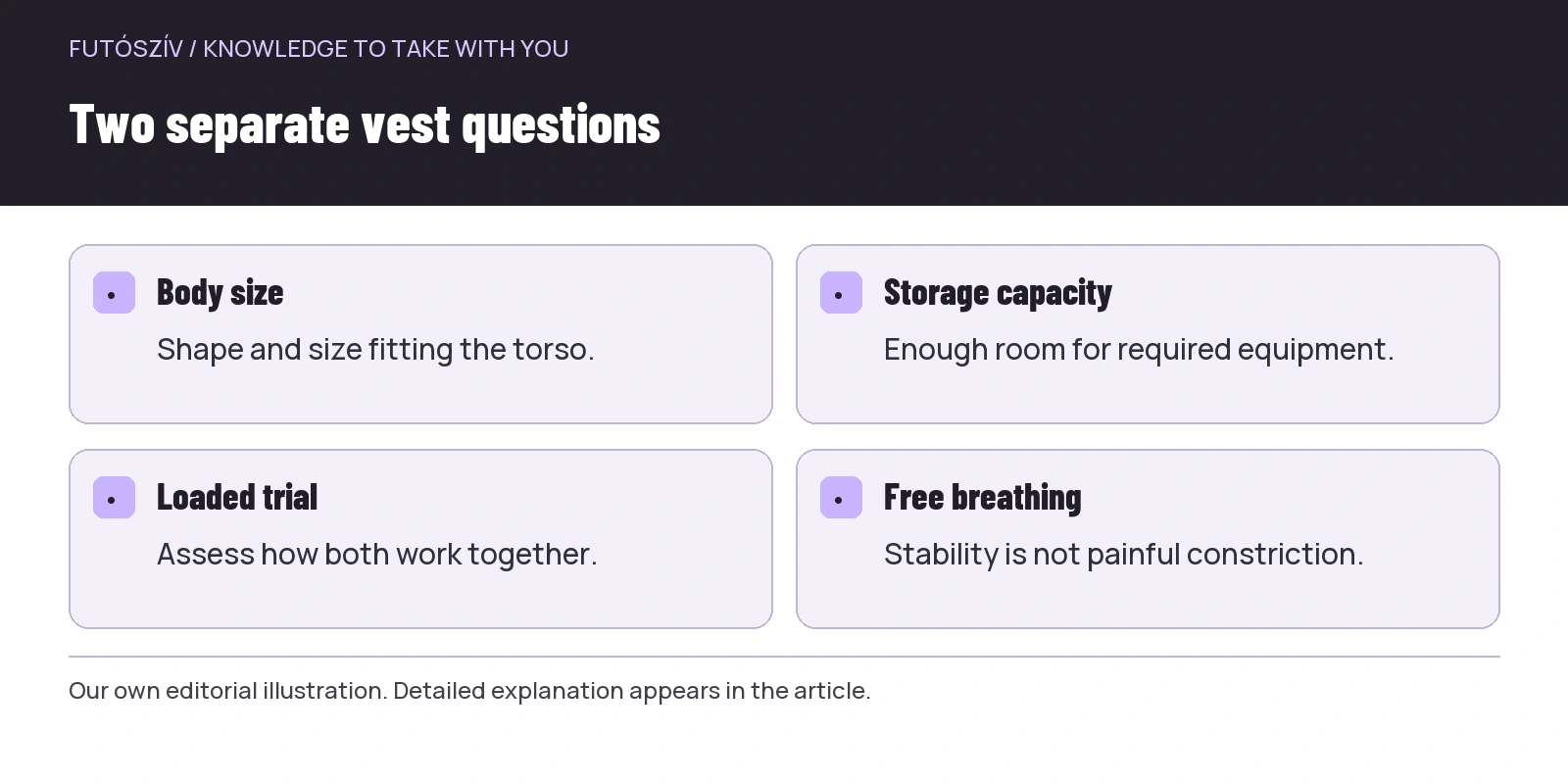 Enlarge diagram
Text version of the illustration
- Body size
- Shape and size fitting the torso.
- Storage capacity
- Enough room for required equipment.
- Loaded trial
- Assess how both work together.
- Free breathing
- Stability is not painful constriction.
Carrying fluid changes shape
Front soft flasks, rear reservoirs and other options position liquid differently. Check compatible bottle and reservoir size, shape and attachment. Identical nominal volume does not guarantee identical pocket fit. The manufacturer product descriptions separately specify access and bottle storage; check your model’s included parts and compatibility. Distinguish supplied accessories from separate purchases.
Test with the intended fluid amount, then consider less remaining. A soft flask can collapse, mass distribution change and an initially firm pocket hold differently. The goal is manageable, predictable behaviour, not an identical shape every moment. Secure bottles as instructed rather than using new knots or alterations to solve wrong sizing. Incompatibility may need an appropriate accessory or different arrangement.
Adjustment: start loose rather than overtight
Learn each strap’s job. Front closures, side adjustment and elastic retainers can differ between models. Loosen as instructed before dressing, then adjust the loaded vest gradually. Breathe naturally and notice straps pulling one point uncomfortably. Front edges too close together or fully stretched closures may suggest size issues; interpret them with product guidance. Stability should not require painful pressure.
If it bounces, do not automatically tighten everything. Check heavy-item placement, bottle attachment and rigid objects held away from your body. More pressure does not always correct distribution. Change one thing and move again to understand what helps. Adjusting every cord continually obscures a good setting. Knowing each component later makes recreating it quicker.
Shoulders and underarms need room to move
Strap edges and underarm fabric may contact skin or top seams during arm swing. Wear intended clothing and move naturally. Do not hold your arms differently for the vest. Comfort only in a rigid unfamiliar posture may justify reconsidering size or shape. Test bending forward and turning sideways too. Record precise neckward slipping or concentrated shoulder pressure for a targeted next trial.
Sports bras can create additional interactions among fastenings, adjusters and bottles. No vest works identically with every bra. Assess the full setup rather than separate labels. Bottles should not force uncomfortable posture or awkward bending to valves. Explore adjustable or alternative constructions for your own needs. Fit is personal; another runner’s satisfaction in the same model cannot replace your trial.
Soft and rigid items behave differently at the back
A packed jacket contacts differently from a phone, power source or hard box. Follow pocket design so rigid edges do not press your back. Avoid loose objects migrating during running. Large rear capacity does not make every arrangement equally usable. Know intended functions and load limits; do not turn it into a weighted vest or carrier for loads outside its design.
Access to a spare jacket matters too. Can you remove and repack the vest without other contents falling? Small separately packed objects need stable places. Give used food packaging a compartment rather than mixing it with clean spare clothing. Good organisation is not military folding: it means knowing where things are when tired or in poor light, reducing searching and accidental loss.
| Trial situation | Observe | Possible change |
|---|---|---|
| Jogging with full bottles | Bouncing and shoulder load | Attachment and mass distribution |
| Natural breathing | Chest constriction | Strap adjustment or size review |
| Arm swing | Underarm contact | Clothing layer, strap location or another cut |
| Removing a bottle | Access and replacement | Compatible shape and manufacturer attachment |
| End of the run | Different behaviour with less fluid | Familiar fine adjustment following the manual |
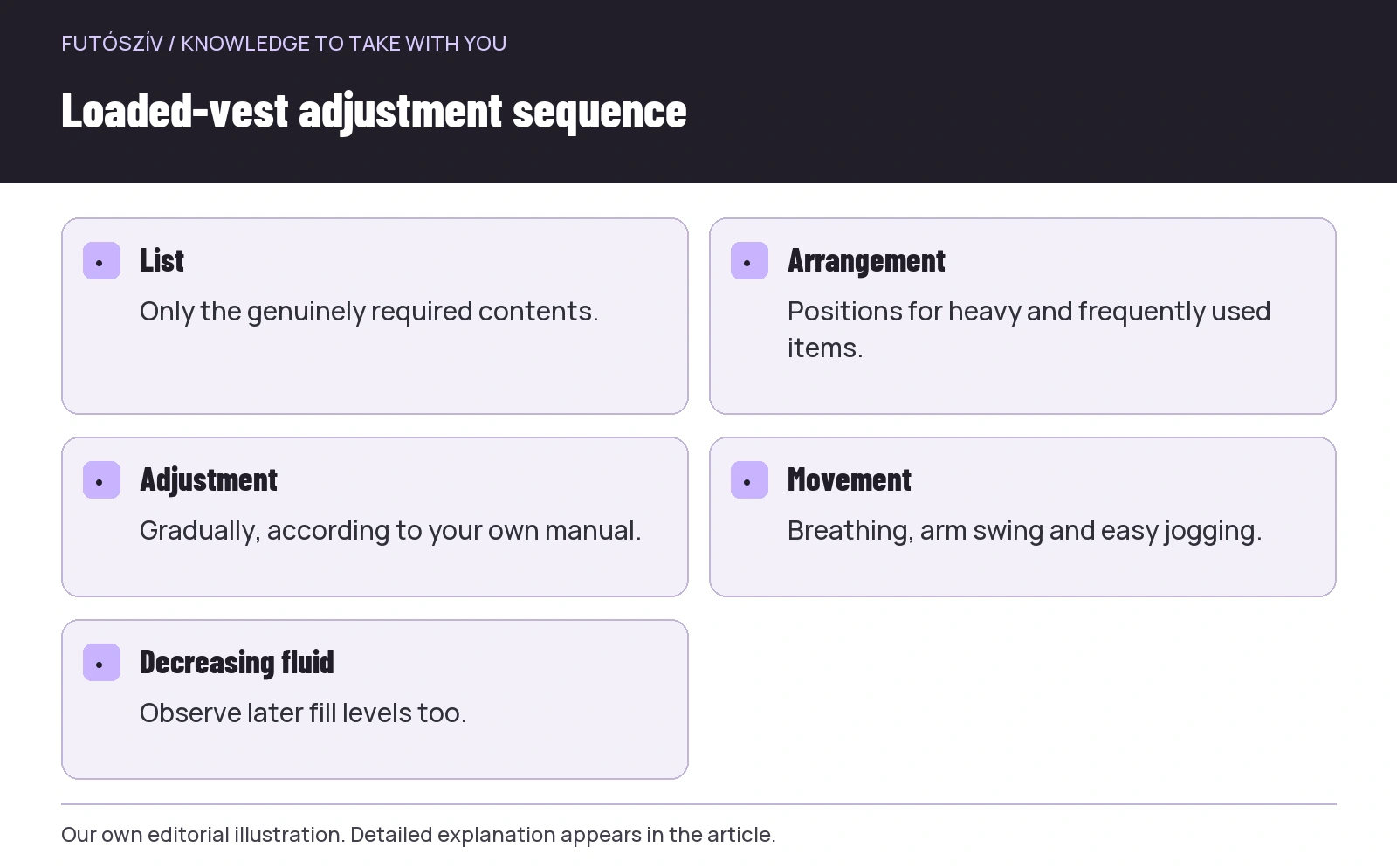 Enlarge diagram
Text version of the illustration
- List
- Only the genuinely required contents.
- Arrangement
- Positions for heavy and frequently used items.
- Adjustment
- Gradually, according to your own manual.
- Movement
- Breathing, arm swing and easy jogging.
- Decreasing fluid
- Observe later fill levels too.
Test access standing, not on a dangerous section
Reach intended supplies while stopped in calm surroundings. Learn bottle, zip and phone positions without taking attention from a route. If something needs two hands and prolonged searching, do not plan it as a moving task on a narrow technical path. Stopping safely is often simpler. Quality does not mean doing everything while running, but accessing necessary functions appropriately for you.
Gloves or a rain jacket can change handling. Small pulls, elastic pockets and tiny buckles may become harder, so practise the intended setup. After changing attachment, check that numbers and other functions remain visible. Hung clothing should not accidentally hide reflective areas. Helpful functions can conflict; testing the system reveals this. An impressive pocket count alone does not create understandable use.
A short first run and precise feedback
Use a familiar route that is easy to leave, within usual easy activity. Do not increase distance or intensity just to test the vest. Observe early and later conditions: slipping, adjustments and pressure locations. Stop to investigate discomfort. Increasing rubbing or constriction is not expected “getting used to it”. The product should work comfortably for its appropriate task, rather than forcing movement to match faulty settings.
Afterwards note contents and changes. A photo or factual notes can recreate a useful setup. Do not make one strap position rigid for all layers and fill levels, however. A thicker jacket, different equipment or fluid amount can require fine adjustment. Know the system and each change’s purpose. Understanding brings more safety and comfort than one accidentally successful but unexplained packing arrangement.
Care and rechecking
Treat vest and fluid containers according to their own manufacturer instructions. Do not leave damp straps and pockets compressed for days; clean and dry bottles and tubes separately as directed. Regularly inspect elastic, buckles and seams. Stretch or damage can alter formerly good fit. Cleaning, material checks and packing order form one system, reducing surprises at departure and keeping the vest familiar.
The right vest is not necessarily the lightest, largest or most pocketed. It works with needed contents, your clothing and movement. Charts, manufacturer attachment, loaded trials and gradual familiarity provide a useful method. If a problem disappears only with excessive tightening, keep investigating. A well-adjusted vest holds, provides access and lets you breathe. The final measure is serving the task without continual rearrangement while running.
Sources and further reading
- Salomon: choosing and sizing a running vest
- Salomon: example of front bottle storage and fit
- UTMB organiser example: carrying mandatory equipment
How Futószív articles are prepared: our editorial guidelines.