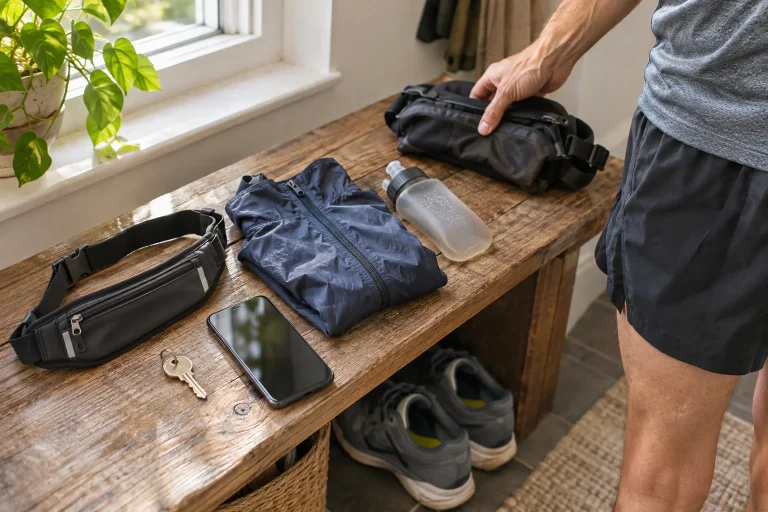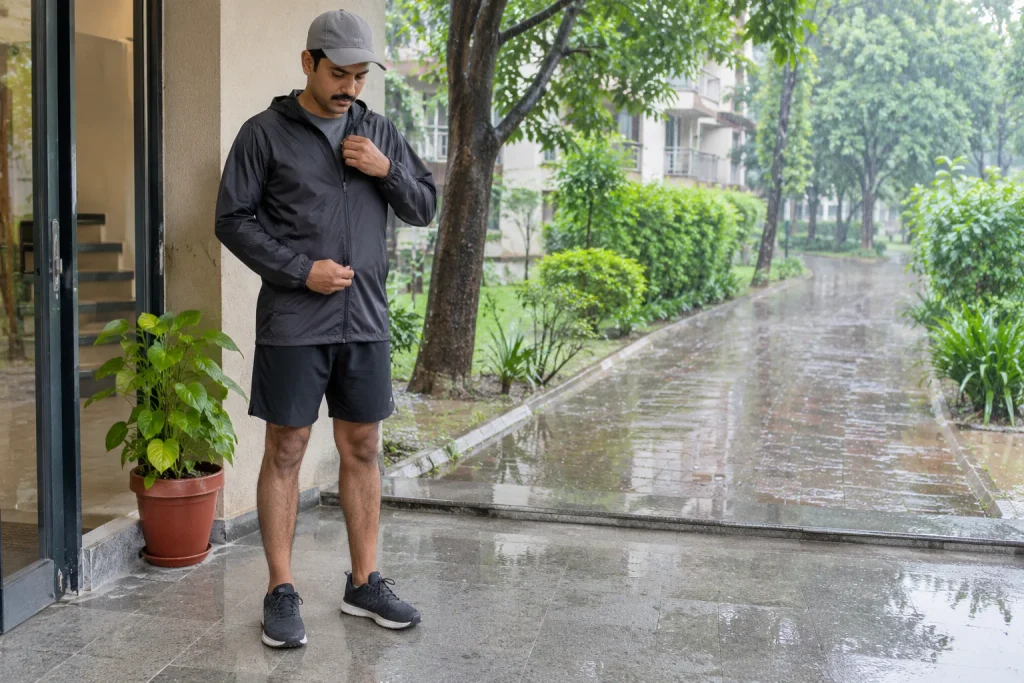
Before a first rainy run, writing a long shopping list is easy: jacket, shoes, cap, new case and something for every possible drop. A more useful beginning may be a short trial with existing kit on a familiar route in manageable weather. It reveals actual irritations and imagined ones. Experience can later support more precise decisions about new items.
Rain covers many situations. Calm mild drizzle, cold downpours, thunderstorms and flooded paths are different tasks. This article concerns a first trial that is easy to stop. Assess official weather information, local conditions and personal circumstances together. Changing the running plan is part of preparation.
First, describe the rain more precisely
Check the forecast’s area and period. Is substantial wind or a thunderstorm expected, and how long would you be outside? The HungaroMet severe-weather system separately describes dangerous phenomena; read the explanation rather than only map colours. Seek fresh information for your actual time window.
You need not choose the hardest weather for a first attempt. Learn when a loop can be shortened, home is near and ground familiar. Change the outing if conditions change. The trial has no hidden requirement to prove determination whatever happens.
A good rainy loop has several exits
A short nearby loop avoids deciding whether to continue at the farthest point. Finish loops as needed without a long unpleasant return. Use readable surfaces and know drain covers, steps and steep slopes. If every corner brings new information, route unfamiliarity and rain uncertainty become harder to separate.
Check where water collects. Deep puddles conceal surfaces, so consider more than dry shoes. Detour with awareness of others rather than automatically entering cycle or vehicle traffic. Choose another loop if a section is unclear or unsuitable. A planned line does not oblige passage.
Inventory existing equipment before shopping
Review clothes already owned and their tasks. A light top, existing layer and familiar shoes may suffice for a short mild-weather trial, depending on circumstances and experience. The first outing teaches what changes when materials become wet. Replacing everything at once obscures which change helped.
The NHS beginner running guidance includes comfortable clothing and a usable route among simple starting conditions. Treat the rain trial similarly: explore a specific situation rather than assemble a new wardrobe. Later purchases are easier to justify with a precisely named problem.
| Existing item | What to examine | What can the trial answer? |
|---|---|---|
| Running top | Is movement comfortable when wet? | Which material or cut genuinely bothers you? |
| Outer layer | Does it stay put with accessible pockets? | Is another cut or simpler carrying needed? |
| Shoes and socks | Comfort on the chosen surface | Is the issue distance, ground or fit? |
| Cap or visor | How much does rain affect vision? | Does your existing option help? |
| Phone carrying | Does the device remain dry and accessible? | Must the case, pocket or position change? |
| Post-finish bag | Is a dry layer at hand? | Does the whole door-to-door process work? |
 Enlarge diagram
Text version of the illustration
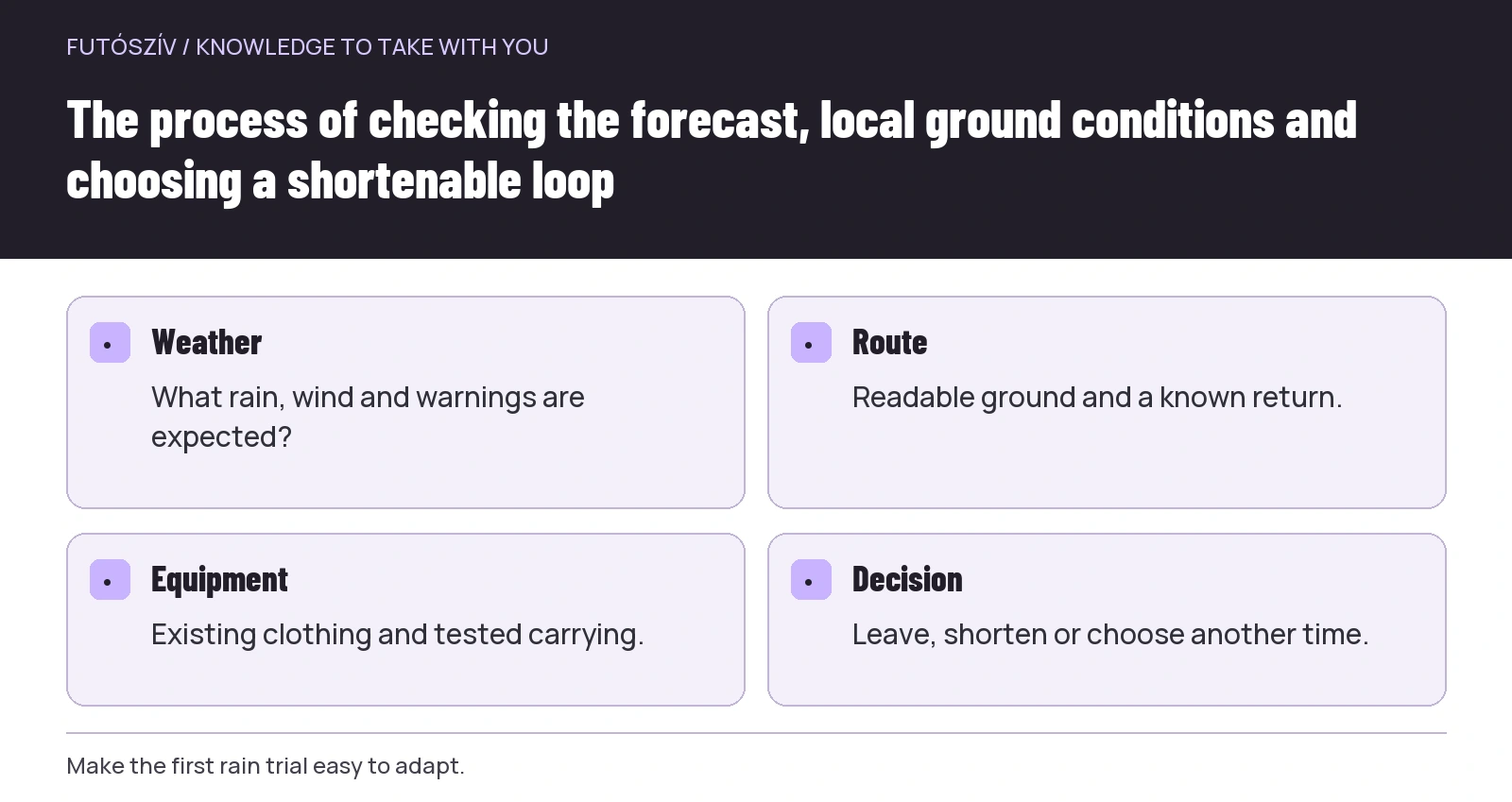
- Weather
- What rain, wind and warnings are expected?
- Route
- Readable ground and a known return.
- Equipment
- Existing clothing and tested carrying.
- Decision
- Leave, shorten or choose another time.
Decide on phone and keys before leaving
Handle water-related device conditions according to manufacturer guidance. A water-resistance mark does not automatically permit every use. With a case or pouch, test important functions and slipping while running. Protection should work with your actions too.
Wet hands change tight-zip and touchscreen handling. Include route, ticket or access-code use if needed. Keep keys easily retrievable at home. Searching wet pockets for the most important object is particularly unpleasant at the end. Give items fixed, known places.
Plan a short trial with few variables
Choose an existing easy outing not intended for performance measurement. Rain already introduces changed conditions. New shoes, route and pace alongside it scatter the lesson. Ask simply how familiar movement works on this known loop in current weather.
Define easy finishing conditions before leaving. Decide at every loop end whether to continue and reassess weather or ground changes. You need not mentally run a tense checklist throughout. Shortening is a normal plan option, not exceptional failure.
Treat wet ground as a separate attention task
Even familiar pavements change in visibility, pooled water and secure-feeling movement. Allow more assessment time at bends, surface transitions and crossings. Do not trial maximum grip at maximum speed. Less rushing makes route and movement changes easier to notice.
Others also travel in changed conditions. Umbrellas, hoods and misted glasses can reduce awareness; respond with greater attention rather than angry explanations. Signal as needed, leave space and avoid forcing walkers beside flowing water. Shared routes remain shared when rain complicates your session.
Organisers check whether group events proceed
Before a scheduled outing, read current announcements. The official parkrun information lists flooding, ice and dangerous course conditions among cancellation reasons, for example. The original invitation is not always sufficient for today’s decision.
Cancellation or route changes may reflect local facts invisible from home. Drizzle where you live does not establish excessive organiser caution; another section may be flooded or obstructed. A cancelled event’s course is not automatically suitable for an independent run. Consider the stated reason in your decision.
 Enlarge diagram
Text version of the illustration
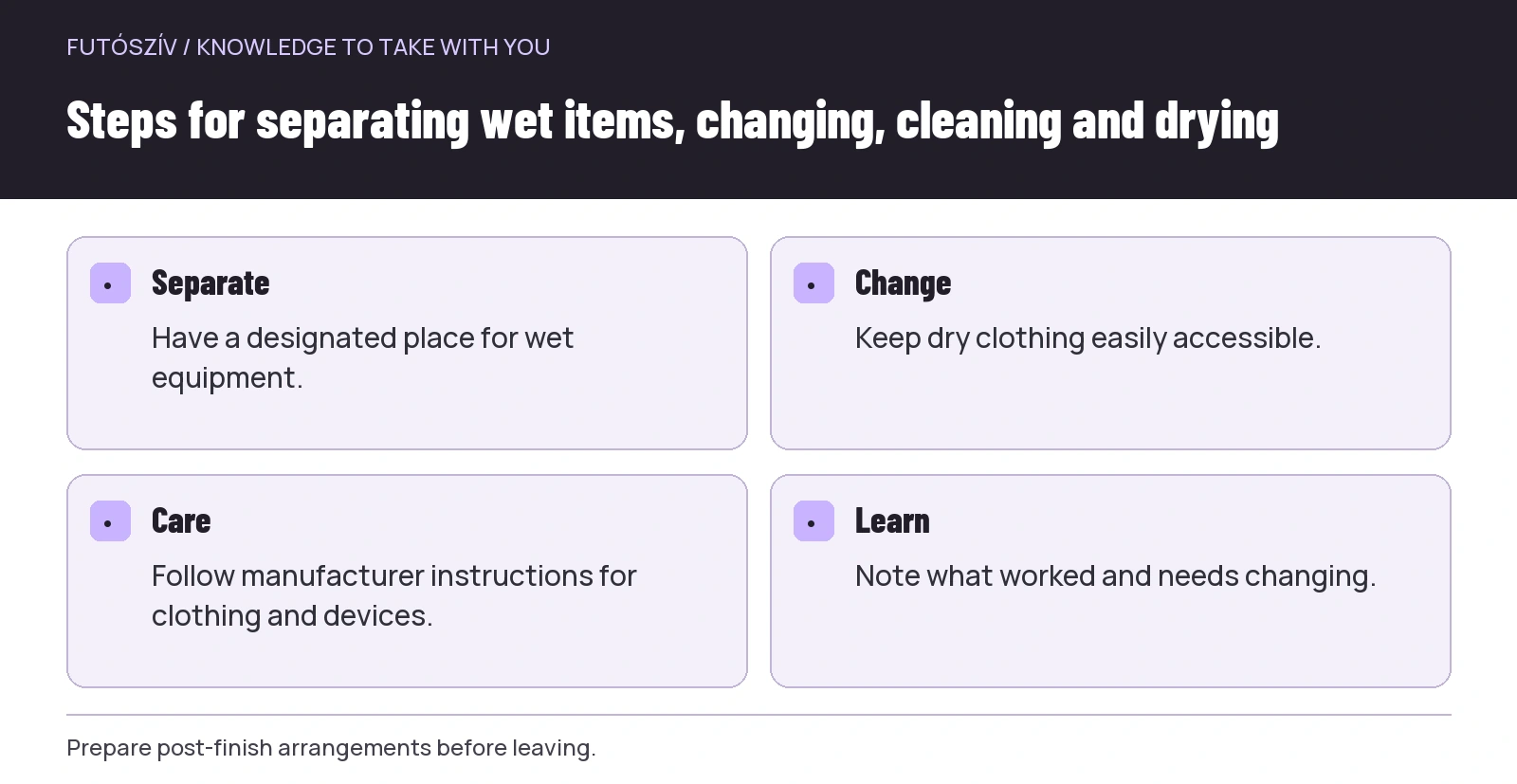
- Separate
- Have a designated place for wet equipment.
- Change
- Keep dry clothing easily accessible.
- Care
- Follow manufacturer instructions for clothing and devices.
- Learn
- Note what worked and needs changing.
Do not leave the finish as your next problem
Prepare wet-kit space and dry clothes before departure. From home, this can mean an accessible change and somewhere avoiding drips through the whole house. With travel, separate wet items and plan a return layer too. Pack so dry clothes are not retrieved beneath used ones.
Care for each item according to its instructions. Fast-drying ideas should not override material heat or treatment limits. Shoes, watches and phones need different processes. Closing the trial means restoring usable condition for next time, not merely putting items out of sight.
Four simple observations afterwards
Vision and attention. What most disturbed navigation: rain on your face, water on glasses, darkness or ground? Solutions depend on the real issue. Another time and clearer loop may help more than new clothes. Precision avoids imagining a whole-equipment problem from one route section.
Carrying. Did phone, keys and other items stay stable and accessible? If constantly adjusting, examine quantity, position and attachment. Less content, another pocket or advance arrangement can change use. Before buying a new case, identify the action you want to simplify.
Clothing feel. Which layer felt pleasant, moved or demanded continual handling? Record temperature and wind with rain experience. Mild-weather success does not automatically transfer to cold wind. Your description helps because it concerns a usage situation rather than a material in general.
Finishing. Did returning and changing work? Was there space for wet things? This can be easier to improve than running in rain itself. If post-finish rushing was worst, address it next time. The experience includes how the outing closes, not only outdoor minutes.
When does new equipment make sense?
When observation reveals a specific recurring need: regularly running in weather unsuitable for an existing layer, or persistently uncertain phone carrying. Describe requirements before browsing: weather, distance, pocket and fit. Purchases then answer real tasks.
Do not expect one new object to solve every rainy condition. Route, time, planned duration and finishing arrangements still matter. Equipment is part of the plan, not its replacement. A small organisational improvement is as useful an outcome as a precisely defined future purchase.
A rainy routine to try
Check current weather and route usability before leaving. Choose a familiar shortenable loop, arrange existing equipment and prepare dry clothes. Keep running suited to the planned easy task and give changed conditions attention. Modify at a loop’s end or sooner if needed.
At home, close the process: separate wet items, change, care according to instructions and write a few observations. Rainy running becomes useful knowledge of your clothes, routes and organisation rather than a one-off adventure labelled simply good or bad. Next rain, start from that knowledge rather than another generic shopping list.
How Futószív articles are prepared: our editorial guidelines.