A running cap is often the last item you grab before leaving. In heat, wind or rain, or when wearing glasses, its shape quickly proves important. It can shade the eye area, manage forehead moisture and cover head, ears or neck differently. These are separate tasks, so start from use rather than a striking product name. A good choice stays comfortable, avoids obstructing vision and works with other kit. Sun protection remains a complete plan rather than one cap’s responsibility.
Three shapes, different coverage
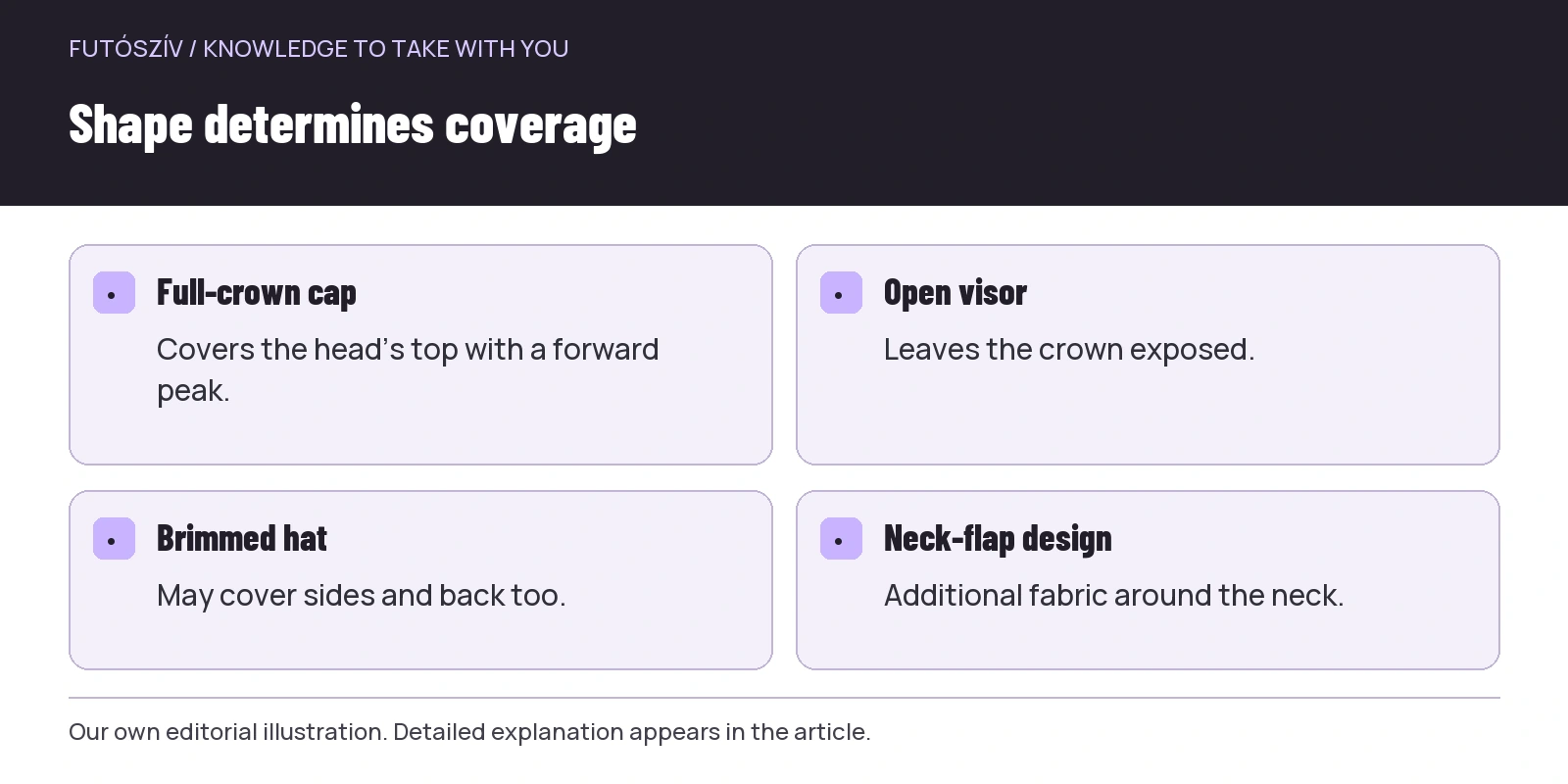
A full-crown peaked cap covers the top of the head. An open visor leaves the crown exposed while shading the front. A brimmed hat can extend coverage sideways and backwards depending on shape. A neck-flap design adds fabric around the neck. Treat these as more than styles. Consider where sun reaches ears, neck and scalp on your route. An exposed area remains exposed while wearing a cap.
The American Academy of Dermatology sun-protection guidance discusses shade, appropriate clothing, hats, UV-protective glasses and exposed-skin protection together. Headwear is one element. A forward peak does not mean complete ear and neck protection, nor an open crown a covered scalp. Examine actual shape and material, then complement them with other measures. A product photo’s shadow shows only one light direction.
Peak length and shape meet your field of view
Put it on and look forward, sideways and slightly down. Use your natural running head position rather than only checking with your chin raised at a mirror. A low-reaching peak may hide upper vision; a flexible edge can behave differently in strong wind. A rigid shape may hold comfortably but need packing care. Foldability is not an automatic advantage: do you need a vest pocket, and will shape return as instructed?
In rain, a peak may help manage drops before the face, depending on size, angle and wind. With glasses, check contact and positioning. A hood creates another arrangement, with edges potentially covering or pressing each other. A quick home trial reveals shifts with every head turn without a long bad-weather run. Learn mechanical interaction first, then assess outdoor experience.
 Enlarge diagram
Text version of the illustration
- Full-crown cap
- Covers the head’s top with a forward peak.
- Open visor
- Leaves the crown exposed.
- Brimmed hat
- May cover sides and back too.
- Neck-flap design
- Additional fabric around the neck.
Size needs depth and shape as well as circumference
Head circumference helps, but depth and shape contribute. A shallow crown sits differently; a deeper one can approach ears. Rear adjustment meets hairstyle and other equipment too. Follow sizing guidance and use your intended hairstyle. With ponytails or buns, check opening and strap. Do not flatten hair temporarily for a trial if running conditions will differ.
Adjustment should be stable without pressure. Move your head and take easy steps or jog somewhere safe. Stability only through strong tightening may suggest another depth or shape. Buckles, hook-and-loop or elastic should not pull hair or bother the neck. With headtorches, inspect meeting adjusters too. Individually comfortable items may press together, so a complete setup gives the real trial.
Ventilation: examine each panel’s role
Mesh, light fabric and an open crown provide different coverage and sensations. The largest-looking ventilation holes may not suit an area needing coverage. Read claims precisely: which material or part has the sun-protection rating? The official BUFF running-cap descriptions show different constructions and UPF labels on some models, for example. This does not make every part of the range identical. Check your selected product’s exact information.
Ventilation feel also depends on weather, intensity and personal comfort. A short trial cannot establish “it does not feel hot” in all circumstances. Headwear does not make heat-running safe without limit. The CDC heat guidance for athletes emphasises reconsidering outdoor effort and timing. In excessive heat, changing location, time or session can matter more than a more technical cap.
UPF: a material property, not a complete protective shell
UPF concerns a clothing material’s ultraviolet protection. Distinguish it from sunscreen labelling and the area physically covered. A well-rated peak cannot cover skin outside it. The CDC sun-exposure information separately mentions hats shading ears and neck. Ask both what the shape covers and what the manufacturer claims for the material.
Do not create an ultraviolet rating from a home light test. Seeing through fabric held towards a lamp differs from an appropriate tested classification. Exact product data and conditions matter. Read instructions about washing, use and damage too. Independently plan exposed-skin protection and shadier routes. Sun protection is a multi-step routine; understand headwear’s role and limits rather than only a large label number.
Try glasses, light and hood together
Glasses arms and cap sides can meet above the ears. A tight band or deep crown may press frames; a peak may touch lenses. Turn sideways and look down naturally. If glasses shift, identify which item moves them. Adjustment or another cap shape may help. Do not forcibly bend frames to suit new headwear. Correct optical-device wear matters particularly when important for navigation.
With a headtorch, check beam direction and switch access. A peak may shadow nearby ground or the strap shift the cap; arrangement matters. Hoods should retain manageable head turns and vision. After a home trial, make the first outdoor outing familiar and easy to stop. Avoid testing new cap, glasses and light together on technical ground. Many new elements obscure causes; safe simple trials teach more precisely.
| Main need | Look at the shape | Test with your own setup |
|---|---|---|
| Front shade | Peak length and angle | Vision in a natural head position |
| Side and neck coverage | Actual brim or neck-flap position | Position in wind and head turns |
| Open crown | Which area remains exposed? | Complete the wider sun-protection plan |
| Glasses | Interaction of sides and peak | Frame arms, lenses and ear area |
| Packability | Is folding manufacturer-supported? | Usable shape after vest-pocket storage |
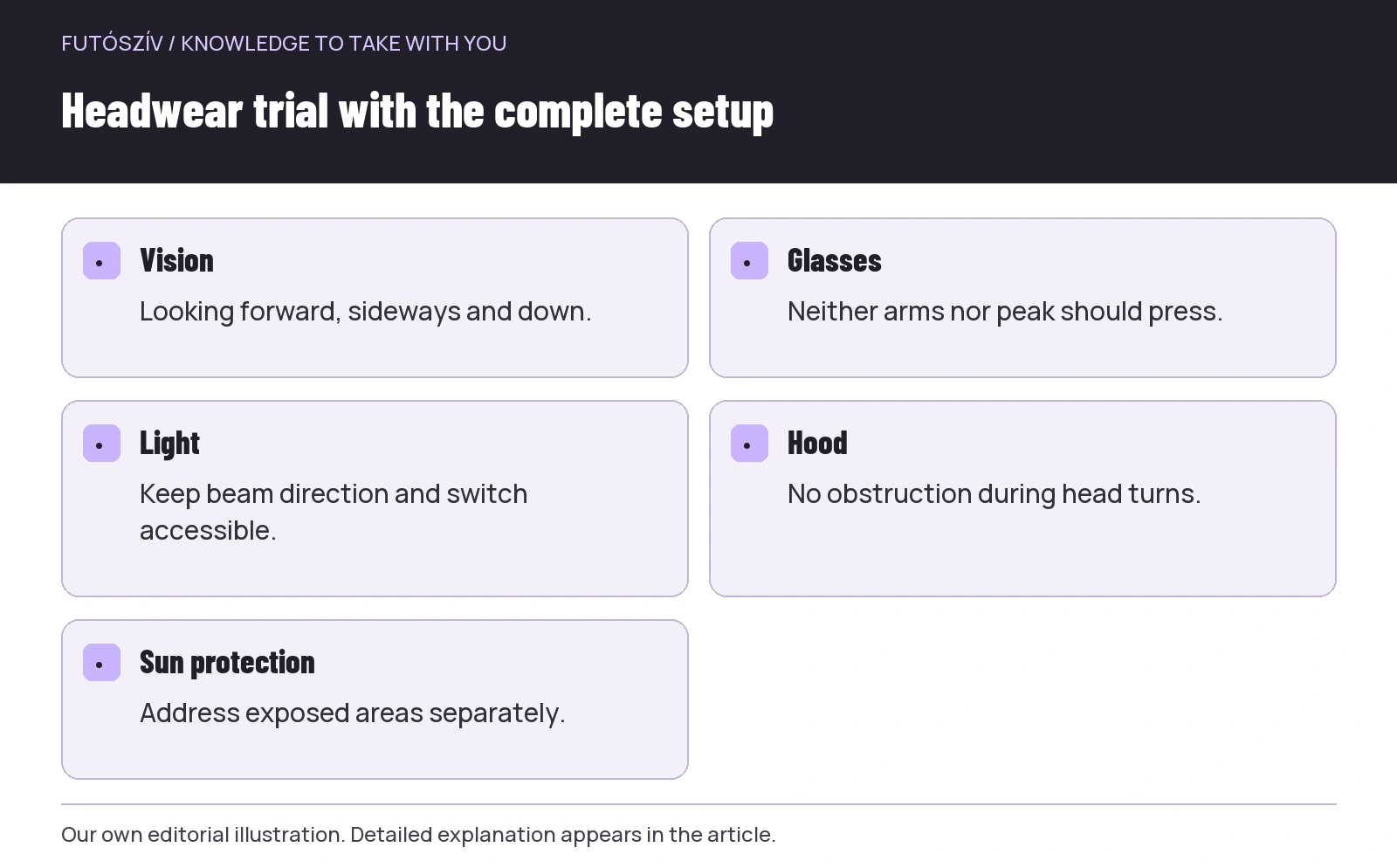 Enlarge diagram
Text version of the illustration
- Vision
- Looking forward, sideways and down.
- Glasses
- Neither arms nor peak should press.
- Light
- Keep beam direction and switch accessible.
- Hood
- No obstruction during head turns.
- Sun protection
- Address exposed areas separately.
Wind requires attachment and route decisions
A wide brim can catch wind differently from a short peak. Assess wind resistance alongside head attachment. Adjust as instructed, checking cords do not strike your face. Strong gusts create environmental hazards no cap adjustment solves. Do not chase lost headwear heedlessly onto roads or uncertain ground. Caution suited to the location matters more than immediately rescuing an object. Equipment must always match conditions.
For long exposed routes, plan removal and storage. An item clipped to a buckle may hide reflectors, obstruct pockets or fall. Use supported carrying arrangements and rehearse. Small packed size can help but is not the only value. If fitting a cap needs elaborate, slow folding, another design may be more practical. A sound choice considers both wear and the state after removal.
Care: shape is part of function
Peak reinforcement, bonded parts, straps and fabric may need different care. Follow the label and manufacturer rather than washing every cap identically. Afterwards check restored shape, twisted bands and hardened seams. Buckles and sweatbands may need particular attention. Do not forget damp headwear in a closed bag. Dry as instructed and check shape and adjustment before the next run.
Assess wear functionally. Fading differs from a broken peak, damaged closure or stretched strap. Interpret damage and treatment effects on claimed protection through manufacturer instructions. Repairs should retain comfortable inner contact; thick forehead stitching can create pressure. Repair should restore appropriate use rather than merely make the hat one piece again.
A short trial sheet can support the decision
Note route type, glasses and layers, then answer: did it stay put, obstruct vision and leave areas uncovered? Add ventilation and packing experience. Specific observation is a better basis than another runner’s photo or “ultralight” adjective. You need not buy every headwear type. A few solutions fitted to your tasks and a considered sun-protection routine offer more. Headwear helps when comfortable during running and clear in its role.
Sources and further reading
- American Academy of Dermatology: a comprehensive sun-protection routine
- CDC: sun exposure and protective clothing
- CDC: heat and athletes
- BUFF: manufacturer running-cap designs
How Futószív articles are prepared: our editorial guidelines.