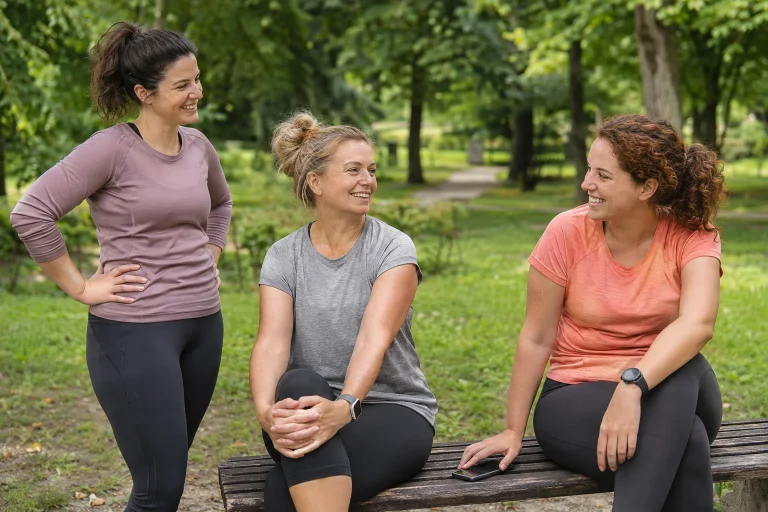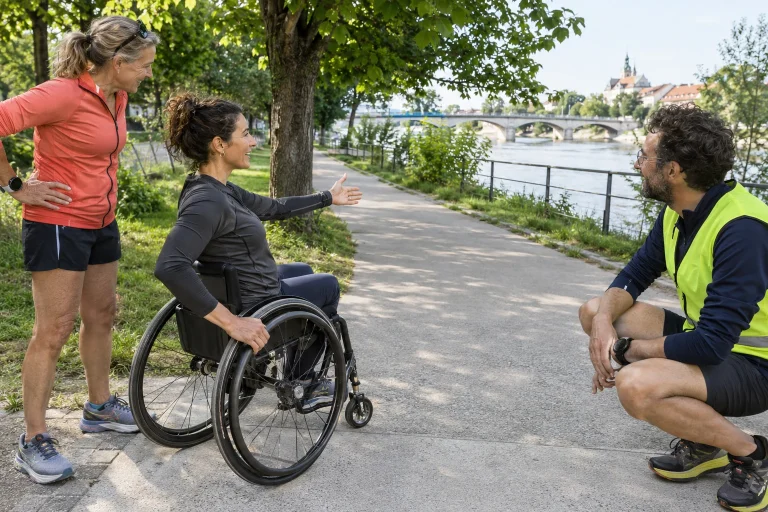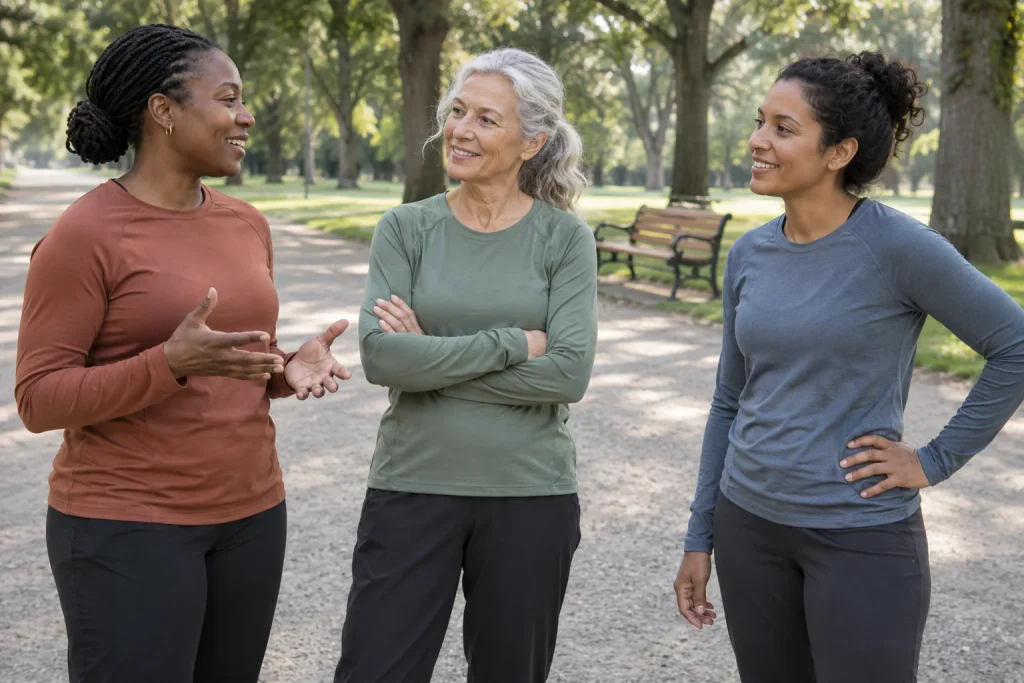
Hearing runner can instantly bring a ready-made image to mind: a particular age, build, equipment or movement style. If you look different, you may wonder whether you have a place in that world. The image does not describe every runner, however. Advertising, previous encounters and others’ expectations may contribute to it. Community identity therefore concerns more than how fast someone moves along a route.
Research on identifying with sport needs to understand the social images within which people develop their roles. A study with members of a US Black women’s running organisation offers a particular perspective. It does not represent every woman or country, but examines within a specific cultural setting how running can become a personally and collectively embraced identity.
The typical-runner image is not the same as actual participants
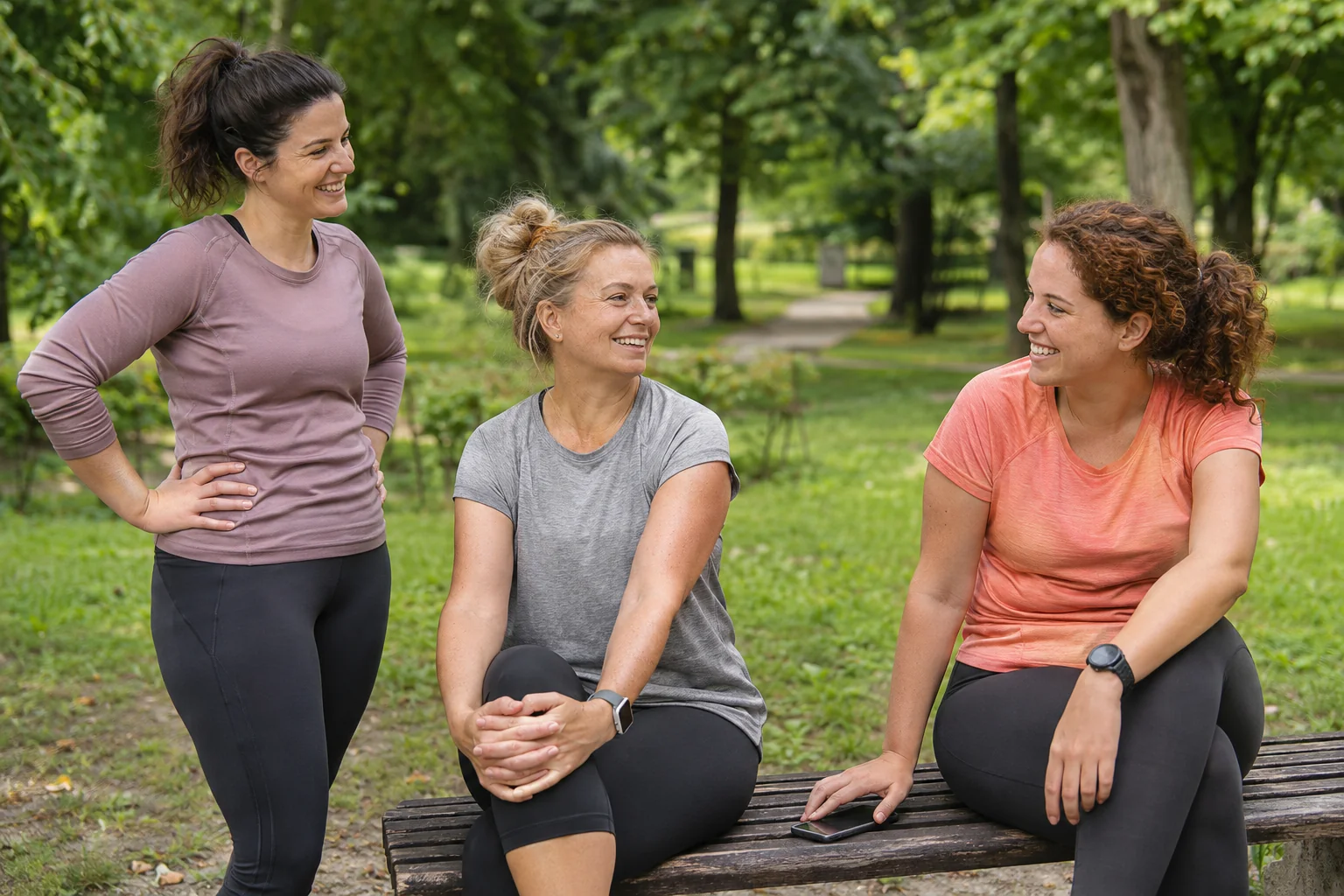
Associating an activity with one striking figure can leave out people participating differently. Park runners can vary in age, build, goals and background. Appearance does not reliably reveal experience, wishes or a chosen programme. A simplified image therefore provides little information about an individual.
A stereotype’s everyday effect need not appear as an explicit ban. It may be a surprised remark, an assumption about sporting expertise or an impression that someone must first prove their place. These are our illustrative possibilities, not incidents quoted from the paper. The point is the distinction between asking about actual details and imposing a ready-made image.
Such expectations can appear in your self-image too. Perhaps nobody prohibited anything, but you compare yourself with your imagined runner. This need not immediately be judged a personal flaw or oversensitivity. Ask where the image comes from and what it actually says about your programme. Striking examples do not equal participation’s full reality.
What did researchers study in the US women’s running organisation?
In Wegner, King and Jordan’s original paper published online in 2019 and in a 2020 journal issue, interviews with members of a national US running organisation for Black women were analysed. The question concerned how organisational membership related to identification with a sporting activity that participants did not necessarily experience as a taken-for-granted role in their social surroundings.
According to the public original abstract, members described learning, support and role models among established members as important. Through personal interpretation and negotiation, they developed identification as runners and could then become examples for others. This interprets processes through interviews, rather than measuring an identical effect in every member or comparing running organisations generally.
Retain the study’s cultural specificity. Black American women’s social experiences cannot automatically be interchanged with those of any Hungarian participant. The paper does not warrant general traits being assigned to Black women, women or runners. Its question instead highlights that sporting self-image develops socially and pathways towards a role can differ.
What can a mismatch between self-image and social image mean?
Dissonant identity in the title is not a medical diagnosis. It is a research interpretation in which existing self-definition and the social image attached to a sport do not fit together easily. This does not mean something is wrong with a person’s body. The question is how to understand an activity as your own role in surroundings that seem to associate it with another image.
In our fictional Hungarian example, someone long saw only young competitors presented as runners, then begins choosing independent outings in middle age. In another story, a newcomer thinks they will be taken seriously only with particular equipment. These are not replacement stories for the American interviewees. They help explain differences between social image and personal practice.
There need not be only one response to a mismatch. Someone may happily call themselves a runner; another prefers saying they go out to exercise without seeking a strong label. Community identity is not a compulsory task everyone must solve identically. Research can describe interesting processes without prescribing the name or organisational membership in which someone must find a place.
 Enlarge image
A role model can offer more than conspicuous success
In everyday terms, a role model need not be a famous athlete. Someone’s presence may show that people with different circumstances, builds or goals can connect with an activity in their own way. This does not mean following the same path. Personal similarity may be interesting, but appearance does not reveal another person’s entire history and circumstances.
In our illustration, a newcomer finds another member’s way of organising everyday activity more interesting than the fastest member’s story. Someone else values asking about an unfamiliar practical detail without first seeming expert. These are not effects established universally by research. They show which different details may become personally significant.
A role model’s value therefore need not be measured exclusively in performance. Understandable participation, expressing wishes or opportunities to learn may matter too. A newcomer need not move the same way or want the same things as someone who offered a point of reference. An example can guide orientation without becoming a compulsory life path.
Organisational membership and the runner role: related but separate
Someone can be strongly attached to a group while running is only one shared activity. Another can have an important runner self-image without organisational membership. Membership and self-definition differ. Interpreting the study requires understanding how they meet in personal stories, rather than assuming they must coincide for everyone.
Bejar and colleagues’ original 2026 scale-development paper approaches identification with the runner role as a separate research concept. Preliminary psychometric investigation of the instrument is not a community entrance test. It helps us see self-image as a separate question without deciding who can belong to a sport. Personal naming is not an entitlement allocated by equipment or a score.
In everyday conversation, asking what someone enjoys about an outing can therefore be more precise than deciding how much of a runner they are. Do shared time, an independent route, learning or a sporting goal interest them? The answer may reveal more about specific wishes than assumptions based on appearance. Identity research can help understand differences rather than draw new boundaries.
Visible diversity and real opportunities are different
A community photograph can show many kinds of people, but actual participation depends on other details. Can newcomers ask questions, is the programme clear and is there room for differing wishes? The photograph alone does not answer these. Diverse appearances can help broaden personal ideas without replacing actual relationships and learning how activities are organised.
| Visible sign | A separate everyday question to clarify |
|---|---|
| Varied participants in a promotional image | What participation framework is actually offered? |
| A friendly invitation | Can you ask questions and express different needs? |
| Shared equipment or a group name | How freely can you choose your programme and self-definition? |
| A successful member’s story | Is it presented as a reference point or a compulsory standard? |
The table is our interpretive aid, not an assessment of the organisation studied. We do not claim that good or bad practice necessarily lies behind an image. It highlights that visibility and actual participation are different questions. Personal decisions can benefit from knowing both, rather than basing your possible place in an activity on one impression.
A question for Hungarian readers differs from a claim about Hungary
You can read a foreign qualitative study as offering interesting questions for your surroundings. Who is presented as a runner, and whose stories are less visible? What do you assume from clothing or build? These are open questions. They do not automatically imply that Hungary has the same group relationships, histories or barriers as the original setting.
Accurate transfer also means not speaking for the people concerned. When someone shares experience in a setting, hear its own details rather than impose a previous study’s ready-made explanation. A paper can offer background for thinking, but another person’s story is not illustrative material for our hypothesis. Their own name for themselves and wishes matter more than quick classification.
Instead of assumptions from appearance, ask for specific information about the programme and participants’ wishes. This does not claim one conversation resolves every social issue. The study interpreted identity within cultural and organisational surroundings. The everyday example is smaller: do not judge one another’s place in sport from signs that cannot tell us.
 Enlarge image
Finding a place does not mean identical activities for everyone
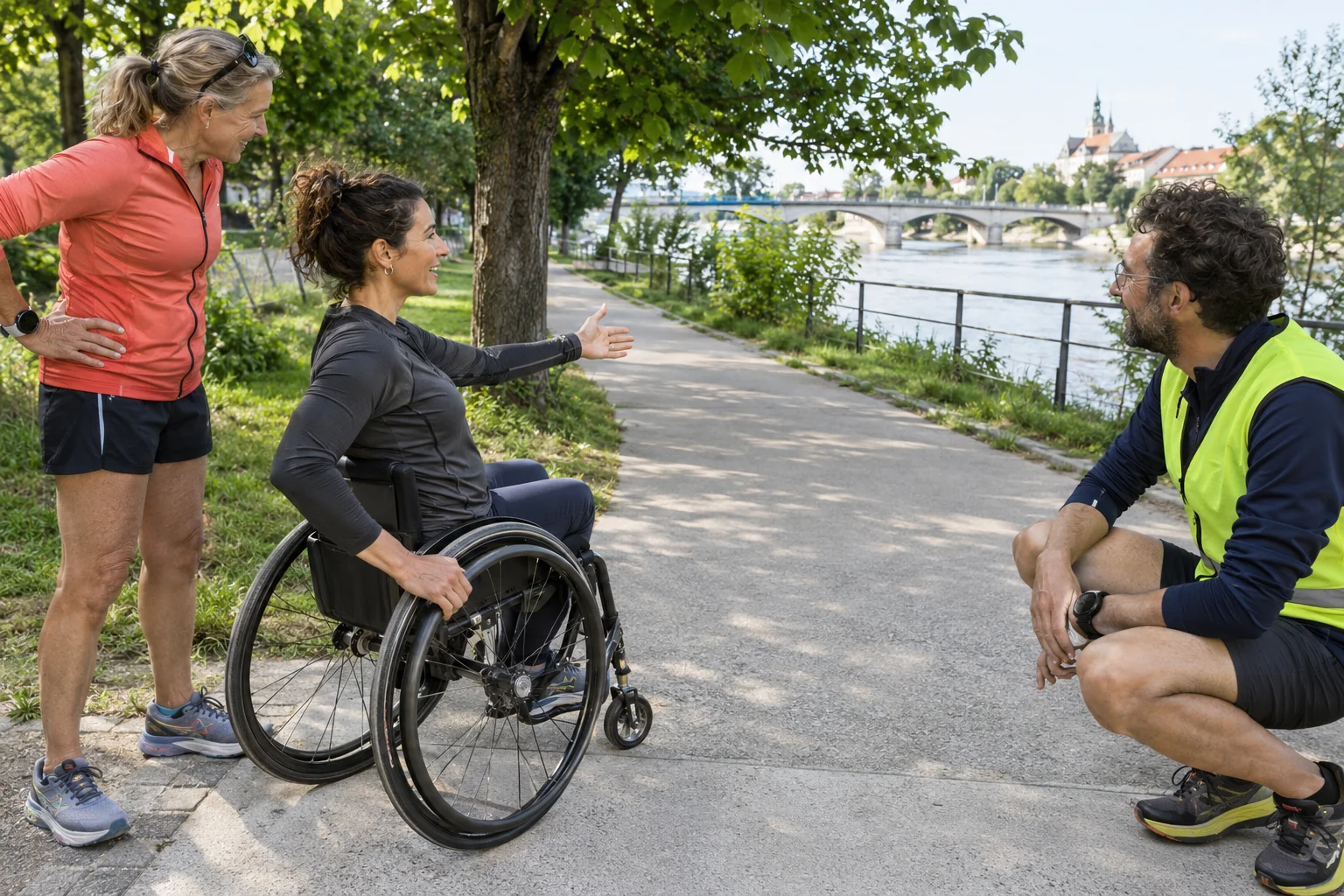
Different participants need not want the same run, pace or social closeness. Community identity does not require differences to disappear. Several goals and experiences can share a setting if they can be named. Your story can belong to running even when it differs from the most frequent portrayal.
Identity, however, is not medical suitability. Someone enjoying the name runner or connecting with a community does not determine their individual capacity for exertion. Appearance cannot establish it either. Self-image and professional or health conditions for activity are separate questions. Social recognition does not require anyone to prove their place through pain or unwanted exertion.
If you do not want organisational membership, that does not make your choice deficient. The original study examined a particular community pathway, rather than proving everyone must follow it. Independent activity or a loose friendship may matter to you. Finding a place can have several personal meanings beyond membership and strong group identification.
Stories can broaden the sporting image
Research on the US women’s running organisation explores how learning, social support, role models and personal self-definition can meet in a particular cultural situation. Interviews interpret processes rather than provide proportions applying to every participant. Retaining method and context, the story opens an important question: whose appearance and experience do we take for granted in sport?
Thinking about your own running need not mean fitting one ready-made image. You can name what you choose, how you enjoy participating and which community or independent framework appeals. A sporting self-image is not an equipment or body-shape exam. More precise stories leave less need for one conspicuous example to speak for everyone.
Sources
- Wegner, King and Jordan: The role of organizational membership in overcoming dissonant sport activity identities, online 2019, journal issue 2020.
- The original paper’s publisher record and abstract.
- Bejar, Fisher and Morrow: Development and Validation of the Running Identity Scale, 2026.
How Futószív articles are prepared: our editorial guidelines.