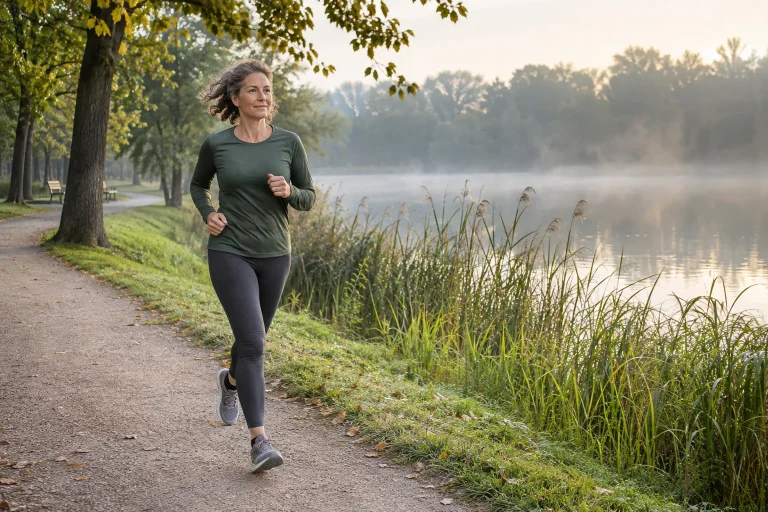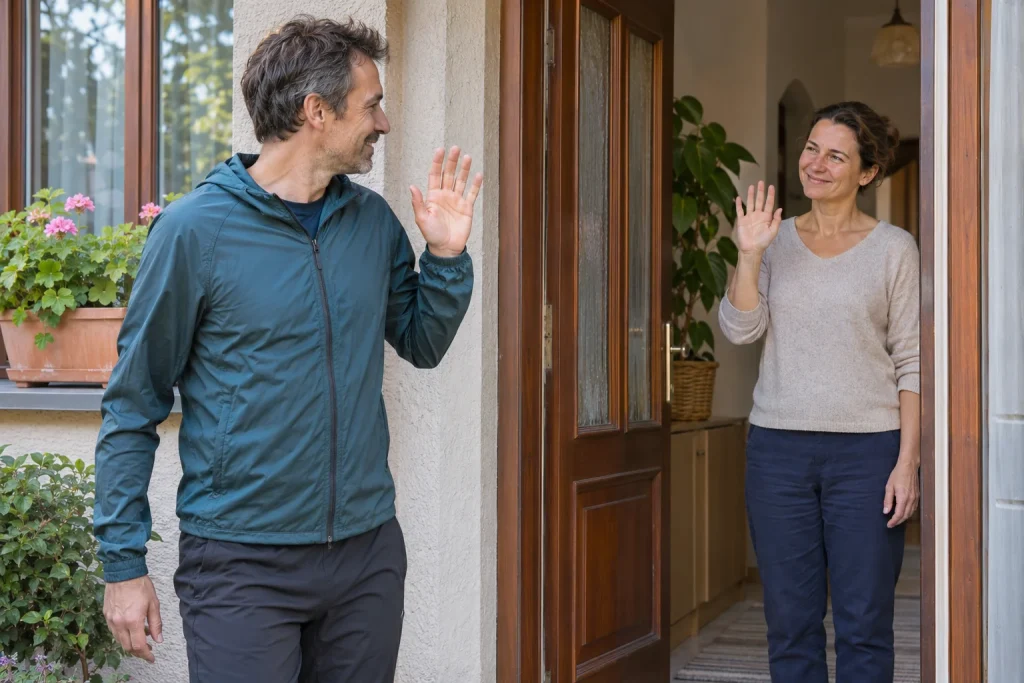
You put on your jacket, say goodbye and set off alone. Nobody runs beside you in the park, yet other people may be part of the outing’s story. You agreed the timing with someone, another person took on a shared household task, or an acquaintance showed you this route long ago. Independent activity and a social background do not exclude each other. Not every connection is visible in the number of people moving immediately beside you.
This perspective does not claim everyone secretly wants group runs. Rather, it allows a solo outing to be appealing in itself while its everyday conditions may be shared with others. Running’s social side need not be sought exclusively in club membership, group photographs or a strong runner identity. Sometimes a brief discussion at the front door is part of the story too.
Alone and lonely do not mean the same thing
Running alone on a particular route describes the outing’s visible organisation. It does not reveal your relationships or how you experience independent time. It can be a freely chosen quiet outing, or a situation in which you would like company. Your experience distinguishes these, rather than the number beside you. One solo run need not yield conclusions about your entire social life.
In our example, someone works with people all day and welcomes an activity requiring no conversation. Someone else finds less connection during the day and currently seeks a shared outing. We can see a runner moving alone in both situations. A similar outward picture can conceal different meanings. The example does not describe two personality types; it shows why the chosen framework is worth asking about too.
Your preference need not stay constant. One day independent movement feels good; another day you are happy to meet. This need not become inconsistency or a failure to connect. Running can be one activity in which you accommodate different social needs. Naming your choice precisely may help more than seeking the same community pattern for every outing.
What did researchers ask London runners outside clubs?
Hitchings and Latham’s original 2017 study examined London recreational runners who did not belong to running clubs, using accompanied runs and interviews. They worked with twenty people, half usually exercising outdoors and half on treadmills. Their interest went beyond group membership to how running fitted into participants’ everyday lives and surroundings.
According to the full author manuscript, not every participant wanted a highly committed running community or a prominent running identity. The authors suggest looking for social relationships beyond a shared subculture. This was a particular London qualitative sample, not an estimate of how many Hungarian runners like being alone.
The research can give readers an interesting question too: which relationships and shared conditions lie behind an apparently independent outing? You need not copy participants’ lives into yours. The perspective can help even if you do not want to join any group. An independent activity need not be interpreted as a social absence to notice the coordination behind it.
Who and what make the available time possible?
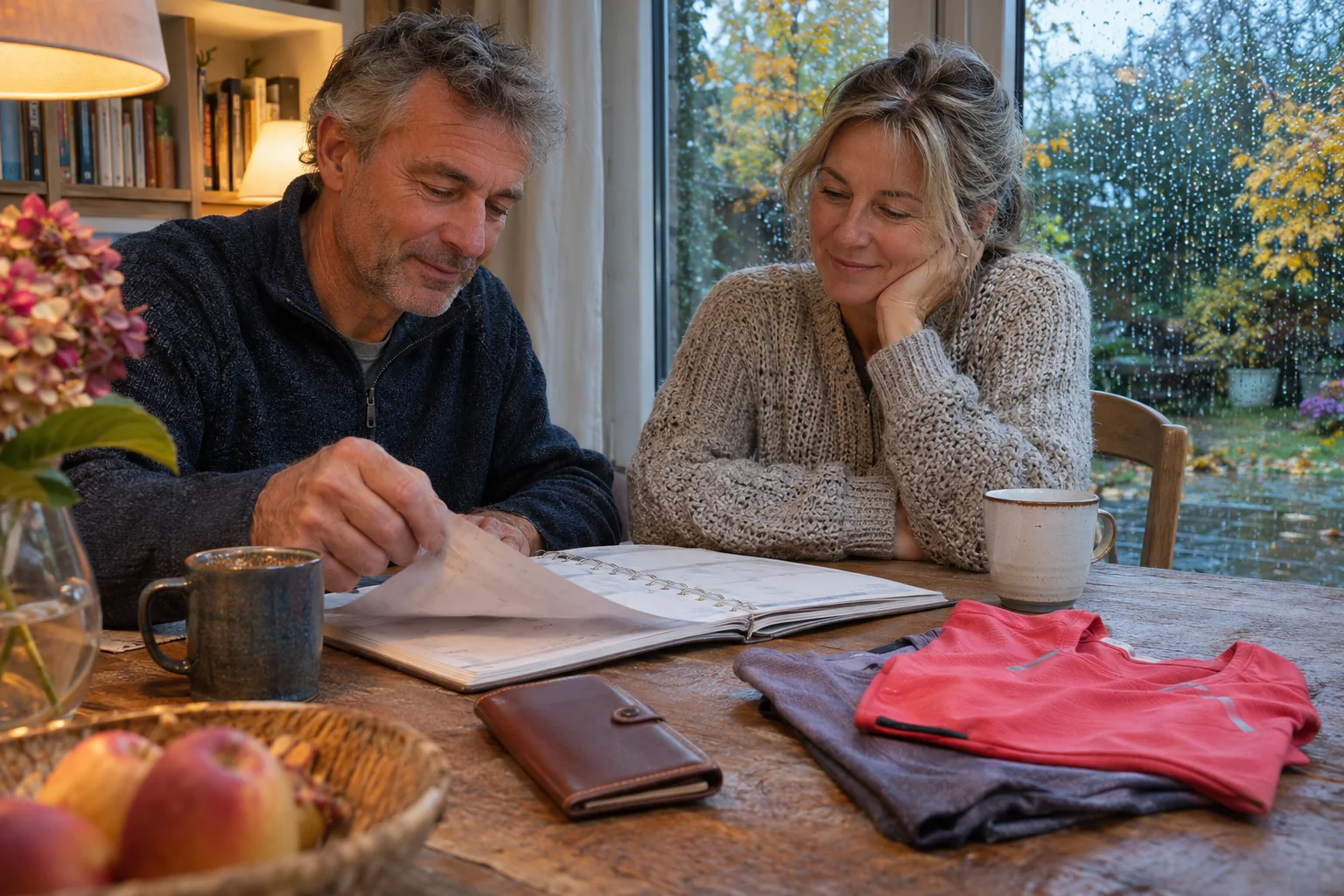
A run’s duration is not the same as the time allowance you need to arrange around it. Preparation, travel, returning home and fitting around other tasks may all be involved. If you share a household or caring responsibilities, even an independent activity may require joint organising. Your own time does not necessarily arise by itself, and others’ time cannot automatically be treated as a freely available background.
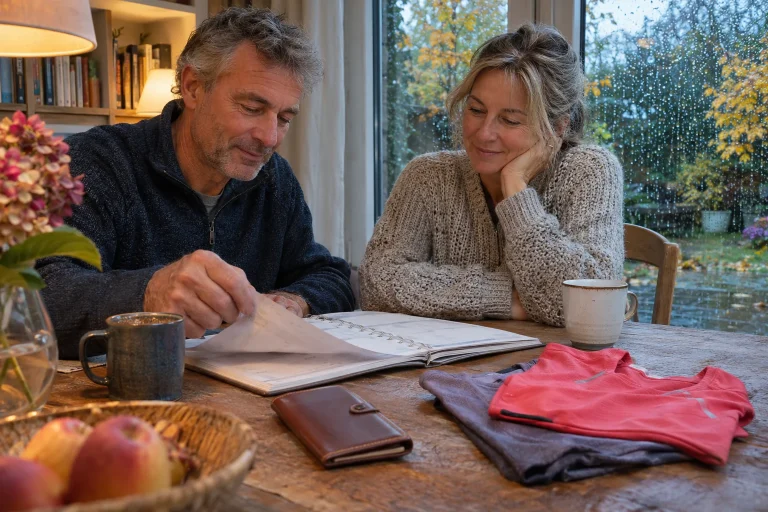
In our fictional example, two adults take turns choosing independent afternoon activities. One runs; the other enjoys another leisure pursuit. They agree beforehand who handles shared tasks and when. One is physically alone during the run, yet coordination made it possible. This is not a solution for every family, but shows where a social background may appear before a sporting outing.
Other life situations offer no such shareable arrangement. Someone may carry responsibilities alone, have an uncertain work schedule or few accessible options. They need not be told everything is possible with sufficient determination. Differences in available time can be real organisational and social circumstances. Running’s personal importance matters, but does not itself create equal conditions for everyone.
 Enlarge image
New runners’ stories also involved different opportunities
In McCormick and colleagues’ original research published online in 2023 and in a 2024 journal issue, repeated interviews followed twenty new runners’ stories. Among those continuing and stopping, experiences involved changing life circumstances and unequal opportunities alongside personal meaning. A strong personal reason was not always sufficient on its own to continue in the presence of certain significant barriers.
The study interpreted stories rather than dividing the whole running population into percentages. All participants were white British people, making it particularly important to tie their experiences to that sample. The study offers a detailed perspective on how an activity’s place in life can change. It does not tell every reader why they continue or stop running, or judge different decisions.
The studies together provide no recipe for club membership. Instead, they remind us of personal meanings and everyday conditions behind visible running. Asking only how motivated someone is can lose many of these details. A more precise question may be which activity they want, what opportunities they have and how it fits their shared life with others.
Support is not always visible beside the course
Some help relates directly to running: someone shows a route, explains an organisational detail or listens to what you want. Other support concerns the outing’s conditions: agreed time, shared tasks or acceptance of choosing an independent activity now. These are our everyday examples, not effects calculated from the cited studies.
The distinction helps avoid counting only someone who runs with us as supportive. A family member or friend can matter in the background without being interested in sport at all. You need not enjoy the same activity to respect each other’s chosen time. Reciprocity is not automatic, however: leave room for their activities and needs too.
In our example, someone appreciates coordination at home but does not want family conversations constantly to concern their running results. These wishes can coexist. Support need not mean continual interest in time statistics. It can also be an agreement that everyone returns to the shared day after independent activities without owing a full report.
Shared surroundings remain shared when you move separately
Pavements, park paths, crossings and transport options are more than the individual runner’s concern. Others use the same space for different purposes. Running alone still places you within these shared surroundings. Independence does not make others’ roles disappear. Equally, using shared space does not oblige you to turn every encounter into conversation or a group activity.
Everyday examples might include familiar faces you merely greet and route habits through which you take account of one another. Loose connections can vary too. Not every park user needs to be called a running community, but mutual consideration remains part of the activity’s setting. Social background can thus mean shared place and time as well as personal friendship.
Your surroundings can therefore belong to your choice too. Perhaps you prefer a quiet route, or somewhere others are present without needing to move alongside them. This need not be attached to an introverted or social personality type. That day’s needs and circumstances can shape the space in which you want independent movement. The research perspective invites noticing differences rather than permanent classification.
Independent activity, shared coordination
Our summary below helps distinguish independence during running from an absence of background arrangements. It is neither a household task plan nor a solution for every life situation. The questions keep both your chosen activity and conditions shared with others visible. You need not work through every question each time.
| Layer | A possible personal question |
|---|---|
| Chosen independence | Do I want to be alone now, or am I seeking company? |
| Time and tasks | What must I coordinate my available time with? |
| Background relationships | Who or what helped make this outing possible? |
| Shared surroundings | How do others use the same place? |
The answer can be simple and ordinary: this is the time available today, I choose this route, and we agreed household tasks beforehand. You need not seek a special runner identity behind it. An activity can be personal and meaningful because it fits your day well. Naming the social background can acknowledge details invisible in the data recorded at the end of a run.
 Enlarge image
Not every independent runner wants a club
Community activities appeal to many people, but are not a universal developmental destination. Solo running need not be a transitional state inevitably ending in club membership. It can remain a chosen form while someone has a rich social life elsewhere. Treat community running offers as opportunities rather than tests of sufficient commitment.
If you like going independently, you need not explain it as rejecting connection with others. You can simply say this is how you currently enjoy the activity. Wanting company another time does not contradict the earlier choice. Your habits can accommodate several forms. The different research stories are interesting precisely because they do not present running as one compulsory social script.
A community invitation can remain kind even when declined. You need not interpret someone’s independent outing as isolation or something to fix. You can ask whether they would like to meet sometime and accept the answer. Understanding a run’s social background is not about steering everyone into groups, but seeing more precisely the framework they choose and its circumstances.
Independence and relationships can coexist
You can leave the door alone while the outing has a shared background. Time, everyday coordination, an acquaintance’s route or shared surroundings can all belong to the story. Noticing them does not diminish your decision’s importance. It adds detail to the picture we form of visible activity.
Qualitative studies do not tell us why everyone runs alone. They help us see more than one social form. Your activity can be quiet, independent and embedded in relationships at the same time. It needs neither a solitary hero story nor a compulsory club identity: understanding what makes that outing possible and appealing to you is enough.
Sources
- Hitchings and Latham: How ‘social’ is recreational running?, online 2016, journal issue 2017.
- The full author manuscript of the Hitchings–Latham paper from UCL.
- McCormick and colleagues: How do new runners maintain their running, and what leads to others stopping?, online 2023, journal issue 2024.
How Futószív articles are prepared: our editorial guidelines.