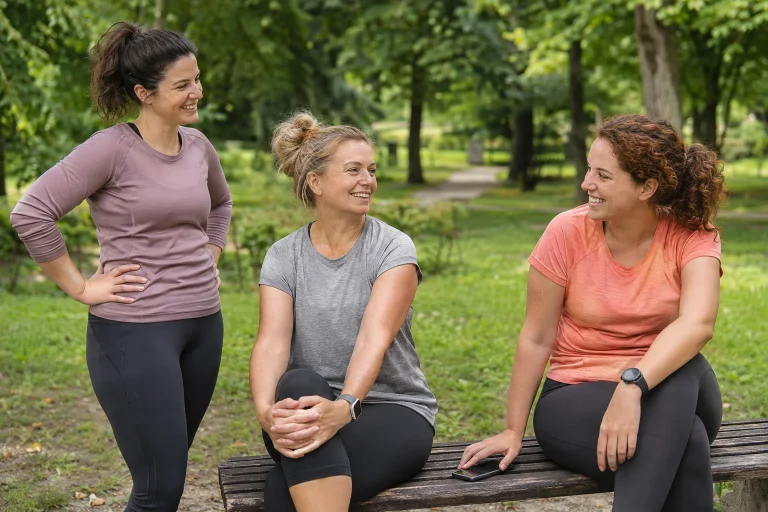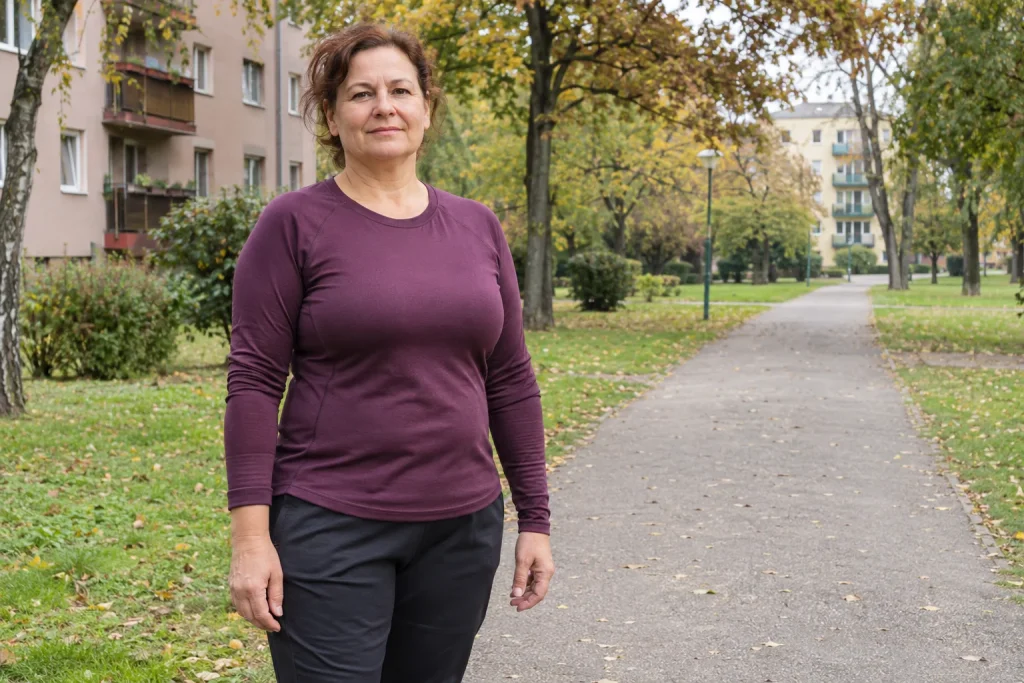
Some people naturally call themselves runners after their first runs. Others have exercised regularly for years but still prefer to say they sometimes go running. The difference between these statements need not concern kilometres covered. It can also concern the activity’s place in your self-image and what you understand by the word runner. This everyday word does not have the same personal meaning for everyone.
Running-identity research seeks to understand this self-definition. Its interest is not in letting someone decide whether you are fast or regular enough to earn the name. In your own story, it may be an important role, a loose description or a label you prefer not to use. Running practice and your image of it can be related without being compressed into one entry requirement.
What does the word runner say about you?
Self-definition can highlight different things. It may mean an activity matters to you, you enjoy thinking about it, familiar situations belong to it or you feel it forms part of how you organise everyday life. These need not all be present at once. Personal usage is not the same as a race-entry category or official completion requirement.
In our example, someone says “I am a runner” because they enjoy their independent morning outings and these are an important part of their week. Someone else exercises equally often but does not want a leisure activity to become central to how they introduce themselves. Both may be doing real, freely chosen running. The label’s differing meaning does not prove one takes their programme more seriously.
An everyday self-image need not be a final declaration. During one period, you may happily emphasise your relationship with sport; at another, other life roles take centre stage. Not every change needs to be read as inconsistency. Running’s meaning can develop with time and circumstances. Self-definition can be a description rather than a contract requiring the same performance every day.
Activity and self-image are separate research questions too
Hitchings and Latham’s original 2017 study examined the experiences of London recreational runners who were not recruited as running-club members. Accompanied runs and interviews showed that regular practice need not involve entering a strong shared running culture. Participants fitted running into life in their own ways; not all found a more committed community role appealing.
The full author manuscript draws on twenty people’s stories. This is not a population survey of how many call themselves runners, but a less-emphasised experiential perspective. It matters because it seeks to understand running beyond the stories of the most committed community athletes. Personal practice and a group-related identity can diverge.
This need not become another rule in personal interpretation. You are not obliged to develop a strong identity, but need not give up the name if it matters to you either. One benefit of research is expanding possible stories. Not every runner arrives at the same lifestyle, community or self-definition, or wants the same things from the activity.
Why develop a separate measure of running identity?
Bejar, Fisher and Morrow’s original paper published in 2026 developed the Running Identity Scale to measure identification with the runner role in research. They conducted preliminary psychometric studies using data from two independent runner samples. The aim was more consistent research measurement of a concept, not deciding who may call themselves a runner.
A scale like this organises responses to a defined question. It is not direct measurement of running pace, an assessment of suitability or proof of sports-community membership. The abstract treats running identity and broader athletic identity as related but distinct concepts. This too shows that self-image can be more complex than one general sporting label.
As a reader, you need not complete or translate a research scale yourself to think about your relationship with running. The general question can be simpler: what does saying “I am a runner” mean to me? The instrument’s methodological purpose is a separate topic. Everyday naming requires no score, and research findings do not allocate the right to personal language.
 Enlarge image
It need not mean the same privately and in public
You might naturally think of yourself as a runner but prefer not to emphasise it socially. In another case, you may enjoy discussing your outings while the name matters less inwardly. The difference does not necessarily mean secrecy or uncertainty. We highlight different details about ourselves in different situations, and the same role is not relevant to every conversation.
Your occupation may matter more in a workplace introduction, while running comes up more easily among sporting companions. At home, you may simply be a person for whom this is one chosen activity. Your wording need not remain identical in every setting. A difference between self-image and self-presentation need not immediately become a problem to solve.
External recognition can also mean different things. It can feel good when a companion naturally calls you a runner, but you need not wait for everyone’s approval. Others’ ideas of speed, racing or equipment may differ from your usage. Everyday self-definition need not follow one external standard that nobody has discussed with you.
Three stories of our own, with different wording
The following examples are fictional illustrations. They are neither study interviewees nor personality types. They show several possible relationships between running practice and its name. The same person may feel closer to another statement at different times, so the examples need not become permanent categories.
| Situation | Chosen statement | What might matter? |
|---|---|---|
| A regular, relaxed individual activity | I go running, but it is not how I introduce myself. | Practice can be valuable without a strong label. |
| A sport newly enjoyed | I feel like a runner, although I still have much to learn. | Self-definition is not an expert title. |
| Changing life circumstances | I run less often now, but it remains an important part of me. | Role and current frequency are different questions. |
None of these statements demands justification. Someone need not run more for their chosen name to seem authentic to you, and a label need not be imposed on someone who does not want it. Accepting differences helps keep a conversation from becoming mutual judgement. Discussing activities, goals and wishes is often more precise than debating who is a real runner.
When the label offers useful support
Self-definition can give a chosen activity personal meaning. One person likes the word runner because it connects memories of different outings; another associates it with a community or place. These are our possible interpretations, not psychological effects established in everyone. The word can help you when it brings you closer to what matters in the activity.
For example, it might help explain clearly that you want to make time for this activity. Other activities and roles can still matter. Running need not push everything else aside to form part of your self-image. Personal significance is not constant priority. Several important things can fit in the same life.
Calling yourself a runner can also offer language for social connection if you enjoy the name. It can signal a shared interest without claiming identical pace or race goals. Using the same word need not imply every further expectation. Several practices and experiences can meet within a group. Self-definition can start a conversation rather than settle what everyone wants.
When the word starts sounding like an expectation
You might attach imagined rules to being a runner that you have not actually chosen: always attending, constantly improving, knowing every race or always feeling enthusiastic. These may appear as everyday expectations, but do not automatically follow from the word. Distinguish what the activity means to you from an external image you may be trying to fulfil.
In our example, someone previously enjoyed calling themselves a runner, then has fewer opportunities during a busier period. If they turn the label into an attendance obligation, every missed session can look like a personal contradiction. The situation can be phrased differently: the activity still matters, while current opportunities have changed. A self-image need not be authenticated daily through one performance.
Personal boundaries remain too. The name is not permission to train, and you need not undertake exertion for the role that you would not choose or that is individually inappropriate. You do not have to prove your identity at every outing. Personal wording can develop even when others attach stronger or narrower expectations. You too can participate in the conversation about running’s meaning.
 Enlarge image
Culture, surroundings and personal meaning
Different settings can attach different images to runner. A racing team may think of preparation, friends of shared time, and everyday conversation simply of activity. You need not decide which is the sole authentic meaning. Research therefore needs to consider who answered the questions and the linguistic and social setting in which they understood them.
For a reader, this does not mean your own word is less valid if it differs from another group’s. It suggests asking about meaning instead. When someone says they feel like a runner, they may highlight a different role from you. Understanding may require hearing why the activity matters rather than another kilometre figure.
You are also allowed not to choose a sporting identity at all. Running can simply be one enjoyable activity among others. The London study offered an interesting perspective precisely because it sought more than the strongest community self-definitions. Practice can carry several personal meanings, and the research concept does not oblige you to adopt one shared running lifestyle.
There can be room for your own name
Running identity is not identical to pace, race results or club membership. Researchers can use defined questions to examine identification with a role, while everyday life uses other statements to describe ourselves. The perspectives can connect without one becoming an eligibility test for the other.
If you enjoy saying you are a runner, you can describe what it means to you. If you simply prefer to go running, that too can have a personal, lasting meaning. The word need not be earned through performance, and accepting a label is not required for your chosen activity to matter. More precise self-definition describes rather than narrows your own relationship with running.
Sources
- Hitchings and Latham: How ‘social’ is recreational running?, online 2016, journal issue 2017.
- The original author manuscript of the Hitchings–Latham paper.
- Bejar, Fisher and Morrow: Development and Validation of the Running Identity Scale, publisher publication date 1 March 2026.
How Futószív articles are prepared: our editorial guidelines.