‘I can do it’ and ‘I want to do it’ sound similarly encouraging, yet answer different questions. One points towards expectations of capability for a task; the other towards experiencing your own choice. Before running, one can feel strong while the other remains uncertain. This need not be called a general lack of motivation.
Psychological research separately examines self-efficacy and autonomous motivation and investigates integrating their theories. Measurement is not an objective running-ability test, however, and confidence does not replace appropriate training demands. The concepts help when they enable more precise questions: what do you want, what do you feel able to do, and which conditions or help are still missing?
Self-efficacy always concerns a task
Self-efficacy is more than general self-confidence. It concerns how much you trust your ability to manage a specified action or situation. Around exercise, this can mean the task itself, handling obstacles or arranging time. You need not feel equally certain about each.
A runner may know an easy route well but be uncertain about finding a new meeting place. Someone else organises time confidently but does not yet know how a new activity will feel. These are our own illustrations, rather than participant stories. They show why ‘Do you have enough confidence?’ is insufficient as a single question.
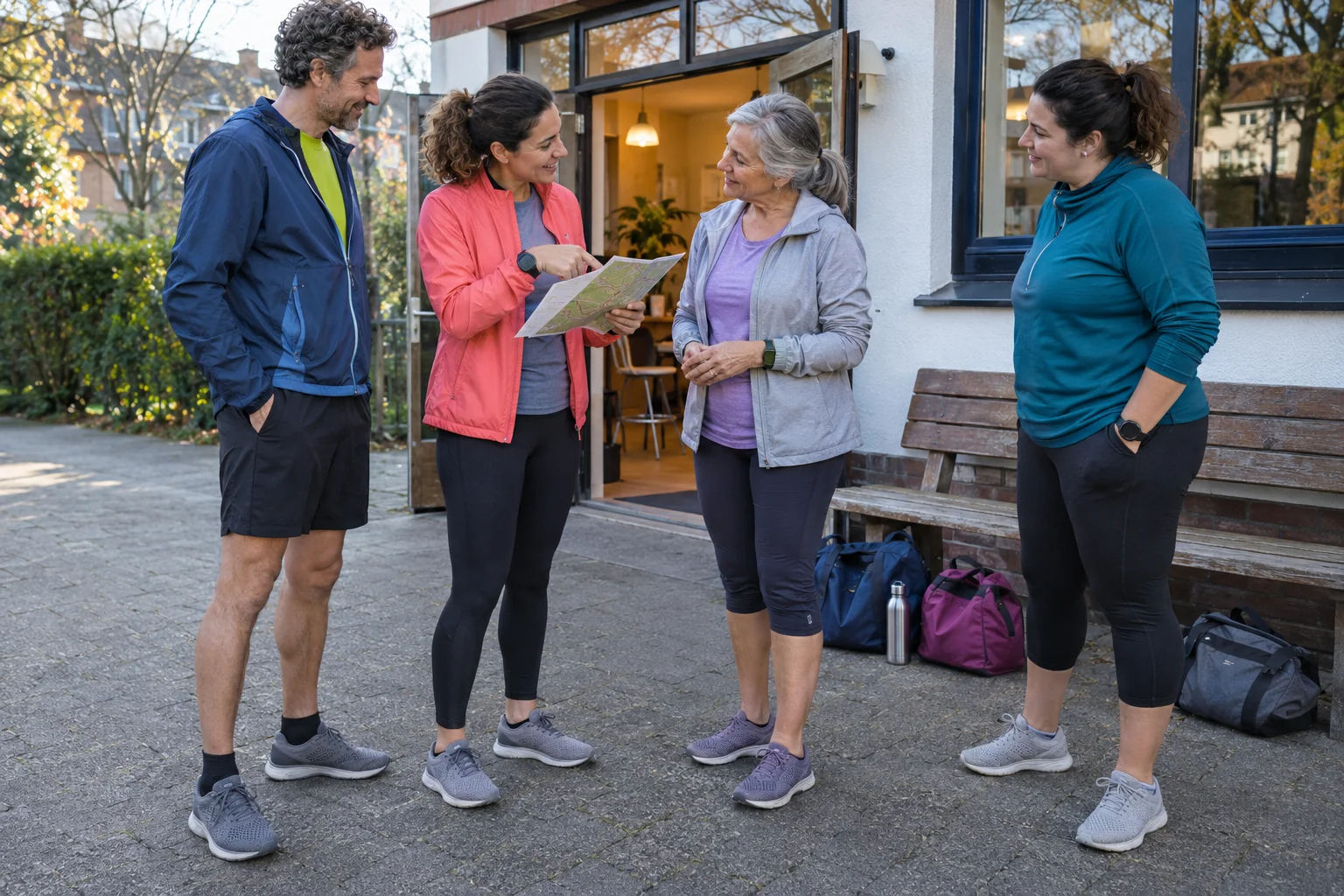
Naming the task precisely also helps select support. Route information needs a different answer from uncertainty about appropriate exertion. A map or discussion may help the first; professional clarification may be needed for the second. Not every uncertainty yields to the same encouraging sentence, and not every question originates psychologically.
Autonomy describes your relationship with participation
Autonomy does not mean making every decision without help. It concerns whether you experience your own choice and personal reason within the action. You can willingly follow professional advice because you understand and value its purpose. Conversely, an apparently free situation can contain strong pressure to conform.
For a runner, feeling capable of a session therefore differs from wanting that form of participation. You may be able to join a meeting but prefer exercising alone today. This is not necessarily fear or low self-efficacy. Distinguishing your needs from expectations about capability enables a more accurate conversation.
Autonomous participation does not mean enjoying every moment either. A personally important goal may involve less-favoured organisation or practice. The question is whether you understand and endorse the reason, rather than whether every minute brings enthusiasm. A smile, result or attendance frequency cannot reliably reveal this relationship.
What did the model integrating both theories examine?
Sweet and colleagues used questionnaire data from 225 university students to examine self-determination and self-efficacy theories separately and in integrated models. Physical activity was also measured by questionnaire. Among fitted models, the authors preferred an integrated version including both self-determined motivation and confidence.
Model fit is neither an individual ability examination nor experimental proof that two sentences change your running. Researchers examined relationships between questionnaire variables, rather than assigning runners to confidence levels. The finding supports combined use of the theories within that analysis while retaining causal and generalisation limits.
The concepts’ similarity does not make them identical. Perceived competence, task-specific capability expectations and experiencing your own choice can be approached through different questions. Everyday conversation need not use every word as a strict measurement variable, but notice when ‘confidence’ is being asked to resolve several different problems.
 Enlarge image
What does autonomy-supportive counselling add?
In an analysis of 120 participants, Fortier and colleagues also examined supplementing brief primary-care exercise advice with more intensive support over three months. The supplemented group reported greater autonomy support and autonomous motivation at six weeks, and higher self-reported activity at thirteen weeks. Perceived competence and motivation also featured in the process model.
The intervention contained several interpersonal and practical components. It was more than an instruction to boost confidence and did not establish fitness for a particular running task. Tie the counselling finding to its programme. Personal assistance need not be reduced to someone saying ‘believe you can’ forcefully enough.
Together, the approaches may offer runners questions allowing both uncertainty and personal goals. What would you like to undertake? Which part do you not yet feel confident about? Where do you need information, practical help or professional opinion? These are our own conversational guides, rather than a validated abbreviated counselling protocol from the study.
Four everyday situations with different questions
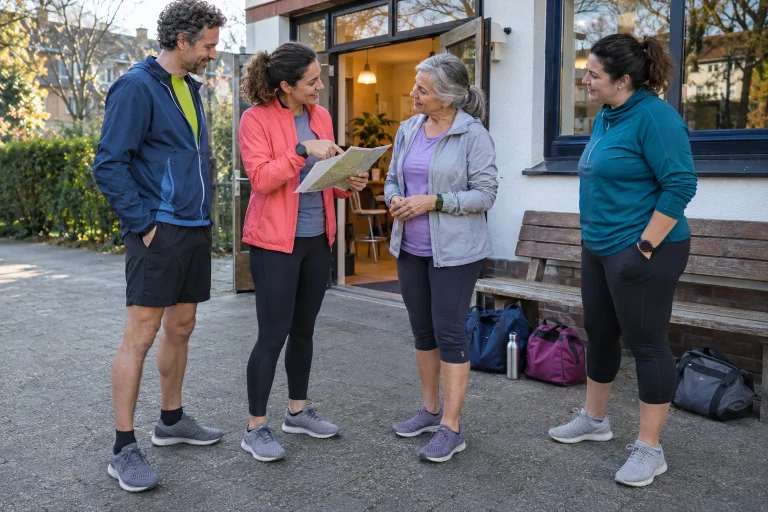
In the first fictional situation, someone wants to exercise with a new group but does not know how meetings work. Personal choice is present; uncertainty concerns the specific situation. Asking where they meet and whom to contact may help more than demanding general courage. Missing information need not be interpreted as personal weakness.
In the second, an experienced runner feels capable of the task but does not want it now. Their goal may differ or the social setting may not appeal. Capability expectations are strong while personal choice points elsewhere. This does not mean motivation needs repair; first understand what they choose and why.
In the third, someone wants to join but health circumstances make appropriate exertion unclear. Strengthening confidence is insufficient. Clarifying professional guidance matters more, and desire does not prove suitability. In the fourth, goal and task are clear but time is unavailable. This practical condition is created automatically by neither autonomy nor self-efficacy.
Confidence is not objective performance data
Feeling capable is valuable personal information, but differs from actual preparation. Certainty and ability can diverge. A research questionnaire does not replace professional exercise assessment when needed either. A high self-efficacy response cannot establish that any distance or load is appropriate for you.
Lower certainty does not automatically prove absent ability either. In a new situation, you may naturally judge from less experience. Clarifying the exact task and necessary help may provide more than trying to eliminate uncertainty quickly. Complete certainty about every question is not necessarily the goal.
Nor need bodily signals be treated as doubts to overcome. Pain, illness or substantial exhaustion may warrant different consideration. Self-efficacy is not advice to interpret every warning as a negative thought. Physical condition and professional guidance remain real parts of making an appropriate decision.
Help can be precise, rather than merely inspiring
If someone says they do not feel ready, ask which part is uncertain. The route, social situation, task or arranging time? Answers may require different support. Well-intended general encouragement is sometimes insufficient because it does not connect to the actual question being addressed.
Precise help does not remove personal choice. It may present an option, clarify a condition or identify whom to consult professionally. Participants can still decide whether to attend. Support’s value does not depend on everyone ultimately choosing what the helper first imagined.
You can request such an answer yourself. Explain that you need the task’s purpose described rather than general encouragement. Or that timing works but you want appropriate exertion clarified. These are communication examples, rather than psychological techniques with guaranteed effects. A specific question can nevertheless make shared thinking clearer.
 Enlarge image
Capability expectations and personal goals can change together
New experiences can change what you think you can do and what you want. Progress need not be linear. You may become more confident in a situation but choose a different goal; or remain interested while a new obstacle requires more help. Following the questions separately is more precise than assuming one general motivation level.
Earlier success does not oblige identical commitments every time. A result supplies experience, but current circumstances may change. You need not prove confidence by always repeating what you managed once. Reducing the task, choosing another option or resting can also be personal decisions.
Naming uncertainty therefore does not necessarily weaken motivation. It may show more precise self-understanding: knowing what remains unfamiliar and where help is needed. Open questions can coexist with experiencing personal choice. Complete certainty need not come first before considering exercise within an appropriate framework and real opportunities.
Two statements, more useful questions
Distinguishing ‘I can do it’ from ‘I want to do it’ is not another labelling exercise. It lets capability expectations, personal reasons and practical conditions be seen separately. Research models examine their relationships without supplying one certain explanation for every runner’s participation.
Before your next session, you need not measure general confidence or perfect motivation. Clarify what you want, where uncertainty lies and which help would be useful. Personal choice and expectations of ability can develop alongside each other while current condition and actual opportunities retain their role.
Sources and conceptual boundaries
Sweet and colleagues: Testing and Integrating Self-Determination Theory and Self-Efficacy Theory in a Physical Activity Context — comparison of questionnaire-based theoretical models. Fortier and colleagues: A self-determination process model of physical activity adoption — a counselling intervention. The fictional running scenarios are our own explanatory examples, rather than ability tests or individual training-load recommendations.
How Futószív articles are prepared: our editorial guidelines.