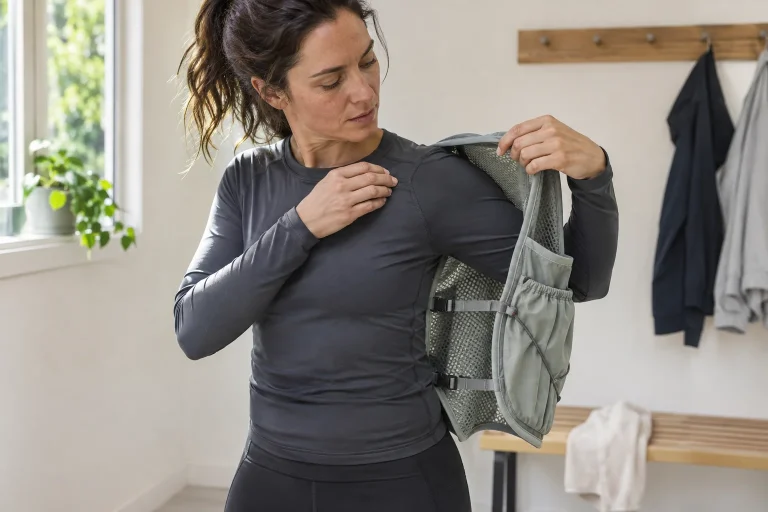
A running-vest strap sits differently, your watch feels tighter or your arm feels unusually heavy. After breast cancer treatment, changes like these are worth reporting to your care team. You need not wait for obvious swelling, and simply buying tighter sports compression is not a good first step. Alongside the possibility of lymphoedema, the cause of a new symptom needs clarification; equipment comfort can be discussed as a related practical question.
Exercise is not automatically at odds with lymphoedema care. Current professional recommendations allow room for individually planned activity and quality of life. Decisions nevertheless require distinguishing assessment of new swelling, treatment of a confirmed condition and the fit of running clothing. This guide helps you prepare: which history to describe, what to bring to a consultation and which questions need answers from your own professional.
Why does a history of lymph-node treatment matter?
The lymphatic system drains fluid from tissues and also helps defend against infection. If cancer or its treatment changes lymph drainage, fluid may accumulate in the tissues. The National Cancer Institute discusses lymph-node removal and radiotherapy associated with breast cancer treatment as part of the risk background. The affected area may include the hand, arm or chest, and symptoms can develop later, after treatment has finished.
At a consultation, saying only that ‘the operation was a long time ago’ is therefore insufficient. Bring the treatment documents you have and explain which side the procedures affected. If you do not know exactly what lymph-node treatment took place, do not guess. Your care provider can help interpret the document. Keep an uncertain memory distinct from a history documented in a report during the conversation.
Previous risk information also matters: were you given monitoring guidance, have you already had a lymphoedema assessment, and whom were you told to contact if something changed? If that pathway has become unclear, ask again for the contact details and next steps. During a return to sport, information about whom to contact with health questions should be as accessible as your training plan. Your treatment history need not become a public story, but may be essential within your own care.
Heaviness and tighter clothing can also be signals
The NHS lists swelling, a heavy or aching feeling, difficulty moving and clothes, jewellery or watches becoming tighter among possible lymphoedema symptoms. These are not individually diagnostic tests. If you notice a new change, describe where and when it appeared, how it developed and how it differs from normal. Choosing a top with looser sleeves may temporarily improve comfort, but does not explain the cause.
Do not turn observation into repeated pressing or home staging of the condition. You do not have to prove for yourself whether an indentation remains in the skin or which stage in an online picture resembles your arm. Professional assessment considers symptoms and history together. If you have been asked to measure at home, use the method personally taught to you, rather than a procedure copied from someone else’s video.
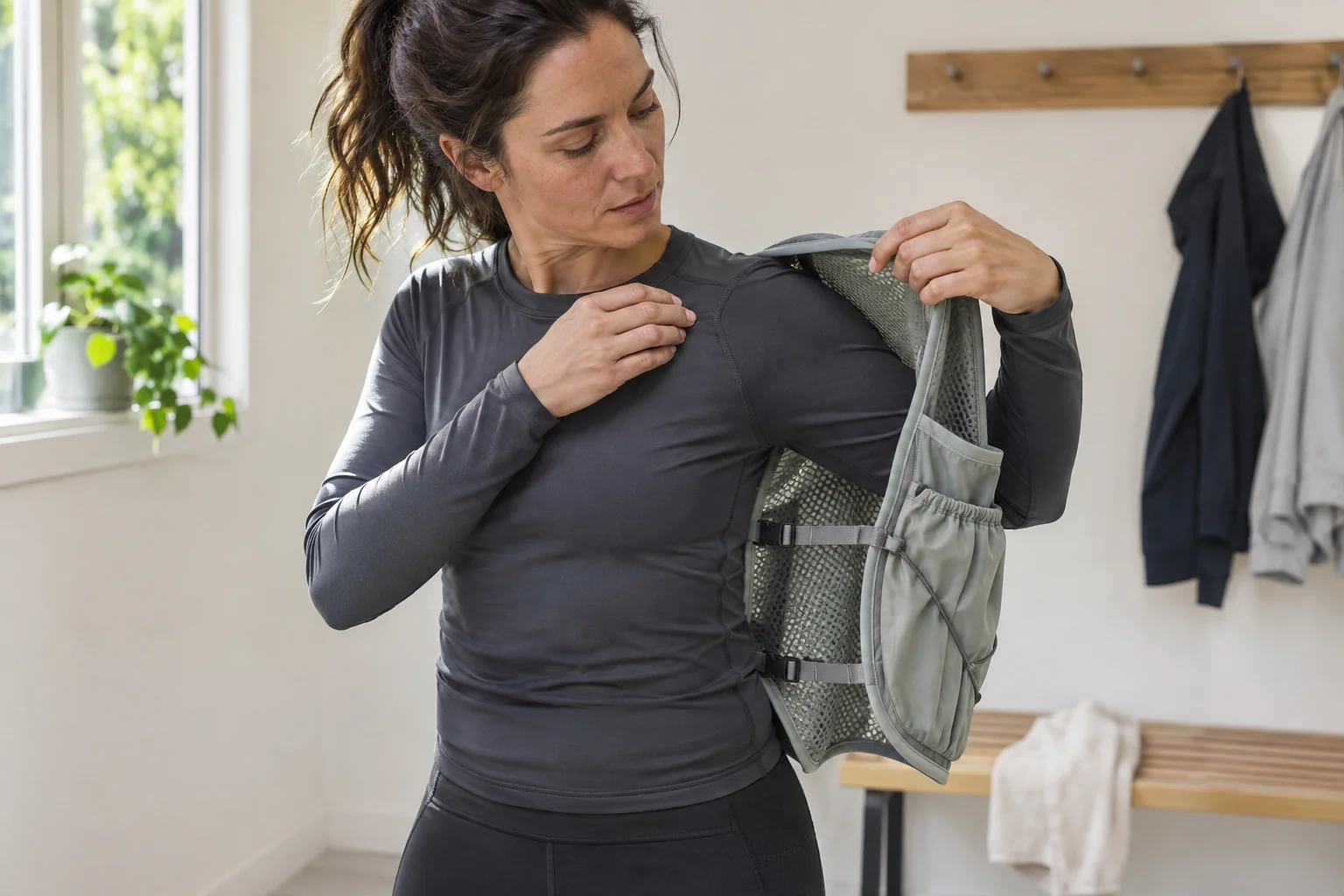
An equipment example can help with the description: you used to wear the same vest, but now it feels tight on one side and the arm’s heaviness remains after you remove it. This does not establish that the vest caused the symptom. Describe the circumstances of wearing it separately from the physical change. Changing equipment must not replace reporting a new symptom.
 Enlarge image
New swelling needs assessment before being given a treatment label
NICE’s breast cancer guideline, updated in 2025, also asks for assessment of other treatable underlying factors before lymphoedema treatment begins. It is therefore unwise to label new swelling yourself as ‘definitely lymphoedema’ and then merely rearrange your wardrobe. Report the change to your care provider and ask about appropriate assessment. An individual treatment plan should be based on a clarified situation.
If the area is warm or painful, swelling increases, skin colour changes or a fever develops, seek medical advice without delay. The NCI discusses cellulitis as an important complication of lymphoedema. Colour changes may look different on darker skin, so also describe pain, warmth and feeling generally unwell. Do not use exercise to test whether a symptom is temporary.
Ask your own care provider for a clear reporting plan: which change should be reported to whom and how soon, and where can you obtain help outside normal clinic hours? The aim is usable guidance rather than constant anxious checking. A previous symptom-free period or a previously comfortable vest does not determine your current condition. A new symptom needs to be communicated with its present circumstances.
Therapeutic compression and a sports arm sleeve are different choices
With confirmed lymphoedema, compression may form part of care. NICE emphasises jointly selecting an appropriate form, while the NHS describes instruction in applying it and an individual exercise plan. This does not mean that any tight garment sold in a running shop performs the same job. A product’s name and a fit appropriate for treatment are different things.
Clarify with a professional whether a compression device is needed, what is recommended, when and how to use it, and which changes warrant a fit check. Do not choose your own pressure rating or size based on another runner’s recommendation. The affected area, condition and individual care together determine the solution. If an already prescribed device is uncomfortable or feels different to wear, seek feedback about that too.
Prevention and treatment of an established condition are also distinct. NICE’s 2025 recommendation does not advise routine compression therapy solely to reduce the risk of breast cancer-related lymphoedema. Recommending sleeves to everyone ‘just in case’ is therefore unhelpful. Discuss your own needs with the treatment team, and do not substitute a product purchase for assessment.
| Question | What requires a professional? | What can you prepare? |
|---|---|---|
| New heaviness or swelling | Assessment of its cause and the care needed. | A description of onset, changes and treatment history. |
| Compression device | Indication, form, size, use and review. | The existing device and your experience using it. |
| Running-vest fit | How does it fit with your individual care and activity plan? | The actual vest and an explanation of its usual contents. |
| Return to sport | A plan and support appropriate to your current condition. | A specific goal: what activity and environment would you like? |
Exercise need not be approached through a blanket list of prohibitions
NICE also states that there is no evidence suggesting physical activity, including upper-limb movement, worsens lymphoedema, and that quality of life may improve. This is an important difference from the old fear that the affected arm must be protected from all movement. New, unassessed symptoms and personal activity choices nevertheless continue to need separate attention.
The APTA guideline on breast cancer-related lymphoedema discusses individual aerobic and strengthening programmes. Assessment and personal adaptation are not the same as independently selecting any weight or running distance. Exercise can have a place in care without everyone following an identical programme. Ask who will help teach suitable tasks and evaluate their results.
Make your running goal specific at the consultation. Would you like a short outdoor activity close to home, equipment for a longer hike, or is everyday arm use the main question for now? These involve different practical and movement demands. A sporting goal does not make daily functioning less important. The appropriate next step can be chosen within your current care framework and personal possibilities.
Show the vest and clothing in the context of actual use
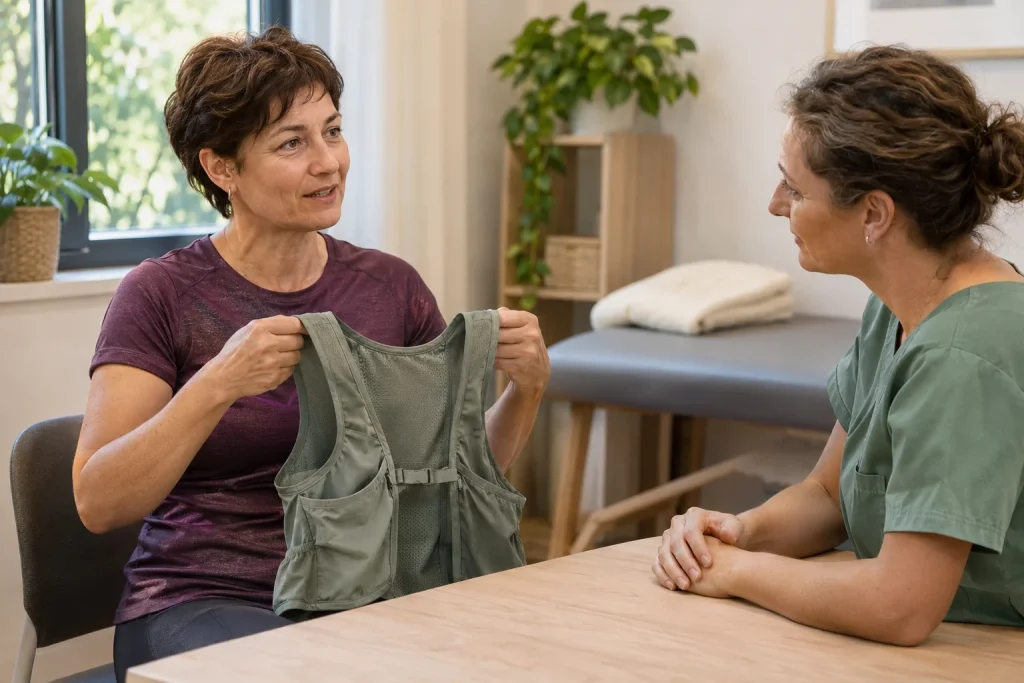
You can bring your running vest to the consultation, or take photographs if agreed beforehand. Strap positions, fastening points and pocket contents all matter. The aim is not to test maximum loading in the clinic. Instead, you are showing which item you mean, where you notice the difference and the usual use for which you want advice.
Break the clothing question into parts: putting it on and taking it off, seams, straps, contact with other equipment and changing after the activity. If compression has also been prescribed, discuss wearing it together with the top. The same size on a label is not enough. Communicate your specific experience of fit, while leaving therapeutic decisions to the appropriate professional.
If wearing an item was associated with a new symptom, do not try to prove the connection through a longer run. Record the circumstances and seek assessment according to your individual plan. Finding more comfortable clothing is a legitimate practical task, but does not replace informing a healthcare professional. Reviewing existing equipment is often a better starting point than buying something new, because it makes the actual problem visible.
 Enlarge image
Include practical usability in follow-up
Summarise the plan in your own words: what was established about the symptom, what treatment or device is needed, how exercise fits in and when will follow-up happen? Record practical clothing advice separately from treatment instructions so the two remain distinct later. A looser top and a prescribed compression device may serve different purposes and therefore need different evaluation.
Changing bodily sensations and appearance can be emotionally demanding too. The NHS also discusses lymphoedema’s psychological impact and the role of support. If sports clothing or group activities are particularly difficult for this reason, tell your care provider. You need not present the situation solely as a technical problem or follow other people’s expectations about how much of your treatment history to share.
Running equipment can fit your life well when comfort questions and healthcare are connected. New arm swelling needs reporting, compression requires individual selection and activity decisions should reflect the current situation. The next step can then be a clear, reviewable plan connected to your own goals, rather than a blanket prohibition or the purchase of a tighter arm sleeve.
Sources
- NCI: lymphoedema in people with cancer
- NHS: lymphoedema
- NHS: treating lymphoedema
- NICE NG101: lymphoedema recommendations updated in 2025
- APTA: clinical practice guideline for breast cancer-related lymphoedema
How Futószív articles are prepared: our editorial guidelines.