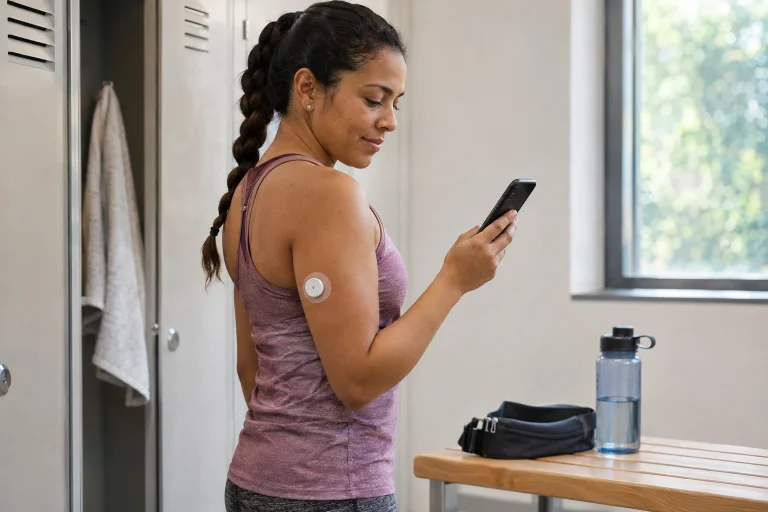
Afternoon exercise ends, you get home, shower and seem to have finished planning around sport. With diabetes, however, blood-glucose considerations do not necessarily end with the last minute of training. People using insulin or certain other glucose-lowering medicines can develop hypoglycaemia, meaning low blood glucose, later—even during sleep. Evening and overnight actions therefore belong in the personal treatment plan too.
This article organises questions for your care team. It gives no insulin amount, carbohydrate quantity or alarm setting for every device. If you currently have hypoglycaemia symptoms, act immediately according to your taught personal plan rather than continuing to read. If someone is not responding normally, loses consciousness or has a seizure, a companion should call 112; do not give food or drink to someone unable to swallow safely, and follow the emergency operator’s instructions.
Why does possible later low glucose belong in exercise planning?
NIDDK explains that more physical activity than usual can lower blood glucose after movement too. Risk is not identical for everyone with diabetes: using insulin and certain other medicines matters. Treatment, meals, activity and history all belong in assessing the situation. General sporting advice does not replace that context.
The American Diabetes Association’s 2026 guide for people with type 1 diabetes also highlights later low glucose after evening or intense activity. Monitoring may be needed overnight too. This does not mean everyone should set the same alarm or checking schedule. Your personal plan must clarify when, how and in response to which signal you should act.
Exercise does not always change glucose in the same direction either. Diabetes UK describes different activities and circumstances that can produce different responses. A higher reading immediately afterwards therefore does not mean there is nothing to consider later. Describe the full observable history to the care team, rather than only two values at the start and finish.
The personal plan begins with your exact treatment and equipment
The first discussion point is diabetes type, current treatment and your equipment. Injections, pumps, sensors and their combinations create different practical situations. Settings for another runner’s system do not automatically apply to yours. Name the specific model and actual use, including changes, at the consultation.
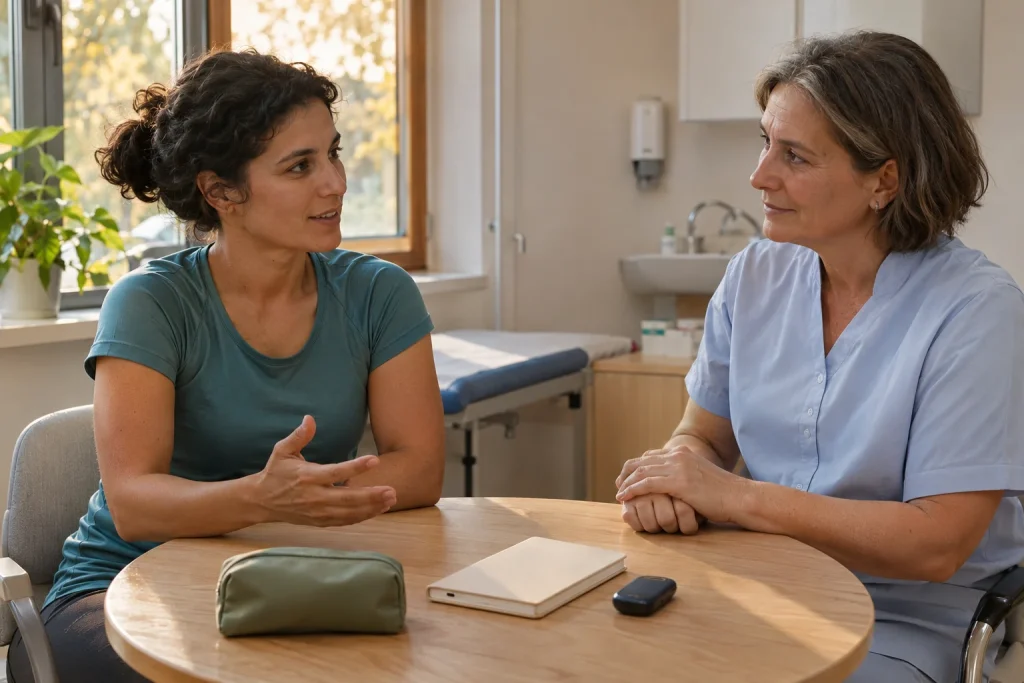
Ask which later hypoglycaemia risk applies alongside your treatment. Obtain an understandable answer about the purpose of evening observation and what to do with an unexpected result or symptom. If the plan is scattered across several sheets, an app and earlier verbal advice, ask for help bringing it together. Information existing somewhere does not make it easy to use on a tired evening.
Report changing daily circumstances: different working hours, a later dinner, longer travel or returning to unfamiliar activity. Do not turn them into your own dosing rules. You are describing a situation to which the team can attach personal instructions. A good plan contains your actual life, rather than an identical example run ending at the same time every day.
 Enlarge image
Four evening stages can reveal a missing part of the plan
Consider finishing exercise, getting home, the evening meal and bedtime separately. Which stage already has clear instructions, and where do questions remain? You may know actions during exercise well but lack an agreed framework for a late journey home or hotel night. Bring the gap to discussion rather than fill it with improvisation.
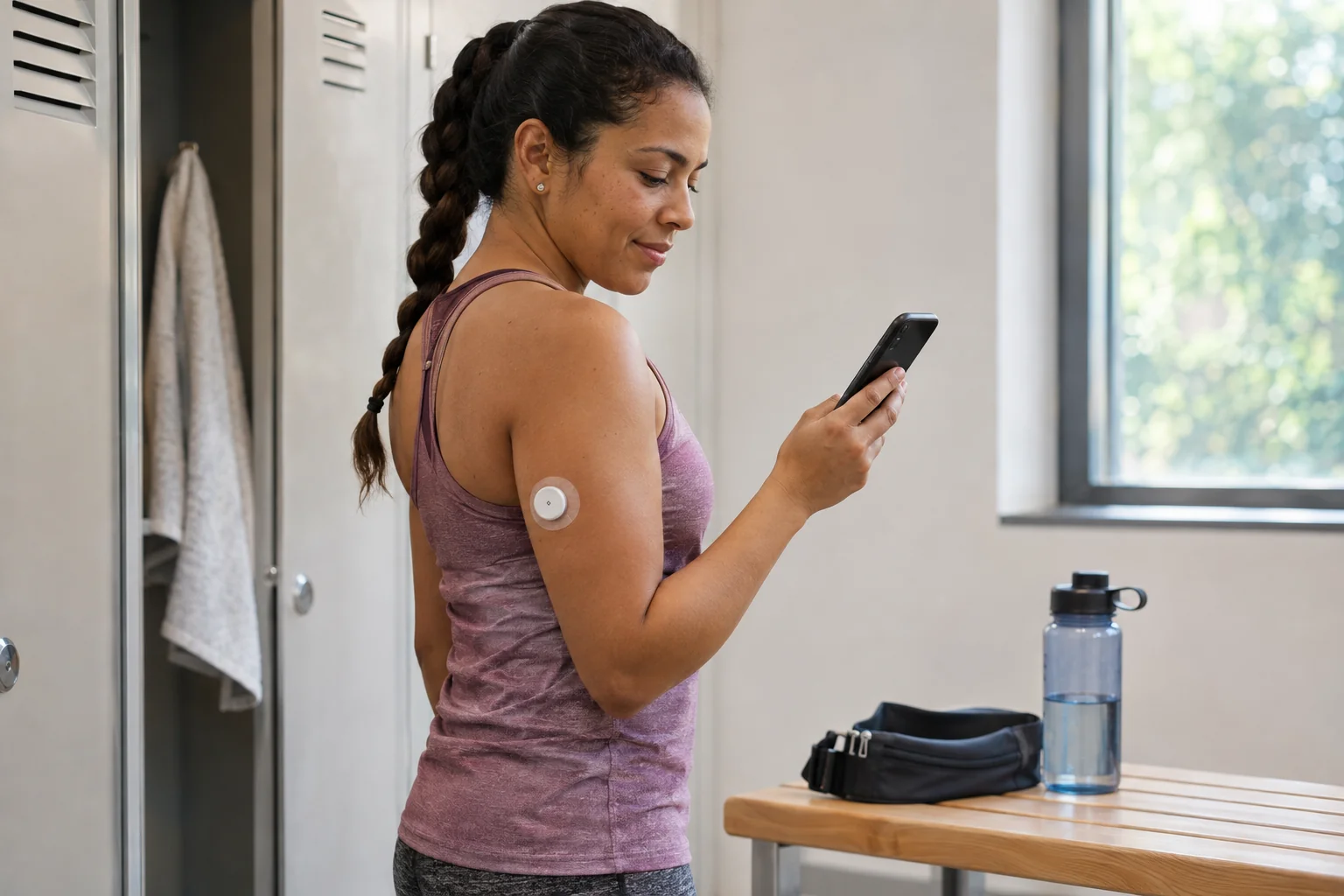
Keep equipment required by your plan accessible on the journey home too. A running belt may come off in the bathroom, a meter move to another bag and emergency equipment remain in a locked car. These organisational problems can be prevented without deciding treatment quantities. Ask whether what you need for planned monitoring and action is actually where it will be used.
At bedtime, you need a clear answer about your checks, when to measure again and what to do with an alert. If instructions are unclear for an evening exercise day, seek clarification before the next such activity. The aim is not unjustified all-night wakefulness, but an understandable, manageable safety framework planned by your team.
| Period | Question to discuss | Practical preparation |
|---|---|---|
| After exercise | How long should closer observation continue for you? | Record activity timing and type alongside the necessary data. |
| Getting home | What should happen with symptoms or an unexpected reading en route? | An accessible pack containing what your personal plan requires. |
| Evening | How should meals and treatment relate to the activity? | Already agreed instructions in a clear form. |
| Overnight | Which checks, alerts and actions apply to you? | Clarify equipment, access and the companion’s role. |
Report overnight symptoms without relying on sensations alone
NIDDK describes sweating, nightmares and tiredness or confusion on waking as possible signs of low glucose during sleep. A person may not wake or notice symptoms, however. A personal monitoring plan therefore cannot rely solely on assuming you will certainly feel a change. Discuss specific actions with the care team.
These night-time experiences do not prove low glucose by themselves. If you wake sweating or feel exhausted in the morning, report circumstances and available measurements. Every bad dream need not retrospectively become hypoglycaemia. Symptoms and readings together support professional assessment; anything unmeasured should remain uncertain rather than filled with guesses.
Highlight previous overnight or severe hypoglycaemia, or difficulty noticing low-glucose signals, at the consultation. The NHS recommends discussing these situations with the care team. Do not treat illness as a natural part of an intense running life. A new event or changed ability to recognise symptoms may warrant reviewing the earlier plan.
A sensor can help, but an alert also needs an action plan
If using a sensor, ask more than whether a low-value warning exists. The signal for your system, whether you can notice it and the response together form a usable plan. NIDDK describes continuous glucose monitoring as one monitoring option, but that does not mean every device or setting has identical capabilities. Know operation from your own instructions and training.
Discuss what to do if symptoms and displayed data do not match or the device is unavailable or behaves unexpectedly. Do not choose a procedure from a community post about another brand. Request an approach for your system and treatment. An ordinary running watch’s heart-rate alert or sleep score is not glucose measurement and cannot replace necessary checks.
Everyday technical preparation matters too: do you recognise the signal, is the necessary device at hand and what do you do during a familiar interruption? Discuss these calmly beforehand. The aim is not inventing a new alarm threshold, but making the prescribed system usable in your actual evening setting. Extensive data help only when the associated action is clear.
The companion’s role and preparation for severe illness
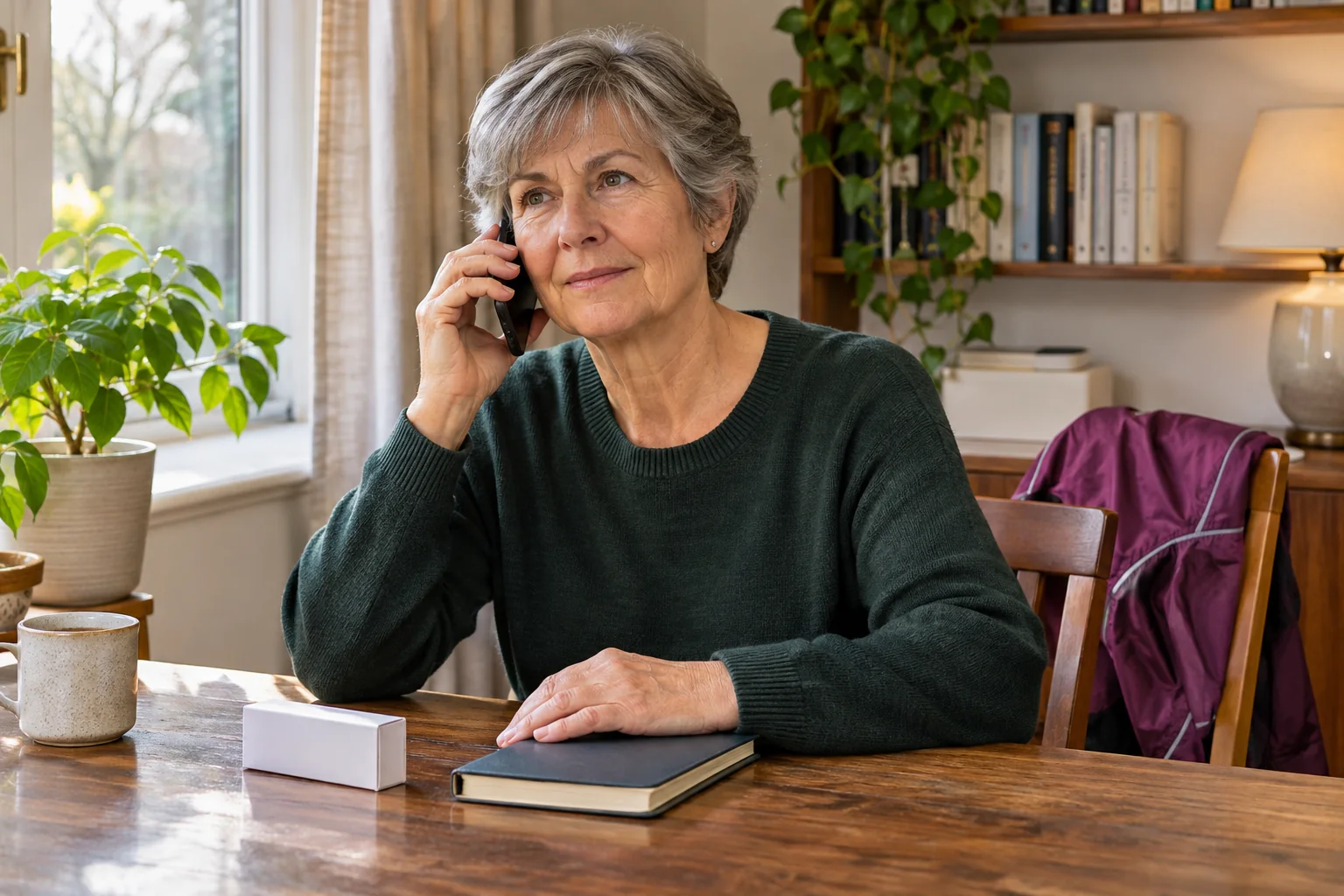
A person living or travelling with you needs information required for the agreed help that you choose to share. NIDDK and the NHS also emphasise preparing family and friends for severe low glucose. If you have prescribed emergency medication, its use needs prior appropriate professional training. A running article is not where device operation should first be learned at night.
If someone does not respond normally, is unconscious or has a seizure, a companion should call 112, explain the diabetes and situation and follow instructions. Do not give food or drink to someone unable to swallow safely. Personal prescribed emergency medication can be used according to the prescribed, taught plan, without delaying help. Accurately giving the location and access matters more than searching sports data.
Travel can change the plan’s setting too. A hotel room, shared apartment or late-finishing race differs from a bedside table at home. Arrange necessary items and access beforehand. Health details need not become public, but a helper should hear more than ‘I will say if anything happens’ when recognition itself may be difficult.
 Enlarge image
Bring the whole activity day’s history to review
A useful note can include activity timing, type and departures from usual, actual meals and treatment, available readings and symptoms. One night need not become a general rule. With the team, examine which information explains the event and which personal-plan changes are needed. The aim is safer handling of the next situation, rather than finding fault with the person.
First ask whether afternoon or evening activity requires a different monitoring schedule. Second, how should meals and treatment fit this particular activity? Third, what should happen with overnight symptoms, alerts or equipment problems? Fourth, when should you contact the team sooner? These can produce a written or easily accessible plan that needs no tired reinterpretation.
Planning sport with diabetes concerns more than beginning a run. Hours afterwards and sleep belong to the same personal treatment history. Identical checks or actions do not suit everyone, and independently borrowing another runner’s dosing is unjustified. A useful outcome is knowing what to monitor in your situation, how to respond and with whom to review the plan.
Sources
- NIDDK: low blood glucose, overnight symptoms and activity
- NHS: hypoglycaemia and severe illness
- ADA: type 1 diabetes, personal care and exercise planning, 2026
- Diabetes UK: exercise and blood glucose
How Futószív articles are prepared: our editorial guidelines.