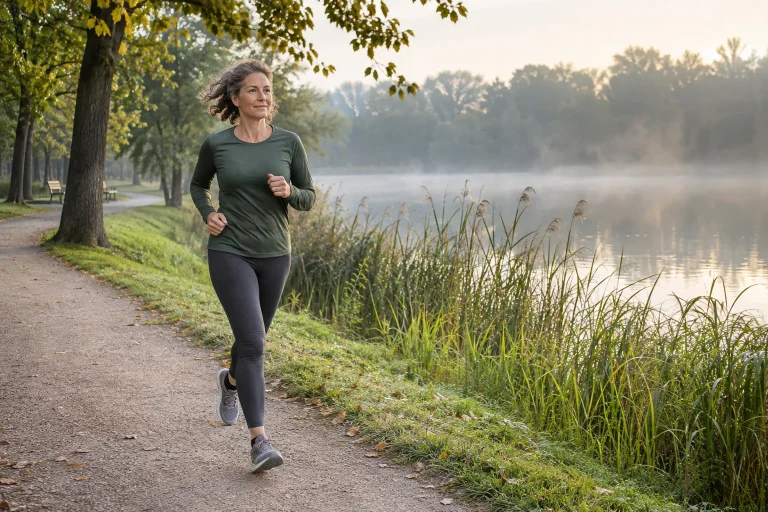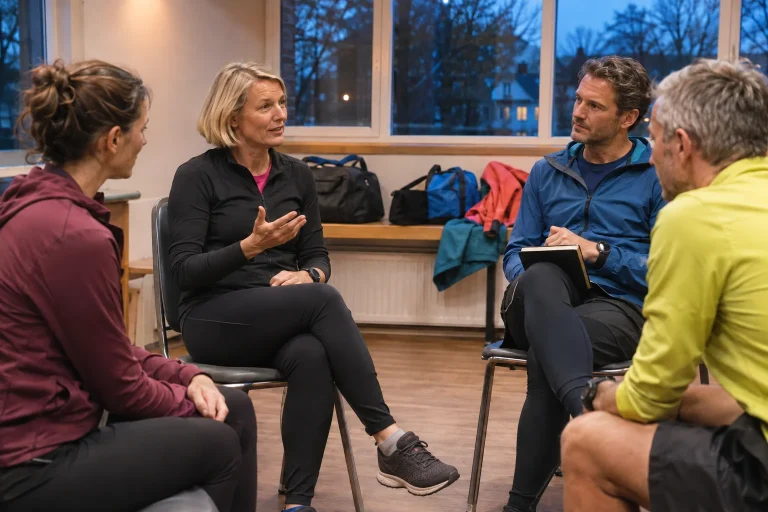
Sometimes you realise afterwards that you had not needed to persuade yourself to take the next step for a long time. At other times, what stays with you from a good run is deliberately gathering your attention for a task that matters to you. One experience may feel easier and the other more effortful, yet both can be valuable. Running psychology’s terms flow and clutch can offer words for this: they do not define two types of runner or decide who runs well.
This article concerns understanding experiences, not a training plan for creating a special state. You do not need longer or harder running to seek flow, and conscious concentration does not mean pushing through pain or feeling unwell. An explanation about attention does not override noticing traffic, surroundings and signals about your own condition.
Two different sentences can both begin ‘the run was good’
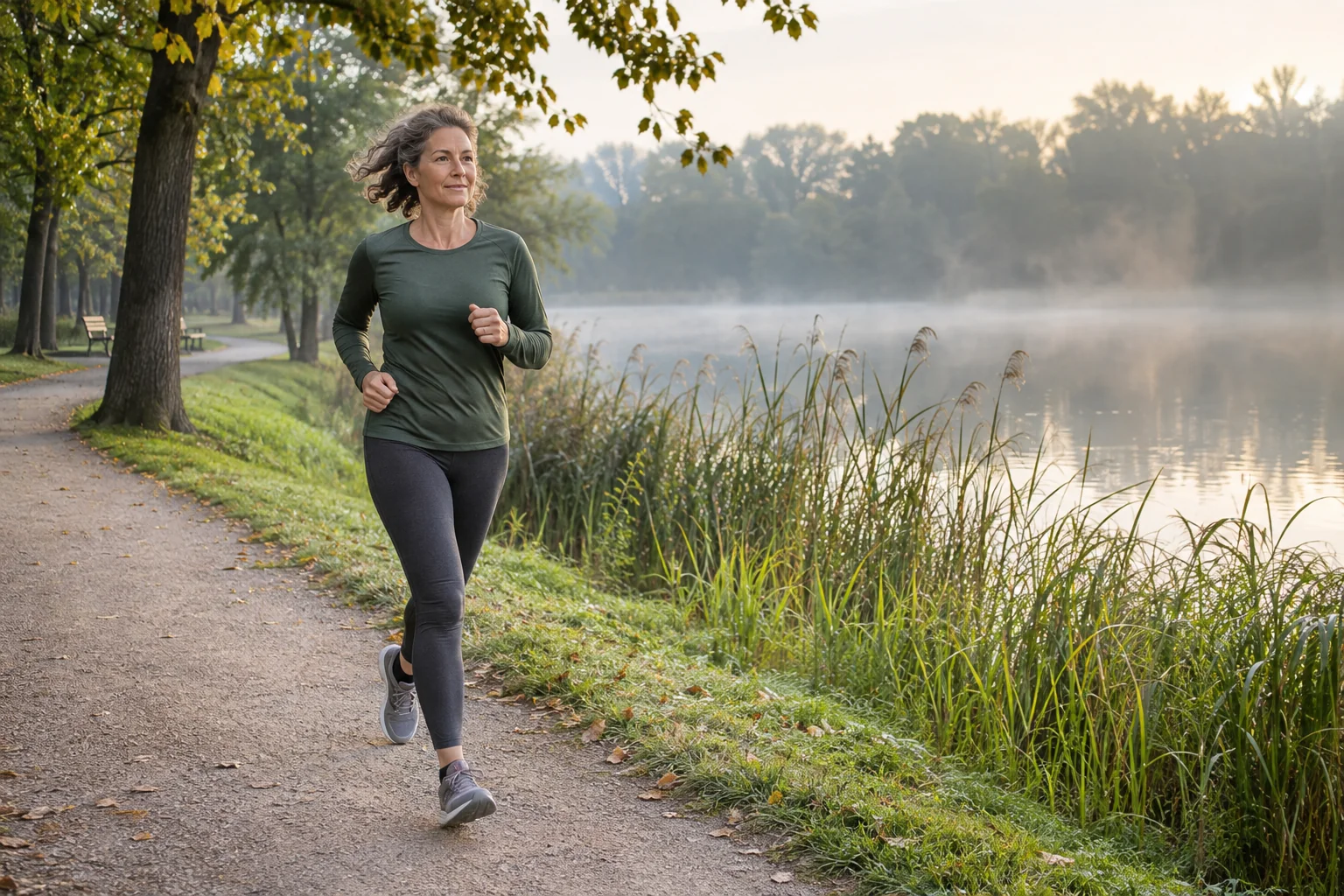
Imagine two everyday examples constructed here. The first runner follows a familiar, quiet route and afterwards mainly remembers pleasant immersion in movement. The second focused on an agreed task suitable for them, and takes pleasure in deliberately carrying out what they planned. There is no need to assume the same internal process behind both ‘it was good’ accounts.
In the first story, the runner highlights the experienced process. In the second, their work towards a goal. This matters in conversation too: someone describing pleasant absorption and someone valuing focused completion are not necessarily disputing each other’s experience. They may be answering the same question from different sides.
The distinction is not a quality ranking. A run experienced as effortless is not necessarily more ‘real’, nor is a more deliberate one necessarily more advanced. The vocabulary helps you escape just two possibilities: either everything happens by itself or the day went badly. Running can be satisfying in more ways than that.
What did runner interviews describe as flow and clutch?
In Jackman and colleagues’ 2021 qualitative study, sixteen runners were interviewed about noncompetitive runs experienced as positive and rewarding. Data covered eighteen occasions because two participants described two separate experiences. Flow was linked more to moving for the process itself and a less specific goal; clutch accounts involved more deliberate pursuit of a defined goal.
The analysis portrayed flow as an easier and more pleasant state, while clutch involved more conscious effort and self-regulation. Researchers organised accounts around planning, monitoring and regulation. These are interpretations developed from interviews, not switch positions measured in the brain. The terms frame descriptions of experience rather than provide a self-rating diagnosis.
Participants were approached after positive experiences, and interviews took place roughly a day later on average. The sample does not establish how frequent either state is in every runner. This background prevents vivid concepts becoming general expectations: you need not identify the same state in every session or force your running into researchers’ categories.
Enjoying the process and pursuing a specific goal are different conversation questions
If you ask why a session felt good, the answer may not be a number. You liked the surroundings, enjoyed moving alongside someone or simply found it pleasant to spend time exercising. These need not become performance indicators. You can describe a run’s personal value without proving a pace improvement.
In another situation, a clear task chosen beforehand supplies the framework. Satisfaction may come from attentively following the agreed plan or changing it in time because of a circumstance. A conscious decision is not necessarily a failure of spontaneity. In an activity organised around a goal, noticing what is needed now can be valuable.
Ask two separate questions: what was pleasant about the process, and what mattered about the task you undertook? Neither needs a grand answer every time. But asking only about completion may hide process enjoyment; asking only about ease may omit deliberate work’s significance. Together, the perspectives can produce a fuller memory.
 Enlarge image
Conscious attention does not necessarily mean constant self-checking
In everyday terms, concentration can mean returning to one current task. This differs from constantly judging every step, datum and feeling. In an illustrative example, a runner knows which route branch to choose and watches the surroundings without composing a continual performance report mentally. Name the content of attention before saying you pay too much or too little attention.
Attention linked to a specific goal need not look identical in two people. One briefly states the next task to themselves; another discusses the session with a companion. These are illustrative possibilities here, not proven techniques for inducing flow. The point is not to compress the entire internal story into the single word ‘concentrated’.
Attention can also change because of an everyday circumstance: a junction, another person, unexpected noise or a route change. That need not make the whole run a lost experience. Adapting to surroundings has its own role. Seeking pleasant immersion is no reason to call necessary external attention a mistake.
Experience can change during the session; one label need not last throughout
A session can have an easier middle and a more deliberately organised finish. Your memory need not be closed with a single state name. Describe what characterised each part. This does not mean finding a precise psychological mechanism behind every shift; it simply allows that running is not a uniform internal film.
Take another constructed example. Someone enjoys moving along a familiar section, then must choose a new direction because a route is closed. Attention shifts to surroundings and organisation. Saying only ‘I was thrown off’ afterwards can frame necessary adaptation as failure. Adding what happened and how they dealt with it can change how the same session is seen.
Naming a change does not mean restoring the earlier state is required. You do not need another loop to make things ‘good again’, or to time the session’s end around a special experience. An ordinary session completed sensibly can have value even if its most pleasant part happened earlier.
Why can a more effortful but important run be memorable?
In everyday accounts, a good experience is sometimes confused with every moment being pleasant. Yet you may value an event afterwards because you completed something significant to you. This is not an invitation to seek suffering. It offers words for recognising that later satisfaction and ease during the task are not necessarily identical.
Keep this distinction in a post-run conversation too. ‘It was hard, but I am glad about it’ is not necessarily contradictory. Ask what was difficult and what gave the occasion value. This does not automatically make the experience a clutch state; everyday understanding does not require research classification of every story.
Do not turn personal meaning into a new obligation. Not every difficult session must be instructive or uplifting. You can say that an occasion simply did not feel good. Accepting experience differs from rewriting everything into a positive story. Concepts should expand ways to describe things, rather than prescribe more correct answers.
Research does not describe the flow–performance relationship in one sentence either
In Schüler and Brunner’s 2009 paper, three studies of marathon runners were presented. Flow during a race was associated with later running motivation, but was not directly related to race performance in those studies. The relationships between flow during training, training behaviour and performance were interpreted through a more indirect model.
An association in data does not mean a good experience causally guarantees a better marathon. The research included both retrospective assessments and assessments made during the race, with important differences between them. A memory after finishing is not simply the same as a snapshot recorded while running. The measurement method matters in interpreting experience.
For readers, two separate questions remain useful: what was it like to experience the run, and what result occurred? Neither needs to justify the other. A good experience counts without a record attached; a task completed appropriately does not become worthless because you felt no special flow during it.
 Enlarge image
Discuss the experience without immediately scoring it
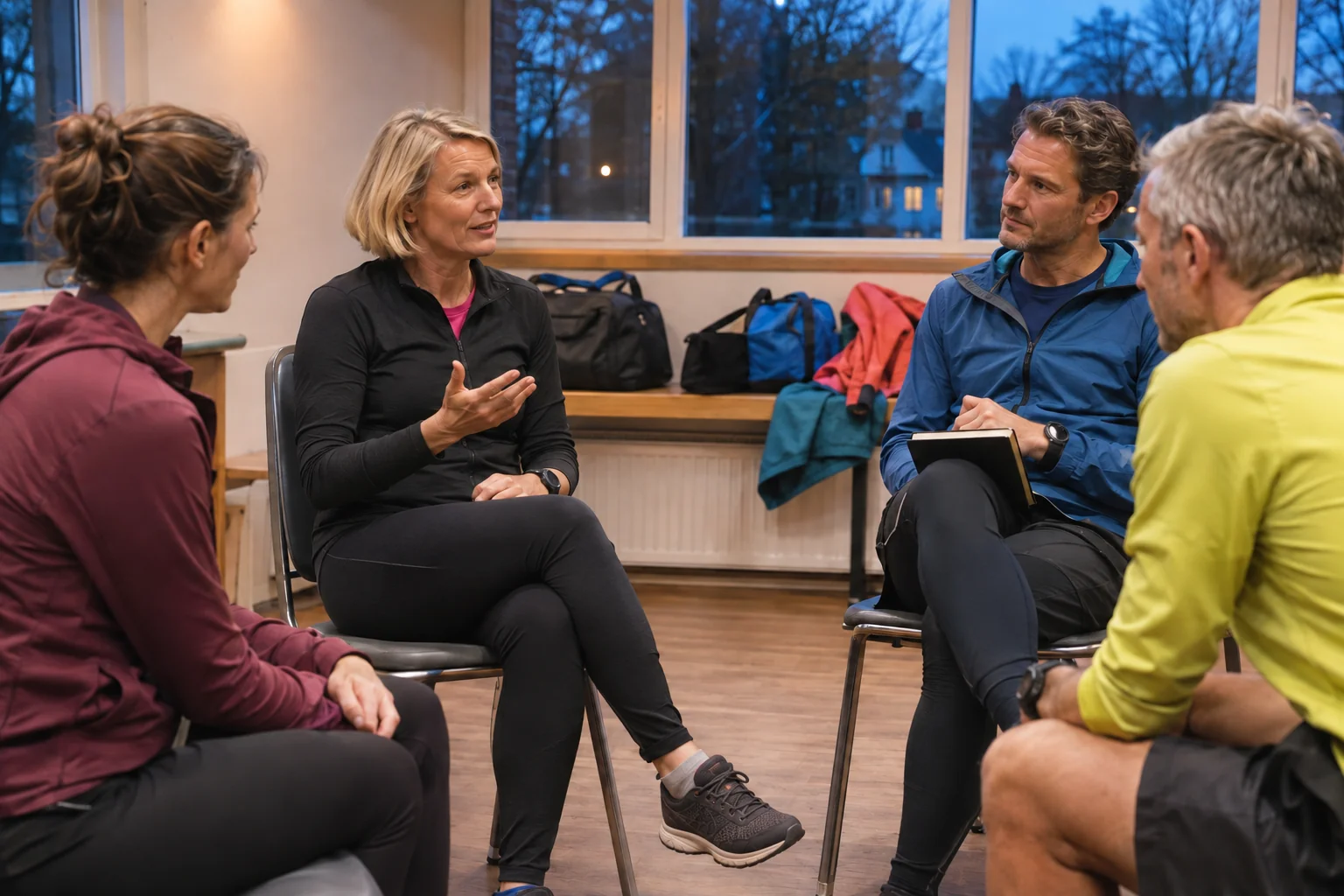
A few brief questions may suffice if you want to recall a run more precisely. What stays with you from the middle? When did you consciously shift attention? Why was the occasion good or important to you? These are not diagnostic questions or a flow scale. They are simple conversation prompts you can use without making logging obligatory after every workout.
| Perspective | What can you describe in your own words? |
|---|---|
| Process | Which part was pleasant or absorbing? |
| Task | Where did you deliberately direct attention? |
| Change | What happened when the experience became different? |
| Personal meaning | Why do you consider the occasion valuable, if you do? |
Uncertainty can remain in the note too. You may not remember exactly when something changed or find it hard to distinguish feelings during the run from pleasure in finishing. There is no need to manufacture a perfect narrative afterwards. You can stay closer to your experience by not automatically filling uncertainty with an impressive psychological explanation.
A companion’s different kind of good experience can make sense too
If your companion says they worked deliberately throughout, do not necessarily respond that they think too much. If someone describes effortless immersion, you need not immediately ask whether the workout was hard enough. First seek the meaning of their account. What was good, important or memorable for them?
Do not turn the difference between two stories into permanent personal characteristics. One account does not mean someone always runs in flow while another always struggles. A different day, task and situation can bring a different story. The label becomes burdensome if the next run must match the same expectation.
Flow and clutch are useful when they give you more words for running. You can discuss process enjoyment, deliberate tasks and shifts during an experience without ranking them. There is no special state you have to achieve. What matters is being able to discuss the value of your own running in more than the language of pace or perfect ease.
Sources
- Jackman and colleagues, 2021: flow and clutch in recreational distance runners’ event-focused interviews
- Schüler and Brunner, 2009: flow, motivation and marathon performance in three studies
How Futószív articles are prepared: our editorial guidelines.