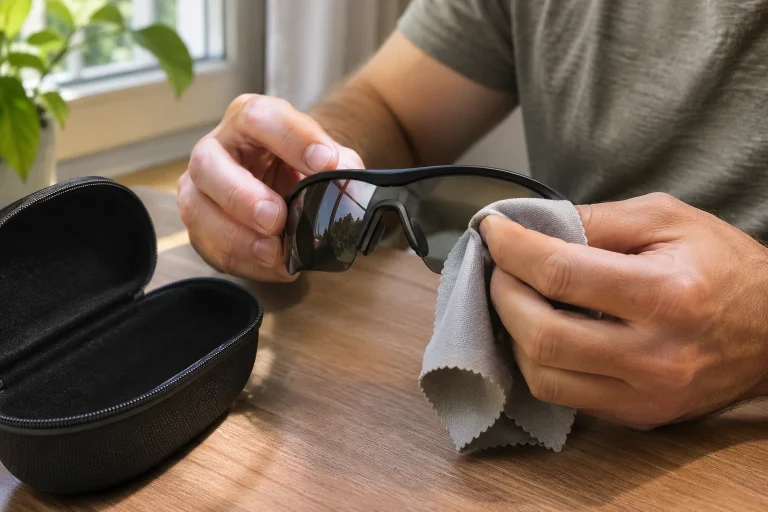
At the end of a windy run, your eyes sting, feel gritty or water noticeably. It is easy to assume that extra tears must rule out dryness, or that any symptom in the wind is simply part of the weather. Comfort at the surface of the eye is more complicated. Discuss recurring symptoms with a professional, and do not automatically label a new change in vision as an effect of the wind.
Sudden deterioration in vision, new flashes, many new floaters or a dark shadow moving into your field of view may require urgent eye assessment. Do not finish the planned run first. This article also helps you discuss less dramatic, recurring discomfort, but it does not select the same eye drops for everyone or diagnose you from an online symptom list.
Why might an eye that feels dry water?
The NHS information on dry eyes lists watering more than usual as a possible symptom alongside stinging, itching and grittiness. Insufficient tear production or tears evaporating too quickly can be involved. Windy, dry or dusty surroundings, long periods using screens and contact-lens wear can also matter. The symptom alone, however, does not prove this is the cause in your case.
You can use both ‘dry’ and ‘watery’ in your own description. You do not need to choose the one word you think fits a condition’s name. You can say that your eyes watered while burning, or that one eye was more affected. An accurate experience is more useful than a label chosen in advance. The assessment aims to clarify what lies behind it and what help is appropriate.
The run itself may be only part of the story. Mention whether your eyes already felt uncomfortable early in the day or you set off from a heated room after lengthy screen work. Check ‘it only happens when running’ against your memories, rather than through another exercise trial. You do not need to deliberately choose a windier route to demonstrate a connection. Recalling occasions that happened naturally is enough to begin with.
Consider the whole day, not just wind speed
It may help to place a few actual situations side by side: did you set off after an office day, on a weekend morning, after driving or in another setting? The aim is not to turn every everyday circumstance into a prohibition. Comparison helps ensure the professional hears more than one particularly uncomfortable run. A day with fewer symptoms is information too, but does not invalidate the worse occasion.
The American Academy of Ophthalmology’s patient education material mentions wraparound glasses as protection from wind and also discusses direct airflow and long periods of screen activity without breaks. This is an environmental consideration that can support comfort, not a treatment for every eye complaint. Glasses do not remove the need to assess new pain or a change in vision.
When considering a route, you do not need to define a numerical wind threshold below which everything is certainly fine. An open lakeside, a passage between buildings and a sheltered park can feel different on the same day. If the usual outing is uncomfortable, the place or time can change. A modification is not an investigation: it does not prove the cause or show that a more serious complaint can safely be worked around.
 Enlarge image
Glasses: fit and vision, rather than brand rankings
Glasses chosen for running should actually work with your own vision and equipment. Frame stability, your view and interaction with a hat are practical considerations. Dark lenses do not mean you will see adequately in every light condition. The aim is to see the route clearly, rather than insist on a model described as sporty. Discuss suitable vision correction with a professional if needed.
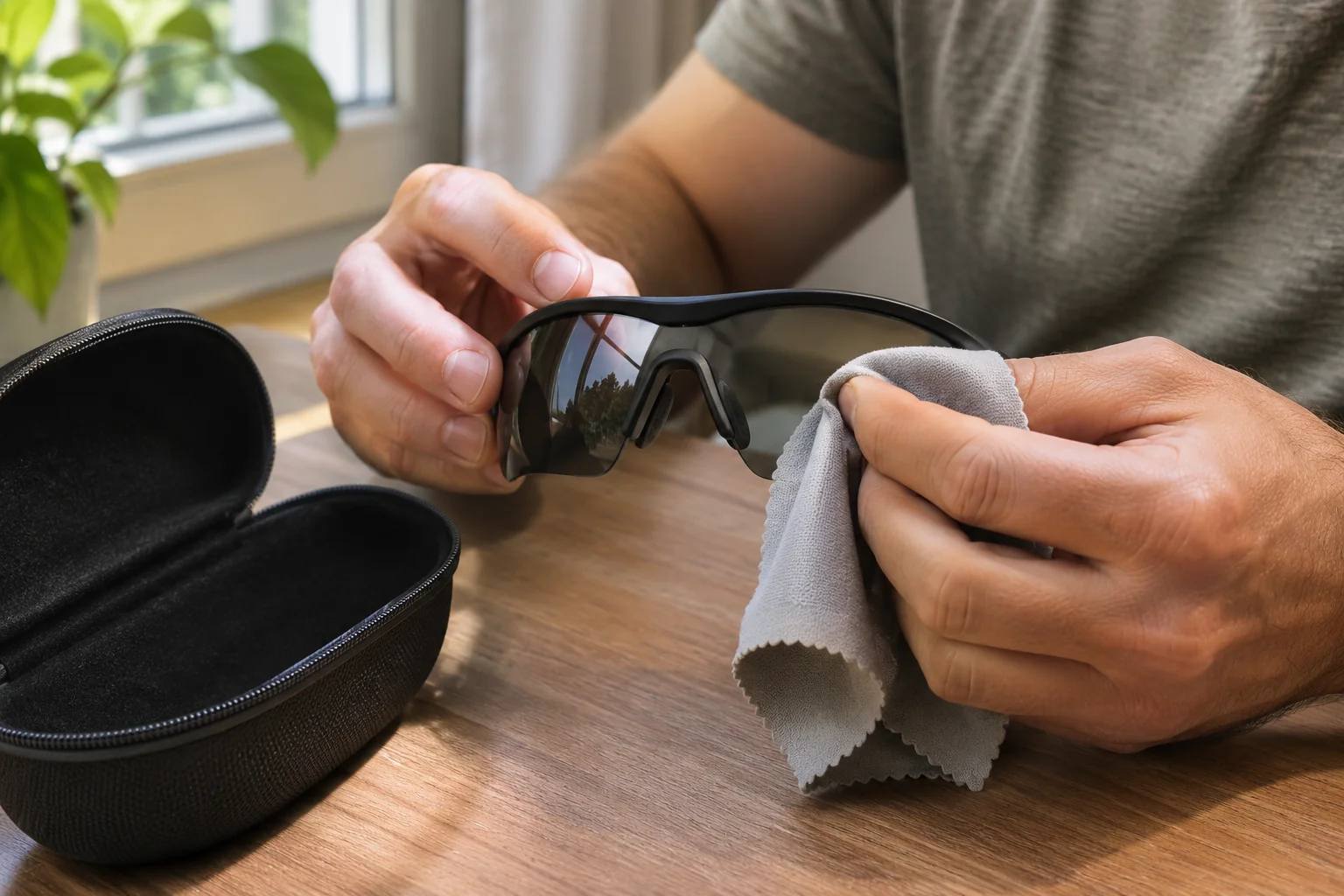
When trying glasses, observe the frame’s position and movement in an ordinary, safe situation. Do not force a tighter strap merely to reduce movement if that makes it uncomfortable. Keep lenses clean according to their own care instructions. A scratched, fogged or dirty lens and blurred vision originating in the eye may be separate issues, but do not try to distinguish them alone while running if you have uncertain new symptoms.
If your comfort changed with new glasses, bring them to the assessment or describe them. There is no need to conclude that the model is bad for everyone or has solved every problem. Personal fit and the state of your eyes can receive separate assessment. Do not confuse a buying experience with clinical evidence, or expect a more expensive frame to provide a treatment effect that nobody has established for you.
With contact lenses, your own wear schedule matters
The National Eye Institute’s contact-lens information advises removing lenses for pain, redness, light sensitivity, sudden blurred vision, unusual watering or discharge, and contacting an eye doctor if symptoms persist or worsen. Acute warning signs do not require a waiting period of home observation. The NHS notes that a red, painful eye in a contact-lens wearer may need urgent assessment.
Do not handle lenses with dirty hands beside a dusty running route. NEI emphasises clean, dry hands and the correct lens-care system; water or saliva must not be used for cleaning or storage. Rain, a water bottle or a nearby tap is not equivalent to the prescribed care solution. Follow the wear and replacement schedule for your own lens type, rather than rules for another person’s product.
A practical question is how to get home if you need to remove your lenses but require vision correction. You can arrange this in advance with glasses or assistance considered appropriate for you. A backup is not a reason to ignore symptoms. It helps ensure that stopping the outing does not create a new transport problem. Do not drive with a new visual disturbance, and ask for help reaching care safely.
When should you set the dry-eye label aside?
The NHS page on retinal detachment describes new floaters or a sudden increase in them, flashes, a dark curtain-like shadow and sudden blurred vision as urgent warning signs. An underlying problem may require prompt treatment to protect sight. You do not have to diagnose it at home before seeking urgent eye care. Windy weather does not rule out a more serious cause.
Likewise, do not carry on organising the day as though it were simple dryness if you have a painful red eye, marked light sensitivity, an injury or altered vision. The NHS dry-eye page treats these as separate urgent considerations. For a severe acute situation, or when arranging safe urgent assistance is necessary, call 112 in Hungary. Do not try to drive yourself to care with a new visual disturbance.
A running companion’s task here is not to photograph your eye and search for online comparisons. They can help you stop, find somewhere safe and arrange care. You can preserve the precise onset and description, but documentation must not delay help. Tell the clinician the history even if feeling unwell or the vision change eases meanwhile. The next run is not a check-up.
What questions should you bring about recurring discomfort?
If symptoms are not acute but recur or persistently bother you, seek suitable eye-care or vision-assessment advice. Describe which eye is affected, what it feels like, how long it has happened and how it affects running and the rest of the day. The NHS may recommend further assessment for persistent symptoms. You do not need to spend weeks trying one self-selected treatment after another to feel entitled to ask.
At the assessment, also mention your contact-lens type and use, eye drops already tried, medicines and known conditions. You do not need to add a complex ophthalmic explanation to your own observation. A precise situation may be enough: it began after a screen-based day, on a windy route, with these lenses. If you suspect a medicine, ask the clinician; do not independently stop a prescribed medicine because of the symptoms.
| What should you bring to the discussion? | What is it useful for? | What does it not prove? |
|---|---|---|
| Description and timing of symptoms | It shows the actual complaint and how it changed. | One certain diagnosis. |
| Details of lenses, glasses and products used | It clarifies the circumstances of use. | That all similar products have the same effect. |
| Screens, travel and weather | It makes the whole day visible. | That wind explains every new symptom. |
| A practical goal | It helps identify the situation you want to address. | That the outing must continue unchanged. |
Choosing appropriate eye drops or other help is not a matter of borrowing a bottle at a race. Ask for advice based on your symptoms, contact lenses and any other conditions. Products can differ in purpose, use and compatibility with lenses. We do not provide the same dosing schedule for everyone. If something fails to help or symptoms worsen, report that to the appropriate professional.
 Enlarge image
Leave room for sensible changes to your running plans
A more sheltered place, familiar equipment and appropriate breaks may form the practical side of improving comfort. Do not turn this into a compulsory series of experiments. Several circumstances can change in one session, so a better or worse experience need not immediately become product evidence. The aim is a more usable outing once the situation has been professionally clarified, rather than completing the original route at any cost.
Before a shared run, you can make a simple practical request: if my vision or eye comfort changes, I will stop and seek help according to the situation. A companion can accept that without a detailed explanation. Symptoms need not be treated as a joke, weakness or an excuse to buy expensive glasses. Necessary changes can be part of the outing, while professional assessment of a new, unusual symptom remains a separate task.
Watering after a windy run can belong to many different histories. Accurately describing your circumstances, using lenses and glasses appropriately and having recurring symptoms assessed can help form an understandable plan. The important boundary is a new vision change or acute eye pain: these are not situations in which to get used to the wind. A good running plan takes your sight and access to help seriously too.
Sources
- NHS: dry eyes and urgent signs
- NHS: warning symptoms of retinal detachment
- National Eye Institute: safe contact-lens use
- American Academy of Ophthalmology: environmental considerations for dry eyes
How Futószív articles are prepared: our editorial guidelines.