A top seems comfortable when you put it on, but its neckline or the bend of your elbow increasingly bothers you during running. Another day, the same clothing is fine but a hot changing room or journey home makes things unpleasant. With eczema, several circumstances shape comfort together. Observing them is useful, but one run cannot establish what causes skin symptoms or which treatment is needed.
The useful question is not necessarily which single running top is eczema-friendly. It is how clothing, surroundings and post-run organisation can fit your established skin-care and treatment plan. The considerations below support that conversation and everyday preparation. They do not provide a medication plan, home allergy testing or a rule that itching must simply be endured until the next kilometre.
Sweat, heat and disease are not a single switch
The March 2025 EuroGuiDerm guideline on atopic eczema discusses symptoms related to heat and increased sweating. But it does not consider evidence on physical activity as a trigger complete and unambiguous, and does not recommend avoiding activity generally. This does not mean every run suits every skin condition. Personal symptoms and current treatment still matter.
Your observation is useful when you do not insist on finding one culprit. You might describe discomfort starting in a heated changing room before warming up, or becoming noticeable only while sitting in damp clothes on the journey home. These are different situations. You need not classify the whole run as one good or bad experience. A more precise timeline makes it easier to discuss what actually happened with a dermatologist.
Nor should avoiding sweat become a performance goal. A sportswear advertisement’s promise of dryness is not personalised skin care. If a programme is difficult to reconcile with your current condition, discuss the location, timing or programme itself. Do not expect buying another product to answer a question that still needs professional assessment of symptoms.
Examine where clothing meets other equipment
The same guideline notes limits to clothing evidence: there are no high-quality data showing one textile alone improves disease severity for everyone affected. Alongside avoiding coarse, irritating clothing and overheating, individual preference matters. ‘Natural’ or ‘technical’ therefore does not replace personal comfort assessment or establish a treatment effect.
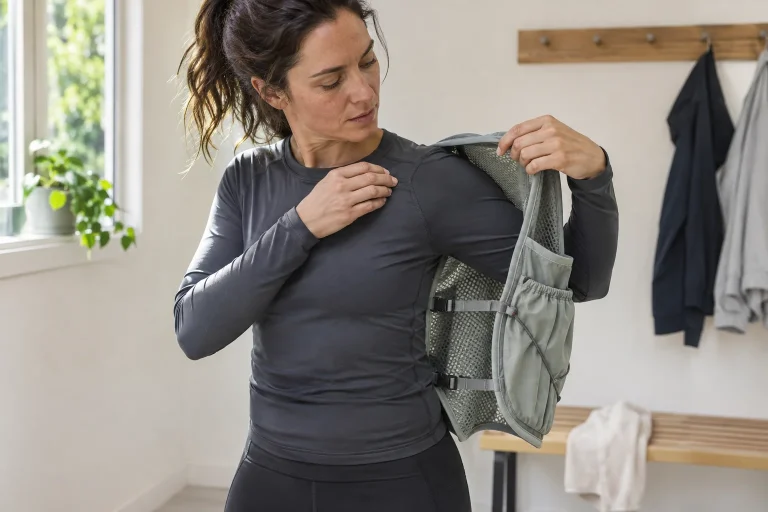
At home, look at where a top’s seam meets an equipment strap, where fabric bunches and which hem lies directly on skin. This is observing clothing, not testing skin. You do not need to deliberately irritate the area through repeated runs to have something to show a doctor. Showing the garment or its inside construction and describing the affected location is enough.
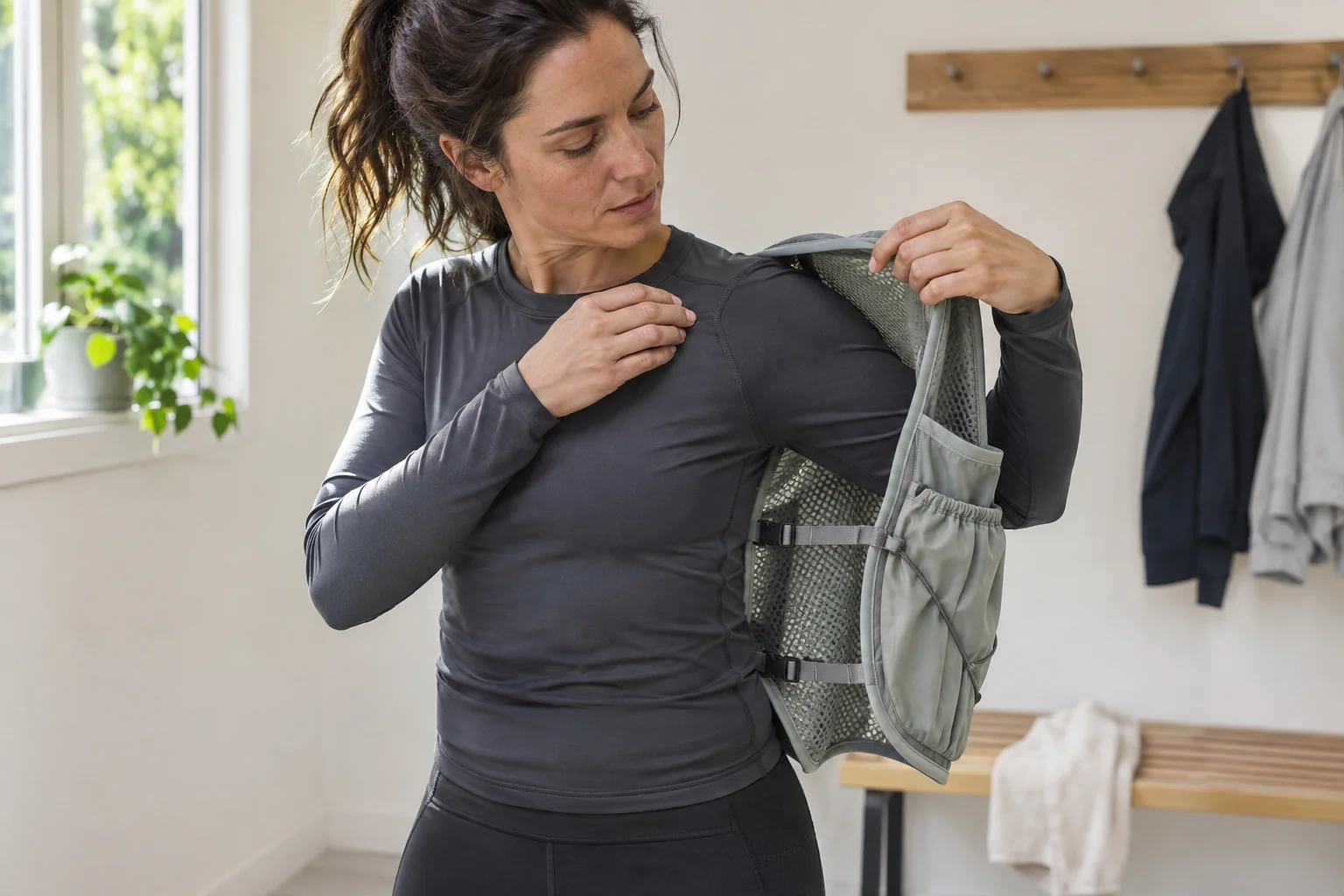
A top alone may behave differently under a vest. Pack weight, bottle position and moving shoulder straps can alter which surfaces meet. Recording only the shirt’s fibre composition may leave these out. A useful equipment note may simply state the garment, additional layer, strap and affected body area. You do not need a long ranking of brands or fibre blends.
When buying, exchange options and the actual cut matter too. An expensive garment is not automatically better because it is marketed for sensitive skin. Check internal hems and do not choose size solely from your usual letter. Clarify specific advice for your skin condition with your clinician when necessary; a retailer can provide clothing information, not a diagnosis.
 Enlarge image
Clean clothes and laundry routines belong in the picture
The American Academy of Dermatology patient information highlights fragrance-free skin-care and laundry products and clothing suited to the skin. ‘Unscented’ and ‘fragrance-free’ do not necessarily mean the same thing. Understanding labels matters more than a product’s pleasant or barely noticeable smell. Do not add new unfamiliar products to an individual treatment plan simply because of a running recommendation.
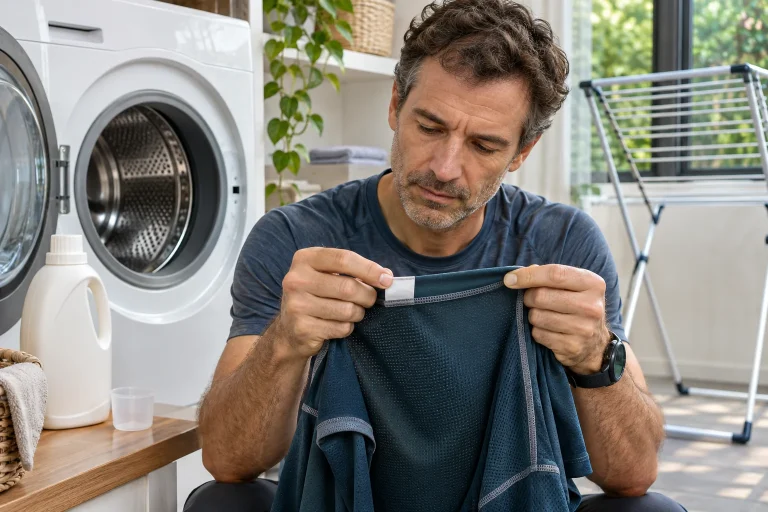
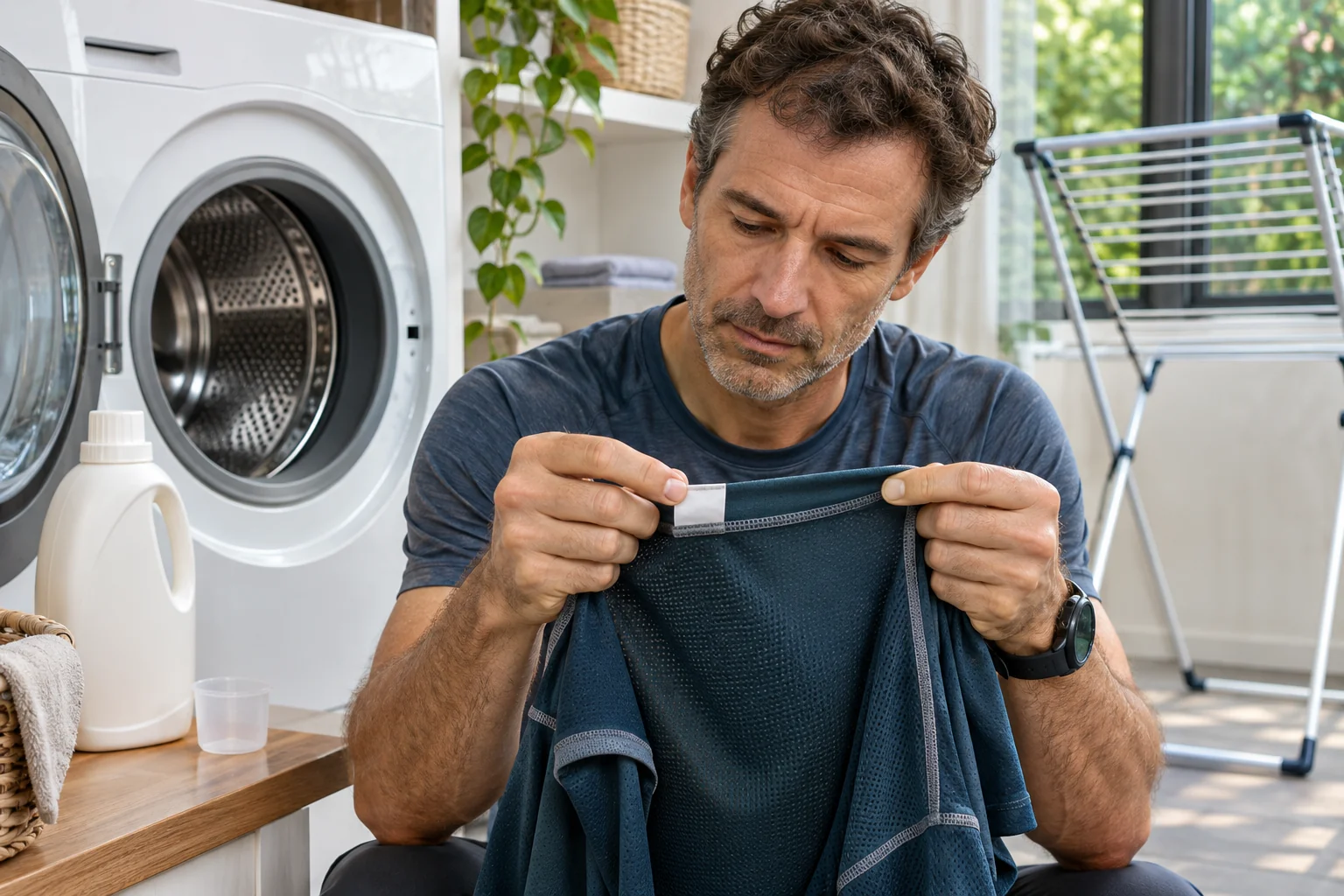
Keep more than the detergent’s name in the laundry history. If you used a new product, conditioner or programme, note it and show the packaging to a professional if needed. The goal is not home allergy testing. Keep the machine’s dosing instructions and clothing care labels available rather than relying on memory or mixing several cleaning products to make washing ever more thorough.
If several people do laundry at home, a separately arranged pile and a clear shared agreement can help. Family members do not need every detail of skin care to avoid accidentally changing an established routine. For travel, clarify beforehand whether you can clean clothing in your usual way. A sports camp’s shared laundry system is a different practical situation from a home laundry basket.
What belongs in the post-run bag?
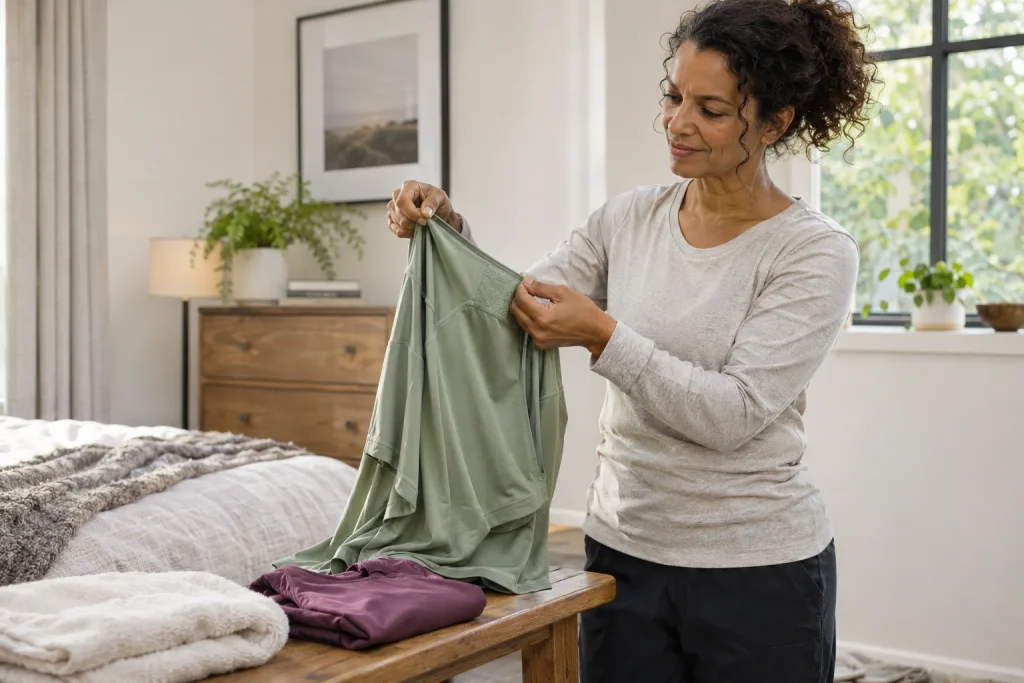
Arranging spare clothing does not require a large equipment collection. What matters is having your familiar, clean garment with you and accessing it when needed. Carry dry clothes separately from used items and plan the journey home so a closing bag store does not prevent changing. This is preparation, not a promise to treat eczema.
Pack the skin-care items agreed for your own plan. You do not need to try a new cream, essential oil, disinfectant or strongly scented shower product every time. A shared changing-room dispenser may not contain what you use at home. If post-run circumstances regularly prevent following your guidance, make that a topic for planning and consultation.
| Part of the day | What can you clarify in advance? | What does this not establish alone? |
|---|---|---|
| Dressing | Where do hems, straps and outer layers meet? | The exact cause of the skin complaint. |
| Travel | Where and when can you access spare clothes? | Which medical treatment is needed. |
| Washing | Are the items in your own plan available? | Whether a new product suits you. |
| Laundry | What changed from your usual clothing care? | Whether a contact allergy is confirmed. |
| Follow-up | What do you want to show and ask? | A photograph or log does not replace examination. |
If an event is followed by a long wait, your bag’s location may matter more than another small running accessory. You should not need others’ permission to reach personal items. Give a companion a simple request: keep the clean-clothes bag with me, or I would like to access this first. You do not have to explain your skin condition publicly.
A new rash is not automatically your familiar eczema
The NHS information on contact dermatitis distinguishes irritation from contact with a substance and an allergic reaction. Symptoms are not always immediate. Persistent, recurring or severe symptoms may require medical assessment, and further specialist investigation may be considered if the cause remains unclear or treatment does not help. Coinciding with clothing alone does not establish which process is occurring.
Do not attach your own diagnostic label to every new patch. Location, timing and the history of new objects or products may be more useful than ‘I am allergic to all synthetic fibres’. Such a broad claim is difficult to use in daily life and may lead to unnecessary shopping cycles. Share the specific experience and leave the explanation open until professionally clarified.
A personal photograph of the skin may help show the timeline if you and your clinician find it useful. Taking or sharing one daily should not be compulsory. Handle it securely and do not put it in a public workout log simply because symptoms occurred during movement. This article’s illustrations are not diagnostic examples either: neither a picture nor a running partner’s skin can identify your symptom.
Which changes call for help sooner?
The NHS page on atopic eczema may recommend urgent assessment if affected skin becomes painful, swollen or warm, leaks fluid, develops pus-filled blisters, suddenly worsens or spreads, or is accompanied by fever or feeling generally unwell. These can indicate infection or another more serious condition. You do not need to try another top, detergent and running route first. For severe illness or immediate danger in Hungary, call 112.
If symptoms are less sudden but do not settle with usual treatment, you can still request follow-up. The NHS identifies treatment not helping atopic eczema as a reason to speak to a doctor. Explain everyday effects too: does it disrupt sleep, dressing or activity plans? You do not need to produce dramatic visible symptoms to mention persistently poor comfort.
Do not change prescribed-product use based on general opinions circulating in a running group. If uncertain about fitting the programme around treatment, ask the person with whom you made the plan. Bring the names of products you actually use and their instructions. A previous good experience does not give general permission to try someone else’s product, and natural origin does not automatically mean gentle on skin.
 Enlarge image
Your own comfort notes and a more manageable running day
Your record can contain four brief details: skin condition before leaving, clothing and equipment worn, when discomfort appeared and how it affected the day. Do not invent an itching threshold below which running is compulsory. If a clinician requests a validated questionnaire or other monitoring, follow that guidance. Everyday notes have a different role: preserving a specific situation for the next discussion.
As a running partner, flexible timing and respect for privacy may be the most useful support. Do not ask to inspect skin, touch a symptomatic area without permission or offer an unfamiliar product from your bag as a ready-made solution. Asking what practical help would be welcome may be enough. Changing a programme should not bring jokes or assumptions about reduced motivation.
A well-prepared day does not necessarily end with perfect skin comfort. But having clean clothes available, avoiding unnoticed laundry changes and describing experience more precisely can still be valuable. Clothing and organisation play a role alongside individual care. Align the next step with the current skin condition rather than an advertisement’s trouble-free run or other people’s tolerance.
Sources
- EuroGuiDerm: atopic eczema, version 3.0, March 2025
- American Academy of Dermatology: skin care with atopic dermatitis
- NHS: atopic eczema
- NHS: contact dermatitis
How Futószív articles are prepared: our editorial guidelines.