What makes a tree image more than a green surface?
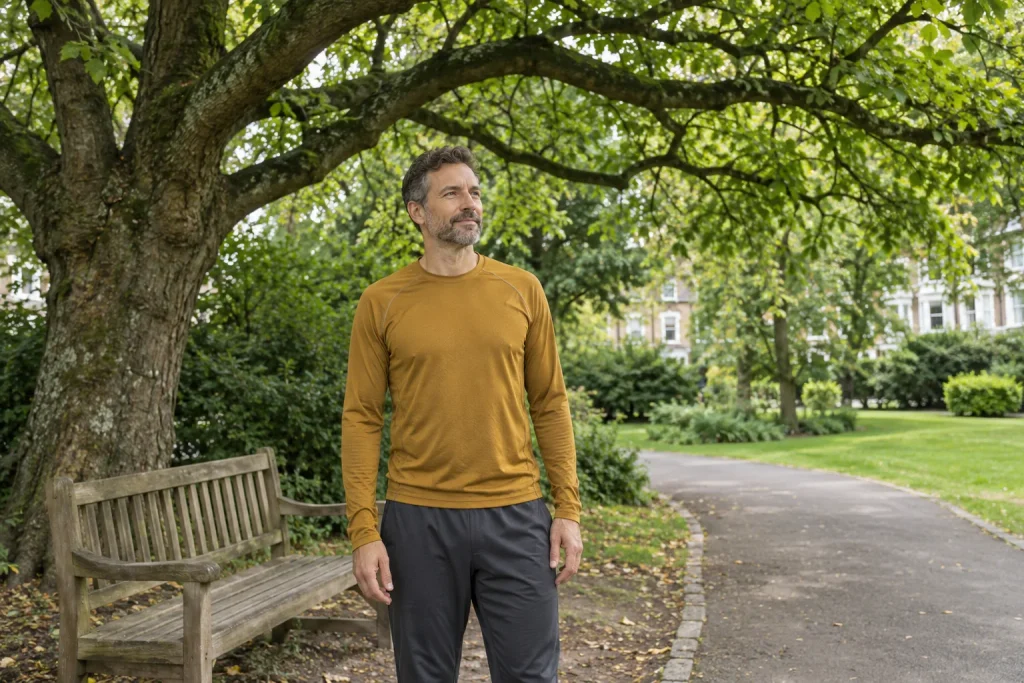
Running beneath a canopy, you see more than green. You recognise the tree’s form, gaps between branches, the trunk and how the space continues. The image has meaning: a park, shade, a familiar resting point or the route’s next section. Research on natural views asks whether colour itself matters, recognisable form or their combination. Calling every green background a forest cannot answer that question.
Views often feel so obvious in running that we notice them only when absent. Attention during an indoor session without scenery may differ from running beside trees, but this does not identify the important detail. A controlled image experiment can separate visual components. In exchange, it leaves out many properties of a real park: wind, sounds, distance and actually moving through space.
This article examines the logic of separating form and colour. It neither scores parks nor predicts running performance from a canopy. It asks what a change in an attention task means, why self-esteem is another question and how to keep an interesting finding in context. Everyday examples are editorial illustrations rather than home psychological tests.
The logic of four image conditions
In Zhang and colleagues’ 2023 experiment, 76 healthy university students aged 18–24 cycled while viewing one of four image conditions. Tree form and green colour were varied separately. Mood and self-esteem outcomes did not relate to form and colour identically; the combined green-tree condition showed a favourable change in attention-task reaction time. Outdoor running was not studied.
Separating the two aspects may sound simple, but matters. Comparing only a green tree with an empty grey surface changes form and colour simultaneously, making the relevant difference harder to identify. Four conditions allow the presence and absence of both to be considered. The table below illustrates this design idea rather than copying the research results figure.
| Image condition | Recognisable tree form | Green colour | What does it examine? |
|---|---|---|---|
| Green tree | Present | Present | Both characteristics together |
| Grey tree | Present | Absent | Form separated from colour |
| Formless green | Absent | Present | Colour without a recognisable tree |
| Formless grey | Absent | Absent | A reference without either property |
This table cannot select a favourable state or required training environment. The design helps prevent an explanation being built into the comparison beforehand. Real routes combine form and colour with other details too. Controlled images can therefore pose useful questions about visual components without replacing knowledge of the entire environment.
A combined effect is not simply two benefits added together
When two properties appear together, we need not assume their separate effects simply add up. Their combination may matter for one outcome, while another change relates to only one component. This is general experimental reasoning rather than something unique to green environments. It helps readers avoid treating different measurements as one overall nature score.
In an illustration of our own, a familiar stretch of trail may remain recognisable and meaningful in grey light, while a plain green wall lacks the space and memories of a place. Someone may still find the wall pleasant. The two impressions do not prove the same thing. This does not claim the study measured every effect of familiarity; it illustrates the many meanings attached to a view in daily life.
A clear research summary identifies the measurement and comparison for each result. Form, colour and their combination may pose different questions for an attention task than a mood scale. “Green improved everything” is convenient but can conceal that structure. Retaining several precise sentences is preferable to passing on one simpler, oversized claim.
 Enlarge image
Attention: which task are we discussing?
Everyday “attention” covers noticing a root, following a coach’s instruction, maintaining a conversation or quickly selecting the right stimulus on a screen. An experiment always measures a defined performance among such possibilities. A reaction-time change therefore does not measure improvement across all attention abilities.
Precise naming matters because navigation while running combines tasks. You see space, think ahead to the next step and monitor your condition. It is not established that a short post-exercise attention task confers an equal advantage in every real situation. Research reveals one component rather than certifying an environment’s overall suitability.
An earlier example of research on nature and attention is Berman, Jonides and Kaplan’s 2008 paper. Two experiments examined directed-attention tasks after a nature walk or viewing nature images. This differs from comparing form and colour while cycling. Together they reveal an interesting research direction, but do not become one study applicable to every running place.
Self-esteem, mood and task performance remain separate
Self-esteem may concern how you evaluate yourself, mood the emotional state you report, and task performance how you complete a particular test. Research uses separate instruments for these. Change in one does not automatically mean the same change in another. A more enjoyable workout need not immediately improve every ability and self-evaluation measure.
Three questions after your own run can also yield different answers: did movement feel good, are you satisfied with yourself, and was an attention-demanding task easier afterwards? You might say yes only to the first. You may enjoy the weather while finding the session challenging. Different answers are not inconsistency or proof of faulty functioning; they name multiple experiences.
An app’s single wellbeing or readiness value should not be treated as their direct sum either. The device uses other inputs and a defined algorithm. A similar label does not replace the study’s attention task or questionnaire. Record feelings and device signals together if useful, but retain their separate meanings.
A static image is not a park you can explore
A pictured tree gives no real shade, and the participant cannot explore it like a park. Viewing distance, size and screen frame are also part of the situation. Static images make certain characteristics easier to separate, while leaving out much of outdoor activity’s experience. Read this as a property of the tool chosen for the hypothesis, rather than simply a flaw.
Perspective changes while running. What looked like a uniform canopy from afar becomes branches, patches of light and route details nearby. This link between seeing and moving differs from viewing a still image while cycling. The experiment therefore does not imply searching for one selected tree shape on every run. Real use and personal meaning involve a broader story.
Indoors, a nature image need not be seen as a complete substitute for a park either. It may be pleasant while the room offers other advantages: accessibility, predictability and practicality in your circumstances. Outdoor running may bring new stimuli while requiring travel or more organisation. You do not need one winner to recognise which setting suits you when.
How can you consider your running place from several angles?
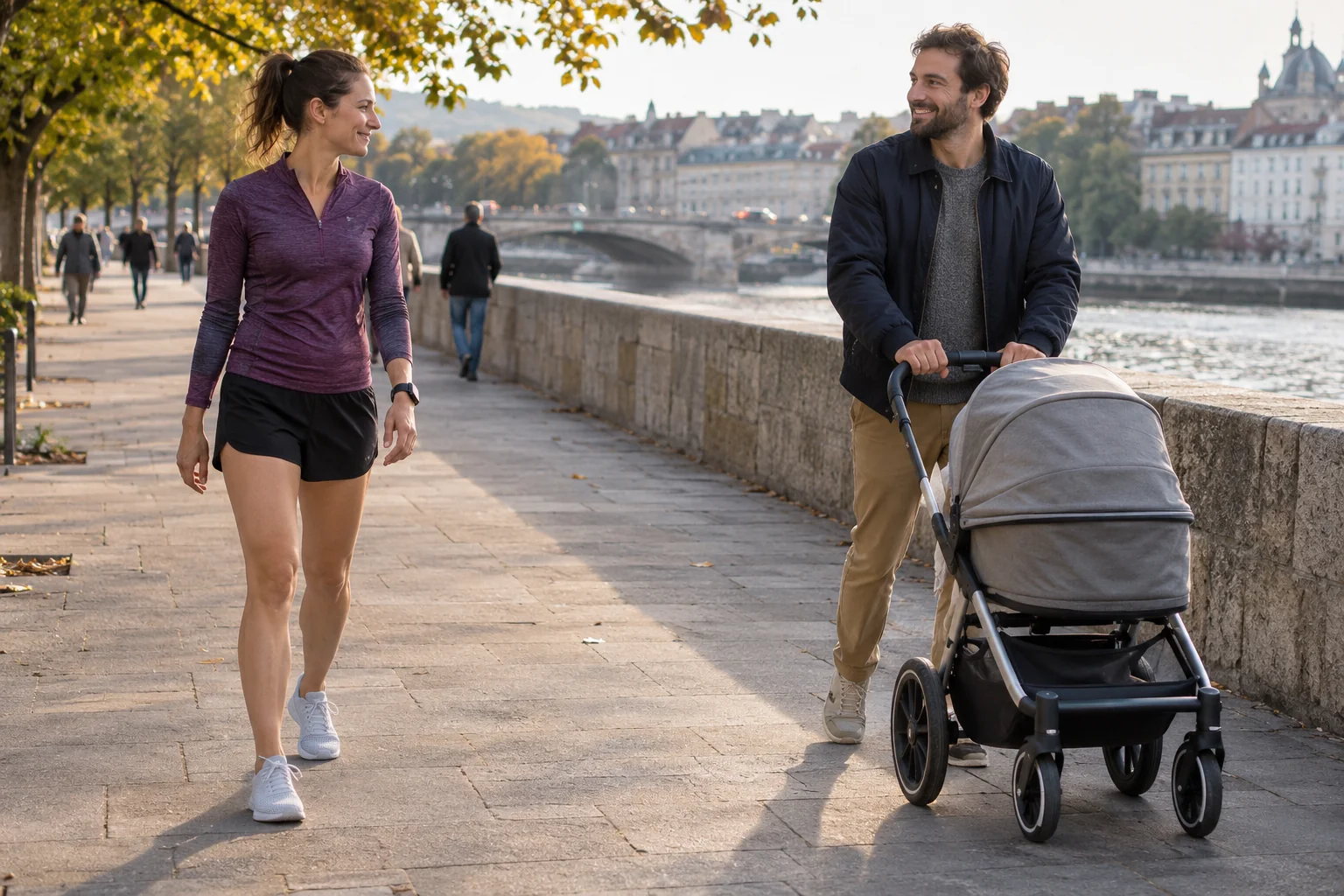
If curious about the view’s role, name a few details in an easy, safe situation. What structures the space? Can you see the next section clearly? Does any point make the place familiar? These are not a home version of the experiment and need no score. They turn “it was beautiful” or “I didn’t like it” into more useful description.
Add circumstances alongside form and colour. The same avenue may offer shade in summer and better visibility in winter. These are practical properties rather than degrees of one universal effect. Surface, traffic, lighting and getting home also matter when choosing a route. A pleasant photograph cannot replace checking whether the route is usable that day.
You do not have to look constantly at scenery to run correctly. On technical or crowded sections, concentrating on progress is entirely appropriate. A quiet stretch may leave more room to notice surroundings. Shifting attention is not failure against an expectation of nature appreciation. Safety and your task take priority over ideal viewing imagined from research.
 Enlarge image
What is a smaller urban green space worth?
A nearby park or avenue does not derive value from looking exactly like a research image. It may fit easily into your day, offer familiar shortcuts or have room for an easy loop. These concern access and usability. The experiment sets no minimum canopy size or required green proportion for every urban running route.
With little natural space available, you need not regard a simpler route as psychologically worthless. Rhythm, meeting someone familiar or finding time for activity can bring enjoyment too. Views may matter without being the only source of a good experience. Research interest must not become another expectation that only running in a particular landscape counts.
Keep different participants’ needs in shared route choices. One finds open space easier to navigate, another prefers trees nearby. Several alternatives may be manageable. Do not use the form–colour experiment to declare someone’s impression wrong. A group route works when the actual people’s considerations have room within it.
A more precise statement about natural views
The two studies make the relationship between environmental views and certain attentional and psychological outcomes interesting and testable. Stronger claims need appropriate additional data. It is not established that a particular tree form makes every runner more focused, or that a brief reaction-time change automatically produces lasting mental-state improvement. A smaller, precise statement remains more usable.
In practice, retaining the idea that environment has multiple components may be enough. Recognisable forms, colours, meanings and opportunities for use come together. Noticing this lets you describe more richly why you like a running place. Research can bring curiosity to personal experience without turning it into a required feeling, a diagnosis or a landscape prescription for everyone.
Sources and editorial distinctions
We checked the primary publications on 21 November 2026. The 2023 cycling image conditions are kept separate from the 2008 nature-walking and image-viewing studies. The table is our illustration of the design, not an original research figure. Our photographic AI images do not document the studies’ participants or actual research locations.
- Zhang and colleagues: Form and color visual perception in green exercise: Positive effects on attention, mood, and self-esteem, 2023
- Berman, Jonides and Kaplan: The cognitive benefits of interacting with nature, 2008
How Futószív articles are prepared: our editorial guidelines.