An urban running route rarely belongs only to runners. On the same promenade, someone may be going to work, accompanying a child, walking a dog, using a wheelchair or simply looking around. Running etiquette is not about reciting an imaginary rulebook in every situation. It means making our movement predictable so others do not have to guess what we will do next.
These are practical principles for sharing space. Local traffic signs, facility rules and event organisers’ instructions take priority. Urban tracks do not all use the same side, and shared routes do not all work alike. Look around and read signs first, then adapt. A habit brought from another park does not override local arrangements.
Pace does not give you more space
Running fast can require more reaction time, not less. A pedestrian may not hear you approaching from behind and does not know you are in the middle of a tempo run. You must adapt the training task to the space available. Slowing or interrupting a repetition may be frustrating, but does not oblige others to clear the promenade.
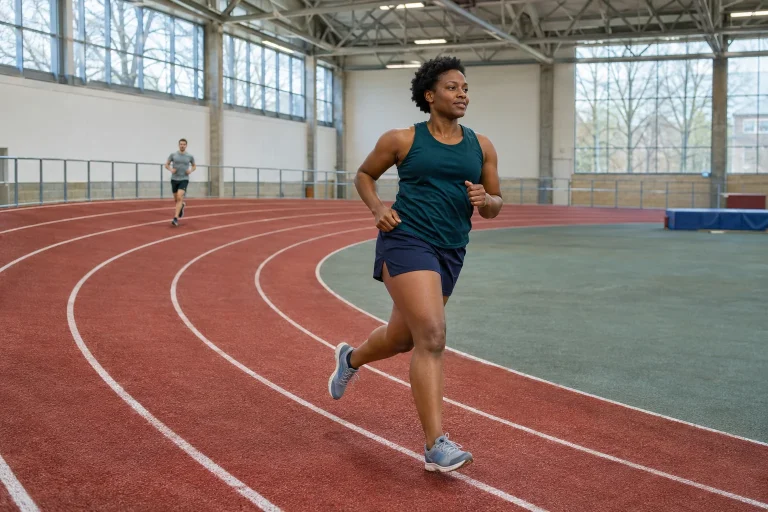
If a place is regularly too crowded for the planned task, route or timing choices become part of training. Another time, a quieter loop or a dedicated sports facility may help. A popular evening park will not offer the same conditions as an empty athletics track. Choose the setting to suit the task rather than forcing the task onto every environment.
Overtaking begins before you speak
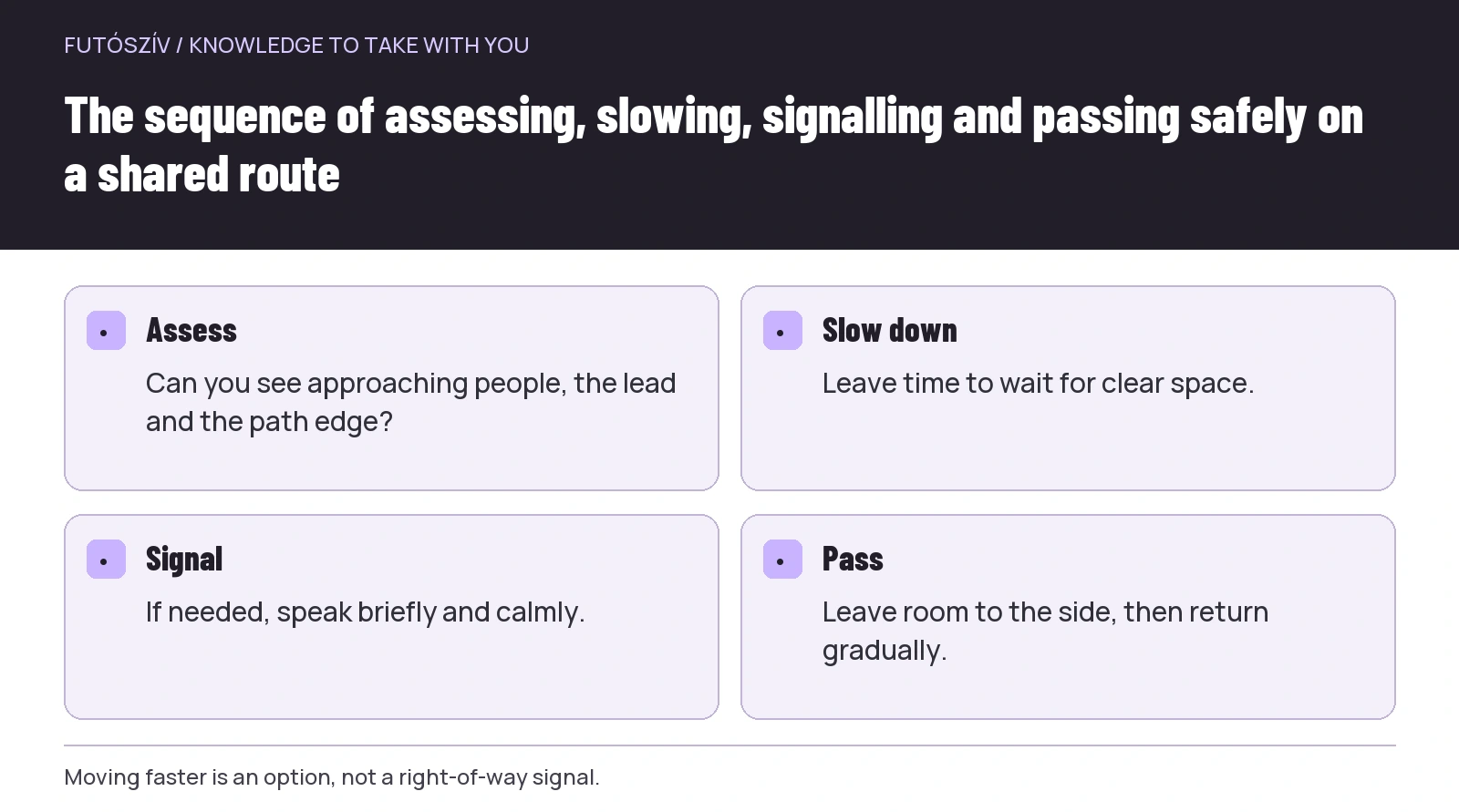
First assess the space. Is someone approaching? Can you pass without making the other person step onto the verge? Is there a lead, scooter or child who may change direction suddenly? If the gap is unclear, slow and wait. Someone approaching from behind sees more of the overall overtaking situation, so should not shift the whole decision onto the person ahead.
Use a brief, clear signal. A calm “excuse me, could I pass?” usually works better than shouting a side at the last moment. “On your left” and “on your right” can confuse someone without time to work out whose side you mean. Keep watching the response after signalling. Speaking does not establish that the other person heard or can safely move aside.
Do not treat walkers as a slalom course
It may be tempting to swing wide around a group and immediately cut back in front. That makes your movement difficult for approaching people and runners behind to read. Leave enough space when passing and return gradually. A close pass at speed can be especially unpleasant for someone who did not see you coming.
The same applies when changing surfaces. Moving onto grass, a muddy verge or into cyclists’ path is not possible for everyone. Wheelchairs, walking aids and pushchairs may genuinely reduce the space available. Do not assume someone else can step aside more easily. In most uncertain situations, a brief wait is simpler.
| Situation | A predictable response | What can surprise others |
|---|---|---|
| Two people walking and talking | Slow down, assess the space and signal if needed | Running between them |
| A narrow bridge or gate | Wait for the other person’s movement | Accelerating through the last gap |
| A pedestrian looking at a phone | More attention and distance | Assuming they will definitely give way |
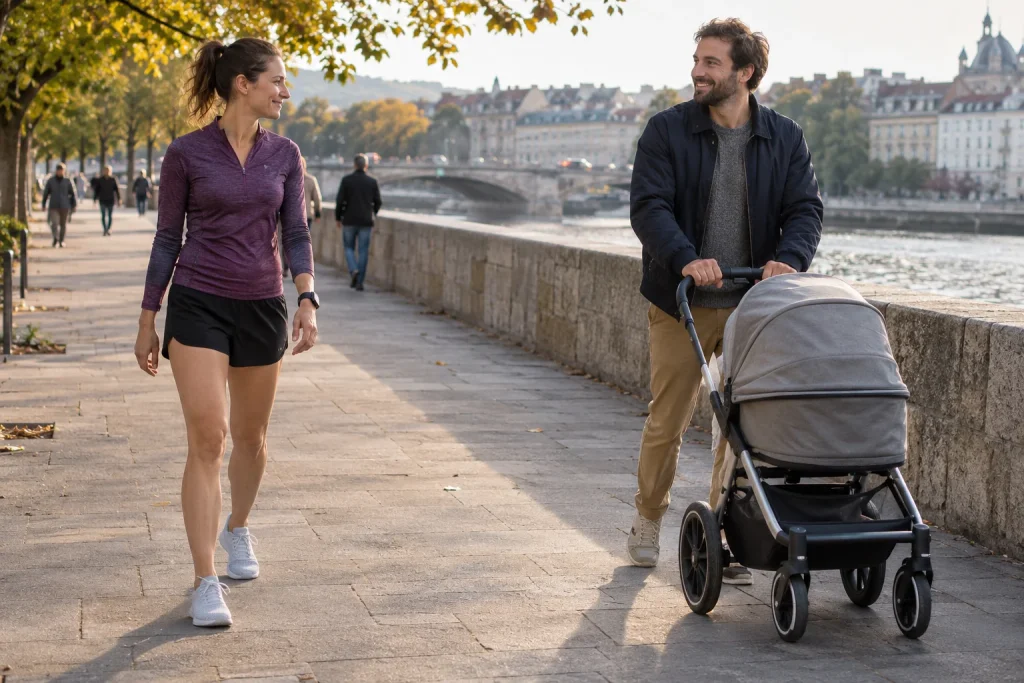
| A pushchair turning on the path | Approach slowly and wait for the turn to finish | Passing close to the front wheel |
| A running group approaching | Hold your line and allow enough room | Changing direction at the last moment |
 Enlarge diagram
Text version of the illustration
- Assess
- Can you see approaching people, the lead and the path edge?
- Slow down
- Leave time to wait for clear space.
- Signal
- If needed, speak briefly and calmly.
- Pass
- Leave room to the side, then return gradually.
When you switch to walking, others do not know your plan
A run–walk session is entirely normal, but the change is not always apparent from outside. Look around before slowing substantially or stopping. Where possible, move gradually towards the edge without blocking an entrance or crossing. A runner stopping suddenly in the middle can cause congestion just like an event aid station.
For shoelaces, your watch or phone, make a particular effort to find a calm place. A stationary person is harder to notice in time just beyond a bend, at the top of steps or in a narrow gate. A good stopping place serves more than your comfort: everyone else’s movement remains clear. Before restarting, check traffic rather than accelerating sideways into someone’s line.
Group runs need their space organised too
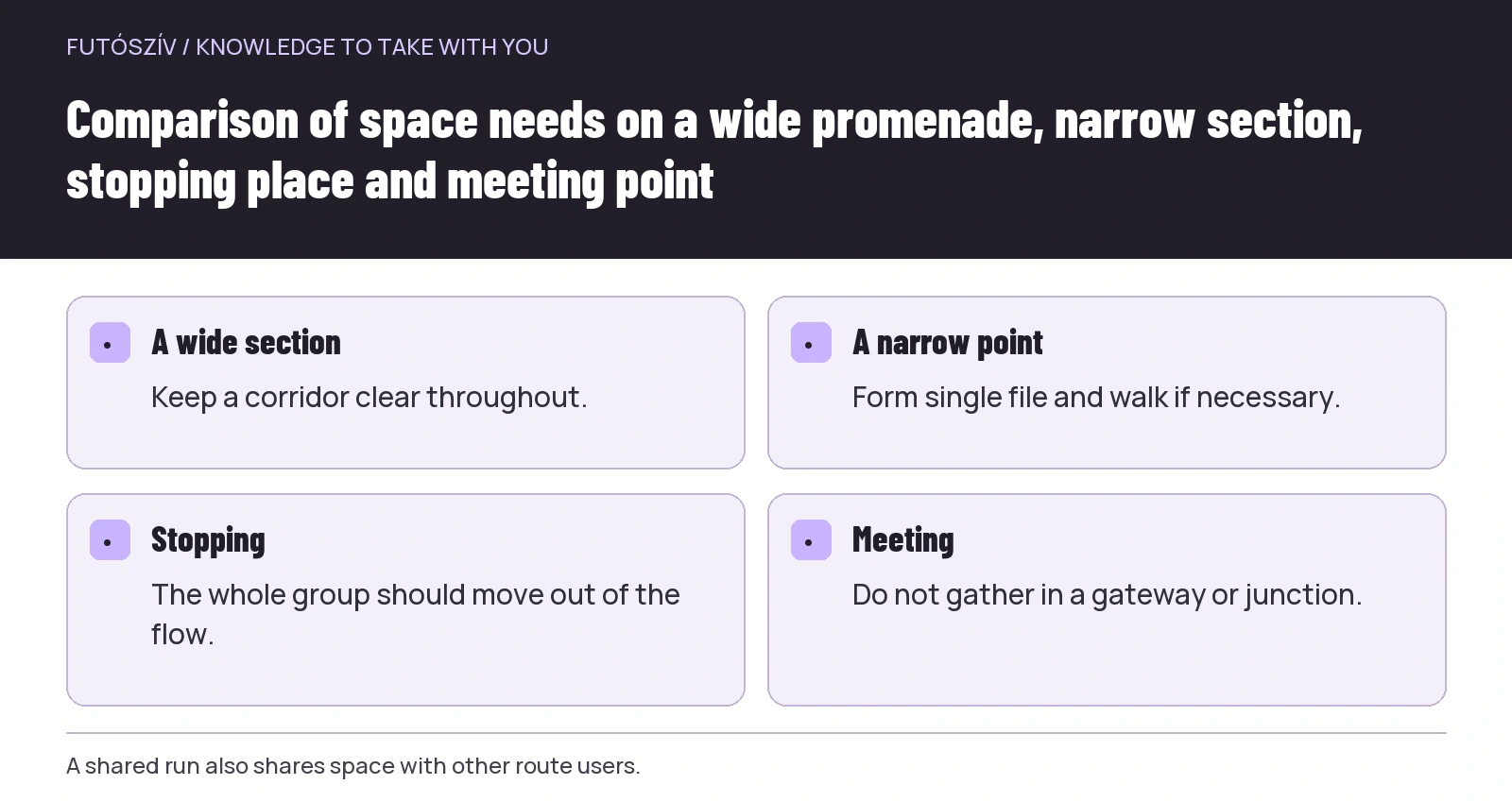
Six people chatting happily can easily occupy a promenade’s full width. From inside the group, this often goes unnoticed because everyone watches only the person beside them. Agree a simple signal for narrow sections and approaching people. Pass the leader’s signal to the back; more than the first row needs to narrow.
You need not run the whole outing in a rigid column. The point is to leave a clear corridor and form single file easily when needed. If someone at the front stops to check the route, the rest should not fan across the junction. Choose a wider place to one side for route discussion, then move on together.
The parkrun code of conduct also emphasises respectful participation and safe organisation during community runs. Apply the same outlook to a friendly run: the social experience includes considering people outside the group. An event does not make a park its own territory simply by running there regularly.
Do not let the meeting point become an obstacle
We often gather before a run at a recognisable gate, statue or stop. This is convenient until we stand in the gateway or in the path of people getting off transport. Put a precise location in the invitation but gather a few metres away on clear ground. The whole group need not block the pavement for a late arrival either.
If leading a community run, inspect the location at the meeting time. A space empty during the day may fill with restaurant terraces, market visitors or other athletes in the evening. Have a backup meeting point too, but communicate it beforehand rather than changing it at the last moment in a hard-to-follow message stream. Good organisation makes the first impression before running easier too.
Dogs and leads: read the situation first
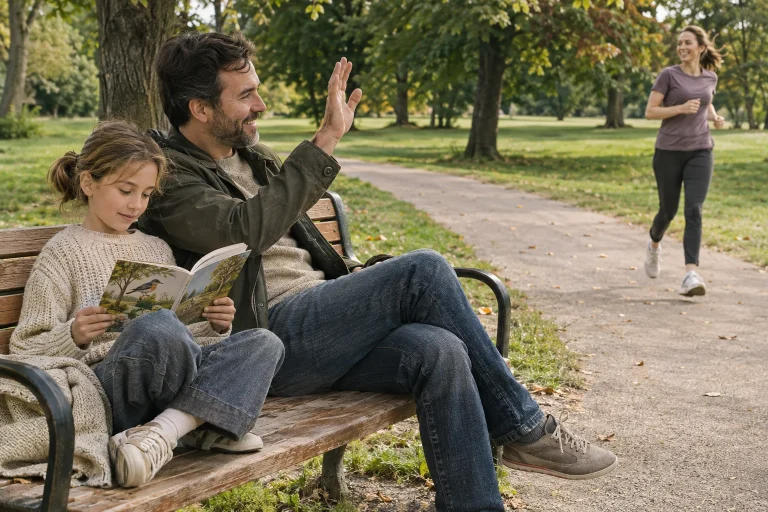
A runner sometimes notices the lead later than the dog. Look at the space between owner and dog as well as the animal’s position. Slow down if the clear passage is uncertain. Running between them is a bad idea even with a slack lead. A short, calm signal can help, but do not wait until the last moment.
When running with a dog, account for local rules and control of the animal. Other route users do not have to know your dog is friendly. Leave them distance and choice. Do not let the lead cut across the whole promenade, or encourage the dog to greet someone who is running or visibly trying to give space.
 Enlarge diagram
Text version of the illustration
- A wide section
- Keep a corridor clear throughout.
- A narrow point
- Form single file and walk if necessary.
- Stopping
- The whole group should move out of the flow.
- Meeting
- Do not gather in a gateway or junction.
Headtorches, music and phones
In darkness, light is also communication. When talking to someone, a headtorch can easily shine into their face. Tilt it down or stand so it does not dazzle them. A light showing your direction does not mean everyone can see you in every circumstance. Allow time to slow, especially at bends and surface changes.
When listening to music, follow facility and event rules and retain awareness of your surroundings. Music from a loud speaker extends your tastes across the whole promenade. Not everyone wants to participate in your run. Do not drift across the route while calling or looking at a screen; for a more involved task, first step aside somewhere safe.
Photos and video: people are in the background too
Running-community pictures can preserve good memories, but participation does not automatically mean everyone wants a close-up or public video. Before a group photo, allow people to step aside without making it awkward or asking for a personal explanation. Do not treat people outside the group as freely available scenery, especially for presenting an uncomfortable situation or conflict.
Do not stop in the middle of a narrow path to film or ask others to change direction for a better composition. In a section with many children or dogs, the best recording may be the one you do not make now. Shared memories do not require constant documentation. A planned group photo in a spacious place often says more.
Conditions change on urban routes close to nature
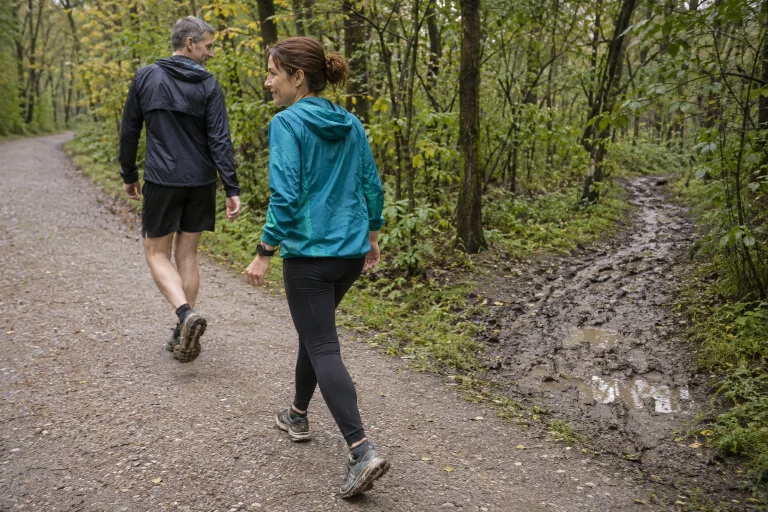
On a Buda woodland path or natural riverside area, urban habits are no longer enough. Mud, erosion, protected vegetation and a narrow trail mean detours can carry an environmental cost too. The Duna–Ipoly National Park visitor guidance emphasises designated paths, care for habitats and taking rubbish home. Running speed provides no exemption.
When detouring around a puddle through vegetation creates an ever-wider trail, the area pays for your dry shoes. Change your route instead at damaged or closed sections. Carry litter, gel sachets and tissues out just as you carried them in. “It will decompose” does not make the trace left for others invisible.
If conflict still arises
First aim to resolve the situation rather than prove yourself right at running speed. Slow or stop appropriately and explain briefly what happened. If you surprised someone, a specific apology usually helps more than explaining how many kilometres you have left. Treating the other person as an obstacle needing education does not resolve misunderstanding.
If someone speaks irritably, do not automatically match the volume. You may indeed have passed too close, or they may have misunderstood. Distance and brief, factual communication help either way. In a threatening situation, leaving safely and seeking help if needed matter more than winning an argument. A mocking social media video does not improve the shared route.
An easy-to-remember urban routine
Before leaving, consider what kind of activity the place supports at that time. While running, look ahead, allow reaction time and accept slowing at narrow points. Signal when passing if needed, but remain responsible for the decision after signalling. When stopping, leave the flow; in a group, watch the space occupied by everyone.
This does not make etiquette spectacular. Its value is precisely that it usually goes unnoticed: the walker is not startled, the wheelchair user is not forced onto a verge, the dog walker need not scramble and you can continue running. Urban running culture grows from these small, repeated decisions. What matters is not who used the route first, but whether everyone will still want to use it next time.
How Futószív articles are prepared: our editorial guidelines.