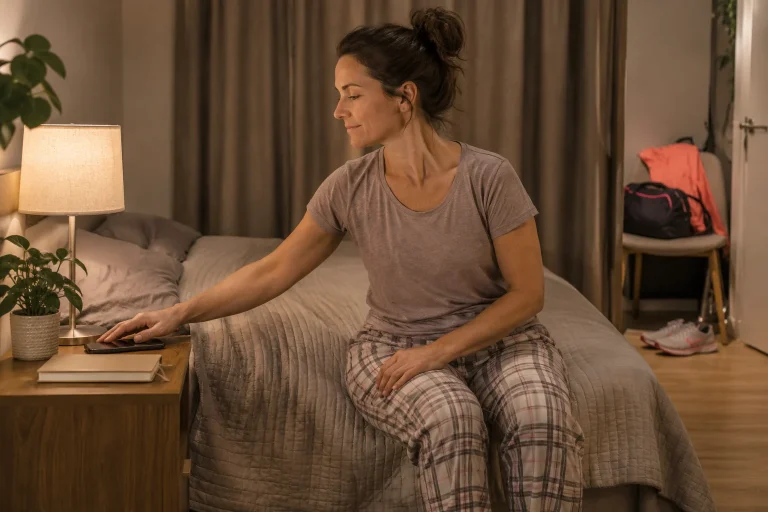
You have a great desire to run again, plans keep appearing and much less sleep than before feels sufficient. If living with bipolar disorder, discuss this change with your care team together with sleep and daily function. High energy can feel pleasant, but alone does not establish that fitness or exercise tolerance changed equally quickly.
This article does not label enthusiasm an illness or establish a mood episode from a running plan. It concerns coordinating personal warning signs of known bipolar disorder with sporting plans. If changes in activity and sleep need are familiar early signs for you, follow the agreed care plan rather than using another workout to test how long the energy lasts.
The change concerns more than feeling cheerful
Bipolar disorder can involve significant changes in energy, activity and daily function alongside mood. The NHS includes unusually high energy, reduced need for sleep, racing thoughts, irritability and impulsive decisions among possible mania or hypomania symptoms. The picture differs between people, and an elevated state does not always appear simply as happiness. NHS: bipolar disorder and possible symptoms.
In your sporting life, several details may combine: planning workouts or trips together that previously required separate discussion, considering usual rest unnecessary, or a companion noticing it is harder than usual to discuss a change with you. These are invented observation examples rather than a diagnostic list or proof that every similar plan means a mood episode.
Compare with your own usual function rather than the club’s highest-mileage member. How many new commitments are you taking on, how much are you sleeping and how well can you follow previous agreements? The timeline and effects on life may matter more to the care team than a striking weekly mileage rise. Sports data are part of the account rather than an objective mood examination.
Less sleep and feeling less need for sleep
Having insufficient time to sleep and feeling exhausted differs from feeling no need to rest after unusually little sleep while activity also changes. NIMH discusses reduced need for sleep among possible manic-episode symptoms. One short night cannot establish an episode; individual patterns, other changes and history need assessing together. NIMH: bipolar disorder, sleep and function.
General sleep information is not an individual mood-treatment guide. NHLBI says deficits from regularly insufficient sleep can accumulate, and daytime naps do not provide every benefit of night-time sleep. This does not establish one hour count or weekend catch-up recipe for every runner with bipolar disorder. Coordinate your sleep plan with a professional who knows your condition. NHLBI: sufficient sleep and sleep deficiency.
For discussion, mark sleep opportunity, estimated actual sleep and how you felt afterwards separately. Getting up for an early group workout differs from not wanting sleep for several successive nights. Notes do not replace examination, but can prevent “I am coping well now” concealing a major schedule change.
 Enlarge image
What does research on sleep loss say?
In Lewis and colleagues’ 2017 study, 3140 people with bipolar disorder reported whether, in their experience, sleep loss had related to earlier mood episodes. Responses showed individual differences; not everyone reported an association. The study relied on retrospective accounts, so does not prove the consequence of one runner’s bad night or reliably separate sleep change as a trigger from an early sign. Lewis and colleagues: sleep loss and mood episodes.
The practical lesson is not testing your tolerance of sleep deprivation. Instead, bring previous personal experience into the care plan. If similar change has preceded deterioration for you, report the current situation too. If unaware of such a pattern, new symptoms or unusual activity are still discussable. Uncertainty is no reason to collect more data through increasingly demanding days.
Another pilot randomised trial in 2015 studied individually and condition-adapted insomnia treatment alongside psychiatric care in 58 adults with bipolar I disorder and insomnia who were between episodes. Bipolar-adapted CBT-I showed more favourable results on several outcomes than psychoeducation. This was a small feasibility-oriented study rather than a general home sleep-deprivation or running programme. Harvey and colleagues: condition-adapted insomnia treatment.
Turn individual warning signs into a usable plan
NICE recommends a collaboratively developed risk-management plan recording personal triggers, early warning signs, coping strategies and available contacts. A family member may be involved where appropriate and agreed. The purpose is to avoid deciding everything for the first time in uncertainty when change occurs. NICE CG185: individual care and risk-management plan.
Connect practical running questions with that existing plan. Whom should you tell when sleeping less than usual and becoming much more active? When should the care team be consulted before an upcoming race or trip? Which chosen person do you want involved, and what may they share? Clarify these in a calm period too, rather than only after submitting another entry.
The plan should not depend on an automatic sports-watch alert. Sleep estimates, heart rate and load scores do not replace professional assessment. A changed daily rhythm can be useful information, but the display cannot decide whether enthusiasm, poor measurement or mood change is behind it. Keep personal communication and previously agreed actions central.
Do not let training momentum rewrite treatment
NIMH stresses following prescribed treatment, keeping appointments and arranging meals, sleep and activity into a routine. Treatment does not become unnecessary because you feel more energetic now. Do not skip medication or appointments to fit a race calendar. Discuss product-related symptoms with the clinician rather than choosing your own solution around sporting aims.
The particular medicine, activity in heat, fluid balance or unusual travel may raise product- and person-specific questions. Take the complete medication list and actual sporting plan to a doctor or pharmacist. This article gives no shared medication or fluid-quantity rule for bipolar disorder. Ask which instructions apply to your condition, medicine and actual programme.
Do not assemble your own treatment from online sleep methods either. The AASM insomnia guideline specifically notes that procedures restricting sleep opportunity may be contraindicated with vulnerability to mania or hypomania. “Sleep less to sleep better” is therefore not a freely copyable training addition. If sleep treatment is needed, assess suitability and method individually. AASM: sleep treatment and individual safety conditions.
What should you tell the care team about training?
Describe daily changes concretely and without judgement. The task is not deciding whether you are a good or bad athlete, but explaining what differs from usual function. The following table supports conversation rather than serving as a mood-diagnosis scale.
| Area | What can be described factually? |
|---|---|
| Sleep | Changes in opportunity, estimated duration and felt need for sleep. |
| Activity | New workouts, missing rest and unusual daily plans. |
| Decisions | Sudden entries, travel commitments or equipment purchases. |
| Communication | Change noticed by you or a chosen family member. |
| Care | Medicine use, follow-up and any recent adjustment. |
| Practical goal | Which approaching programme needs coordinating with the personal plan? |
You might say: “I have slept less than usual in recent days but started planning more training and travel. I would like to know how to use the warning plan we agreed.” This is a precise signal rather than self-diagnosis. Sudden activity need not be presented as a sporting achievement to be taken seriously, and changing plans need not bring shame.
Positive, realistic aims can describe movement’s future role too: companionship matters, you enjoy outdoor activity or want to retain individually appropriate exercise. These need not conflict with care. Discussion places sport meaningfully within treatment and daily life rather than replacing assessment with it.
 Enlarge image
The community should not make mood diagnoses
Running companions do not always see changes in sleep, work and home function. Others may interpret the same training enthusiasm as determination or enviable form. A club should not diagnose every enthusiastic person. If someone previously shared a personal plan and requested a specific supportive role, however, that commitment can be taken seriously.
A useful response instead of labelling is: “You previously said it was important to report changes in sleep. You are discussing more new plans and mentioned short nights. Would you like help contacting the person you agreed this with?” There is no need to win an argument about the other person’s state. Factual observation and support for agreed professional contact form a clearer role.
A community should not automatically reward abandoning rest or encourage ever greater commitments merely because someone shows much energy. Changing or skipping a programme should have a normal place. Personal diagnosis and care details remain within the circle chosen by the person concerned. Support is neither public mood monitoring nor constant surveillance of private life.
When is prompt help needed, and what does continuing mean?
NICE recommends urgent specialist assessment for suspected mania or severe depression. If the situation changes quickly, use your urgent-contact plan rather than waiting for the next race or routine review. Immediate danger, severe confusion or an immediate safety crisis requires emergency help, on 112 in Hungary. You need not observe every listed symptom or obtain certainty from a questionnaire first.
Decide how to continue with the care team according to your condition and goals. Bipolar disorder does not mean running is prohibited for everyone, and enjoyment of sport need not automatically become a symptom. Do not separate sudden unusual momentum from sleep and everyday function, however. An individual plan helps when it takes the whole history of change seriously alongside the feeling of energy.
Sources
- NHS – Bipolar disorder
- NIMH – Bipolar Disorder
- NHLBI – How Much Sleep Is Enough
- NICE CG185 – Bipolar disorder: assessment and management
- Lewis and colleagues, 2017 – Sleep loss and mood episodes
- Harvey and colleagues, 2015 – Bipolar-specific insomnia treatment pilot RCT
- AASM, 2021 – Behavioral and psychological insomnia treatments guideline
How Futószív articles are prepared: our editorial guidelines.