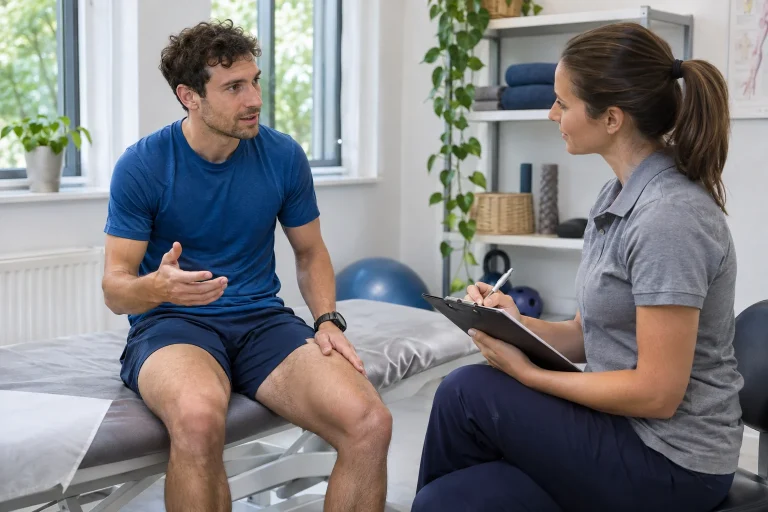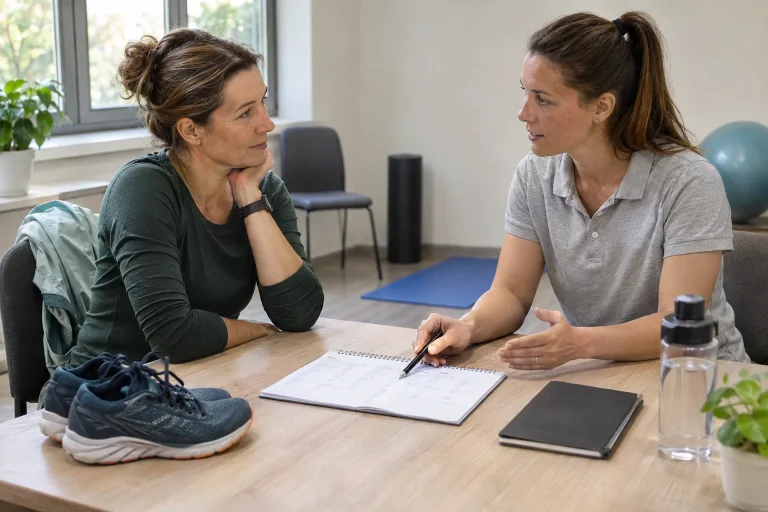
Getting ready used to take a few minutes: you got up, made breakfast, dressed and ran if time allowed. Now grasping a mug is hard, the first steps are awkward and stiffness follows much of your preparation. Asking which extra warm-up to add may not be the best starting point. Persistently changed morning joint function may also need healthcare assessment.
Stiffness alone does not name a cause. Duration, affected areas, swelling, pain and the rest of the day together form a meaningful account. A suddenly very painful, hot, swollen joint that is difficult to move or cannot bear weight needs urgent help, rather than a morning-routine test. The NHS knee-pain information links such changes with urgent assessment.
What does stiffness mean for you?
“I feel so stiff” can describe several experiences. Starting a movement may be difficult, comfortable range may narrow, bending may hurt or the whole body may feel cumbersome. Everyday language is not wrong because it lacks technical terms. Add what it means in a task: putting on shoes, pushing a door handle or getting out of bed became harder.
Distinguish difficulty moving around a joint from general sleepiness or whole-body fatigue. They can coexist and need not fit one box. You might feel alert yet struggle to move your fingers, or have unusual exhaustion alongside stiffness. That says much more than “recovery went badly”.
Your earlier function is an important reference. If mornings were always slower but usual tasks now differ, describe that change. If new, try to recall the onset. You need not compare flexibility or waking time with another runner. The consultation asks what happened to you, rather than who can leave earliest in the group.
Easing with movement does not explain the cause
Morning stiffness may ease as the day gets going, but that cannot establish one diagnosis. The NHS rheumatoid-arthritis information describes stiffness worse in the morning and after inactivity. Change during movement can therefore matter; easing does not prove harmlessness or simply a missing warm-up.
It is easy to make a rule of running or stretching until everything “loosens up”. That turns observation into an exertion test. Adding harder exercises also makes it harder to explain what an ordinary morning would have looked like. You need not provoke symptoms or increase pain for your account to be taken seriously.
A personal activity plan for an assessed condition is another matter. Discuss expected morning responses, changes and when to report back. Do not automatically apply an old plan unchanged to new symptoms. “I was told to move before” is history, rather than an automatic answer to longer stiffness or symptoms elsewhere now.
 Enlarge image
Degenerative and inflammatory patterns: orientation, not labelling
Osteoarthritis is often called degenerative joint disease, while rheumatoid arthritis is inflammatory. These names do not let you select a condition from morning sensations at home. The NICE osteoarthritis guideline combines certain age, pain and stiffness characteristics in clinical assessment. Prolonged morning stiffness is an atypical feature that may prompt consideration of another or additional cause.
The NHS says rheumatoid arthritis can involve general symptoms alongside pain, swelling and stiffness. Small hand and foot joints are often affected, and both sides may be involved, although not always. This is not a reason to diagnose yourself. It explains why the whole picture matters, rather than only the knee loaded during the last run.
“Wear” does not mean permanently abandoning all movement, nor does “inflammation” give a home medication rule. A clarified condition and individual plan matter. Labels often accumulate a large package of advice: shoes from one person, diet from another, complete sport avoidance from a third. Such general ideas cannot replace assessment of morning symptoms.
Why is minute thirty not a diagnostic gate?
A thirty-minute boundary often appears online. NICE’s clinical osteoarthritis recommendation combines shorter or absent morning stiffness with other conditions. This is a professional context, rather than a home test where minute twenty-nine reassures you and minute thirty-one provides a certain disease name. Symptoms and examination together guide actual assessment.
Even measurement start and finish can be unclear. Do you count from the alarm or getting up? Are you tracking complete disappearance or when usual tasks become possible? These differences do not make observation useless; they show why a second-perfect figure interpreted alone is misleading.
Give approximate time with function instead: “After getting up, my hands were still difficult to use when breakfast preparation ended.” If you did not watch the clock, say so. An estimate is more useful than an invented precise number. The aim is an understandable temporal pattern, rather than landing on the right side of a self-test.
Observe one morning through usual tasks
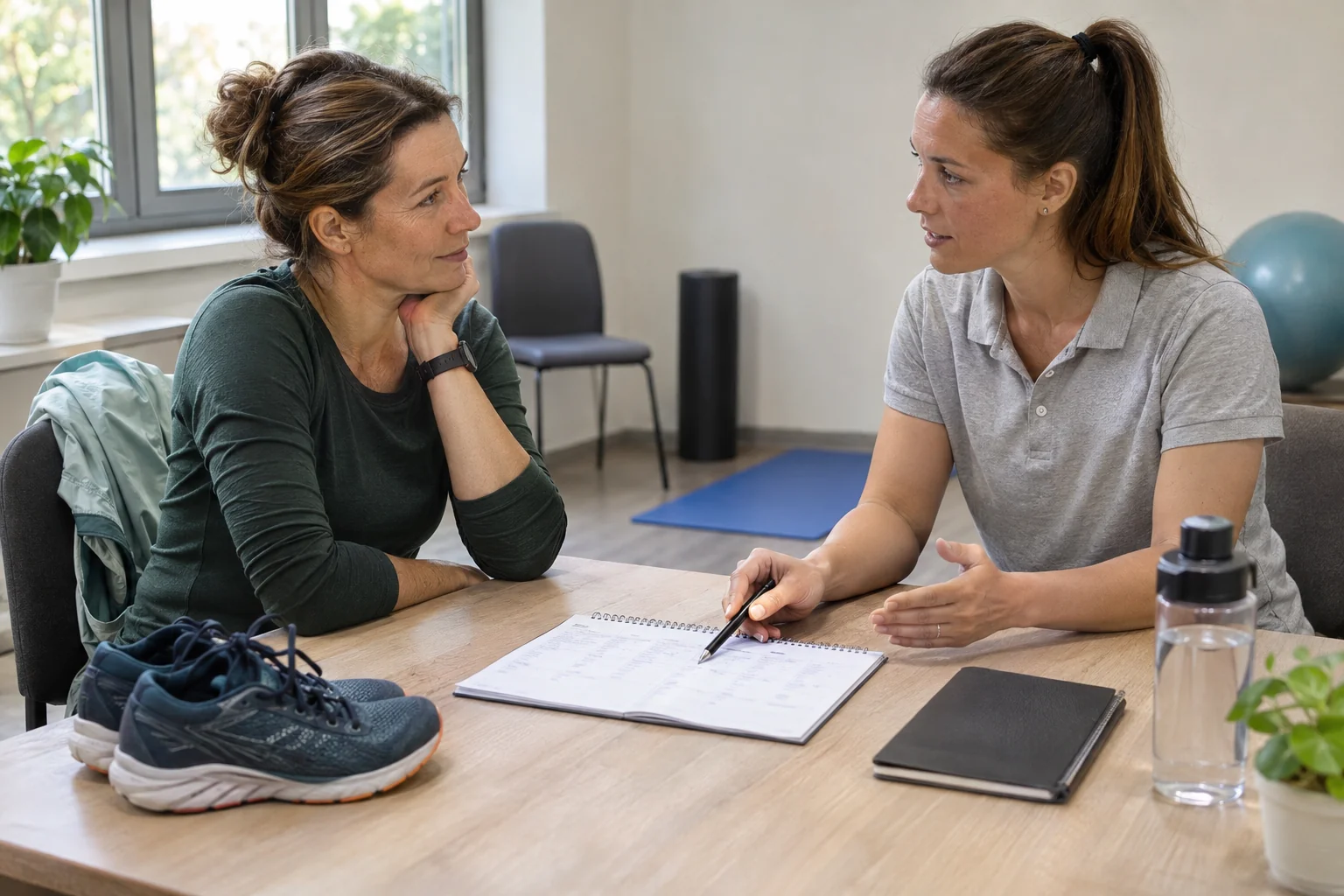
A brief note can cover when difficulty began that morning, what it obstructed and how it later changed. Shoelaces, keys or reaching the bus are concrete examples. Describe completed everyday tasks rather than arrange separate trials to discover what else hurts. The diary organises a story, rather than examines the joints.
Choose a manageable amount of detail. A long table every morning can direct more attention to recording than to life. For example: on Monday, the hands and right ankle were stiff, dressing took longer and symptoms eased by late morning. Note a non-running day too, so symptoms are not visible only on training days.
Absence of symptoms is data, but not complete proof. An easier morning does not erase previous weeks, just as one bad day cannot describe all others. Show fluctuations if present. Do not delay consultation because today’s morning improved and you feel only the worst state justifies showing the problem.
Describe morning logistics alongside running distance
Stiffness may affect the day long before running. Dressing, helping a child prepare, commuting or starting work can become difficult. These are not incidental details. They reveal changed function and meaningful support needs. “I could not run five kilometres” can conceal very different situations depending on whether leaving home was already hard.
If a tight departure creates rushing, ask for organisational help: another person may take a morning task or a non-urgent errand may move later. This is not treatment; it fits the day to current function. You need not make up a difficult morning through faster stairs or chasing the bus to appear equally productive.
Tell a running partner without assuming diagnosis: “My joints have been stiff on several mornings; I am arranging assessment and cannot promise the start.” This is clearer than daily excuses and needs no public health detail. Temporary uncertainty is an organisational fact, rather than evidence about persistence or belonging in sport.
 Enlarge image
Assessment does not stop at one laboratory result
Suspected persistent unexplained synovitis is a professional question. The NICE rheumatoid-arthritis guideline recommends specialist assessment, with particular urgency for circumstances including multiple joints or small hand and foot joints. This does not ask a layperson to diagnose inflammation; assessing suspicion is the provider’s role.
The guideline also emphasises that certain normal or negative blood results do not automatically close the question. Symptoms and examination need combined interpretation. An old general blood test or an internet-ordered test cannot replace assessment. Do not delay appropriate progress until every result from a self-selected package arrives.
Bring morning sequence, affected locations and everyday changes. Ask which causes are being considered, whether another specialist is needed and which changes to report sooner. UK guidance guarantees no Hungarian appointment or referral. Its message is to avoid dismissing persistent changed joint symptoms as poor recovery or waiting an artificially chosen period before asking for help.
Fit movement to the clarified condition
Assessment can lead to very different movement plans. NICE recommends tailored therapeutic exercise for osteoarthritis; that differs from prescribing harder running for every new morning symptom. Appropriate form, support and follow-up depend on the clinical situation. A running portal cannot select an exercise or dose from a few sentences about stiffness.
If you already have a plan, clarify mornings within it too. Under what changes can agreed activity continue, when should it be modified and whom should you contact if more joints are affected or basic tasks become harder? These are specific useful discussion points. You want to understand how actual symptoms fit your care, rather than obtain another general sports permission.
Assessment helps when it reconnects with life: is dressing easier, departure more predictable, and which tasks are comfortable again? Running distance is only one part. You need not hide a persistently changed start to the day behind ever-longer warm-ups. Accurate observation and timely professional assessment support later movement decisions based on the actual condition.
Sources
- NHS: rheumatoid-arthritis symptoms
- NICE NG226: osteoarthritis, diagnosis and tailored treatment
- NICE NG100: suspected persistent joint inflammation, referral and assessment
- NHS: knee symptoms requiring urgent assessment
How Futószív articles are prepared: our editorial guidelines.