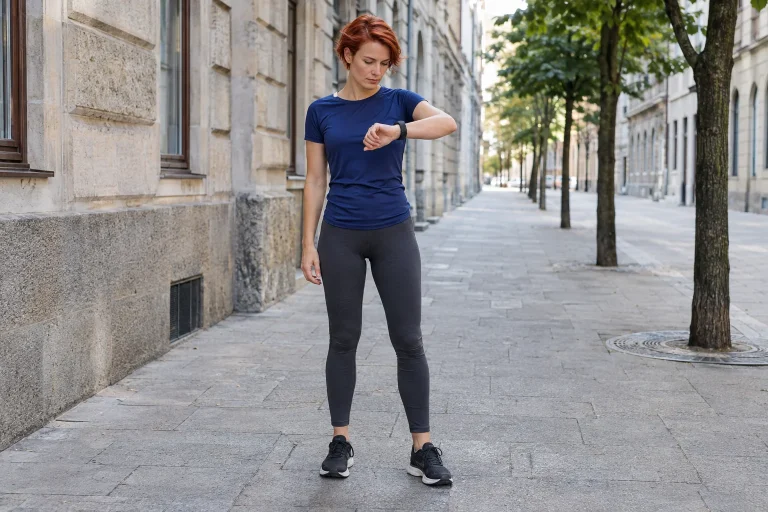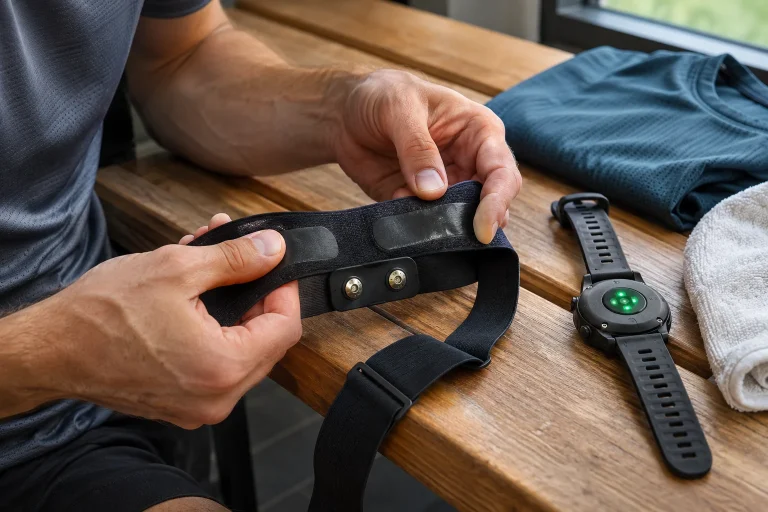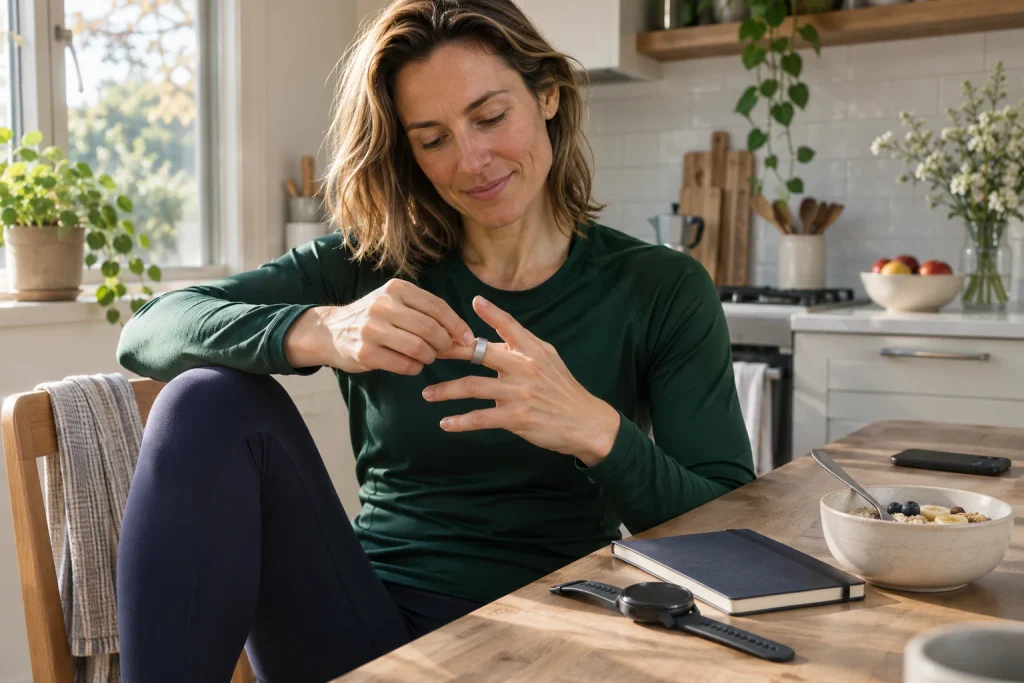
Oura Ring 5 is a smart ring primarily designed for everyday and overnight observation. For runners, sleep, resting signals and longer-term patterns may be of interest, while a running watch can still serve a separate role for routes, pace and intervals. Small size does not make the ring equivalent to wrist- or chest-worn devices for every sporting measurement.
This guide uses Oura documentation checked on 21 November 2026, rather than our own device testing or medical review. It addresses current Ring 5 sizing, membership limits and the updated workout-recording path. It describes current exports instead of the old Oura on the Web interface. In particular, the phone’s live heart-rate view now needs an external source; not all the ring’s data stream live onto the screen.
Ring 5: a new generation with its own sizing requirements
The manufacturer describes Ring 5 as a slimmer, lower-volume titanium design than Ring 4. It uses optical and temperature sensors alongside movement tracking. The current product guide lists sizes 6 through 13 without half sizes. Do not automatically convert these numbers to conventional ring sizes or earlier Oura models.
Ring 5 and Ring 4 sizing differs, so use the Ring 5 kit. Manufacturer instructions also ask you to check the generation number on the sizing-kit box. The number of a previously well-fitting ring may therefore be an unsuitable starting point. Proper contact is a measurement condition, rather than merely an appearance issue; an overly loose device creates different contact.
A plastic sizing ring is not a complete product sample: its weight and material feel differ from the final titanium ring. Consider size, finger, comfortable overnight wear and everyday work together. The desired colour should not take priority over being able to wear it without pressure or uncertain rotation.
A twenty-four-hour trial, rather than one quick fitting
Oura recommends trying its sizing ring for at least a full day, including sleep. Finger size can change through the day, so a few morning seconds cannot represent the whole wearing situation. The manufacturer primarily recommends the index finger, although the middle or ring finger may also suit. Stable, comfortable fit matters more than a preselected jewellery position.
Snug and restrictive are different. The ring should not cause pain, numbness or persistent pressure. Consider other hand use around training too: do you grip weights, walking poles or equipment requiring a firm hold? A soft-strapped watch and a rigid ring are mechanically different objects. Continuous data collection is no reason to force uncomfortable wear.
Your sizing notes can identify the finger, time and conditions of the trial. If unsure between sizes, use current manufacturer guidance and support rather than another runner’s finger size. Naming size and generation together also helps with later exchanges or accessories. Do not treat the ring as a universal size identified by one number alone.
Sleep, resting heart rate and Readiness are separate layers
The sleep section uses several contributors: duration, efficiency, sleep onset, timing and estimated stages describe different things. A longer night does not automatically improve every field. Oura Sleep Score is an assessment derived from data, rather than direct brain measurement. Do not call sporting observation of estimated stages a clinical sleep study.
Readiness discusses nine contributors, including resting heart rate, HRV balance, temperature change, sleep and recent activity. Personal averages need time to develop. HRV balance and the HRV classification in trend views may use different windows; every “HRV” label is not another display of the same instantaneous figure. Check the particular field’s meaning rather than only its colour.
Our interpretation example: Readiness drops after a demanding workweek although running distance has not increased. The system cannot by itself identify precisely which life factor caused the change. Personal wellbeing and contextual notes help interpret it. A high score cannot examine a painful joint, and a low score cannot diagnose disease.
 Enlarge image
Temperature deviation is not internal fever measurement
Oura’s temperature view shows night-time skin-surface changes against your own baseline. The manufacturer explicitly distinguishes this from core or basal body temperature. A deviation near zero means closeness to your earlier average, rather than a body temperature of zero degrees. Read plus and minus values alongside their reference.
A new or replacement ring may establish a new baseline, and the manufacturer also mentions initial hardware differences. If the curve changes on replacement day, retain that date in the log. Do not immediately attribute every jump to fitness, infection or hormonal change. A series spanning a device change raises different questions from observations using the same device and wear conditions.
Night-time ring temperature deviations cannot simply be transferred to checking heat strain while running. Daytime surroundings and running create a different measurement situation, and the displayed overnight average also concerns another time. If unwell, a familiar morning temperature curve does not override symptoms. The data remain supplementary context rather than replacing appropriate symptom assessment.
Workout recording in autumn 2026: automatic, live and manual paths
The current Oura Record a Workout guide describes three modes. Automatic Activity Detection suggests activity from worn-ring data, which you can later confirm, edit or dismiss. Live Activity Tracking is a separately started phone recording; adding an activity manually is a retrospective entry. They do not prove the same thing: a manual entry cannot create sensed heart rate afterwards for a section never recorded.
The 2026 description says Live Activity Tracking replaced the earlier Record Workout Heart Rate feature. Look for Start live activity in the current app rather than an old screenshot. Outdoor route, pace and distance use phone GPS. This is neither standalone GPS built into the ring nor evidence of the same map without a phone.
After a first trial, inspect sport type, start, duration and fields actually present. Accepting a detection and saving a workout correctly are not always the same action. If also importing from another watch, check for parallel entries. A log remains interpretable when you know which row is automatic and which comes from another recorder or manual addition.
Live heart rate needs an external sensor
Current Live Activity Tracking support says live heart-rate display requires a compatible external source. The ring does not stream its own pulse to the phone as live workout data; without an external source, ring heart rate may appear in the later summary. Outdoor route and pace can still come from phone GPS. These fields therefore have separate requirements.
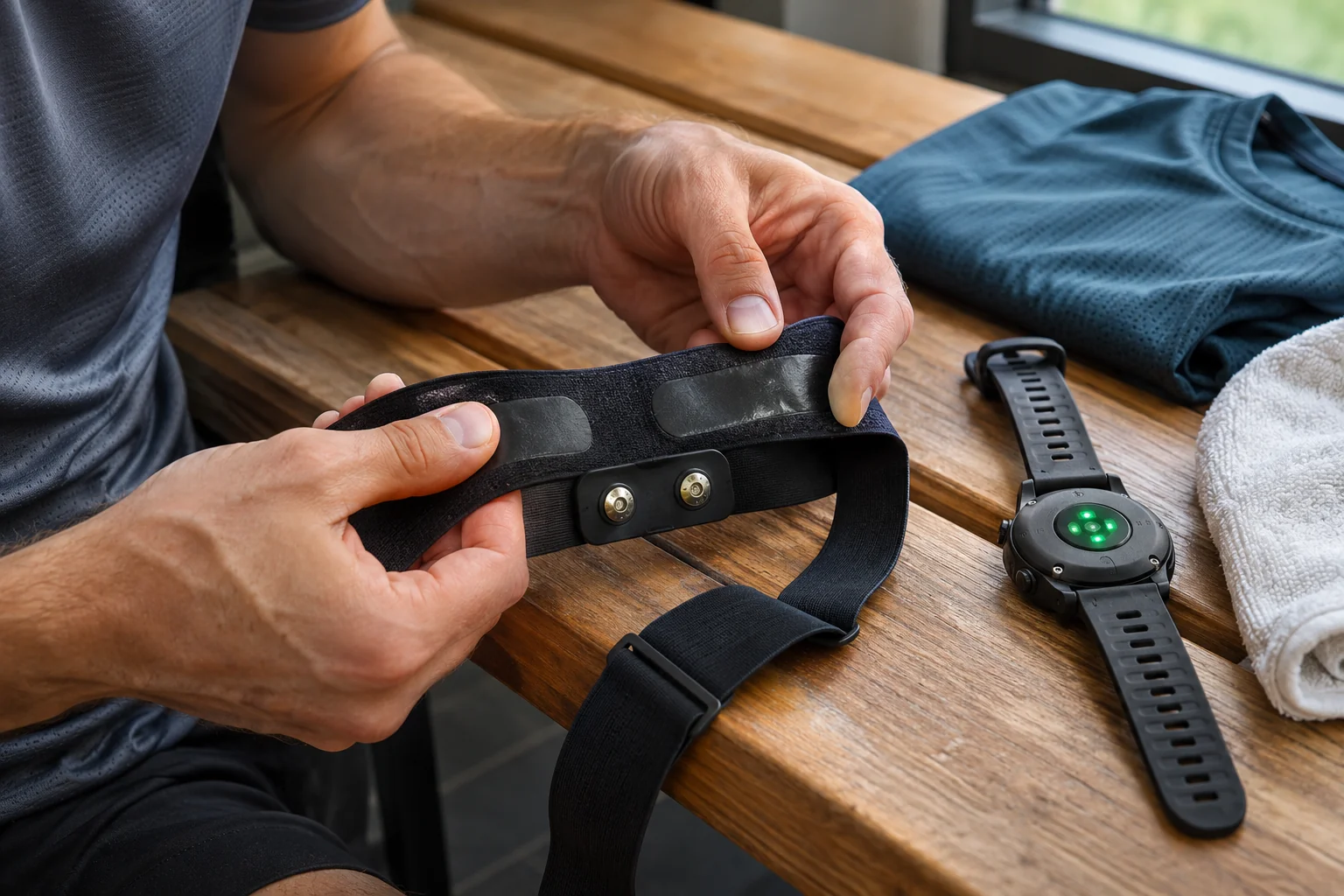
An appropriate external device sends heart rate through the supported BLE Heart Rate Service. Oura lists examples of chest straps and other devices, but “Bluetooth” alone does not prove compatibility. The sensor must have an available connection and actually be operating as a live heart-rate source. Documentation currently marks Live Activity Tracking through Apple Watch as unsupported.
One possible division is a ring for overnight observation, a running watch for the main route log and a separate strap for the intended live heart-rate source. You need not use all three, but if you do, make the paths clear. A completed workout imported into Oura differs from a sensor’s direct live connection. Review those connections through a short saved example.
Views without membership and the multiyear cost
Detailed Ring 5 Oura analysis requires active membership. The official membership page updated in November says non-members retain three daily scores, basic profile and app settings, battery status and Explore content. Detailed data and API access differ. Hardware price alone should therefore not be treated as the cost of the full future experience.
Cancelling membership differs from deleting an account and its data. Manufacturer information says a retained account’s data do not automatically disappear after membership ends, and a personal data download can be requested without active membership. Restricted detailed app views and downloading your own information are separate questions. Neither should be inferred from the other.
Separate the ring, any charging accessory and recurring membership on a cost sheet. Check fees and periods in the chosen country’s currency; we do not quote a US amount as a Hungarian final price. An initial extra month or retailer offer does not guarantee unlimited future membership. For planned multiyear use, identify which detailed views you will actually need.
Oura on the Web has closed; exports follow a new path
Oura’s official notice says Oura on the Web closed on 5 October 2026. Export instructions relying on an old web dashboard menu may therefore be misleading. Personal data downloads can be requested through Membership Hub, including without membership. The discontinued interface and retained download option are different services even when associated with the same account.
The export and sharing guide says preparing a download can take up to ten days. Shareable Reports is a separate summary PDF function, while the API is another app-connection route. A sleep summary for a professional may not require raw tables; a PDF may lack fields needed for personal analysis. Choose the format for the purpose.
Our spreadsheet example: do not read a duration stored in seconds as minutes. 21,600 seconds equal six hours; this is unit conversion, not an Oura measurement. Even a correctly downloaded file can be misinterpreted through wrong units or time zones. Retain the original export and mark changes in the working copy so interpretation stays traceable.
 Enlarge image
Battery and memory: nine days do not mean nine days of storage
The manufacturer typically specifies six to nine days of use for a new Ring 5, depending on use, size and settings. This is not our test result. Battery lifespan and duration per charge can also change. Checking charge matters particularly before overnight recording, as low power may leave detailed sleep analysis unavailable.
Product Safety & Use specifies up to three days of internal storage for Ring 5, while listing longer periods for earlier models. This differs from battery life. A ring still running on a multiday trip does not mean its first night’s data can wait indefinitely to sync. The manufacturer recommends daily synchronisation to avoid data loss.
Check firmware in the list for your own generation. October Ring 5 support separately lists version 2.1.39; Ring 4’s version on the same date differs. Updates may roll out gradually and require Bluetooth and sufficient charge. Do not label an assumed update benefit as a personally observed accuracy improvement merely because the software number changed.
Its place in the running week and practical wearing limits
The ring’s supplementary role may be convenient tracking of overnight routine and everyday patterns. If you do not wear a watch to sleep, a properly fitting ring may offer another experience. But running pace display, navigation and watch-button control do not move to your finger. The task, rather than the newest generation number, should guide the choice.
The manufacturer advises considering removal for weight gripping and strong-friction situations. Address trapped moisture and irritation rather than maintaining wear for a continuous score. A painful, swollen or discoloured finger with a difficult-to-remove ring requires professional care; we provide no home cutting method. Measurement convenience does not take priority over hand health.
Oura Ring 5 adds interpretable value when your observation goal is clear, membership affordable and recording conditions traceable. Readiness need not be a daily exam grade. Good fit, a clear data path and realistic conclusions are more useful together than one supposedly certain recovery percentage. Sleep data remain one part of the running week rather than its sole director.
Sources and verification context
Primary Oura Member Care documentation; checked on 21 November 2026. Functions are described from documentation rather than our own running or sleep tests.
- Ring 5 generation, sensors and design
- Sizing kit and 24-hour trial
- Sleep Score contributors
- Readiness and contributors using different time windows
- Night-time skin-temperature changes and baseline
- Automatic, live and manual activity recording
- Live phone GPS and external heart-rate source
- Non-member views and closure of the web dashboard
- Membership Hub export, reports and format
- Battery and overnight use
- Memory, care and ring-wearing limits
- Separate firmware lists by generation
How Futószív articles are prepared: our editorial guidelines.