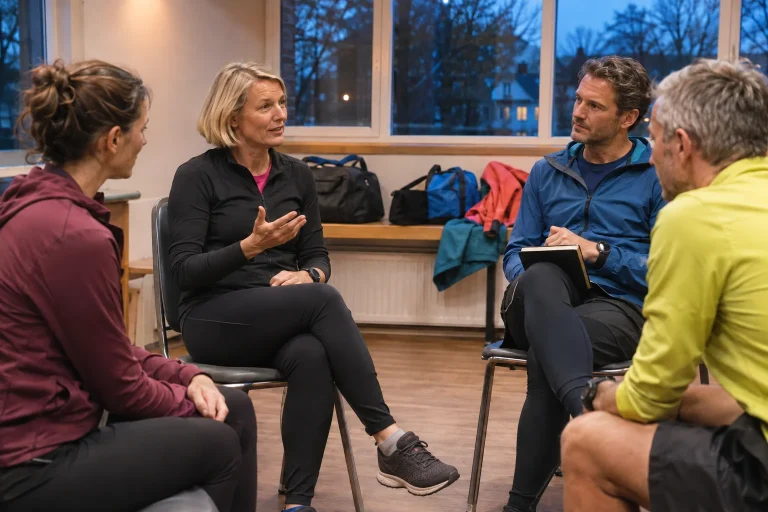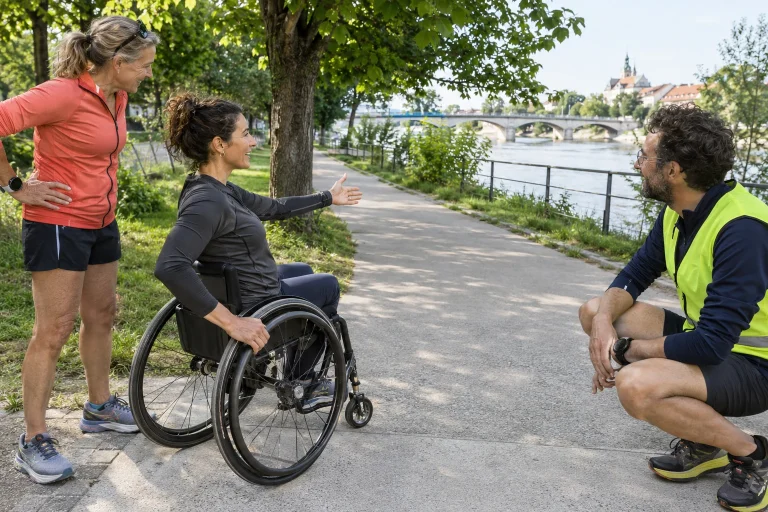
You find a nearby exercise group with a convenient time, and would enjoy some company. The advert, however, describes a weight-loss contest: group weigh-ins, rankings and transformation photos at the end. Some of these may interest you, or you may simply want to attend the exercise sessions. Before signing up, find out what participation actually means.
An exercise class, personal weight management and a public competition are three separate things. They may appear together on one poster, but they do not ask the same things of participants. Knowing the precise conditions helps you decide whether the programme suits you. Having a larger body does not mean you must automatically accept a weight-loss contest as your only route into exercise.
First separate the offer into its components
From the advert, identify what is actually offered: exercise classes, a personal training plan, dietary support, regular measurements, community events or a results-based competition. If something appears only as an attractive adjective, ask for a more precise description. Understanding the whole package takes more than knowing it is for beginners or promises a motivating community. The actual activities and commitments matter.
The NIDDK guide to choosing a programme also recommends asking about how it works, professional expertise, costs and results before signing up. This is US healthcare information, not an assessment of a particular Hungarian group. The practical point here is that the service should remain understandable when you set the advertising aside.
A sentence of your own can help with an enquiry: “I’m interested in exercising together, but I don’t want to take part in the weight-loss ranking. Is that possible?” The answer may reveal whether the class can be chosen separately or whether the full package is required. Do not assume either answer by guessing. With the information available, you can compare the programme with your own goal.
Clarify participation and publicity conditions separately
Attending an exercise session is not the same as appearing in a photo series, a ranking published with names or a social-media post. Ask which data, pictures and stories are collected, what is compulsory and what can be chosen separately. Read the provider’s own information. This article does not replace a legal assessment of privacy or contractual matters; its purpose is to keep the practical questions clear.
The NICE NG246 general principles of care emphasise individual circumstances and non-stigmatising communication when discussing weight. This is a healthcare guideline, not a set of rules written for running clubs. It can still help you state your own needs: a participant is more than a number on a scale, and discussing their goals does not have to become a public appearance automatically.
If you do not want to share a picture or result, say so before signing up. Also ask whom you can contact later if your request changes. A general statement that the group feels like a family is not enough: you need to know the actual practice. Your choice about online visibility may differ from how much you want to join a community in person.
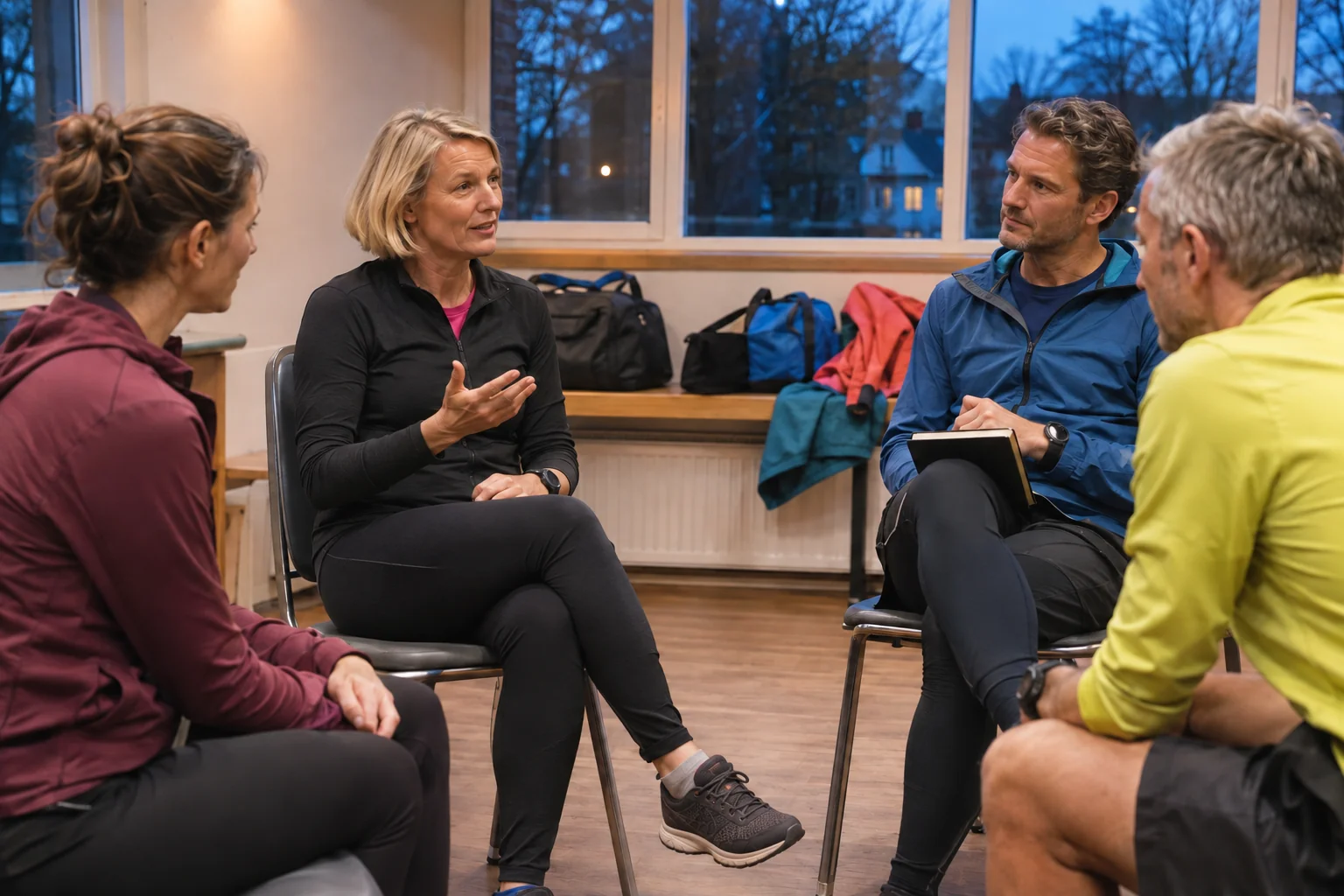
What do weigh-ins mean in the programme?
A private measurement linked to a personal goal differs from a compulsory weigh-in for a group competition. Ask why the data is needed, who sees it, how it is discussed and what happens if you do not want this part. A scale reading can provide information in an individual health process. In a ranking, however, it does not show someone’s overall health or comfort during activity.
Faster change does not prove that someone is progressing more healthily or with a better programme. A competition’s scoring conditions and professional follow-up are separate tasks. If prizes depend solely on weight change, clarify how different starting points and individual healthcare plans are handled. It is not your job to establish at home whether your circumstances are comparable to everyone else’s.
You can also mention tension about the measurement. If group weigh-ins or rankings put you under substantial pressure, that is important information when choosing. You do not have to change your feelings before joining the programme. Ask whether another form of tracking is available or whether you can choose a class where this is not the central element.
 Enlarge image
Understand the activity in relation to your individual starting point
The NICE recommendations on physical activity emphasise taking current physical ability and condition into account. A weight-loss goal does not make the same distance, pace or exercise appropriate for every participant. Ask for a specific description of the activity rather than simply a promise that anyone can follow it.
Does it involve jumping, rapid changes, stairs, getting down to the floor or using equipment? Who will personally show you a suitable alternative? What happens if you stop because of pain or another symptom? Modifications need to be understandable in practice too. “Everyone at their own pace” is useful when it is clear how the group organises that.
Suitability for a class and questions about an existing health condition cannot be resolved through the competition’s general motivational messages. If you have individual instructions, share them to the extent needed and ask which professional support the group relies on. Discuss the specific care question with the appropriate healthcare professional. The instructor’s role and medical assessment should not remain blurred together.
| Programme element | What to clarify before signing up |
|---|---|
| Exercise | Specific tasks, individual modifications and instructor support |
| Measurement | Purpose, process, access and whether it is optional |
| Competition | Ranking, prize conditions and the option to participate separately |
| Publicity | Practices for sharing pictures, names and results |
| Service | Full contents, costs, contact arrangements and ending participation |
The dietary element and professional background are separate questions too
If the group also provides a meal plan, find out who prepares it and which individual information they use. A shared document, a product package and a dietitian consultation are not the same service. The description does not always reveal a professional’s qualifications and role. You can ask whom to approach about a known condition, eating difficulties or questions about putting the plan into practice.
The NIDDK programme-selection guide also recommends clarifying products you must buy and charges outside the service. In your own comparison, therefore, look beyond the joining fee: which appointments, products, apps or supplements are required? This does not mean every additional cost is unjustified, but that you should know what you are committing to and whether it remains feasible over time.
Dietary advice should not override your own healthcare instructions. If a programme asks everyone to follow the same restrictions regardless of health conditions, review this with independent professional help before participating. The group’s enthusiasm does not replace clarifying whether the particular plan suits you. Asking whether you can choose only the exercise or community element is reasonable too.
Pressure and discomfort are not compulsory motivational tools
Not everyone finds competition difficult, but your own experience deserves to be taken seriously. If the rankings make you feel that skipping meals, compulsive extra exercise or constant body comparison is necessary, the situation goes beyond a simple registration question. You can talk to an appropriate professional about it too. A noticeable weight change does not have to happen before the pressure becomes real.
The NICE eating-disorders guideline states that the need for care cannot be determined from a single BMI value. If you are already receiving treatment, the group challenge needs to be considered in relation to your care plan. A public weight-loss contest does not replace therapy or individual healthcare follow-up. You can speak about your own difficulties even if others describe the contest as just a game.
Shaming instructions, jokes about bodies or being called to account in front of the group are not necessary conditions of exercising together. Ask how feedback is given and how participant concerns are handled. Part of a programme’s atmosphere becomes clear from the answer to a simple request for a modification. If your request is immediately interpreted as a lack of determination, that is important information for your decision.
Two fictional offers with the same advertising title
The first fictional group advertises itself as a weight-loss contest, but explains on enquiry that exercise classes can be chosen separately, personal data is not automatically published and individual activities can be discussed with the instructor. This still does not establish that the programme is medically suitable for anyone and everyone. It does, however, provide more specific information to compare with your own goal.
The second fictional group requires rankings, shared weigh-ins and before-and-after pictures for everything, and gives no clear answer about modifying tasks. If you are seeking only social exercise, the offer does not match your needs. You do not have to change your goal to fit the advert. Looking elsewhere is then not giving up exercise, but deliberately choosing the conditions of participation.
The two examples do not describe real providers and are not a rating system. They illustrate how different the content behind the same title can be. A brief advert may not show every detail, so asking questions has real value. Your decision also depends on whether the time, location and cost work in your life, not only on the mood shown in the advertising.
 Enlarge image
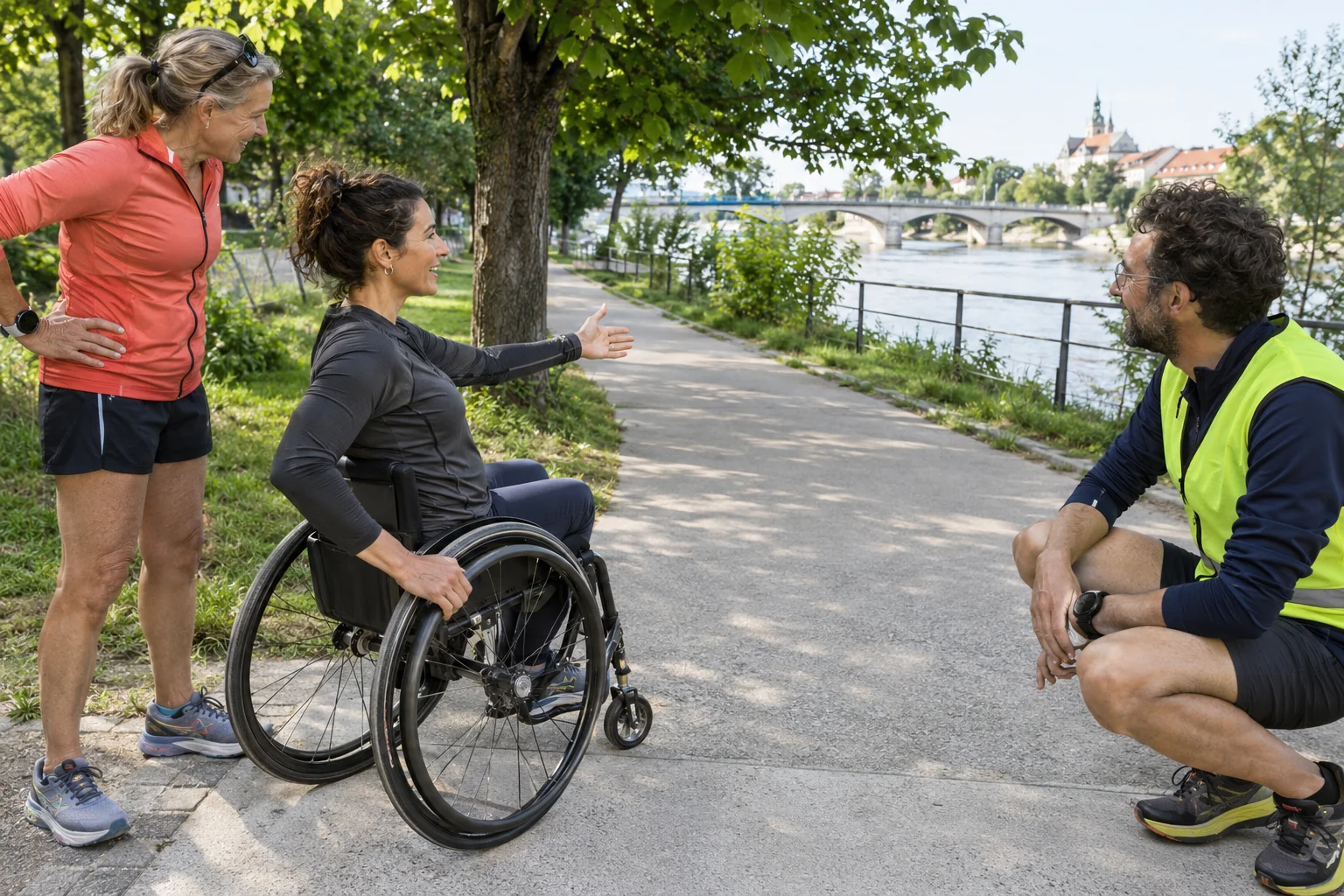
Participation without a weight-loss goal can have value of its own
You may be looking for regular shared time, learning movement skills or a form of sport you are permitted to do. NICE does not tie the benefits of physical activity solely to weight loss. This helps separate the purpose of exercise from the competition’s scoring. Even if weight loss is a personal healthcare goal for you, it does not necessarily need to happen through public comparison.
State what you would like to keep from the programme: its proximity, company or instructed activity. Then ask under what conditions those are available. Not every provider offers separate options, but it is better to know in advance. This also gives you more precise criteria when looking elsewhere, rather than having to work out from scratch what matters with every new group.
You do not need to defend your participation decision to others by referring to your weight. It is enough that you do not want certain parts of the package or are looking for a different kind of professional support. Joining an exercise community does not become legitimate only through a weight-loss ranking. Clearly naming your own goal helps you find a setting where the programme is genuinely about you too.
A brief message to the organiser
An enquiry does not need a lengthy personal introduction. For example: “I’m interested in the exercise class you advertised. I’d like to know whether I can attend without the weight-loss contest and public results, how exercises are modified and exactly what the fee includes.” This can reveal several important details without sharing unnecessary health information.
After the answer, consider what remains uncertain. If an important condition is still unclear, ask for clarification before signing up. A sound decision does not require expert knowledge of every detail; it requires an understandable connection between the commitment and your goal. Separating sport, measurement and publicity gives you more room to choose.
Sources
- NICE NG246: General principles of care
- NICE NG246: Physical activity and diet
- NIDDK: Choosing a Safe & Successful Weight-loss Program
- NICE NG69: Eating disorders – recognition and treatment
How Futószív articles are prepared: our editorial guidelines.