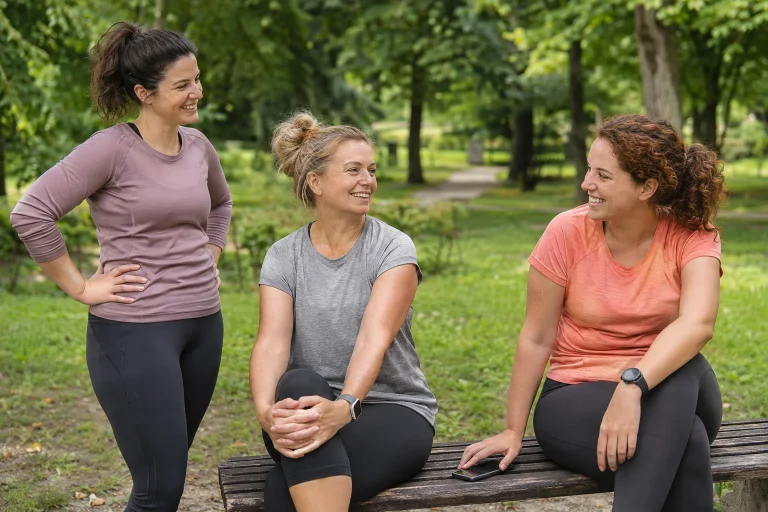
After a shared lunch, someone jokes that it will need running off tonight. At other times, the same sentence comes from within: I should not have eaten that; now I must add another lap. Running can easily become a way of settling accounts after food. If the thought regularly creates pressure, take it seriously without immediately labelling yourself.
Coordinating eating and movement can itself be a healthcare or sports-planning task. It is different when movement feels like punishment, a request for permission or making amends for eating. Body size or one workout’s length does not decide the difference. What matters is how the thought operates in your day, how much freedom of choice remains and its effects on eating, wellbeing and relationships.
You do not need a diagnosis before seeking help
If eating and movement involve persistent anxiety, rigid rules or a compulsion difficult to stop, seek appropriate healthcare support. The NHS information on eating disorders includes excessive exercise, very strict eating habits and avoiding food-related social situations among signs important to professional assessment. One thought does not establish an eating disorder, but you can discuss the difficulty without a diagnosis.
New chest symptoms, severe shortness of breath or fainting during exercise require immediate medical help. Do not try to resolve significant illness through more movement or treat it as completing a dietary rule. If you are already receiving eating-disorder treatment, follow your individual activity instructions and tell the care team about changing urges.
You do not need to prove the situation serious enough for an initial conversation. Explain that running often feels compulsory after eating and that departing from this is difficult. A GP can help assess health and find appropriate specialist care. The aim is attention to physical and psychological connections, rather than more exercise discipline or weight-loss advice for something actually causing pressure.
What does the idea of making amends change?
Making amends assumes something wrong happened. Eating can become a moral event: you were good or failed, deserve something or must pay it back. The running programme then acquires another task. You no longer set out because it was planned or you want the experience, but because an internal rule says you owe something.
An everyday example clarifies this. One person happily meets a friend after dinner for agreed activity. Another heads to the same place solely because staying home after eating feels impossible. The visible activity is similar, yet the inner situation may differ. The aim is not diagnosis from a picture, but making room to discuss experienced compulsion.
Reduced freedom can appear concretely. A changed schedule is hard to accept, rest feels uncomfortable or a run’s length is retrospectively matched to a meal. These need not be listed as personal faults. They are useful descriptions of what happens. To understand change, name the situation and feeling, not only completed kilometres.
Body size does not determine how real the difficulty is
The general care principles in NICE NG246 state that eating disorders can occur at any weight. The NICE NG69 eating-disorder guideline advises against using a single measure, such as BMI, to decide whether treatment should be offered. A larger body does not prove compensatory urges harmless, and lower weight does not replace individual assessment.
This matters because people sometimes name the same behaviour differently according to body shape. One person receives concerned comments about excessive exercise; another is praised for discipline. In a conversation leading to help, specific behaviour and changes in functioning matter. You do not first have to look the way you imagine someone with a problem should.
A healthcare weight-management goal and anxiety around eating can coexist. They should not be handled through unrelated, conflicting instructions. Raise both with your care professional so support can be coordinated. This article does not determine your diagnosis or treatment order; it helps prevent a difficulty being hidden behind one body-size figure.
 Enlarge image
Language in a running community can shape the situation too
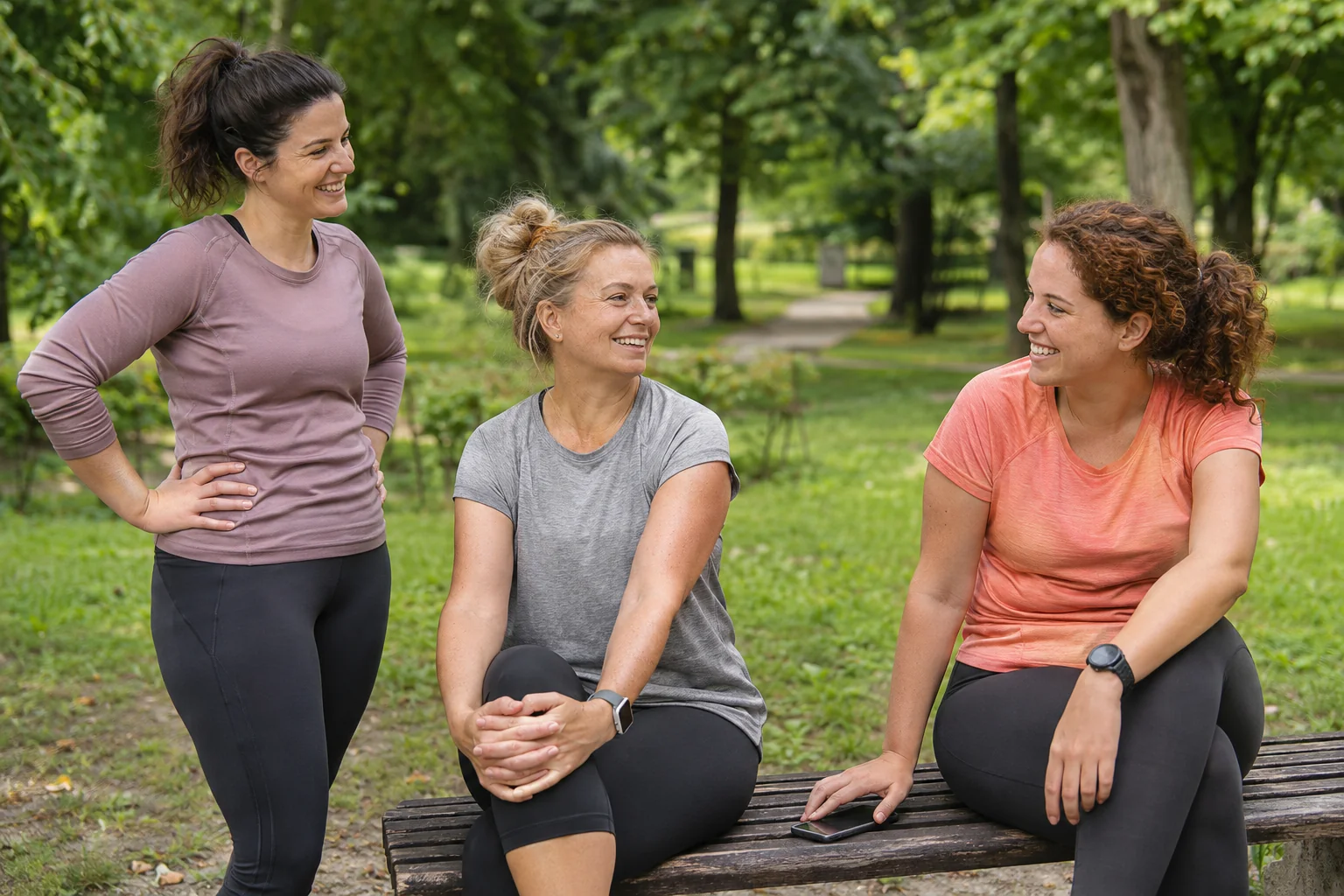
Jokes about working off food, being naughty or cheating are familiar in many groups. They may still burden you. You need not argue with everyone to request different language. For example: ‘I do not want to balance food against running at the moment.’ Or: ‘Let us talk about the programme we planned instead.’ The statement describes your need rather than judging the other person.
A group leader can present the session through its actual sporting task rather than as punishment for yesterday’s meal. Praise can recognise thoughtful organisation, participation or a learned task. Everything need not connect to calories and body size. Community atmosphere is not treatment, but can make expressing needs honestly easier or harder.
If you do not want to share health details, a practical boundary may suffice. Today you follow the agreed plan, decline extra laps or ask for a particular kind of comment to stop. You choose how much explanation to give. If the environment repeatedly mocks that or adds pressure, another group or participation format may be worth considering.
Renaming a goal involves more than a positive sentence
Calling running wellbeing instead of compensation does not necessarily change the pressure behind it. Understand the specific decision situation. What happens when plans change? Does rest feel acceptable? Does eating change because you did not run that day? These are discussion questions, not self-scoring test items.
Work with a professional can explore connected thoughts, situations and behaviours. NICE NG69 emphasises assessing individual physical and psychological health and providing appropriate specialist eating-disorder care. An online motivational exercise or new dietary rule does not treat the problem. With a known eating disorder, NG69 recommends stopping excessive exercise. Do not continue compensatory exertion, and handle any later movement according to a plan agreed with your care team.
You can still name your interests: you enjoy the park, miss company or feel curious about a future sport. These goals can help discussion, but you do not need to start a new programme immediately to prove change. Appropriate support may include first clarifying your relationship with movement and necessary healthcare conditions.
What should you describe in the first professional discussion?
You do not need diagnostic language for your account. Time and everyday details help: when does the urge to compensate for eating arise, what do you do then, and how does it affect sleep, work, company or planned sport? Mention changes in wellbeing or eating too. The aim is showing the whole situation, not only an exercise amount.
A short fictional example: ‘If I feel I ate more, I go out even when I want to do something else. I find it hard to stop thinking about it.’ Another: ‘If I miss running, I change my food too, and it creates a lot of tension.’ These do not establish diagnoses. They help professionals understand the thoughts and behaviours behind seeking help.
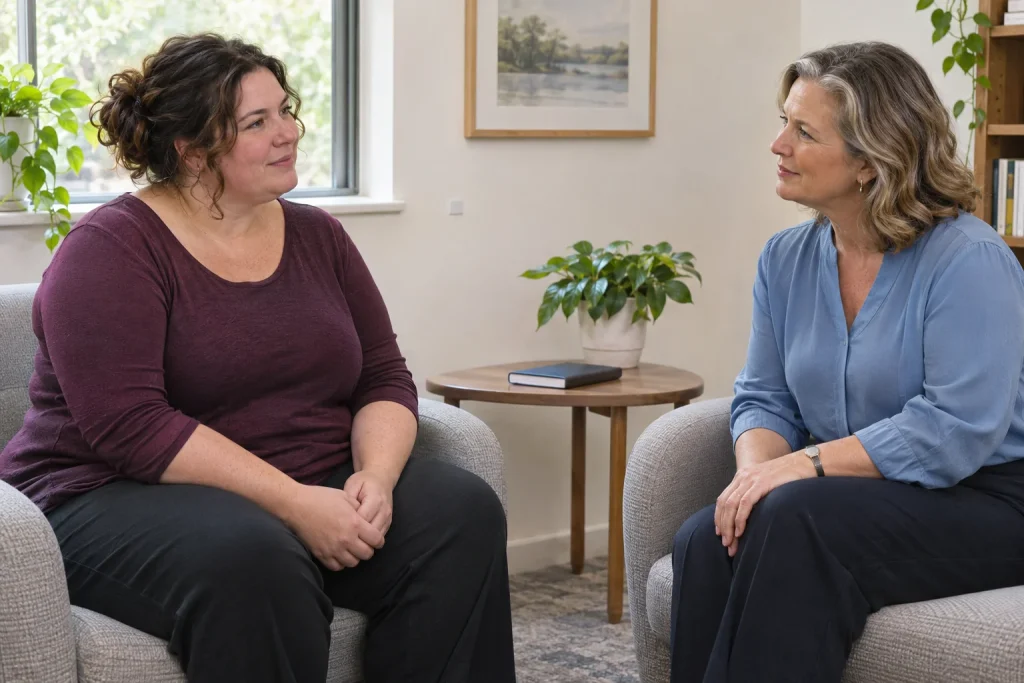
The NHS notes that seeking help can be difficult, and having someone trusted attend may help. If you want that, agree beforehand what support you need: accompanying you, helping remember questions or staying for part of the discussion. They do not need to speak for you entirely. Your experience matters, even if describing it coherently is hard.
| Part of the situation | A specific description |
|---|---|
| Triggering situation | When does the idea of compensating after eating appear? |
| Behaviour | How does it change exercise or eating? |
| Experienced impact | What tension and everyday difficulty does it cause? |
| Support needed | What help do you need with assessment and the next step? |
What can a friend do without becoming a monitor?
If worried about someone, a specific observation and compassionate question are a better beginning than judging their body. The NHS guidance for supporting someone with an eating disorder emphasises listening and supporting access to appropriate help. Ask how they feel and offer to accompany them to a professional discussion. You do not need to collect diagnostic evidence.
Avoid automatically praising weight loss or saying that at least all the movement is useful. That may be part of the difficulty. Monitoring every meal and workout is not helpful either. Supportive presence and professional care have different roles; confusing them can create further tension.
Practical help might involve arranging an appointment, time for calm conversation or respecting that the person does not want calorie and body-size talk. If a care plan exists, clarify suitable support with them and, where needed, their care professional. You do not need to invent therapy rules or negotiate running length with them.
 Enlarge image
Tracking should not become another compensation system
Observing the situation may help professional discussion, but need not become another scoring system. If detailed food and exercise records increase pressure, mention that too. A few short descriptions may be sufficient. Adapt tracking to individual support rather than compulsory completion of a generic internet diary.
An app target or community streak should not override the care plan. If a feature repeatedly steers you towards food accounting, discuss its role. This does not mean everyone must abandon all sports data. In your situation, identify what helps and what maintains pressure difficult to manage alone.
Change need not be measured by never again thinking an old phrase. Support and follow-up aim to understand functioning and assist individual care. A returning difficulty can be reported; it does not prove you unworthy of help. If already working with a professional, bring changes and uncertainties back to that work.
Your relationship with movement can be more than accounting
Loving running and struggling with associated pressure can coexist. Goals can be discussed differently when food-related guilt and chosen movement each receive attention. You do not have to blame sport automatically, or call every difficulty a lack of motivation. Appropriate help seeks to understand your whole situation.
An initial step may be saying: ‘Distance is not my main difficulty now; it is feeling that compensation is compulsory.’ That opens a different discussion from requesting another training plan. Body size does not determine whether your difficulty deserves attention. Eating does not need making up for through running, and your relationship with sport deserves to be shaped by enjoyment, choice and health needs too.
Sources
- NICE NG246: General principles of care
- NICE NG69: Eating disorders – recognition and treatment
- NHS: Eating disorders – overview
- NHS: How to help someone with an eating disorder
- NHS: Fainting
- NHS: Shortness of breath
How Futószív articles are prepared: our editorial guidelines.