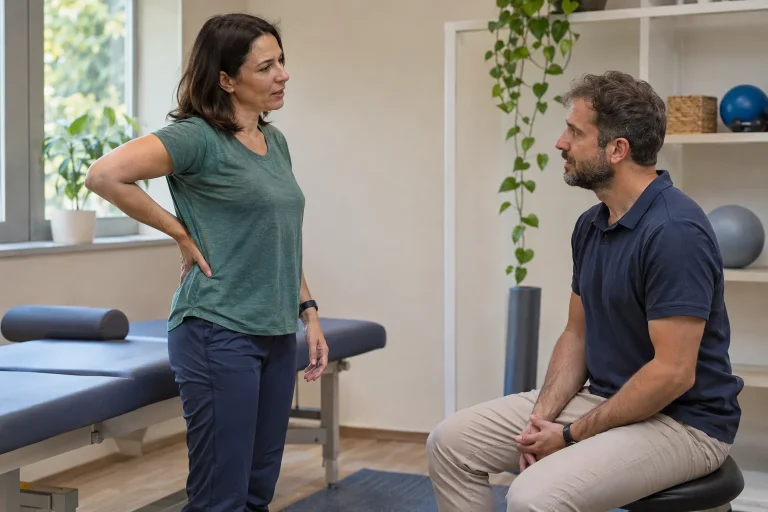
You have a dermatological history because of psoriasis, but as a runner you assume new joint stiffness is overuse. It is easy to treat these as separate stories. Nevertheless, it is worth describing them together at consultation: new, recurring joint symptoms alongside psoriasis may raise a connection requiring individual assessment. This does not mean every pain is an inflammatory joint condition.
This article helps identify which symptoms and history to bring to the discussion, when to ask about rheumatological assessment and why automatically blaming training is insufficient. It does not diagnose, offer a home provocation test or choose a running workload in place of individual examination.
Why might skin and joints enter the same discussion?
Psoriatic arthritis, or PsA, is a long-term inflammatory joint condition that often occurs alongside psoriasis. The NHS describes pain, swelling and stiffness, noting that not everyone with psoriasis develops it. It is therefore worth reporting the connection between these histories, but the skin condition’s name alone does not diagnose new joint symptoms. NHS: Psoriatic arthritis.
According to the American College of Rheumatology, the condition can affect one or several joints, and symptoms around the back or pelvis may also arise. Skin and nail changes, symptoms and physical examination all matter in assessment. You need not organise every sign under a single disease beforehand. ACR: Psoriatic Arthritis.
Your role is to tell a new clinician too about the already known dermatological diagnosis, previous treatment and onset of joint symptoms. Do not assume every document and piece of information is automatically available. An existing report or brief summary can help connect the history in the consulting room.
Describe the new symptom’s timeline independently of running too
When did stiffness begin, which area does it affect and in what situation do you notice it? Is it already present in the morning, noticeable after sitting or only during a particular activity? Timing associated with training is one piece of information, rather than a ready-made explanation. The full daily pattern can help individual assessment.
The NHS also describes symptoms that are stronger in the morning and change with movement in PsA. This does not mean that feeling easier after moving has certainly identified the condition, or that more running should treat it. Describe the circumstances of improvement and ask individually about appropriate activity. You need not prove the pattern with a trial run.
If skin symptoms are longstanding but joint symptoms are new, highlight that difference. The histories need not start in the same week to belong in one consultation. Also say whether a similar joint episode occurred before, what assessment took place and what has changed since.
Report swelling and morning stiffness alongside everyday consequences
Describe where swelling is visible or felt and when you noticed it. You need not determine whether it truly originates in a joint by pressing it or performing comparative movements. If you are uncertain what you saw, say so too. Establishing the finding belongs to individual examination; your observation is an important starting point.
Add an example to the word stiffness: is dressing, standing up, handling an object or your usual morning start harder? A change in daily tasks may be understandable instead of an exact number of minutes. You need not test bending forward, maximal grip or repeated standing. Discuss experiences that occurred naturally.
Pain, difficulty moving and fatigue are separate information. If pain is milder but daily function remains difficult, that matters too. The NHS also lists reduced energy among possible symptoms. You need not connect every symptom with certainty; it is worth sharing your overall condition with the clinician.
 Enlarge image
Nails and other history can be mentioned without becoming a standalone test
The NHS and ACR also describe nail changes and swelling of an entire finger or toe among possible symptoms. If you noticed these or they were assessed previously, say so. However, do not diagnose yourself from the appearance of your own nail or digit. Similar-looking changes may have other causes requiring individual differentiation.
Report previous skin treatment and regular medicines too. Planning care may depend on what treatment you receive, what you experienced with it and who follows you. You need not choose a treatment sequence yourself from drug names or another patient’s programme. Do not independently change existing guidance for sport.
If there are new symptoms elsewhere, do not omit them because the main question concerns a joint felt during running. Bringing symptoms together is the professional’s task. Retain the original observation and timeline in your account, rather than reshaping it to fit a disease pattern read online.
Annual assessment is no reason to wait with a new symptom
NICE’s psoriasis guideline recommends regular annual assessment for psoriatic arthritis in people with psoriasis. If the condition is suspected, however, it considers prompt rheumatological assessment warranted. This is a clinical care framework, rather than a Hungarian appointment-booking rule. The practical lesson is not to wait only for a distant routine review when symptoms are new. NICE CG153: assessment and referral.
A screening questionnaire may help care, but does not replace the whole history. NICE notes, for example, that PEST does not detect axial arthritis or inflammatory back pain. An apparently favourable score should therefore not cause you to omit actual back or other symptoms from discussion. The questionnaire’s role needs interpretation within care.
When making contact, you can say that you have known psoriasis and new, recurring stiffness or swelling, and want to know whether rheumatological assessment is warranted. You need not bring a ready-made diagnosis. A precise question can help present dermatological and musculoskeletal histories as one connected account.
A running-related origin is a hypothesis, rather than an examination result
As a runner, your last long session or changed programme may seem an obvious explanation. Describe that history without closing the question with it. Events occurring in sequence do not prove running caused every symptom. Skin-disease history and the daily symptom pattern are equally parts of assessment.
It is also incorrect to conclude that every new joint pain alongside psoriasis must be PsA. The NHS mentions several other possible conditions with similar symptoms. The purpose of individual assessment is precisely to weigh these possibilities within the current history. Your role is to pass on details you definitely observed.
If you had a previous sports diagnosis, describe when it was given and for which symptoms. Name what differs now too: a different location, morning symptoms, swelling or changed daily function. An old label does not automatically make a new history known. This may be information requiring fresh assessment even if it affects the same joint.
Examinations and findings serve the individual question
Alongside history and examination, the NHS describes laboratory, joint-fluid and imaging tests when needed. You need not assemble your own test package from this. Ask which possibility the clinician wants to clarify, why that test is chosen and how the result connects with the next step.
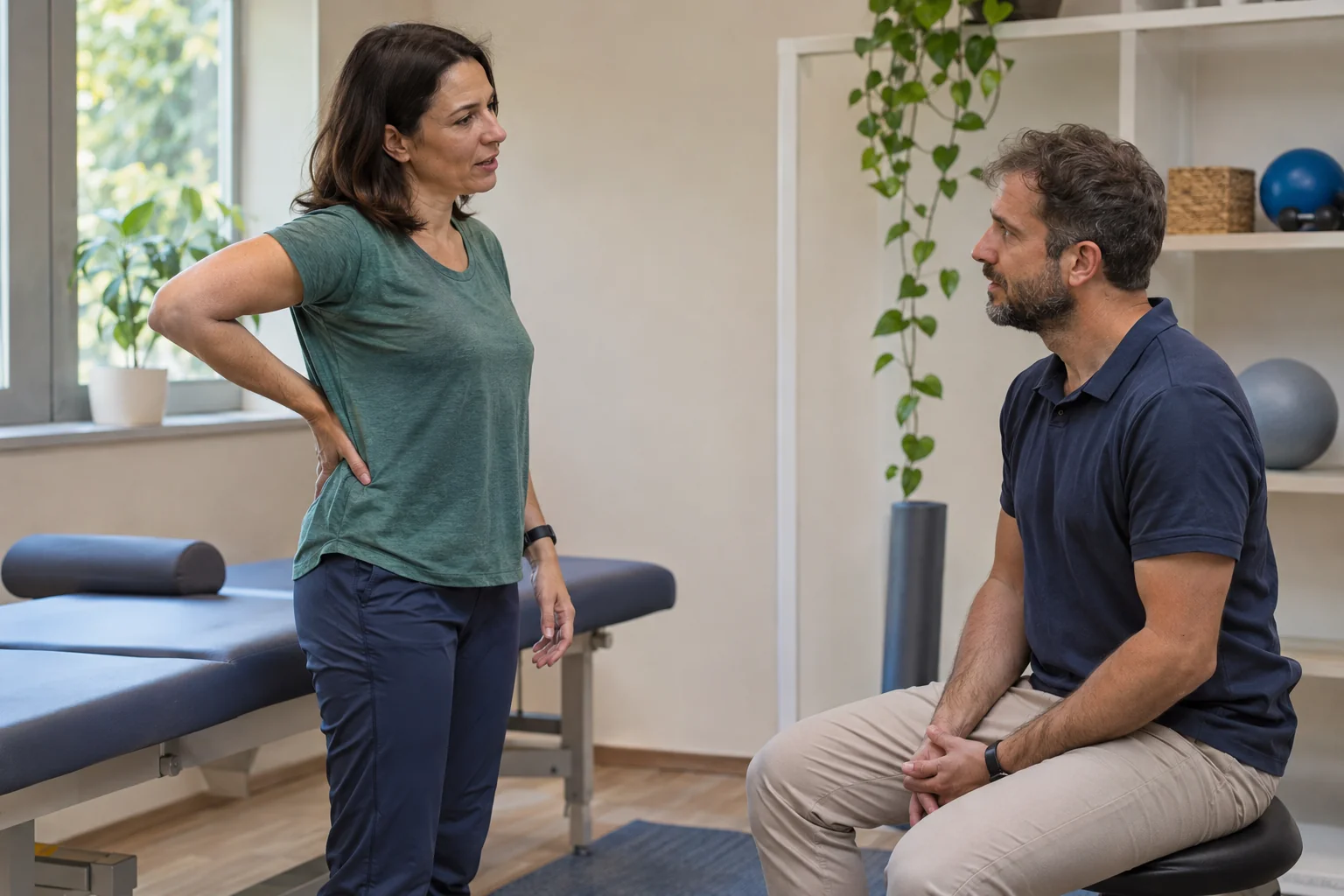
You can also ask about information transfer between skin and joint care. Who follows each symptom, which document should you take onward and where will changes be discussed? Regular review is useful when your individual task is clear. Do not turn advice received in different places into a compromise treatment plan of your own.
Even without a completed diagnosis, a follow-up plan matters. What should be observed from everyday situations already experienced, when should you report back and which changes warrant earlier assessment? Uncertainty is not a reason to try to decide the question alone through running or painful movements.
 Enlarge image
Discuss movement within assessment and treatment
For chronic conditions, the CDC emphasises discussing appropriate activity type and amount with a professional. This is a general framework, rather than permission to run with new joint stiffness. Your symptoms, assessment and sporting needs should inform discussion of the next step. CDC: individual activity advice.
Name running specifically, together with the programme you plan. Daily movement, physiotherapy and sporting load may be separate questions. If another activity is advised, clarify its purpose and execution too. You need not compensate for a modification later with more running; the next decision should relate to your current individual condition.
A sporting companion or coach can adapt to the agreed framework. You need not share every health detail, but can explain that new symptoms are being assessed and your programme follows individual guidance. Support does not mean testing pain or demanding an account of missed training.
How the combined symptom history can come together
The following table is a brief summary for consultation. It is neither a screening score nor a diagnostic test. Describe history known with certainty and changes observed naturally; missing details need not be manufactured through a new test.
| Topic | What should you bring to the discussion? |
|---|---|
| Skin history | When was psoriasis diagnosed, and what care and documents are available? |
| New joint symptom | Where, when and how did stiffness, pain or swelling begin? |
| Daily pattern | What do you experience in the morning, at rest or during natural movement? |
| Function | Which familiar tasks became harder, and what help do you need? |
| Care question | Is rheumatological assessment warranted, and how will changes be followed? |
Describe the new symptom at the start of making contact, rather than only saying something hurts after sport. Known skin disease and musculoskeletal change together form the individual question. Seek prompt medical help for unusually severe, rapidly worsening symptoms or symptoms accompanied by feeling unwell; in a serious emergency in Hungary, call 112.
The histories of psoriasis and new joint stiffness need not remain separate in the consulting room. Reporting the connection is not self-diagnosis, but important history for individual assessment. For the next sporting decision, ask for this full picture, understandable follow-up and your own care framework.
Sources
- NHS: Psoriatic arthritis
- CDC: Chronic Conditions & Disabilities Activity
- American College of Rheumatology: Psoriatic Arthritis
- NICE CG153: Psoriasis assessment and management
How Futószív articles are prepared: our editorial guidelines.