If your legs feel heavy and painful and trousers become harder to fit, advice may readily arrive that you should move more or take better care of yourself. You may already have tried many things while the change remains difficult to understand. Pain and difficulty functioning in everyday life are not character traits, however. You need not prove willpower before a meaningful health discussion can begin.
Changing body proportions and leg symptoms can have several explanations. Lipoedema is one possible condition, but this article cannot establish whether it applies to you. The aim is understanding the concept and describing your symptoms more precisely. We do not provide a photographic checklist or a running programme suitable for everyone affected.
If a leg suddenly becomes swollen, red, hot and painful, or fever or flu-like illness occurs, urgent assessment is needed. New unexplained one-sided swelling is also urgent; accompanying breathlessness or chest symptoms requires immediate help. The NHS information on lipoedema and swelling explains why an established or assumed condition does not automatically account for every new change.
What does lipoedema mean, and why is it not simply a weight label?
The NHS describes lipoedema as an abnormal build-up of fat in the legs and sometimes arms that may be painful and affect daily life. It is more common in women and typically affects both sides; heaviness, tenderness and easier bruising may occur too. These described features support understanding, rather than forming standalone diagnostic criteria.
The 2024 German S2k clinical guideline emphasises disproportionate, symmetrical limb-fat distribution associated with painful symptoms. It distinguishes this from painless disproportionate distribution and does not regard appearance-based stages as a reliable measure of symptom severity. Clinical assessment therefore needs to address symptoms and function alongside appearance.
Lipoedema is not identical to obesity, although both can coexist. Neither direction permits simple self-classification: a larger body does not prove lipoedema, and lower body weight does not automatically exclude it. You need not change weight before discussing pain. Your question may be what explains your particular symptoms and what help could improve daily life.
A mirror image and online comparisons are insufficient for deciding
Leg photographs placed side by side online can readily suggest recognition from a few similarities in shape. An image does not reveal pain’s nature, history, movement difficulty or other possible causes. You need not submit photographs of your body for public-group opinions before seeking help within care.
Appearance does not reliably reveal everyday burden either. Two people with similar proportions may experience different symptoms and find different tasks difficult. Visible change may be mentioned at examination, but should not be the sole consideration. Your sensations need not be justified by a striking photograph, nor become insignificant because another person’s condition looks more noticeable in an image.
The guideline does not treat easy bruising alone as a decisive diagnostic sign either. If you notice new or unusual bruises, describe them alongside your history rather than automatically attributing them to assumed lipoedema. An online list may give words for a question, but counting every apparently matching item does not replace individual judgement.
 Enlarge image
Translate ‘my legs feel heavy’ into everyday situations
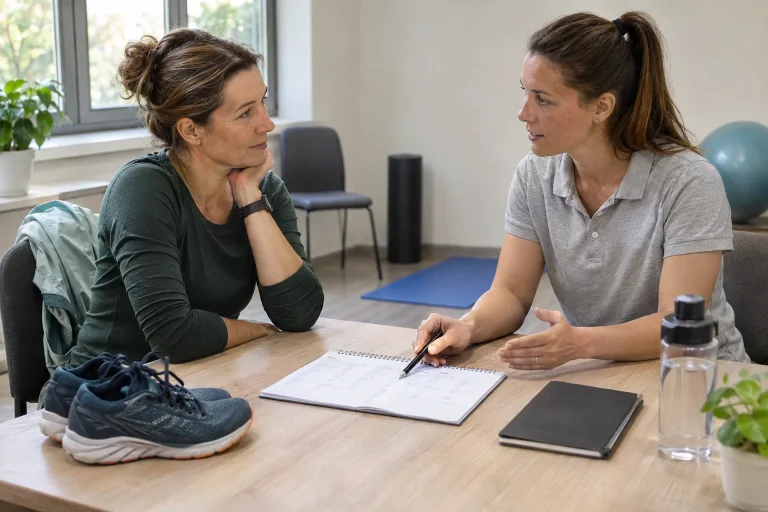
Describe the activities in which difficulty occurs: reaching the bus stop, prolonged standing, stairs or changing clothes in the evening. Name the timing pattern too: does it occur early or late in the day, after a particular demand or independently? This forms a clearer history than ‘I am not fit enough’. You are describing function, rather than grading fitness.
Pain can also have its own description: tender to touch, painful without contact, disturbed by garment pressure or different symptoms during movement. You need not provoke it through hard pressing or a prolonged trial. Experiences already encountered in everyday life can be described. The aim is not proving every possible symptom, but ensuring your main problem is not lost.
Choose functional examples from your own life. ‘By the end of shopping I can barely manage the queue’ or ‘I must turn back earlier on my usual walk’ is concrete information. Add what remains easy too. This does not make the account contradictory: daily activities pose different demands, and symptoms need not be identical in every situation.
Clarifying diagnosis and organising today are parallel tasks
While assessment proceeds, everyday access can also be discussed. Where can you sit, how will you get home, which clothing is comfortable and which task needs reorganising now? These are not home treatment instructions. They are organisational questions that may support daily function without deciding the cause beforehand.
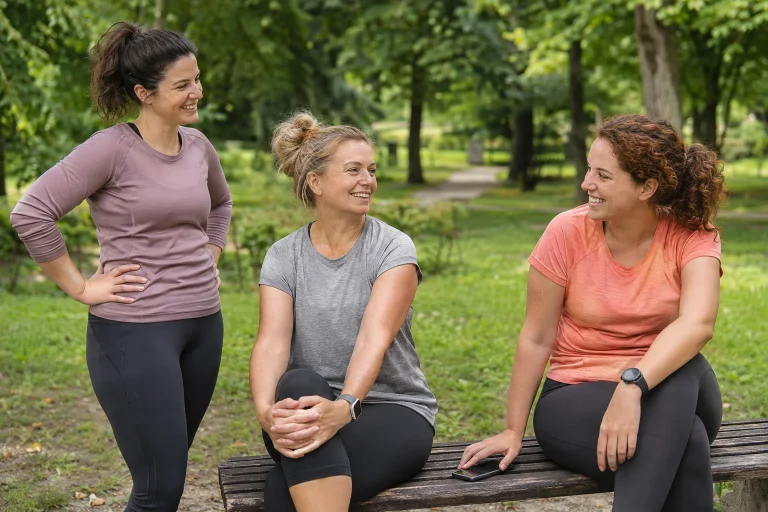
Instead of a long programme that must be completed continuously, plan the possibility of shorter occasions and necessary breaks if suited to your individual condition. You need not reach the loop’s end or follow a companion’s route for movement to count. Nor should stopping because of symptoms automatically be called failed training or insufficient willpower.
A pressing garment, narrow chair or many stairs to an activity can also be real barriers. Distinguish these from bodily symptoms. Creating a usable environment cannot always be replaced by increasing physical performance. Sometimes the next good step is finding another seat or entrance, rather than a harder exercise sequence.
Movement’s aim should not be solely changing body proportions
If lipoedema is confirmed, movement may form part of individual care, but is not a general task to ‘run it off’. The guideline discusses movement within overall symptom management. This does not mean everyone must run or that a particular distance removes the condition. Selecting actual demands requires knowledge of your symptoms and circumstances.
Personal goals might include easier daily travel, a shared programme you can participate in or establishing an agreed movement routine. These are not lesser aims because change is not measured in centimetres. If a plan names only reduced body proportions, ask how pain, comfort and daily function are represented.
Your own enjoyment can have a place too. A calm social occasion may matter more to you than a sport’s performance indicator. You need not choose movement you hate or regularly experience as painful simply because it is considered more intense. In an appropriate professional plan, access, ability to maintain participation and personal goals are meaningful information, rather than decorative extras to treatment.
Choosing equipment and treatment is not an online shopping race
According to the NHS, a specially trained professional assesses the appropriate compression solution. This does not mean any tight sports sock or online product is suitable. Do not independently select a pressure class, create homemade bandaging or treat uncomfortable tightness as proof of effectiveness. Individual instructions and wearability both need clarifying.
For other treatment offers too, ask the aim, conditions for use and how results are assessed. A striking before-and-after photograph differs from improvement in your pain or daily function. This article does not assemble a surgical or medication plan, nor promise Hungarian care or funding eligibility from foreign information.
If you have received several suggestions, ask for a clear summary of what currently belongs in the plan, what is optional and what needs further assessment. You need not obtain every advertised aid at once. Tell your clinician about current medicines and treatments without independently changing them because of an online story. To make your own decision, understand expected benefit, burden and uncertainty too.
 Enlarge image
Ask for a more precise question instead of a stigmatising explanation
The NICE principles of care emphasise that symptoms should not all be attributed automatically to body weight. Respectful communication attentive to personal goals matters even when weight or another associated condition forms part of assessment. You need not choose between having symptoms taken seriously and a matter-of-fact discussion of health factors.
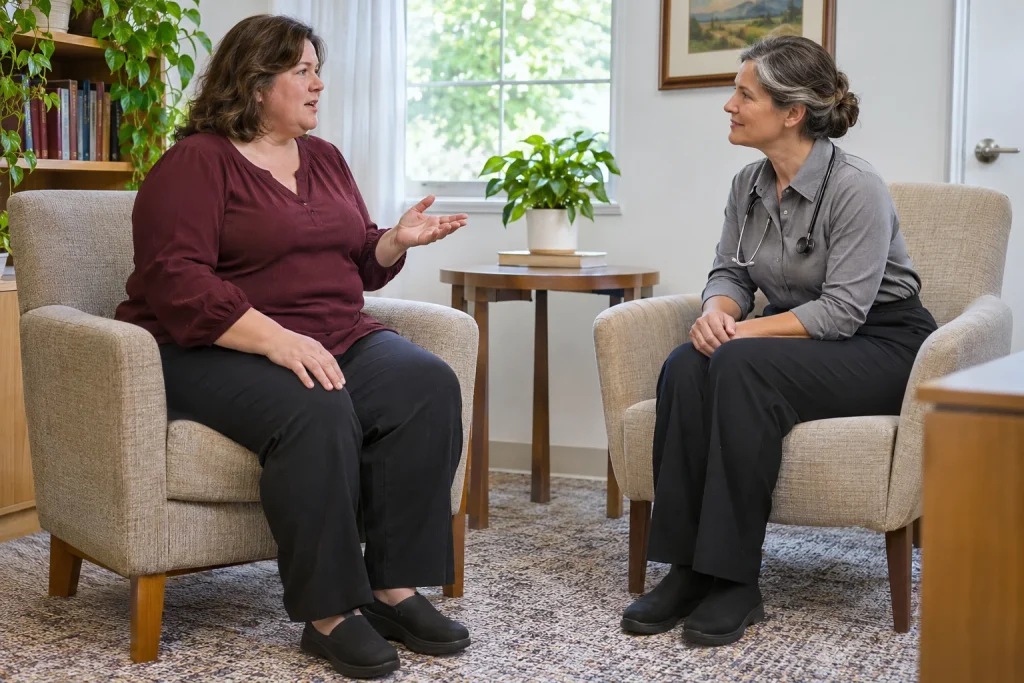
A useful sentence may be: ‘I want to understand what explains the pain and difficulty walking, and what further assessment is needed.’ If the answer is only general lifestyle advice, ask what is thought about your specific symptom. The question does not force a preselected diagnosis. It seeks clarity about your history and the necessary next step.
You can also prepare a brief response to community comments: ‘I am having my leg symptoms assessed and looking for a programme appropriate for me now.’ You need not publish your whole medical history or body image. If the condition is emotionally demanding too, you can seek support; this does not make physical symptoms imaginary. Help may address the burden of everyday life, rather than only naming a diagnosis.
A workable plan starts from your own quality of life
After discussion, it helps to know three things: the likely explanation considered for current symptoms or what remains uncertain; the next step; and which changes should prompt earlier help. Ask for these in your own words with a short summary. You need not learn every technical term to follow the plan.
Everyday feedback can accompany your goal. For example, how the agreed route went, how usable clothing was and what changed in daily tasks. Do not build a compulsory pain-provoking test into checking progress. A plan exceeding your time or budget is important information too: an unmanageably large burden cannot be solved through encouragement alone.
Painful, heavy legs therefore cannot be reduced to willpower. Symptoms, possible explanations and daily function need understanding together while preserving your dignity and decisions. The name lipoedema may help formulate a question, but does not replace examination. A truly useful result is an understandable next step connected with your individual situation, rather than a label selected from a picture.
Sources
- NHS: Lipoedema
- NICE NG246: Principles of care
- DGPL/AWMF: S2k Lipoedema Guidelines, 2024
- NHS: Swollen ankles, feet and legs
How Futószív articles are prepared: our editorial guidelines.