With a known rotator cuff injury, running can seem a lower-body sport: if your legs work, why not set off? Yet the shoulder participates in arm movement and everyday preparation too. Putting on a top, handling a vest, travelling there and training itself belong to one programme. Discuss running separately with knowledge of your own treatment and rehabilitation guidance.
Someone receiving nonoperative treatment starts from a different situation from someone who underwent tendon repair. This article does not give a return date or shoulder test. It helps identify upper-body details worth bringing to the treating team so a sporting goal receives an individual, understandable answer.
Type of care matters alongside the diagnosis
The rotator cuff consists of four shoulder muscles and their tendons, helping lift and rotate the arm and position the upper-arm bone’s head. AAOS describes different tear types and care options. ‘Rotator cuff injury’ is therefore not one identical rehabilitation situation for everyone. Your own report and chosen treatment provide the individual starting point. AAOS: Rotator Cuff Tears.
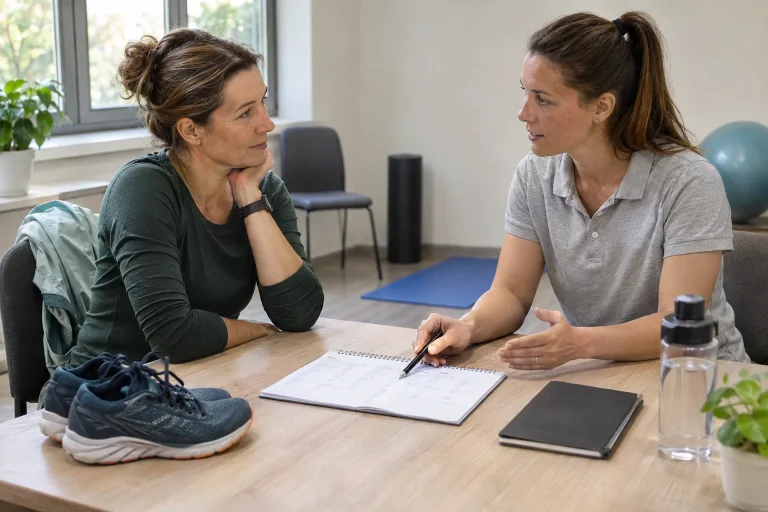
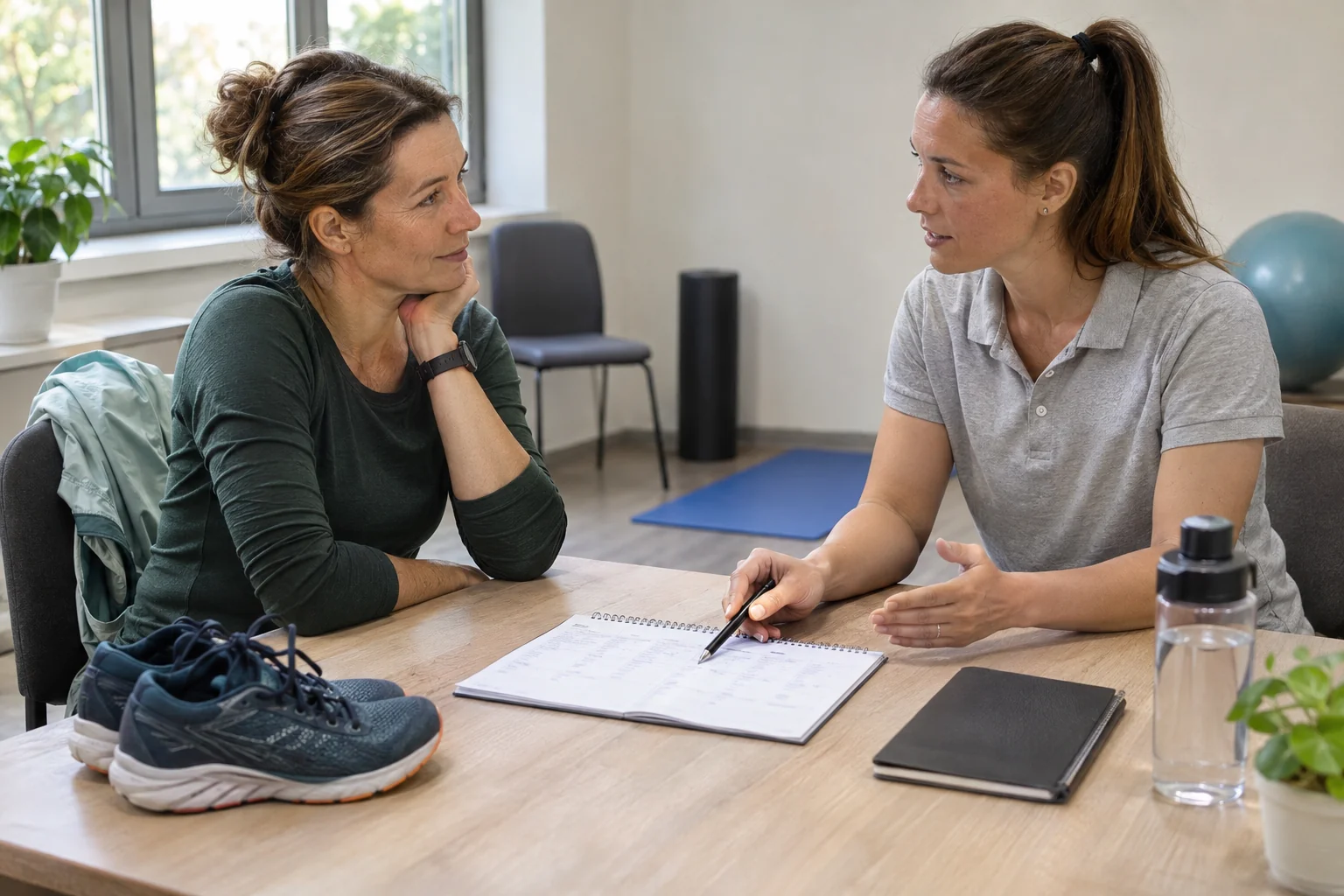
Bring available documents to review and request an understandable summary of the condition identified. What is treatment’s purpose, and which current restrictions relate to it? You need not learn every technical term, but understanding your tasks and open sporting question is worthwhile.
Another person’s similar diagnosis is insufficient for adopting their programme. Different tissue conditions, treatment or recovery phases may underlie their story. Social accounts often show only the diagnostic name and first run. Missing individual details mean their timeline cannot become your return plan.
After surgery, internal repair matters rather than the scar’s appearance
According to AAOS surgical information, rotator cuff repair often involves reattaching the tendon to the upper-arm bone. Rehabilitation phases protect the repair and later restore movement and strength. Sling use and duration of restrictions also depend on your own procedure. AAOS: surgical care and rehabilitation.
A small skin incision therefore does not mean the shoulder is ready for every sporting task. ‘Arthroscopic’ also describes surgical access, rather than uniform permission to run. Ask which procedure was performed, whether other treatment occurred and what this means for current guidance. The team familiar with the exact surgical situation can answer individually.
Do not time stopping an aid or restriction around a planned run. If a sling, dressing or daily task is difficult, report this and seek help. Independently changing protection is not the solution. Manage medicines and postoperative instructions in discussion with the clinician too.
Passive, active and strengthening tasks can have different aims
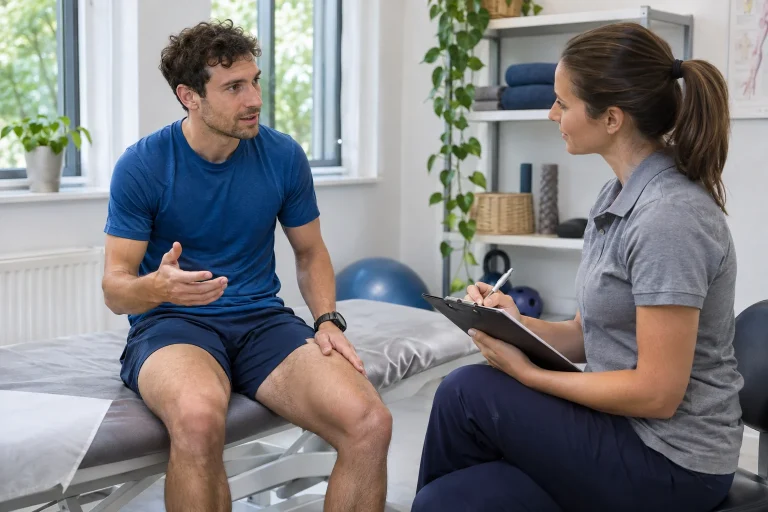
Surgical guidance discusses passive movement with a therapist helping the arm, active movement and later strengthening separately. Do not merge them into ‘I exercise’. Ask which phase you are in and which task was assigned. A general description in this article does not change individual instructions.
Being able to perform a movement does not mean you should repeat it in the present phase. Feasibility, purpose and permitted load are separate questions. Ask for your task to be demonstrated, then request feedback on whether you understood. Do not use an online exercise name instead of individual instructions.
Equally, completing a strengthening task does not automatically answer whether to run. Sport may involve other situations and preparation. Clarify with the rehabilitation team how the assigned exercise connects with daily function and planned activity. Do not independently add the two programmes together hoping to return faster.
 Enlarge image
Nonoperative treatment also needs an individual sporting question
According to AAOS, planning treatment considers activity, overall condition and other individual factors alongside tear type. Nonoperative care does not simply mean everything can continue unchanged. Reducing pain and improving function may be aims, while actual action must connect with your assessment.
Ask what the current adjustment concerns: a daily task, raising the arm, carrying, sport or another situation? The broad word ‘resting’ can have many practical interpretations. Describe the task specifically and request an example of implementing advice in your day.
Do not record new or worsening weakness and pain as familiar parts of an old diagnosis. AAOS also discusses reassessment of changing symptoms with a known tear. You need not establish tissue changes at home. Noticing and describing change and seeking help when needed matter more than another self-test.
Putting equipment on belongs to the running programme
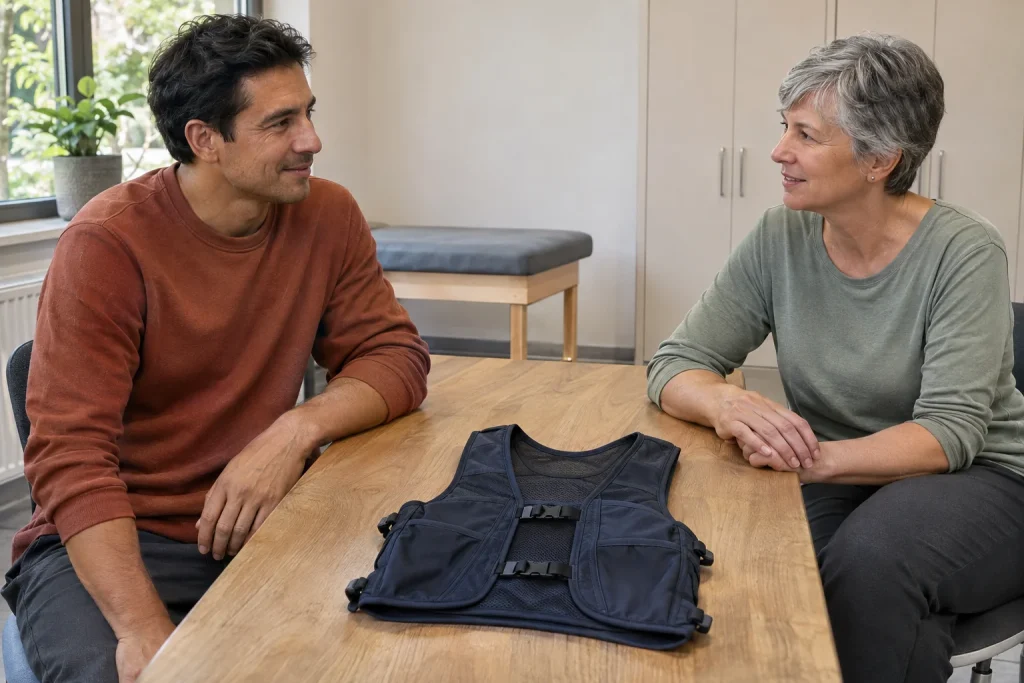
Training begins at home: putting on a top, jacket, vest or backpack, handling pockets and packing objects all belong. Bring these details to consultation. A vest’s name or weight alone does not answer the question; identify the movement and individual restrictions involved in using it.
If putting an item on would require uncomfortable reaching behind or raising the arm high, do not seek a solution through painful trials. Ask how that situation can be handled in your phase and whether assistance or different arrangements are needed. Available equipment can be shown, without repeating the symptom-provoking movement while preparing for the appointment.
Equipment already on your body and putting it on independently are separate questions. Removing it, reaching pockets and what happens at the end also need clarification. Ask more than whether a vest feels comfortable on the shoulder. Request an individual answer about the whole use situation in light of current guidance.
Describe the whole training situation alongside arm movement
Do you imagine a short predictable route, community occasion or longer trail run? Would you use poles, hold a phone or carry fluid? The aim is not calculating a safety score alone from this article. The team needs to answer about the actual sporting situation you plan, rather than an entirely different one.
Discuss getting there and home too. Driving, public transport, dressing and carrying a bag may belong to the programme. Shoulder condition matters even if you think of running itself as lower-body loading. Present your whole day, rather than merely the section recorded as training in an app.
Do not independently alter arm movement to attempt running with a rigidly held or differently immobilised arm. Individual restrictions are not barriers to bypass through homemade technique. If running is currently inappropriate, ask about other possible activity. Alternatives also need selection for your assessed condition.
Discuss function alongside pain changes
Improved resting comfort, easier dressing and strength changes are separate information. Say more at review than ‘it is better’. Identify which task differed and what remains difficult. You need not try a new harder exercise or longer sporting trial to have something to report.
The NHS shoulder-pain page recommends urgent discussion for, among other things, sudden or very severe pain, inability to move, major swelling, altered shape, persistent sensory disturbance or symptoms beginning after injury. Seek prompt help for new fever and feeling generally unwell too. In a serious emergency in Hungary, call 112. NHS: Shoulder pain.
After surgery, also follow warnings in your own discharge report. Do not automatically treat new symptoms as compulsory consequences of physiotherapy, or independently change medicines for a sports plan. Know the follow-up route: whom can you notify before review, and which changes need more urgent assessment?
 Enlarge image
Name running specifically at review
‘You may move’ or ‘you may load it’ does not necessarily describe running. Name easy jogging too, alongside planned circumstances. If no individual recommendation exists yet, ask when reassessment happens and by which considerations. A general calendar week does not replace your treatment situation.
The following questions support discussion. They are not a fitness checklist, and answers need not be generated through independent trials. They show connections between diagnosis, daily activity and sport to clarify with a professional.
| Question | Why does it matter? |
|---|---|
| Which treatment phase am I in, and which restrictions currently apply? | Advice connects with current condition. |
| What is the purpose of the exercise assigned? | The roles of strengthening and other movement become clear. |
| How should I handle equipment within my own guidance? | Tasks before and after running are included too. |
| Did we decide specifically about running or discuss general activity? | Avoids overinterpreting advice. |
| What is the next review’s aim, and which changes should I report sooner? | The plan remains usable between meetings. |
Summarise answers in your own words. If several professionals contribute to care, ask who is responsible for which question and what information to pass on. Advice given at different times may differ for explainable reasons, but do not resolve this yourself through a compromise programme. Ask for clarification.
Sporting goals and rehabilitation can fit one plan
Your attachment to running may be an important personal goal. Describe missing community, outdoor routine or an event. The team then sees not only an exercise being performed but also the life situation you want to return to. The actual plan is framed by current condition and treatment, rather than the race calendar.
A companion or coach can help implement clarified guidance: adapt the programme, help with equipment or accept another meeting format. Support does not mean testing the injury or overriding protection instructions. You need not prove commitment through a spectacular comeback session.
After a rotator cuff injury, running also concerns your shoulder’s individual condition. Treatment type, exercise purpose, arm movement, equipment and follow-up together make the discussion specific. Discuss the next sporting step with the treating team within this context.
Sources
How Futószív articles are prepared: our editorial guidelines.