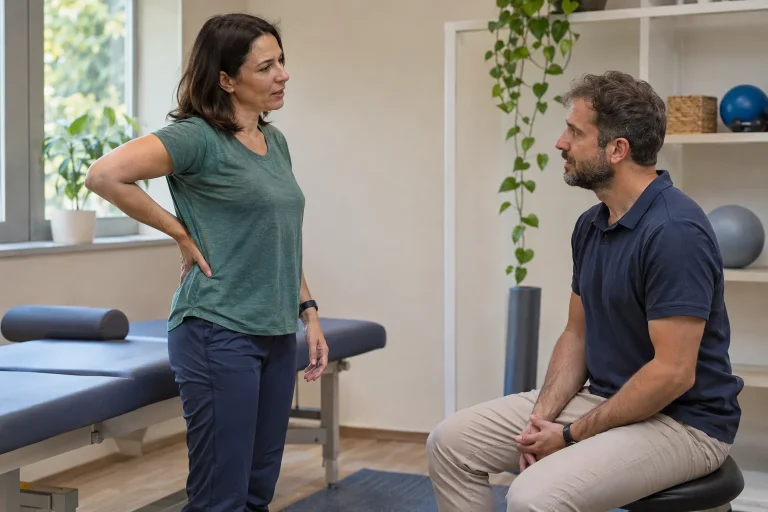
Your neck feels uncomfortable while your arm or some fingers tingle. A side-view phone photograph can make it easy to think you only need to address head posture. Yet the image does not reveal when altered sensation began, how long it lasts, whether grip worsened or which other symptoms accompany it. These may be more important questions than where your shoulder appears at a particular instant.
New or worsening arm symptoms alongside neck pain deserve medical discussion. This article helps describe observations precisely, rather than identify an affected nerve at home. It provides no neck-twisting, pressure or forced-arm-position tests. The symptom’s significance needs assessment through the whole history and individual examination.
Clarify ‘numbness’ through your own experience
Some people call crawling pins and needles numbness; others mean reduced awareness of touch in an area. Others have a heavy or clumsy hand and use the same word. None of these descriptions should embarrass you. Explain your experience and ask for clarification if a clinician uses a term differently.
The NHS neck-pain information also lists accompanying tingling or an arm that feels cold as circumstances needing medical advice. Do not omit an associated symptom because you regard the neck as the main problem. NHS: Neck pain. This signal alone does not identify the cause.
Describe altered sensation from a situation you naturally noticed. Did it appear at work, while dressing, running or waking? Do not test with needles, hard pinching, hot objects or painful pressure. You need not create a sensory map at home; reporting the new symptom is your task, while examination belongs in care.
Location and timing together form a usable history
On which side, in which arm area and around which fingers does the symptom occur? Is it a continuous band or separate areas? Your description helps even if it does not match an online diagram. Do not reshape experience to resemble a familiar nerve pathway. The professional needs the actual sensation.
Separate the onset of neck pain and arm symptoms in the timeline. Did they begin together, or is one older? Is altered sensation continuous, recurring briefly or noticeable in particular daily situations? Approximate duration can be described without inventing second-by-second precision. Uncertainty is part of a credible account too.
Highlight changes in symptom area or nature separately. For example, previously there was brief tingling, while now gripping a familiar object also feels different. You need not wait for every symptom to become constant. New or worsening changes may need prompt assessment, with urgency clarified according to the actual situation.
A cervical nerve-root problem is one possibility, rather than a diagnosis visible in a photograph
According to AAOS, cervical radiculopathy involves irritation or compression of a nerve exiting the neck and may cause pain spreading to shoulder or arm, altered sensation and weakness. A symptom connection between neck and hand is therefore a medically meaningful question. This does not make every numb arm a cervical nerve-root problem. AAOS: Cervical Radiculopathy.
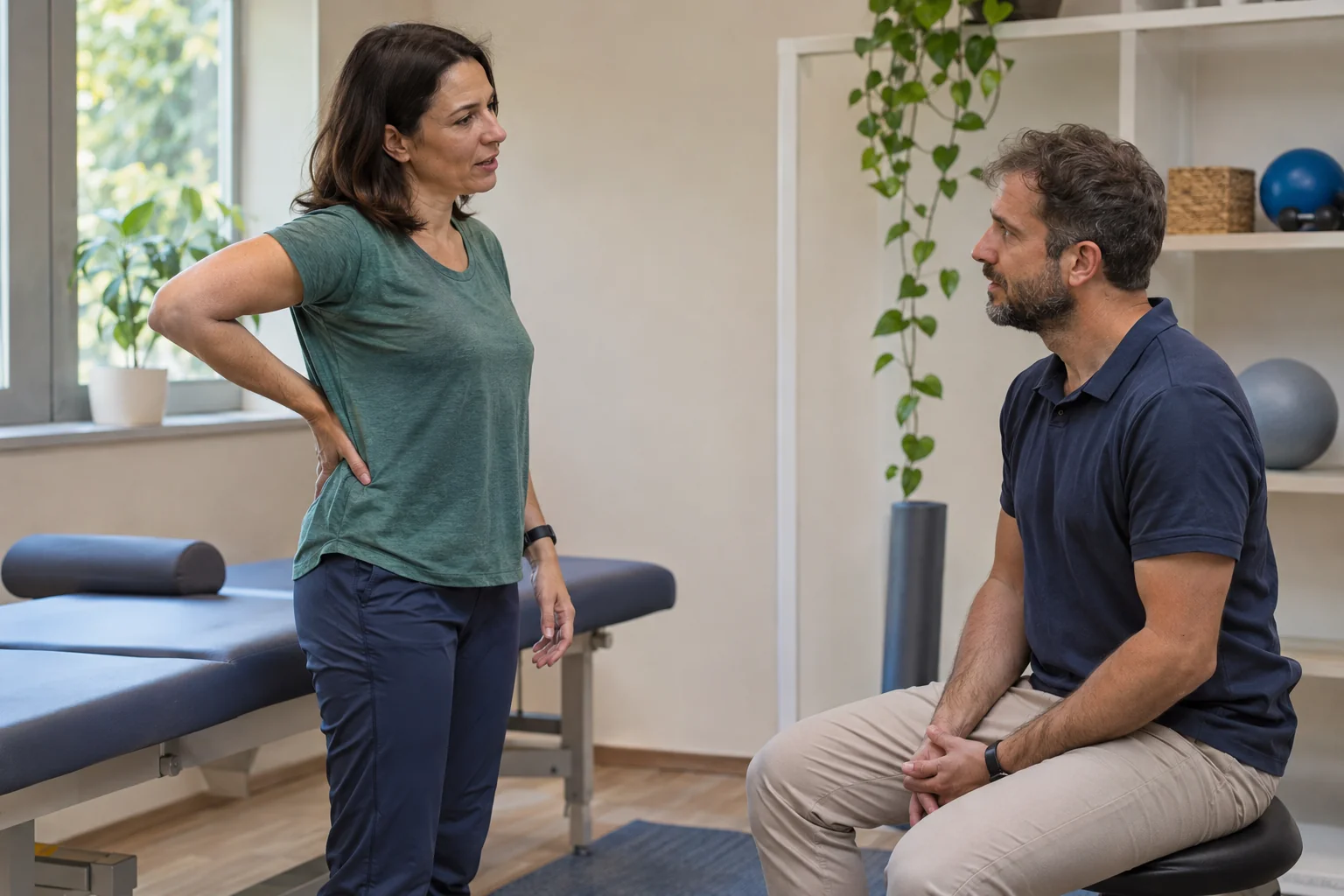
During assessment, a professional considers history, neck, shoulder, arm and hand condition, sensation, strength and further findings when needed together. Similar symptoms may have other causes, so one movement or finger area is insufficient to choose a name. Your history and current function provide the individual context.
NHS slipped-disc information describes neck and arm symptoms while noting that not every disc abnormality causes symptoms. A word in an old report does not therefore automatically explain current altered sensation. Bring the document and describe what happened since. NHS: Slipped disc.
 Enlarge image
Do not describe changes in grip and arm use simply as tiredness
Make ‘my hand is weak’ precise through a real example. Is holding a familiar object harder, do you drop things, or is dressing or a work grip less certain? The aim is describing everyday change, rather than organising your own strength measurement. Individual examination distinguishes caution due to pain from changed strength.
Report new functional deterioration even if neck pain is mild. Pain, tingling and hand use are separate information. You need not determine severity with a heavy shopping bag, maximal squeezing or repeated arm bending. Experiences that naturally occurred may already matter sufficiently for assessment.
If walking or balance changes alongside hand dexterity, include this in a neck consultation too. The AAOS page on cervical spinal-cord compression describes such a symptom group. This does not establish that you have it; it means the full functional change should be reported promptly. AAOS: cervical spinal-cord compression.
Phone and desk circumstances can also be described
If symptoms are noticed during a particular work task or phone use, describe that circumstance. How long did it last, how did you use the arm and what happened afterwards? You need not adopt the symptom-provoking position again to prepare for the appointment. An observation differs from claiming to have certainly found the cause.
A work or home photograph may help show the environment if the clinician considers it useful. Yet it does not show symptom timing, sensation and strength changes, or the whole day’s activity. Do not select neck exercises or create an equipment-buying obligation from one instant. The individual symptom needs assessment first.
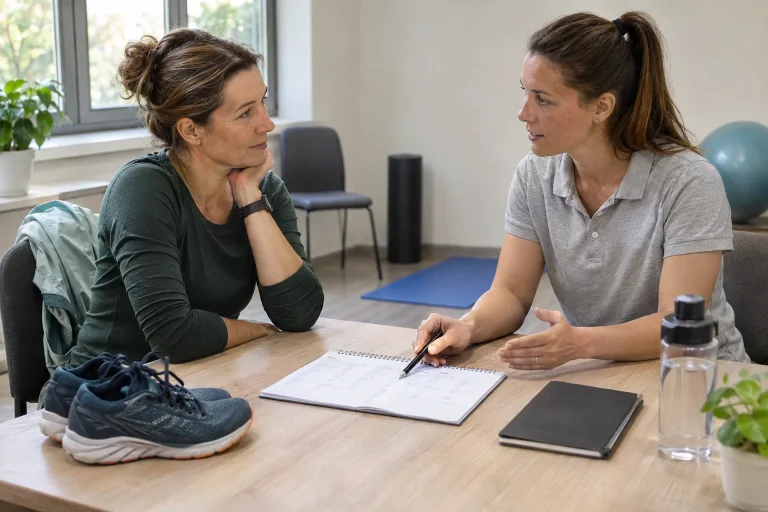
Bring your whole day into discussion: driving, desk work, physical tasks, sport and rest. Running is only one activity. If arm use is also difficult at work, organising your day may be a practical part of an activity plan. You need not quantify every minute; describing the most important recurring situations can already help substantially.
As a runner, ask about the specific programme too
Alongside ‘can I run?’, describe the programme imagined and symptom timing relative to sport. Was it present before starting, did it appear during running or was it noticed later? Were you holding a phone, wearing a bag or experiencing another unusual situation? These are circumstances worth sharing, rather than causes proven beforehand.
Do not diagnose yourself from holding a phone or arm movement. With new or worsening symptoms, seek individual advice about sporting demands based on assessed condition. Do not use a longer run to test whether numbness returns. A flawless sports-watch curve does not replace discussing sensory or functional changes.
Consider travel safety in your current condition too. The NHS warns, for example, that driving or cycling with restricted neck movement may be dangerous. If neck turning or arm use makes you uncertain, seek help and guidance. Reaching planned training or review is also part of the real situation.
Why avoid your own neck provocation test?
Head turns, neck pressure or arm tension seen in a video may look like simple tests. In individual examination, however, a clinician interprets technique, symptom nature and other findings together. Home imitation does not permit the same inference. You need not provoke symptoms more strongly to justify seeking help.
Do not use forced neck twisting, pressure or sudden ‘cracking’ to seek a diagnosis. If a movement task is recommended, ask its purpose for you and request feedback on your performance. A general article does not choose an appropriate exercise with current altered sensation.
A movement temporarily changing symptoms does not automatically identify necessary treatment. Feeling easier or worse in a position may be important to report, but is not a standalone therapeutic instruction. Clarify within your plan what to do, what to avoid and which changes to report. Ask again about unclear instructions.
 Enlarge image
Which new symptoms require immediate help?
Sudden one-sided arm or body weakness, loss of sensation, facial drooping or speech difficulty may indicate a stroke. Seek emergency help immediately; in Hungary, call 112. Symptoms temporarily disappearing is not a reason to wait. Neck pain does not automatically provide a musculoskeletal explanation for a sudden neurological change. NHS: stroke symptoms.
Seek prompt medical assessment for new or worsening arm-strength changes, substantial sensory disturbance, unsteady walking or deteriorating hand dexterity. Severe, sudden symptoms may require emergency help. You need not decide at home which nerve or disease is responsible. Describe the current change first and follow care providers’ guidance.
If an accident or other significant injury preceded symptoms, report it immediately. Previous neck problems or an old disc report do not automatically explain a new event. Current symptoms, onset and history matter together when seeking help. In a severe condition, do not try to drive yourself to care.
Bring missing information alongside the photograph to consultation
The following table is not a diagnostic questionnaire. It organises personal information unavailable from a desk or running-posture image. Describe only experiences already encountered; do not perform new tests to complete rows.
| Missing information | Useful description |
|---|---|
| Sensation | Tingling, reduced sensation or clumsiness: what does numbness mean for you? |
| Location and side | Where in the arm or hand, where does it spread and on which side? |
| Timeline | When did neck and arm symptoms begin, how long do they last and what changed? |
| Function | Which familiar grip, dressing or work task became harder? |
| Full context | Work, travel, running and rest circumstances, alongside previous reports. |
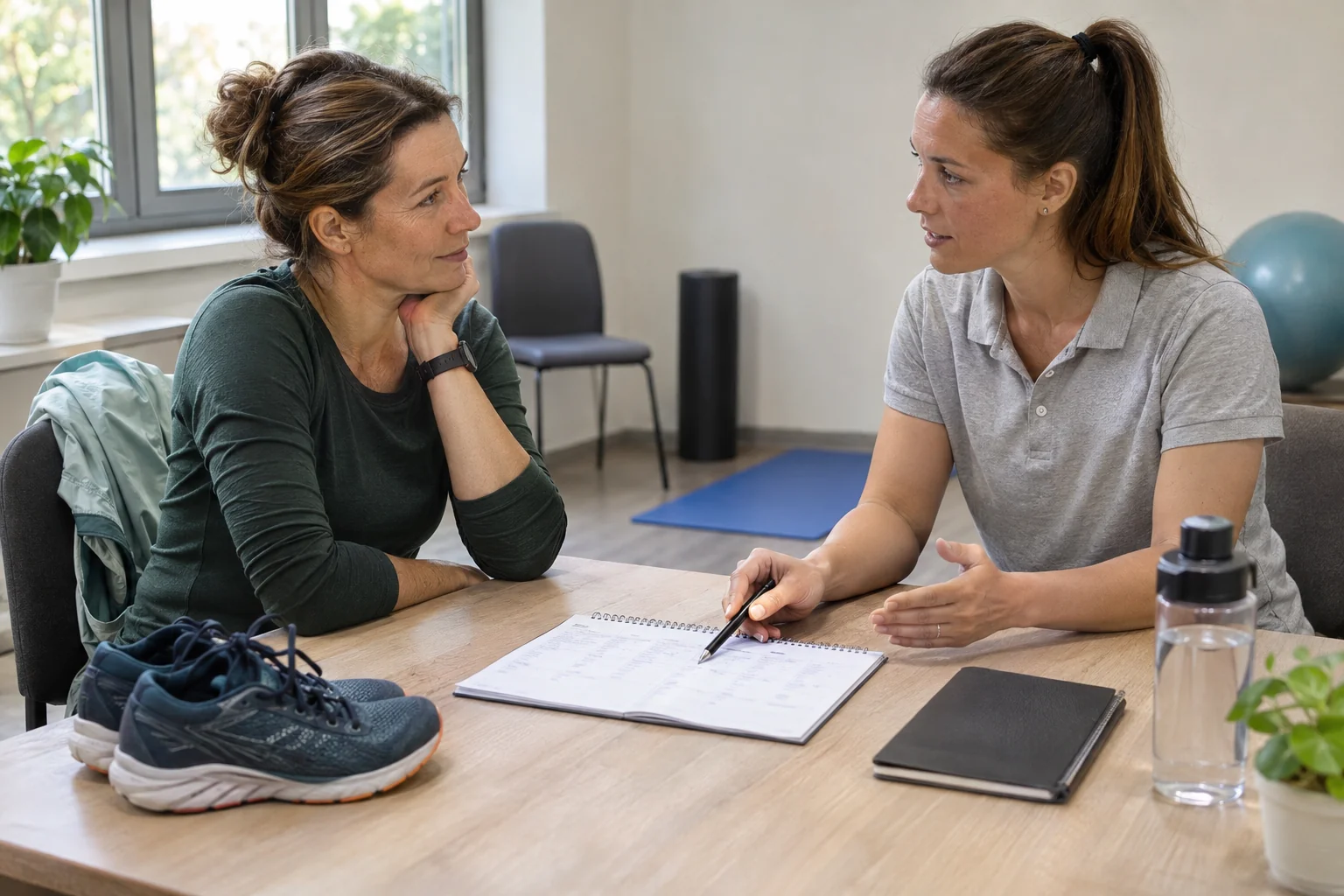
At the meeting’s end, ask what was found, which further assessment is needed and how advice relates to your sport. The next review’s aim and changes warranting earlier contact should also be clear. An old report, new symptom and specific running goal are three separate pieces of information to discuss together.
A posture photograph shows at most one environmental detail. The history of pain, sensation and arm use becomes interpretable through your account and individual examination. Report a new symptom precisely before a correction selected from an image or another running trial takes centre stage.
Sources
- NHS: Neck pain
- NHS: Slipped disc
- AAOS: Cervical Radiculopathy
- AAOS: Cervical Spondylotic Myelopathy
- NHS: Symptoms of a stroke
How Futószív articles are prepared: our editorial guidelines.