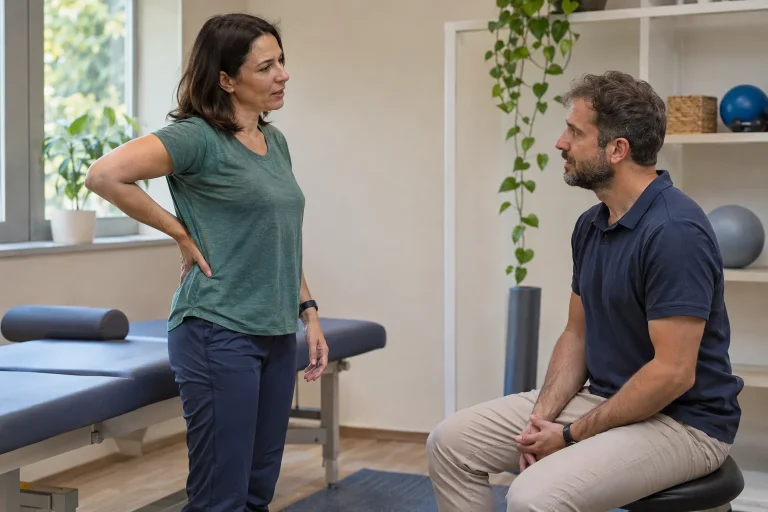
After a period of severe back pain, even putting on running shoes can cause worry. The movement itself may not hurt: you fear the whole episode starting again. “Nothing is wrong, just move” offers little help. You need an explanation that takes symptoms seriously, clearly explains examination conclusions and connects the next step to your situation.
Worry can be discussed without calling pain imaginary. Assessing your condition, choosing suitable movement and arranging understandable follow-up belong together. This article supports questions and consultation preparation; it prescribes neither a self-administered pain test nor a universal return programme.
Explain which situation and consequence you fear
“I am afraid to move” is a good start, but add a specific example. Are you avoiding bending, afraid to restart running or concerned about being far from home when unwell again? Understanding movement, planning a programme and arranging a safe environment may require different help. There is no need to feel ashamed of what you fear.
Name the feared consequence too. Do you fear pain definitely means new damage, inability to work or losing the ability to care for someone? Personal meaning can explain why general activity advice is difficult to follow. You need not decide beforehand which worry is justified; that is what you want to clarify professionally.
Recall avoided everyday situations too. Have you stopped carrying shopping, cancelled walks, requested help dressing or reorganised days in advance? Describe actual changes rather than starting from an online scale you completed. How this history affects your life matters to the clinician.
Reassurance needs an understandable professional basis
NICE guidance on low-back pain and sciatica emphasises information tailored to personal needs and abilities. Reassurance and activity advice relate to symptom assessment, rather than replacing every prior examination with a sentence. You can reasonably ask what was considered and what supports the recommendation. NICE NG59.
A useful question is: “What do we know about my current symptoms, and what remains uncertain?” A good explanation need not contain complete certainty. It can include current conclusions, further observation and review. What matters is understanding the decision’s basis and which changes would alter the plan. Uncertainty need not be concealed with false guarantees.
“We saw no signs of an urgent problem” differs from saying your pain is insignificant. If an earlier statement felt dismissive, say so: “I understood that what I feel does not matter, and then did not know how to continue.” This creates an opportunity to clarify misunderstanding without requiring you to establish a new diagnosis.
Choosing suitable movement is part of individual assessment
The NHS general back-pain information discusses maintaining activity and avoiding prolonged bed rest. Do not interpret this as requiring unchanged completion of a running plan with every symptom. Everyday activity and sporting load can be separate tasks. Ask for specific guidance on movement suitable for your condition. NHS: Back pain.
NICE recommends considering individual needs, preferences and capabilities when choosing activity. This gives you room to explain what is accessible, familiar and worrying. You need not silently accept a programme you cannot understand or perform. A plan is usable when you know what it means within your day.
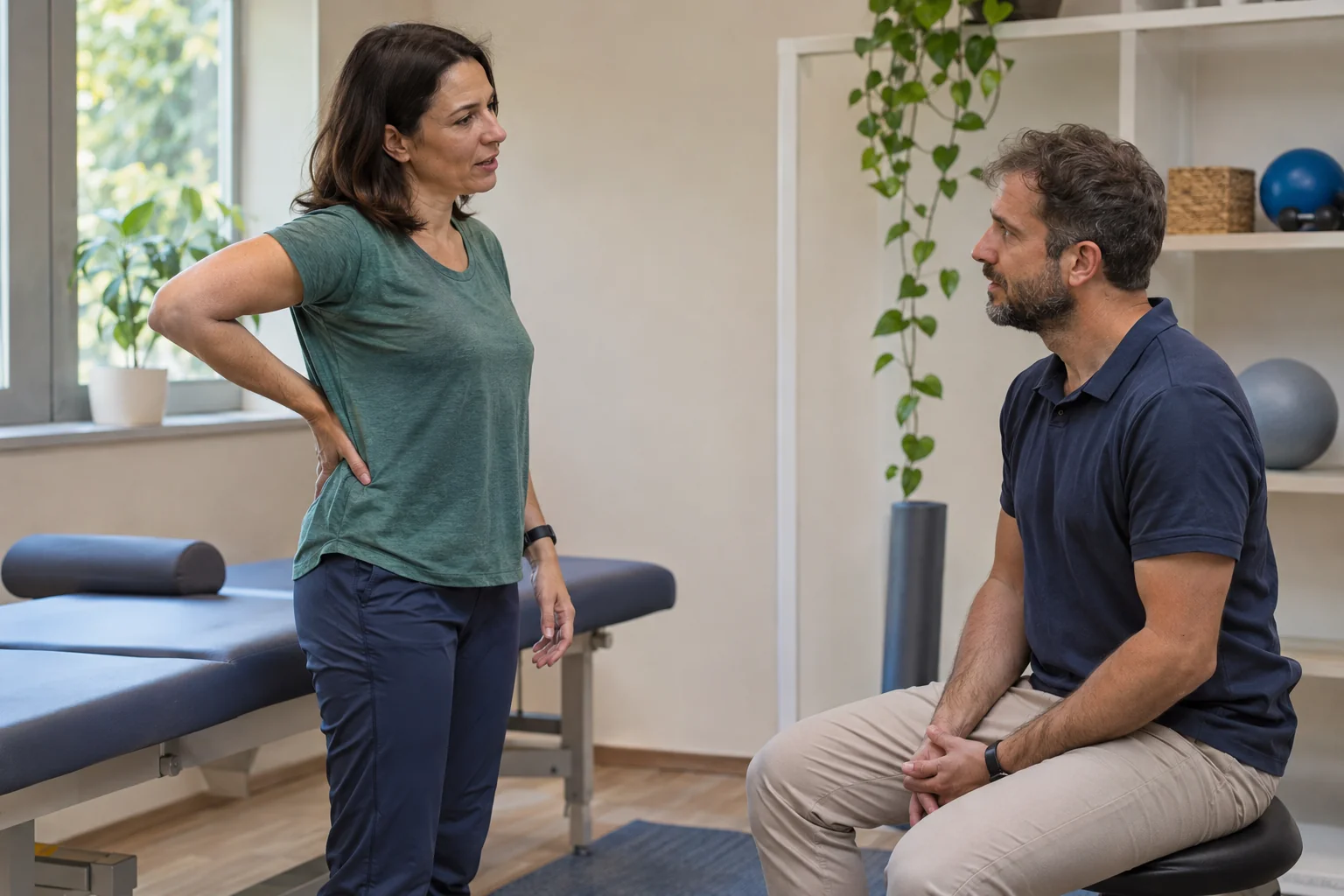
Do not assemble your own fear-provoking sequence of “proof” movements. Personal care can discuss approaching a difficult situation, but a general article cannot select your starting task. If given exercises, request a demonstration, feedback on your own execution and clear instructions for reporting changes.
 Enlarge image
Pain and worry can be assessed together
Considering physical and psychological aspects together in persistent symptoms does not mean pain is merely a thought. NICE recommends considering combined programmes with exercise and cognitive behavioural approaches in certain circumstances. This is an individual professional decision, not a lay label. Describing worry does not reduce the credibility of your physical symptoms.
The 2023 RESTORE randomised trial assigned 492 adults with persistent, activity-limiting low-back pain to three groups. It examined individualised cognitive functional therapy with or without movement-sensor feedback against usual care. Activity limitation improved more favourably in the therapy groups at the main follow-up. Kent and colleagues: RESTORE.
The research did not test whether an encouraging sentence cures everyone. It assessed a complex intervention delivered by trained professionals with specified eligibility criteria; serious spinal disease and conditions preventing activity were among exclusions. Results do not provide general running clearance or a home therapy recipe. They show that care attentive to function and personal barriers is studied scientifically.
Translate general advice into your situation together
To understand “start gradually”, ask which activity is meant. Moving within the home, commuting, an individually taught exercise and running are different tasks. Your assessment should establish the starting framework. This article adds no progression in minutes or kilometres, which would bypass individual condition.
Discuss your environment too. Would a predictable, easily interrupted setting help, or would company be useful now? These need not be called therapy rules. They are organisational details that can fit the personal recommendation. A programme becomes real when travel there, return home and possible help are considered.
Ask about expectations too. What should the next appointment review: performing a daily task, functional change or understanding an exercise? Make the goal clear rather than only naming distant performance. Alongside wanting to return to running, everyday safety and independence can matter to the plan.
Ask for guidance if symptoms change meanwhile
One essential question is: “Which changes should I report, when, and to whom?” Clear follow-up can avoid having to reassess the entire story alone with every sensation. The answer must relate to your condition. A general internet pain threshold for every person and symptom is insufficient.
Alongside pain intensity, discuss changes in sensation, strength and daily function. Do not interpret new numbness or weakness only as part of worry; report it to your care provider. Discussing fear does not remove the need for appropriate assessment of new physical symptoms.
The NHS warning signs include new loss of sensation around the perineum, bladder or bowel changes, and new weakness and sensory changes in both legs. These may need immediate care. Seek urgent help for sudden severe or rapidly worsening pain, fever and feeling generally unwell too. In a severe emergency in Hungary, call 112.
Your companion and coach can adapt to the personal plan
People often mean encouragement when saying “Do not think about it, just start”. If this does not help, explain the support you need. They might ask what you agreed with the clinician and accept your choice of another programme or smaller organisational commitment for now. Encouragement need not become a test of strength.
At other times, an overcautious companion stops every bend or movement and decides for you. Shared understanding of personal guidance may help more than constant warnings. You can ask questions together during care if you wish. The companion does not diagnose or choose exercises; they can help implement the clarified framework.
Give your coach necessary sporting information and only the health details you want and consider justified. A shared plan may only need the activity and follow-up agreed with the professional. Running companions’ opinions cannot replace care, and group expectations do not justify overriding personal guidance.
 Enlarge image
A short question sheet can help at the next consultation
Writing questions is not an attempt to prove symptoms. It helps discuss why continuing your day is difficult, alongside reports and pain severity. You need not invent an answer for every row. Two or three important questions can start a meaningful conversation.
| Topic | Example wording |
|---|---|
| Concern | I fear starting will make my condition worse again. |
| Avoidance | Since then, I have also been afraid to perform this familiar daily task. |
| Interpretation | What do we know about my condition now, and what is the basis for recommending this activity? |
| Specific plan | Which activity does the advice concern, and how should I carry it out? |
| Follow-up | Which changes should I report earlier, and what will the review assess? |
At the end, summarise your understanding: “Have I understood correctly that this is our agreed task now, and that I should separately report new sensory changes?” Ask for clarification if uncertainty remains. Repeating back helps distinguish general information from personal recommendations.
If previous answers were unclear, say so. Questions are about understanding your care rather than examining the professional. If needed, request another explanation or professional opinion with your full history. The aim is a justified, individual and traceable plan rather than necessarily a more permissive answer.
Feeling safe need not be proved through one brave run
Return stories often compress change into an impressive first session. In your situation, understanding, asking questions and clarifying daily tasks can also be meaningful steps. You need not prove you are unafraid with a long run. Evaluating individually agreed activity matters more than the spectacle of returning.
Nor should you blame yourself if concerns remain after examination. Explain which question remains open or which situation needs more support. Mentioning fear does not mean every physical symptom has psychological origins. Assessing the full situation includes your experience and understanding the next step.
Reassuring information becomes usable when it names current knowledge, personal action and follow-up. Pain can be taken seriously and suitable activity selected without false guarantees. Ask for this understandable framework for your next sporting decision.
Sources
- NICE NG59: Low back pain and sciatica recommendations
- NHS: Back pain
- Kent and colleagues, 2023: RESTORE randomised trial
How Futószív articles are prepared: our editorial guidelines.